




Goodbye, 2027 Truck Prebuy
The much-anticipated 2027 Class 8 truck prebuy fizzled out before it ever got off the ground. HDT asked Kenny Vieth of ACT Research why.


Kenny Vieth, president, ACT Research, said many factors have killed off the 2027 Class 8 prebuy before it began.
Photo: ACT Research/Canva
My, how things have changed. Back in 2022, the consensus in the trucking industry was that a massive Class 8 prebuy was in the offing – set to kick off sometime in 2025, at the latest.
Prebuys are essentially mass purchases of new Class 8 trucks ahead of significant technology upgrades, price increases, or both. In most cases, these dramatic shifts in technology and price are driven by regulatory pressures associated with the hardware required for new vehicles to meet new exhaust emissions regulations.
Based on previous market performance ahead of emissions regulations in 2004, 2007, and 2010, many industry analysts felt confident that a prebuy was in the offing heading into 2027.
Massive Market Upheaval
As 2025 began, the North American freight market, stagnant since the 2020 COVID-19 pandemic, was showing signs of recovery. This meant that fleets would have the capital necessary to fund a large prebuy.
And 2027 happened to be the year the strictest diesel exhaust emissions regulations in history, spearheaded by the U.S. EPA and the California Air Resources Board would become law.
The new hardware and warranty extensions required for trucks to meet those upcoming regulations were projected to drive 2027 Class 8 truck prices up by as much as $20,000 or to $25,000 per unit.
When HDT sat down with Kenny Vieth, president of ACT Research in September of 2022, a then-new report issued by his analyst group indicated that if carriers were fiscally healthy, these factors would fuel the largest Class 8 prebuy in history.
And ACT Research wasn’t alone in that assessment. Volvo Trucks North America, Fleet Advantage and Gladstein, Neandross & Associates (GNA) were also predicting a significant Class 8 prebuy heading into 2027.
But, in November of 2024, all of that changed when Donald Trump won a second term as President of the United States.
Since then, in an industry already struggling with overcapacity, Trump has nullified the freight market recovery by sparking a trade war with other nations.
At the same time, he has gutted many key aspects of the EPA's controversial Clean Truck Rules that were set to become law in 2027.
In short, these moves have created massive uncertainty in the trucking industry today. Instead of confidence in a growing economy, fleets are now looking at a flat freight market for the foreseeable future – coupled with a possible increased risk of an economic downturn in the near future.
At the same time, no one can now say for sure what will happen in terms of technology and pricing with 2027 truck models. In March, the EPA announced that EPA 3 was likely to be reconsidered, while the EPA’s Clean Truck regulation was being “reevaluated”.

Historically low freight volumes have hampered fleets' ability to purchase new equipment.
Photo: Volvo Trucks North America
No one knows how, or even if, the regulation will change. Will OEMs forge ahead with new hardware and warranties? Or set them aside until a new administration revisits diesel emissions regulations in the future?
There is so much chaos and uncertainty now in the trucking industry, it is impossible to answer those questions – and many others – at the moment.
However, one thing does seem abundantly clear: The 2027 Class 8 prebuy ahead of EPA 2027 has fizzled out before it even began to get off the ground.
With all that going on, HDT decided to reach back out to Vieth for his thoughts on where the North American Class 8 market is at the moment – and where it is likely headed as 2027 comes closer.
HDT: So much for predicting the future, huh?
Vieth: (Laughing) No kidding! It never fails! The future is always very hard to predict. But I have to say, I’m not sure anyone one could have foreseen all of this happening -- and happening in such a short time!
HDT: Well, let’s start with the freight market right now. Because if there was going to be a prebuy, a strong freight market, beginning about right now, was going to be what funded it, right?
Vieth: Yeah. Back in 2022, we were optimistic that the freight market would be driving strong carrier profitability into 2025. It was already slowing down in ’22 when we made that prediction. And we knew it freight volumes would be down in 2023. But typically, freight market downturns last about six to eight quarters. And, lo and behold, this one is about to enter into its 13th quarter. Our expectation back in 2022 was that carrier profitability would be peaking in 2025. And that has absolutely not come true.
HDT: In other words, the fleets are just getting by.
Vieth: Right. Because we’re seeing a continued oversupply in the market. And if you don't have money to invest, fleets can't even think about adding more equipment.
We look at the big publicly traded truckload carriers and we aggregate their financials as a gauge of market health. To find a worse quarter for carriers’ Q1 2025 profit margins, we have to go all the way back to the first quarter of Q1 2010.
So, we are currently at a generational low in terms of carrier profitability.
Our expectation at the end of last year was that a reversal in truckers’ fortunes would play out in 2025 as a healthy economy increased demand into a modest downwards correction in tractor supply.
While we did not change our forecasts materially until the first tariffs hit, it is not wrong to think that everything changed in November 2024.
HDT: I thought Trump would leave the economy alone for a while. I was surprised he moved on it so quickly.
Vieth: We did not anticipate a President of the United States doing essentially self-inflicted harm to the U.S. economy at this breadth and scale. There is active damage being done to the US economy because of tariffs right now.
The first half of 2025 has really been marked by uncertainty amid a pulling forward of consumer demand and business inventories. I think the other shoe is going to drop in the second half of this year.
We saw a big pull-forward of goods begin in Q4 2024 as the global markets realized Donald Trump was going to be elected.
And that trend held accelerated through the first quarter of Q1 2025.
To date, we’re largely buying pre-tariff goods. Soon, those shelves will be restocked with goods whose prices reflect the higher prices paid up and down the supply chain. In response, we are hearing that the truck and trailer OEMs are raising prices. We’re also hearing about price increases for aftermarket parts. Everything is becoming more expensive. And higher prices and increased economic uncertainty in a profit constrained market lowers demand.
Based on those aforementioned economic conditions, it’s harder to suggest that there’s going to be any material improvement in the ability of carriers’ ability to improve profitability in the next couple of quarters.
And if carriers aren't making money – or are making money at generational low levels -- there's no reason to add capacity ahead of a regulation that may -- or may not -- happen.
HDT: All of that would be bad news for a truck prebuy, even if the Clean Truck Regulations were a sure thing. But now, all of that is up in the air, as well.
Veith: We thought that as soon as the Chevron case was decided in June of 2024, the Clean Truck Rule was likely doomed.
In addition to on top of carriers not making any money, EPA is now “reevaluating” these regulations. To my knowledge today, the EPA has yet to come out yet and say with definitive guidance as to whether they're going to change them, or not.
So, I don't think anybody is willing to prebuy trucks right now. Why would you, as a carrier, prebuy a truck if you think the regulation is going to go away?
HDT: The other side of that coin is, what are the OEMs going to do?
Veith: The industry has made huge investments in new technology that delivers lower NOx emissions. And if you make a major investment like that, you hope to get a return on it.
Let me start with this caveat: I don’t know what the engine makers strategies are. But, because there were two pieces to the EPA’s Clean Truck legislation from their point of view, clearly you have to think that the OEMs would like to see at least the technology part of the regulations continue.
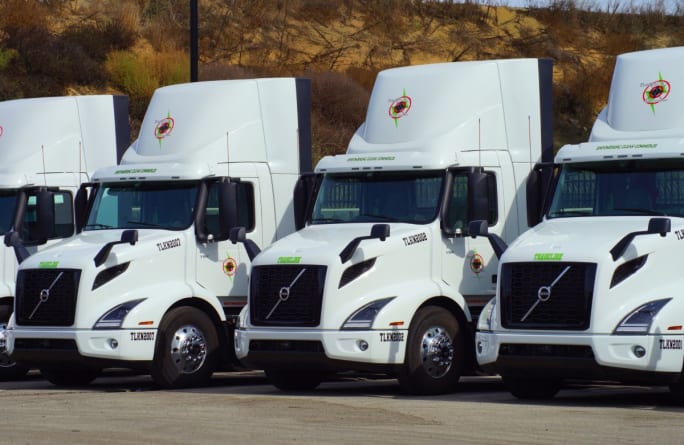
Questions remain as to what technology and warranties OEMs will offer on 2027 model year trucks.
Photo: Volvo Trucks North America
As a reminder, in addition to lowering NOx, there was also a significant warranty extension in the rule. Our analysis suggests that the regulation’s technology piece accounted for about a third of the projected price increase for 2027 trucks, with warranties accounting for about two thirds of the cost.
So, for us, the question is, what will the EPA do? Will they keep the technology but get rid of the warranty extensions? Will they keep everything? Or will they shelve everything. These are important questions that need to be answered quickly, so that the industry can decide on the path forward.
More Equipment

How Volvo Updated Its D13 for EPA 2027 [Watch]
Volvo’s updated D13 promises lower emissions without sacrificing performance or fuel economy. Take a closer look at what changed inside the engine in this HDT Spotlight video.
Read More →
Michelin Tire Improves Efficiency and Durability for Regional Fleets
The Michelin X Multi Energy D2 is a regional haul drive tire engineered to help fleets improve fuel efficiency, durability and traction in demanding stop-and-go operations.
Read More →
ZF Expands Commercial Vehicle Push in North America
ZF is expanding its North American commercial-vehicle presence with new transmission applications, electrification, trailer technology and autonomous-driving systems.
Read More →
Tesla Wants a Self-Driving Semi. Are Cameras Enough?
Could Tesla’s camera-only autonomous driving technology work on an 80,000-pound Semi? In this commentary, HDT's Deborah Lockridge takes a look at Tesla, Cybercab, and how autonomous trucks see the road.
Read More →
Kodiak: Driverless Long-Haul Truck Launch on Track for 2026
Kodiak AI says its driverless long-haul safety case is 93% complete and it remains on track to begin commercial operations by year-end 2026.
Read More →
What DOT’s Automated Vehicle Strategy Means for Trucking
The U.S. Department of Transportation issued a new automated-vehicle strategy that outlines plans for driverless-truck regulations, cross-state freight corridors, and federal safety standards.
Read More →
East Coast Port Launches $45M Electric Truck Push
The Port Authority of New York and New Jersey announced millions in incentives for zero-emission drayage trucks, yard tractors, and new charging hubs near the port.
Read More →
PlusAI Going Public to Fund Autonomous Truck Launch
A SPAC deal could provide PlusAI with up to $300 million as it works toward a 2027 commercial launch of factory-built autonomous trucks.
Read More →
NHTSA Moves to Rewrite Truck Fuel-Economy Rules
The National Highway Traffic Safety Administration says it lacks authority to regulate medium- and heavy-duty truck engines separately from complete vehicles, but the existing standards have not yet been eliminated.
Read More →
Detroit Opens Orders for EPA 2027 Engines
Detroit isn’t starting from scratch to meet EPA 2027 diesel emissions standards. Its Gen 6 DD13 and DD15 engines keep much of today’s platform while updating the fuel and aftertreatment systems.
Read More →