





Related: How One Fleet Faces Maintenance Tech Shortages Head-On
Who's Going to Work on Electric and Alt-Fuel Trucks?
Fleets of the future are likely to be powered by a variety of drivetrains and fuels. Can an industry dealing with a technician shortage find the skilled workers it needs to keep them running?
September 9, 2019
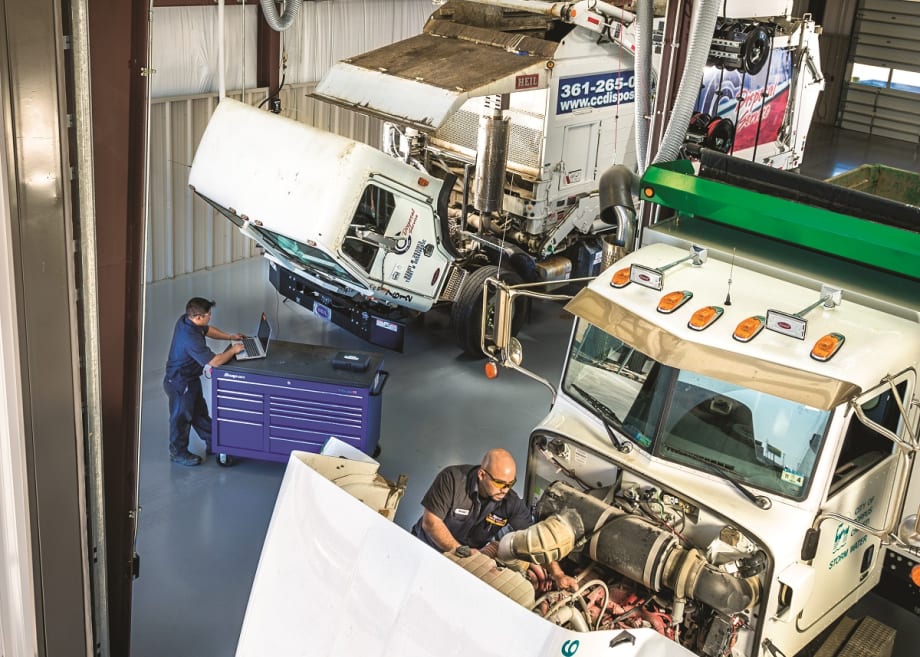
For Rush Truck Centers, technicians can choose to train in alternative-fuel trucks as a specialty skill needed at some of its locations.
Photo: Rush Truck Centers
6 min to read
Finding qualified diesel technicians is an ongoing challenge. With a new generation of trucks powered by alternative fuels and drivetrains entering the marketplace, we now need technicians able to troubleshoot and repair powertrains that would have seemed like the stuff of science fiction just a few years ago.
There is a growing belief among some fleets and dealerships that the answer to the technician shortage is “growing your own.” The good news there is that, for most young people, advanced technologies using software, high-voltage batteries, hydrogen fuel cells, natural gas, telematics and the like aren’t all that foreign to them.
Victor Cummings, vice president of service operations for Rush Enterprises, says thanks to a dedicated, aggressive, in-house recruiting team, combined with a high-profile recognition and reward program, the national truck dealer has been able to stabilize its technician problem.
“We’ve learned to focus on our technicians and their development,” Cummings says. “We execute that strategy from start to finish with them. We are very focused on preventative maintenance. That’s where we start our entry-level technicians to get them oriented on how we do things and hone their basic skill sets.”
From there, Cummings says, technicians start to choose their own set of technical specializations — which can include alternative-fuel vehicle systems. “We see that as a specialty skill set,” Cummings says. “Natural gas is still very much a niche market. So not all of our dealerships have a need for those technicians.”
But in those markets, or when a new market emerges, Cummings says Rush moves quickly to get interested and qualified technicians into training. “We start with online courses — Cummins has an excellent set of courses,” he says. “Once the technicians qualify there, we send them off for actual classroom time at OEM schools. Those classes could last anywhere from a couple of days to a couple of weeks, depending on the subject.”
John Sheehy is fleet manager at EVO Transportation and Energy Services, out of Milwaukee, Wisconsin. He’s facing the challenge of converting a new, merged fleet over from diesel to natural gas — and getting his technicians to buy in to the change.
Luckily, it’s a road Sheehy has been down before. The fleet founded by his father, Sheehy Mail Contractors, was an early adopter of CNG Class 8 tractors. Recently, it was acquired by EVO Transportation, which is keen to make the same transition.
Like Rush Enterprises, Sheehy had already focused on its own, home-grown crop of technicians. So when the time came to make the jump to CNG, as a manager, Sheehy felt his primary mission was to get them to buy in from the beginning. “We made them a part of the process,” he says. “They were going to be critical to getting this done. And we needed their input and knowledge to make it happen.”
Despite some initial skepticism, the technicians agreed. “We adopted a sort of ‘burn the ships’ philosophy like some of the early Spanish explorers,” Sheehy says. “We were committed. So there was a team philosophy of, ‘Let’s figure this out and get it done.’”
One advantage early alt-fuel adopters have, Sheehy says, is that they tend to get a lot more OEM support for their efforts, because the manufacturers have a vested interest in proving that a new technology is viable.
“We reached out and really pushed the OEMs for the training and materials we could get. Lucky for us, Cummins has an excellent training center just up the road in Green Bay that we used extensively. And Agility Fuel Systems was great about coming to us and giving us extensive training in our own facilities.”
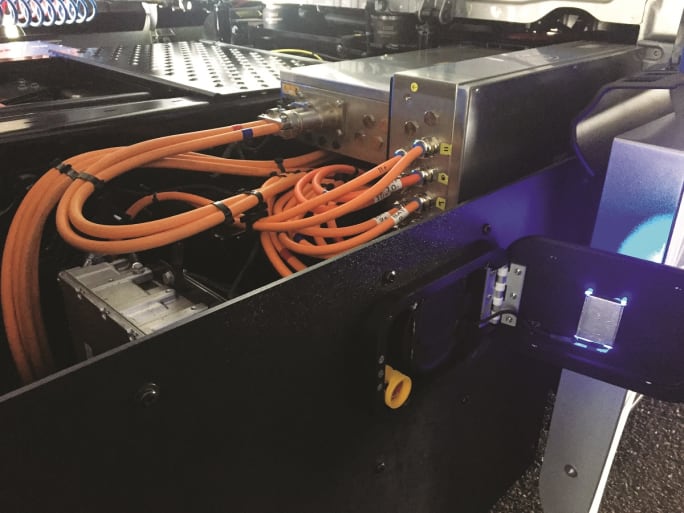
Battery-electric trucks like this Freightliner eCascadia and hydrogen fuel cell trucks like Nikola will need new technician skills.
Photo: Deborah Lockridge
New techs — new technology
As new fuel and propulsion systems come on line, the certifications technicians will need to maintain and repair them will change — and training will still be crucial.
“There is going to have to be training on some new vehicle systems in the future,” says Mark Russell, president of Nikola Motors, which is on a fast-track to develop the industry’s first long-haul tractor powered by hydrogen fuel cell technology. “Obviously, hydrogen fuel cells will require training. And we’re already working with Ryder System, which will be our national service provider when the trucks begin real-world operations, on training technicians to work on them.”
“Training to service these new vehicles — electric trucks in particular — is critical for their success,” adds Steve Slesinski, director of product planning at Dana, which has been working on electric drivetrain components for several years and recently announced a new line of hydrogen fuel cell drivetrain components. “That’s why we are investing heavily now in new training resources for these technologies. We want to build that knowledge base now, so that when these vehicles do start to appear in fleets, their owners will have a positive customer experience.”
At the same time, Slesinski notes, many repairs on the vehicles of the future may not require a technician at all. “Many of these vehicle systems will be serviced and updated remotely via telematics,” he says. “And that is going to require a different type of technician, one that may be very different from our ‘traditional’ idea of what a truck technician is.”
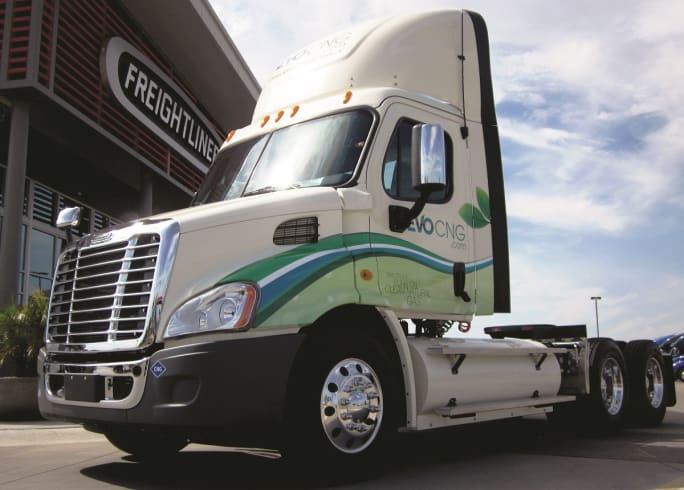
One advantage early alt-fuel adopters have is that they tend to get a lot more OEM support for their efforts, says John Sheehy with EVO.
Photo: EVO Transportation and Energy Services
Cummings agrees, noting that Rush is already developing an extensive telematics network that is rapidly becoming more dynamic and capable of making vehicle upgrades in real time. And as a natural consequence of that technology, he sees the younger generation of technicians as the ones who will take the lead with emerging alternative fuels and other advanced vehicle technologies.
“Our older technicians are actually adapting to all of this new technology pretty well,” he says. “But I feel like the young people just entering the workforce are more receptive of these new technologies and quicker to learn them. They’ve grown up with new technology as a daily force in their lives. So they are more apt to dive into a new technology and embrace it.”
But more than anything, Sheehy says, the key to success with technicians and new technology is a firm commitment and buy-in to go the distance. “And that has to come from the top,” he says. “You can’t embrace and adopt new technology halfway. It doesn’t matter if it’s clean diesel, or natural gas, or something else. You have to jump in with both feet. And upper management really has to drive that — from reaching out to OEMs, lining up training, all the way down to explaining to technicians why you’re going this route and asking them to help you make it work.”
There will be many challenges, some of them currently unknown, to fully integrating new technologies into fleet operations and making them both efficient and profitable. And maintenance professionals will be a key component in the success — or failure — of these new technologies.
Subscribe to Our Newsletter
More Maintenance
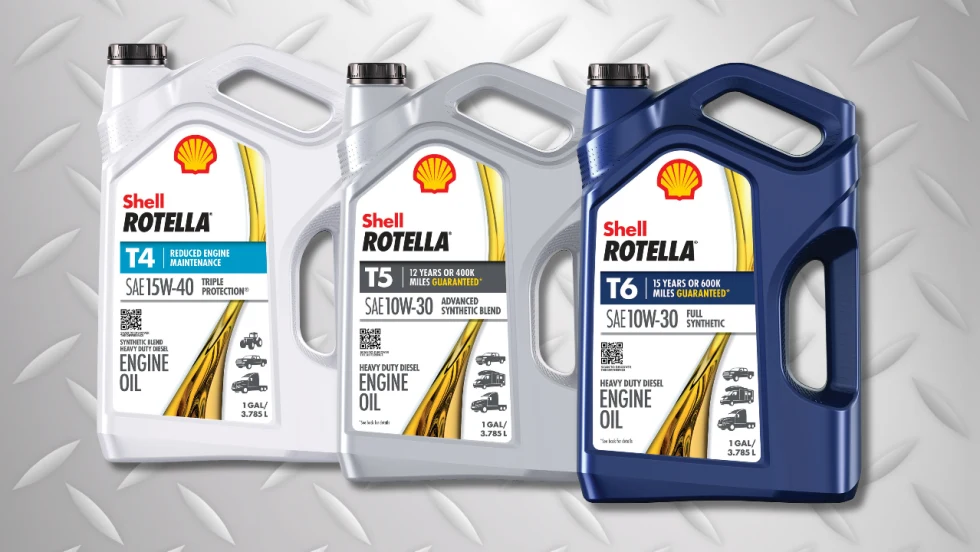
Shell Prepares Rotella Oils for 2027
New CL-4 and FB-4 formulations will begin arriving in early 2027, with improved protection against oil breakdown, wear and deposits, according to Shell.
Read More →
Mack Expands Extended Coverage With Four Chassis System Plans
Mack Trucks' new system-specific coverage options allow heavy-duty fleets to select protection for driveline, cab, HVAC, electronics, and advanced safety components.
Read More →
What an Out-of-Service Order Really Costs, and How to Plan for One
The repair invoice is the first number you see — and often one of the smallest. Here’s what else an out-of-service order can cost a fleet, and how planning can reduce the damage.
Read More →
International Launches Online Truck Parts Store
Fleetrite.com lets fleets and repair shops find OEM and all-makes parts, check prices and availability, and order without calling a parts counter.
Read More →
Continental Introduces New Regional Truck Tires
Continental says its new Generation 5 steer and drive tires for regional operations offer longer tread life, with estimated mileage gains of 22% and 19%, respectively.
Read More →
Sponsored•October 1, 2026
How AI Can Help Your Techs’ Efficiency
The technician shortage isn't going away, and no single fix can close the gap on its own. Trent Broberg makes the case that AI's real job in the shop is protecting the billable hours and job satisfaction of the techs you already have, not asking them to work faster.
Read More →
Wrong Repair Prompts Recall of Freightliner, Western Star 4x2 Trucks
DTNA is recalling more than 2,400 trucks that received an incompatible software fix instead of the hardware repair required to address brake valve corrosion.
Read More →
Truck Drivers Need More Than Another Alert
Fleets have more visibility into truck health, safety events, and driver activity than ever. The next challenge is turning all that information into useful guidance for the person who has to decide what to do next.
Read More →
The Maintenance Checks Trucking Fleets Should Prioritize Before Fall Freight Picks Up
Making it through August isn’t the same as being ready for the next several months of operation. Find out what systems may have suffered from summer heat and need to be checked out before fall.
Read More →
What Three Fleets Are Doing Differently When Buying Truck Parts in 2026
With freight improving but costs still climbing, fleet maintenance executives explain how they're balancing price, quality, and supplier relationships.
Read More →