




ELDs Enhance Productivity, Driver Satisfaction
Productivity and efficiency can be greatly enhanced through better and closer management. That once cost time and money; then ELDs came along.

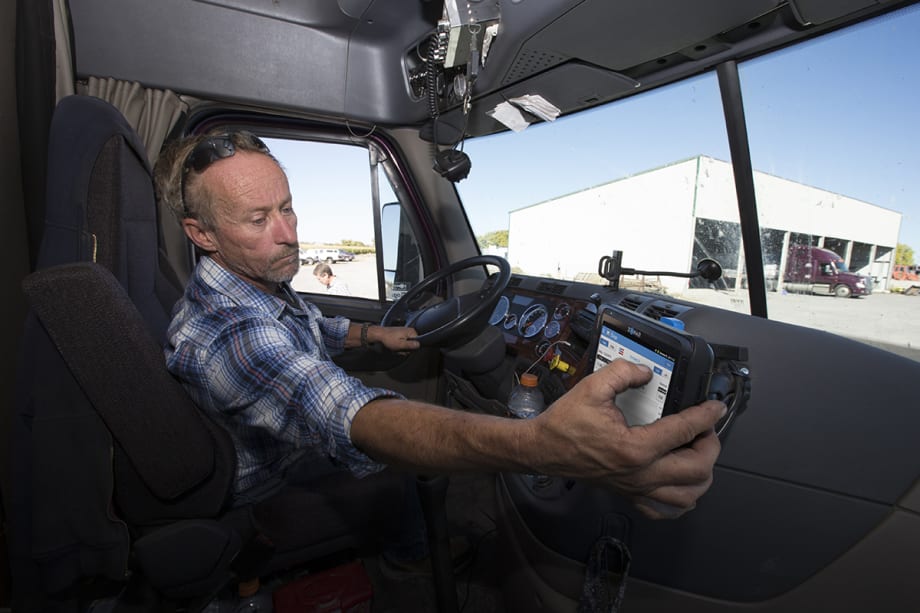
Data produced by ELD is pure gold for fleet managers.
Photo: Zonar
Those who believe that Electronic Logging Devices are productivity killers have yet to exploit their full potential. While ELDs do take away some flexibility, when combined with a transportation management system, they can provide insights and planning possibilities that reduce or eliminate the need for elasticity in time management.
Take for example a situation where traffic congestion adds 45 minutes to a trip that could have been accomplished in compliance with the hours of service rules. Prior to electronic logging, drivers would have continued with the trip and made the necessary adjustments afterward. ELDs do not allow that sort of flexibility, but the visibility they provide could have alerted the driver or a trip planner to the bottleneck and rerouted the truck. Or, a completely different trip could have been laid out had historic data on congestion in the area been considered in the planning stages.
Everything changed when the ELD rule came into effect in 2017. Now every truck has an ELD or some type of electronic log and the data produced by those devices is pure gold for fleet managers. And drivers as well, once they accept that the devices can help them earn more money too -- provided the fleet they work for is taking advantage of all the information the ELD provides.
There are so many small elements that contribute to the success of a trip that it's impossible to manage it all with pencil and paper. Business process automation offers vast new insights that just weren't possible previously. And the best thing is, all this visibility and potential for oversight is readily available to fleets of any size.
"A lot of carriers are coming to realize the true definition of capacity in this industry is available driver hours," says Mark Cubine, vice president of marketing at McLeod Software. "Better planning leads to greater productivity and that goes straight to the bottom lines of the fleet and the driver."
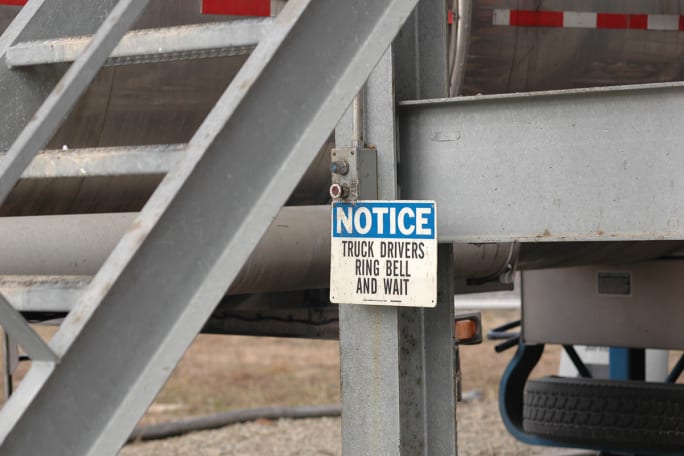
Successfully negotiating detention charges depends on having good data to back up the claim. ELDs provide irrefutable evidence.
Photo: Jim Park
Cubine believes detention time is the greatest thief of productivity in the industry right now, and reports and studies suggest it's getting worse. Data collected by carriers can help reduce losses due to detention, or at least steer fleets out of harm's way. If detention is inevitable, can you effectively negotiate and collect money for it, he asks?
"Shippers put up a lot of barriers and hoops you have to jump through in order to collect, so have you done everything possible, such as proving the driver arrived on time and warning the customer before the charges begin to kick in?" he asks.
If that doesn't work, customers with poor track records can be avoided, or surcharged because of the poor performance.
"One of our refrigerated carrier customers now has what they call the "dirty 30" list of particularly egregious detention offenders. They just won't go in there anymore or they charge extra for the load upfront," Cubine says. "We have also heard from some carriers with strong records for billing for detention that customers will unload them first because they don't want to be charged for detention. The ability to successfully fight detention is dependent on having good data from your ELD or some other mobile communication device integrated with a management system."
Driver Retention
Today, with retention having become nearly the top priority in every fleet, you can't afford to lose even under performing drivers. However, they can be coached into shape using data from their logging devices. Andrew Page, a logistics specialist at Turk Enterprises, a 45-truck reefer fleet based in St. Andrews, Manitoba, notes wryly that you couldn't learn much by scrutinizing paper log sheets because they all looked the same.
"For years we tried to figure out why some drivers were so much more productive than others, and of course try to improve the weaker performers," says Page. "Once you have their ELD data, it's very easy to see the differences."
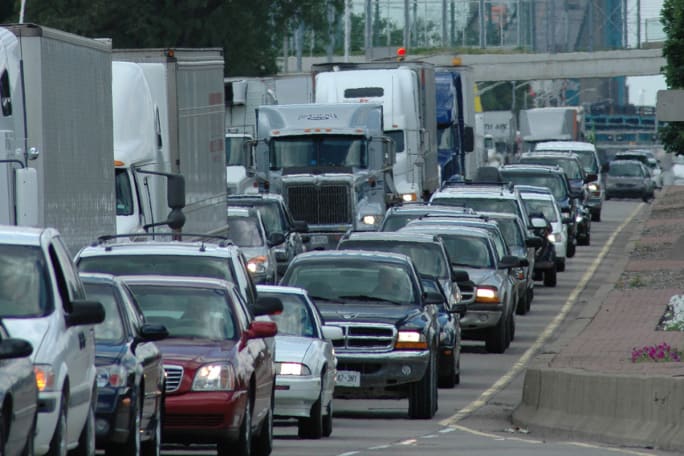
On top of real-time data, ELDs provide historic data on places to avoid at certain times of the day. Why send a driver into the middle of a traffic jam?
Photo: Jim Park
How does this driver structure his day versus the other guy? Where and when does he or she take breaks? Does he leave enough time to get through cities without getting caught up in traffic?
"You can see how much more time some drivers take to do the same job," he notes. "Obviously these are coaching opportunities that will help those drivers earn more by making them more productive. Once you frame it that context, they are much more willing to embrace change."
Information that flows from the ELD through the management software touches nearly every part of the operation -- from "quote to cash" as Cubine says. Load and trip planning can be improved using records from previous trips that establish travel time, dwell times, opportunities for backhauls, etc. Planners' jobs have been greatly simplified by automation that can reveal at the press of a button, exactly what a trip will cost in terms of fuel, wages and repositioning possibilities.
And with accurate and up to the minute HOS information, planners will know in advance is a particular load is good for a particular driver or not. There's nothing more irritating to a driver than having to take a reset on the road when they could have been at home. Want to improve retention? Pay more attention to drivers' available hours and upcoming scheduled downtime.
Automated Tasks
Productivity is obviously a big deal for drivers, but there's so much more you can do now with ELDs, telematics and management systems, from instant pass-through of proof of delivery from the cab to the billing department and right through to the customer. The invoice for a load can now be on the customer's desk before the driver has even left the parking lot. That won't render the billing department redundant, but they will have more time to pursue those problem accounts and shake down more customers for detention time.
Even routing and fuel purchase optimization can be automated, with the additional benefit of live weather and traffic updates for both the driver and the planners.
It's a small feature, but Isaac Instruments' fleet management solution can create temporary geofences based on address details to automatically alert dispatch and the customer when the truck breaks into fenced location upon arrival, or when it breaks out of the fence when leaving the customer. Alerts are sent to designated parties and it's all done with messages.
"That's just one less button to press for the driver," says Isaac Instrument's vice president of marketing, Jean-Sebastien Bouchard. "That doesn't sound like much, but Isaac worked hard to minimize the potential for driver distraction when designing their system. The driver of course can still send alerts as to when the unload begins and ends."

Timely alerts make it easier to be proactive rather than reactive. Customers can be notified of potential early or late arrivals so appointments can be rescheduled in advance.
Photo: Jim Park
There are, sadly, no silver bullets when it comes to improving productivity, just a multitude of small elements that can now be successfully managed because they are much more visible. The ELD was what set it all into motion for the smaller fleets that did not want to be burdened with complex and expensive satellite-based fleet management systems. Even fleets of five or 10 trucks can now enjoy the benefits of the data that has been there all along but has remained stubbornly elusive. Embrace your ELD and improve productivity.
More Safety & Compliance

From One Generation to the Next: How Mentorship Builds Safer Truck Drivers
After three decades in trucking, Harold Perry shares what he's learned about driver safety, mentorship, and helping the next generation build confidence behind the wheel.
Read More →
FMCSA Pauses Biennial-Update Enforcement Amid Motus Transition
Carriers whose updates were due on or after June 1 have more time, while FMCSA works to stabilize its new registration system and warns of phishing sites impersonating its new carrier registration system, Motus.
Read More →
ZF Expands Commercial Vehicle Push in North America
ZF is expanding its North American commercial-vehicle presence with new transmission applications, electrification, trailer technology and autonomous-driving systems.
Read More →
Truck Drivers Need More Than Another Alert
Fleets have more visibility into truck health, safety events, and driver activity than ever. The next challenge is turning all that information into useful guidance for the person who has to decide what to do next.
Read More →
Tesla Wants a Self-Driving Semi. Are Cameras Enough?
Could Tesla’s camera-only autonomous driving technology work on an 80,000-pound Semi? In this commentary, HDT's Deborah Lockridge takes a look at Tesla, Cybercab, and how autonomous trucks see the road.
Read More →
What DOT’s Automated Vehicle Strategy Means for Trucking
The U.S. Department of Transportation issued a new automated-vehicle strategy that outlines plans for driverless-truck regulations, cross-state freight corridors, and federal safety standards.
Read More →
NYC Expands Speed, Pedestrian Safety Tech Across Fleet
New York City is expanding intelligent speed assistance and pedestrian-alert systems across its municipal fleet, moving the technologies from pilot programs into vehicle procurement and retrofit requirements.
Read More →
FMCSA Removes 110 Truck Driver Training Schools from Certified ELDT List
Federal regulators also are targeting more than 160 additional training providers and launching a nationwide audit of third-party CDL skills testers as part of a broader crackdown on trucking fraud.
Read More →
Beyond DOT Compliance: What Makes a Trucking Fleet Truly Safe?
A trucking fleet can follow every rule and still make unsafe decisions. The real test comes when safety conflicts with freight, productivity, or cost.
Read More →
Hours of Service Pilot Programs: FMCSA Readies for 2027 Rollout
Two pilot programs could eventually reshape hours-of-service rules, giving truck drivers options to pause their 14-hour clock or use longer split sleeper rest periods.
Read More →