




Cutting the Hidden Fat May Boost Morale and the Bottom Line
Cost cutting efforts typically focus on the obvious targets: travel, sales meetings, advertising, overtime, etc. But there may still be hidden fat that can be cut without causing as much pain as these obvious targets
Cost cutting efforts typically focus on the obvious targets: travel, sales meetings, advertising, overtime, etc. But there may still be hidden fat that can be cut without causing as much pain as these obvious targets.
There are two ways to look for hidden fat: hard saves and soft saves. Hard saves track directly to the bottom line. Subletting unused space is a typical hard save. A soft save is indirect and my not be so easy to trace to the bottom line. For example, establishing standard work for a key process may eliminate systemic errors and ultimately reduce total operating costs.
However, it may be hard to see an economic benefit, especially if other wastes in the business counteract the savings attained. Let's review some key areas of potential savings for applicability to your business:
Hard saves:
•Space. Is every square foot really required? Is some premium space being taken up by items that can be stored in lower cost space somewhere else? Typically, a good lean effort can reduce space used by operations by about 30%, due to better layout and a '5S' effort. Space saved can perhaps be used for a new product or service opportunity.
•Utilities. Are there special rates that could benefit your business? Are lights being kept on when they don't have to be? Are lights being used in areas that have plenty of natural light? Could temperatures be modified a couple more degrees? I recently heard about a superstore in a rural area of the US that turned off all lights in the store and relied on skylights. Is there a way to recycle corrugated, pallets, etc for extra cash? Old PC's can be recycled for a credit.
•Maintenance costs for breakdowns, emergencies. A preventive maintenance program should eliminate breakdowns and emergencies that require premium cost services, like overtime and weekend rates to fix. If you have premium cost services, take a look at your preventive maintenance program. Are there gaps to close?
•Premium inbound and outbound freight. Are you tracking premium freight costs? Is there a corrective action program to prevent the reoccurrence of any premium freight? How does this affect overtime?
•Efficiency. Do you have a way to measure efficiency trends reliably? If you are using standard labor hours to measure efficiency, are the labor hours correct? If the trends are not improving, do you have a program to get them moving in the right direction?
•OEE (Overall Equipment Effectiveness): this measure tells you whether your equipment is available when you need it, performing up to speed, and delivering the quality level expected. OEE is expressed as a percentage, and typically rates about 60-65%; world class would be 85%. If you don't know your OEE, it might be worth it to baseline it and see if there is an opportunity for improvement.
Soft Saves:
Soft saves or cost avoidance activities show up directly on the bottom line. For example, if you find a way to process orders twice as fast and don't reflect this in your staffing level, there won't be a bottom line impact.
For that matter, if you transfer an under utilized order processor to fill an open position in another area, that may not count as a save in some systems. The real issue with soft saves is whether a saving you make in one area is being counteracted by a new inefficiency in another area.
A suggestion regarding soft saves is to track them separately, to encourage people to do the right thing. If the soft save log shows very positive results that can't be reconciled with the financials, then it is time to look for the source of margin leaks that must be occurring.
Here are some potential soft savings opportunities:
•Environmental, Health, and Safety improvements. You may be able to get a reduction in insurance rates as a result of EHS improvements. Perhaps your insurance company can help with a program.
•Reduction in the loss of key employees. A seasoned employee may have knowledge that may be extremely difficult to replace, and the time and money lost in recruiting can be substantial so retention of key employees can save money.
•Productivity of new employees. How long does it take to get a new employee fully up to speed? How much time is wasted "learning the ropes" that could be saved with standardized work for offices and warehouses? If your business has high turnover or many temps, this can be a surprisingly large opportunity.
•Administrative rework. How much time is wasted in administrative processes due to corrections and delays? Many of these inefficiencies are fairly easy to correct.
•Copier waste. I have never seen a photocopier that didn't have a trash container for next to it. Why are there so many trashed copies? Why doesn't any body care? This is waste of paper, toner, electricity, and a machine. Perhaps an imaginative employee could be asked to root through the trash container and analyze the kinds of items being scraped. It wouldn't be surprising if the amount of scrap decreased if the staff noticed that somebody was going through it.
•Unused reports. For some reason computer reports take on a life of their own and people are reluctant to stop printing them. Perhaps all reports should only be printed on demand. It might be fun publicize the total number of pages printed and offer the staff a reward like free ice cream sundaes when the number of pages drops 30%.
•60-minute meetings. Perhaps because of convention, people think meetings should last 30 or 60 minutes and schedule them as such. Is there any reason for this, really? What if people agreed to have 50-minute meetings? Does anybody really believe that the same work wouldn't get done in 50 instead of 60 minutes? How happy would employees be if they saved 60-80 minutes a day of meeting time?
Cutting out hidden fat may suggest pain to many people, but how many of the items discussed above really sound like they would cause suffering? Getting new employees up to speed faster? Eliminating safety hazards? Eliminating the need for premium cost maintenance?
If the elimination of waste viewed as a means to a more energetic way of doing business, cutting out hidden fat can boost morale as well as the bottom line. Think about saving time... and the dollars will always follow.
More Fleet Management

Long-Awaited Canadian Border Bridge to Open in Detroit
For trucking, the bridge opening should offer immediate improvements in efficiency and reliability, with new customs facilities, expanded inspection capacity, and direct freeway-to-freeway connections.
Read More →
Aurora Rolls Out Next Generation of Driverless Trucks for Commercial Freight
Aurora's latest autonomous trucks it's rolling out with International feature lower-cost hardware designed for a million miles as the company expands commercial driverless freight operations across the U.S. Sun Belt.
Read More →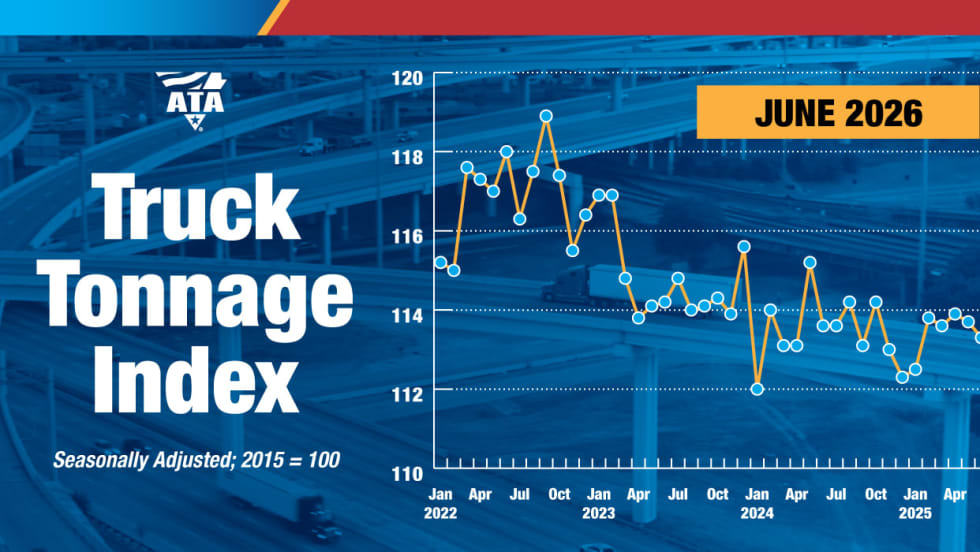
Freight Tonnage Down, Rates up, as Lower Capacity Powers Trucking Recovery
The recovery from the freight recession continues to be driven by reduction in capacity rather than by increased demand.
Read More →

Think Your Trucking Fleet Isn't Using Much AI? Think Again
Shadow AI — the use of unauthorized artificial intelligence tools at work — is becoming increasingly common, putting sensitive company data at risk. Learn how trucking fleets can protect sensitive data while embracing AI.
Read More →
ArcBest Consolidates Brands, Cuts Workforce
The company will bring three business units under the ArcBest brand, eliminate about 2% of positions, and expects the changes to generate $40 million in annual savings.
Read More →
Trucking Fleets Faced Record Operating Costs During Third Year of Freight Recession
ATRI's annual operational cost report shows carriers trimmed fleets, delayed equipment purchases, and ran older trucks as expenses continued to outpace freight rates.
Read More →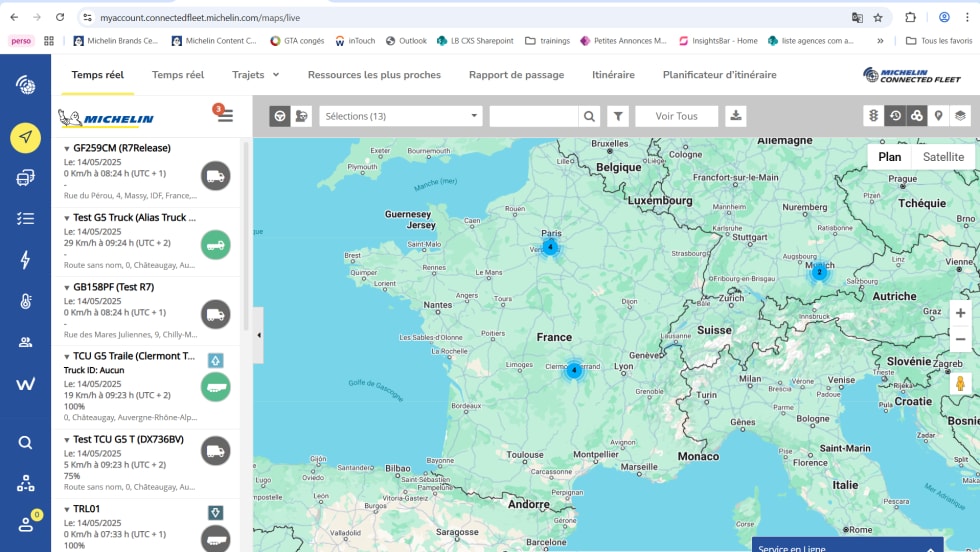
Michelin Adds AI Assistant to MyConnectedFleet Platform
Michelin’s new generative AI tool delivers instant fleet insights, helping managers analyze fuel use, tire maintenance, vehicle status, and operational performance without manually creating reports.
Read More →
LytxOne Platform Now Features AI, Compliance, and Asset Tracking Tools
New enhancements add AI-powered insights, asset tracking, compliance automation, and configurable privacy controls to Lytx's all-in-one fleet management platform.
Read More →
July Imports Poised to Set Container Record
The National Retail Federation projects July container imports will surpass the pandemic-era record as shippers frontload freight ahead of expected August tariff increases.
Read More →
HDT Announces 2026 Truck Fleet Innovator Finalists
From AI and fleet electrification to safety, operations, and leadership, these HDT Truck Fleet Innovator finalists are changing how trucking gets done.
Read More →