




Cutting Fleet Fuel Costs in the Purchasing Process
Read about the ways fleets can cut fuel costs in the purchasing and management process, rather than just by reducing fuel consumption.

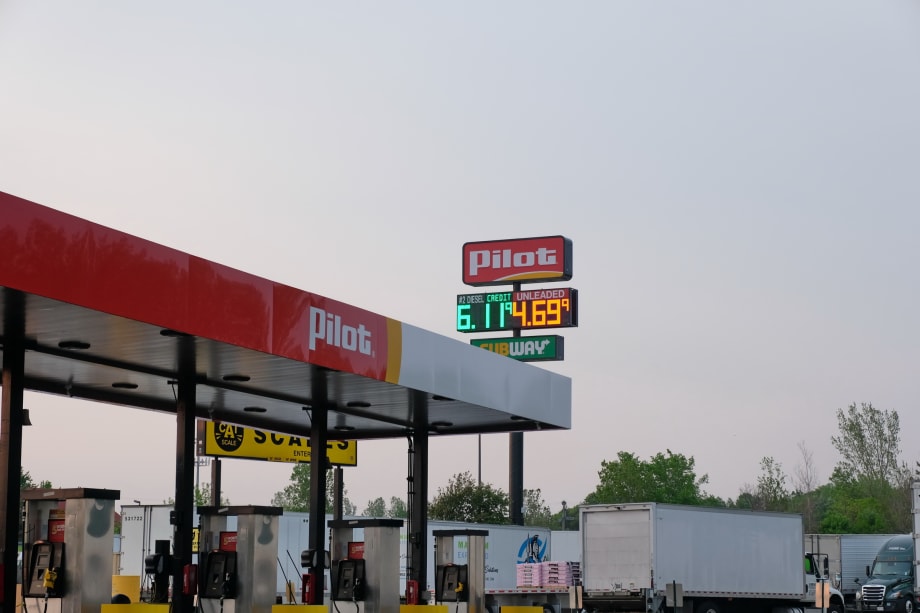
Negotiating discounts is one of the obvious ways to lower the price of the fuel you're buying. To get started, you'll need to know how many gallons you’ll be buying.
Photo: Jim Park
There are two ways to save on fuel. The first is to burn less of it by spec’ing efficient vehicles and training and motivating drivers to ring up higher MPG performance.
The other way is to leverage management techniques and technology solutions to buy fuel for less in the first place.
How to dive into the management methods and tech solutions that can help cut your fuel spend overall was the focus of HDT’s webinar, “Beyond MPG,” produced by the editors of Heavy Duty Trucking and moderated by HDT Business & Washington Contributing Editor David Cullen.
Speakers Howard Abrams, president of Sokolis Group, and Brian Antonellis, senior vice president of fleet operations for Fleet Advantage, discussed various ways that fleets can cut their fuel costs in the purchasing and management process, rather than just by reducing fuel consumption.
“Negotiating discounts is one of the obvious ways to lower the price of the fuel you're buying,” said Howard Abrams of Sokolis Group, which specializes in fuel management and consulting services.
“Start by knowing how many gallons you’ll be buying. That may sound simple, but a lot of folks rely on accounting systems, [profit and loss], and you're looking at the cost. You're looking at dollars, and that can fluctuate with the market.
"To know how much fuel you're buying, you may need some additional systems to pull the gallons together and see the trends in different locations to summarize those gallons, rather than just the cost
Hold Up Your End of Fuel Discount Agreements
“You also want to understand who your top suppliers are and where you’re buying that fuel from them so you are in a better position to start the negotiating process,” Abrams said.
"Keep in mind that once you have all that information, and you've negotiated to reach an agreement, expect the supplier to be looking for you to hold up your end of the deal. And that means continuing to purchase the gallons that you've been buying from them, or more.”
Abrams also pointed out that often suppliers give a negotiated deal because they're looking to expand their business with you. He said to help with that, the fleet should take a look at its systems and figure out whether or not they’ve got good information for the volume and not just the amount in terms of dollars of what is being purchased.
Once a negotiated deal is in place, it’s important to communicate that to drivers and make sure that they're adhere to new policies in regards to where you want them to be buying fuel, he says.
The Impact of Longer Trade Cycles on Fuel Savings
Brian Antonellis of Fleet Advantage, which provides leasing and lifecycle management solutions to fleets, delved into how extending trade cycles for trucks affects fuel costs.
“With the extension of life cycles, we're starting to see the impact of what an older truck does when you run it too long,” he said.
For example, he said, a 500 tractor fleet on a five year trade cycle and getting about 8.4 MPG on an eight-year cycle would get only 7.9 mpg.
“The gap created from running older vehicles and running them longer results in an increased fuel spend and increased carbon output at essentially more cost,” he said.
With that scenario in mind, he offered a couple of recommendations.
“Understand the fuel mpg on tractors new and older works,” he said. “As you enter the end of its lifecycle, you'll typically see fuel degradation, it's no longer getting that 8.4 mpg; it’s starting to drop. As we think about how to manage that lifecycle, we know we can't do it any longer, one year out. So, we’ve got to have a good one-, three-, and five-year plan for how to buy equipment, procure equipment, get it on order.
“The essence of this is we need to be ordering more than one year out and that running trucks past the 500,000 mile mark, we're going to see fuel degradation,” Antonellis continued. “And as your fleet ages because you can't get new equipment, it's going to cost you more.
"So, there are real incentives for fleets to manage that lifecycle. And when we put five- and eight-year life cycles out there, I'm not saying that those are proper or improper life cycles. It's really driven by the vocation of the vehicle. How are you using it? How many miles per year do you put on it?”
Antonellis also touched on how when extending the truck’s trade cycle, the necessary maintenance will change.
“If you had a truck that you typically kept for four or five years, and now you've been required to keep that truck for six or seven years, the maintenance that you perform on that truck is going to be different,” he said. “You have key components that were not at the end of its lifecycle in the four or five year targeted range, but they are now on at the end of their lifecycle as you stretch it out to possibly five, six or seven years.
"It’s critically important that as you extend your lifecycle, if you're not able to get new equipment, that you understand it's still going to cost you more in fuel and maintenance costs.”
Leverage Telematics to Save Fuel
Abrams also spoke about leveraging telematics to help provide control over fuel spend.
“Using telematics, there's GPS data that's available that comes off of that, that tells you where your vehicle is,” he explained. “And with those data points, there's now systems in place that let the fuel card providers sync up with your GPS data.”
“That means you can actually determine whether or not your vehicle was at the fueling location at the time — alerts can be sent out if there's a fuel card transaction, and the GPS data where the vehicle was doesn't line up,” he added. “That gives the fleet some more control to help spot any type of fraudulent activity.”
However, he advised that the main challenge with this is there are a lot of “false positives.”
The speakers also touched on a range of additional topics, including:
Negotiating fuel discounts
Determining fuel surcharges
Auditing fuel bills
Deploying fuel cards
Selecting from on-site, mobile fueling, truckstops, and cardlocks
More Fuel Smarts

How Volvo Updated Its D13 for EPA 2027 [Watch]
Volvo’s updated D13 promises lower emissions without sacrificing performance or fuel economy. Take a closer look at what changed inside the engine in this HDT Spotlight video.
Read More →
Diesel Price Spike Shortens Payback for Natural Gas Trucks, Report Says
Energy Vision estimates fleets could recover the higher purchase price of an RNG-fueled Class 8 tractor in 1.3 to 2.8 years under current fuel-price scenarios.
Read More →
Calstart Becomes Catalyst Mobility, Reflecting Broader Focus
Calstart is now Catalyst Mobility, reflecting the nonprofit’s growing national role in clean transportation, including zero-emission trucks, infrastructure and incentive programs.
Read More →

Record Diesel Prices Squeeze Trucking Fleets
Average U.S. diesel prices have climbed to nearly $6 a gallon, surpassing the 2022 record as tight refinery capacity and Middle East disruptions keep fuel costs elevated.
Read More →
How Fuel Delivery Shapes Engine Performance
Fuel delivery depends on more than what happens at the injector. For fleet, maintenance and technical professionals, looking at the full path from pump to injector can provide useful context for understanding engine performance.
Read More →
East Coast Port Launches $45M Electric Truck Push
The Port Authority of New York and New Jersey announced millions in incentives for zero-emission drayage trucks, yard tractors, and new charging hubs near the port.
Read More →
California Bill Could Shed Light on Electric Truck Prices
Why do battery-electric Class 8 trucks remain so expensive? A California bill headed to Gov. Gavin Newsom would give fleets and state agencies more visibility into what manufacturers charge.
Read More →
Detroit Opens Orders for EPA 2027 Engines
Detroit isn’t starting from scratch to meet EPA 2027 diesel emissions standards. Its Gen 6 DD13 and DD15 engines keep much of today’s platform while updating the fuel and aftertreatment systems.
Read More →
Zero-Emission Truck Corridor Planned for West Coast
California, Oregon, Washington, British Columbia and Baja California are coordinating plans for truck charging and hydrogen fueling from Canada to Mexico.
Read More →
A Closer Look at Kenworth’s Electric T880E Vocational Truck [Video]
Learn more about Kenworth's T880E battery-electric vocational truck at the Paccar Technical Center, including its range, applications, upfitting considerations, and PTO options, in this HDT Spotlight video.
Read More →