




Related: Nikola Raises $100M to Scale Hydrogen Truck Development
Commentary: Is Hydrogen Fuel the Future?
With Nikola trucks launching in 2020 and in full production by 2021 and hydrogen fuel stations popping up across the country, hydrogen may become a serious factor for trucking sooner than we think.
by Rolf Lockwood
September 5, 2018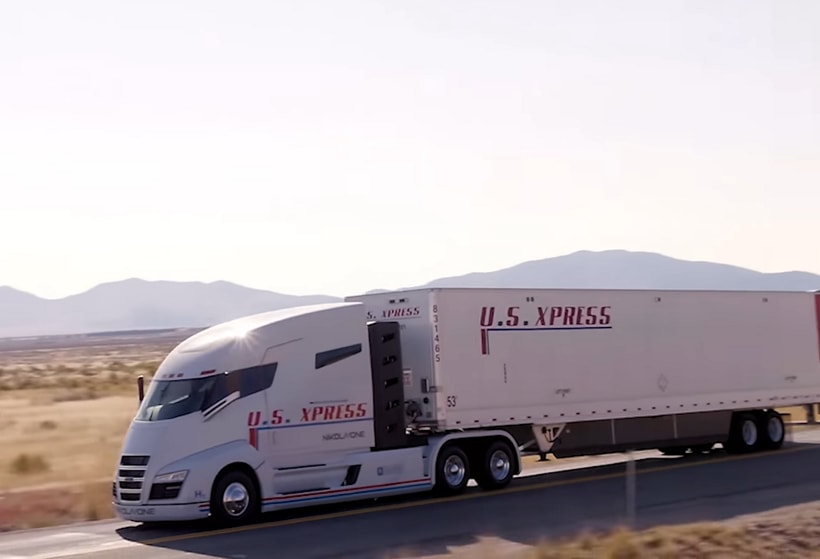
With Nikola launching its first hydrogen fuel cell trucks in just a few years, and passenger car companies testing hydrogen-fueled models around the world, hydrogen may become a serious factor sooner than we think.
Photo courtesy Nikola Motors
3 min to read
She swore at me, my friend did, when I told her I was writing this column about hydrogen fuel cells. I knew she would, because she runs a small fleet of tank and pumper trucks in the oil fields of both Texas and Alberta. Makes good money in the process, too.
Hydrogen, in her mind, threatens that livelihood, because it signals the end of fossil fuels… sort of. The reality is that her 16 trucks will be keeping the oil wells going for a very long time to come.
That said, hydrogen may start to become a serious factor in our driving lives sooner than we think, in both cars and trucks. Nikola Motor Company’s fuel-cell trucks aside, passenger cars are leading the way here. Toyota, Hyundai, and Honda all have commercially available fuel-cell models, and fuel-cell growth in the transportation sector nearly tripled last year. There were nearly 3,500 fuel-cell electric cars on the road in the U.S., primarily in California, through the end of 2017.
As of last year’s end, there were 40 retail hydrogen stations and nine non-retail stations in the U.S., but 45 (plus 11 private fleet facilities) in Germany alone. As many as 400 service stations are planned there by 2023 as part of the H2 Mobility Joint Venture run by Daimler, Linde, Shell, Total, and others. Europe has a clear lead over North America, not least because the German government very actively supports infrastructure development. But Japan is more advanced still, with 91 public outlets.
Enter Nikola. It’s really on the move, according to a press release last month. Targeting $200 million in investment funds, Nikola CEO Trevor Milton announced that more than $100 million had already been raised and funded in August.
“So far this year we have kicked off plans to build the largest hydrogen network in the world with Nel, secured a massive 800-truck order commitment from Anheuser-Busch, developed the most energy-dense battery system on the market with almost 400 watt hours per liter, engineered a 240-kW fuel cell, kicked off electric vehicle stability controls and electric ABS with WABCO, designed a thermo-management and HVAC system with Mahle, finalized the most advanced Class 8 independent suspension on the market with Meritor, relocated our company to Arizona to build our new 150,000-square-foot headquarters, and now closed on $100 million.”
Nel ASA may be the most important element. Since its foundation in 1927, the Norwegian company has been developing hydrogen plants, so Nikola has partnered with a seriously experienced outfit. Its capabilities cover the entire value chain, from hydrogen production technologies to manufacturing of hydrogen fueling stations, providing all fuel-cell electric vehicles with what it claims to be “the same fast fueling and long range as conventional vehicles today.”
By 2028, Nikola plans to have more than 700 Nel-built hydrogen stations across the U.S. and Canada. The first 14 stations will be up and running by 2021, we’re promised.
Give these guys credit: They’re really pioneering hydrogen-electric renewable technology. With a range of between 500 and 1,200 miles and refill time within 20 minutes, Nikola trucks will be in fleets beginning in 2020 and in full production by 2021, the company says. It adds that it has nearly $11 billion in pre-order reservations.
Nikola is going to be a force, I predict. Maybe my friend really should be concerned.
Subscribe to Our Newsletter
More Fuel Smarts

How Volvo Updated Its D13 for EPA 2027 [Watch]
Volvo’s updated D13 promises lower emissions without sacrificing performance or fuel economy. Take a closer look at what changed inside the engine in this HDT Spotlight video.
Read More →
Diesel Price Spike Shortens Payback for Natural Gas Trucks, Report Says
Energy Vision estimates fleets could recover the higher purchase price of an RNG-fueled Class 8 tractor in 1.3 to 2.8 years under current fuel-price scenarios.
Read More →
Calstart Becomes Catalyst Mobility, Reflecting Broader Focus
Calstart is now Catalyst Mobility, reflecting the nonprofit’s growing national role in clean transportation, including zero-emission trucks, infrastructure and incentive programs.
Read More →

Record Diesel Prices Squeeze Trucking Fleets
Average U.S. diesel prices have climbed to nearly $6 a gallon, surpassing the 2022 record as tight refinery capacity and Middle East disruptions keep fuel costs elevated.
Read More →
Sponsored•September 9, 2026
How Fuel Delivery Shapes Engine Performance
Fuel delivery depends on more than what happens at the injector. For fleet, maintenance and technical professionals, looking at the full path from pump to injector can provide useful context for understanding engine performance.
Read More →
East Coast Port Launches $45M Electric Truck Push
The Port Authority of New York and New Jersey announced millions in incentives for zero-emission drayage trucks, yard tractors, and new charging hubs near the port.
Read More →
California Bill Could Shed Light on Electric Truck Prices
Why do battery-electric Class 8 trucks remain so expensive? A California bill headed to Gov. Gavin Newsom would give fleets and state agencies more visibility into what manufacturers charge.
Read More →
Detroit Opens Orders for EPA 2027 Engines
Detroit isn’t starting from scratch to meet EPA 2027 diesel emissions standards. Its Gen 6 DD13 and DD15 engines keep much of today’s platform while updating the fuel and aftertreatment systems.
Read More →
Zero-Emission Truck Corridor Planned for West Coast
California, Oregon, Washington, British Columbia and Baja California are coordinating plans for truck charging and hydrogen fueling from Canada to Mexico.
Read More →
A Closer Look at Kenworth’s Electric T880E Vocational Truck [Video]
Learn more about Kenworth's T880E battery-electric vocational truck at the Paccar Technical Center, including its range, applications, upfitting considerations, and PTO options, in this HDT Spotlight video.
Read More →