




Are Your Wheel Bearings Adjusted Properly?
Good and bad in the wheel-bearing world is divided by a very fine line - about the width of two human hairs, in fact. That's not much of a margin considering the potential consequences of improper adjustment

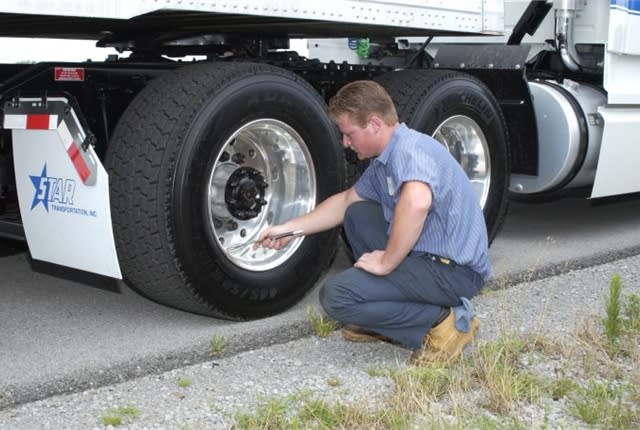
With tolerances no more than the width of human hairs, there's little room for guess work when torqueing wheel bearings.
Photo courtesy Michelin
Good and bad in the wheel-bearing world is divided by a very fine line - about the width of two human hairs, in fact. That's not much of a margin considering the potential consequences of improper adjustment.
Loose bearings will cause the wheel to run in negative camber (the top of the wheel tilts inward from the vertical centerline of the wheel). The classic and obvious signs of loose bearings include irregular wear on the inside edge of an inside dual tire or irregular cupping on steer tire shoulders. Other more subtle indicators of loose wheel bearings include premature failure of the wheel seals, persistent intermittent ABS fault codes, and brake lining wear that appears as tapered wear on the inside edge of the top shoe and the outside edge of the lower shoe.
Unfortunately, those symptoms take time to develop. You could have a problem, but you may not become aware of it for thousands of miles. Uneven wear of brake lining, for example, won't prevent the truck from stopping. It will, however, degrade brake performance because you're lessening the contact patch between the lining face and the drum. With disc brake rotors, the less-than-true running of the wheel and rotor relative to the calipers and the pad will cause one pad to remain in contact with the rotor, eventually wearing both parts prematurely.
It's the same with tires and the ABS tone or exciter ring. With the wheel flopping around on the end of the axle, the inside edges of the tires are going to wear prematurely. If the tone ring isn't in very close proximity to the sensors, the light will come on, prompting a fault code.
"It's hard for some to conceive that such small a amount of bearing endplay can have such a dramatic impact on all those other components," says Tom Runels, engineering manager for drum brakes at Bendix Spicer Foundation Brake. "Even if you double the TMC's recommended endplay of 5 thousandths of an inch, 10-thou would still be an almost imperceptible amount of movement without measuring it."
Therefore, the matter is often overlooked. "The truth is, people usually become alert to a problem only when it becomes visibly obvious," he says. "Lining wear, tire edge wear and ABS faults are both visible and obvious. Loose bearings usually aren't."
Process and procedure
Setting the correct tightness (amount of end play) requires diligence on the technician's part, and of course adherence to procedures. The preponderance of the problems mentioned above should be a hint that bearing adjustment isn't always done correctly.
It seldom is, according to Mike Beckett of M.D. Alignment in Des Moines, Iowa, who claims that no less than 80% of trucks and trailers, new and in-service, have loose wheel bearings.
The difference between too loose or too tight is between one thousandth and five thousandths (0.001 - 0.005) of an inch, according to the Technology & Maintenance Council's standards for wheel bearing adjustment, outlined in Recommended Practice 618. To achieve the desired amount of end play, RP 618 offers a nine-step process. If all nine steps are followed, you'll get there. If not...
"First of all, far too few shops use a dial indicator to verify end play," Beckett says. "Secondly, they follow RP 618, but usually leave out Step 8 - the dial indicator part. They torque the wheel nut on, back it off, torque it again, and then back off a quarter or half a turn of the nut. That's where they get into trouble."
The torque values and suggested back-off turns indicated in RP 618 assume a lot: that you're using a calibrated torque wrench, that the spindle threads are in like-new condition and haven't stretched or deformed, and that no contaminant is on the thread face that could influence the torque. Lubricant spilled on the threads will affect torque, as will rust and dirt. So, how certain are you that the 200 foot-pounds recommended by RP 618 in the initial tightening is actually 200?
The second problem Beckett points to is the travel of the nut across the thread pitch. On a 12-threads-per-inch spindle, one full turn of the nut will move the bearing 0.083 inch. If you back it off one-fourth of a turn, it will move away from the bearing about 0.020 inch - or about four times RP 618's maximum recommended end play of 0.005 inch.
The additional "slack" is there to compensate for the weight of the truck that will soon be applied to the bearing, says Mark Stangl, sales manager at Timken. "The weight of the truck, when the wheels are on the ground and the bearings are loaded, will push the rollers up into the raceway," he says. "When the truck is up a jack, the 50 foot-pounds of torque applied in Step 4 of RP 618 does the same thing. When you back it off, you're freeing up the bearing to accommodate the weight."
If the technician stops there, the problems will begin. "You could meticulously follow the first seven steps in RP 618, but you still won't know exactly where you are if you don't follow through and use the dial indicator to verify the final amount of end play," Stangl says. "All the variables in there could easily compound and leave you outside the acceptable range."
Perils of preload
Loose wheel bearings aren't the end of the world. It's a little annoying and inconvenient at times, and costly in terms of tire wear, leaky seals, etc., but short of having the wheel come right off, there's little real threat to a loose wheel bearing.
On the other hand, excessive preload often will cause a bearing to fail within a few hundred miles. And that could be part of the problem. Techs reluctant to over-tighten a wheel bearing may err on the side of caution, preferring a slightly loose bearing to one that is too tight. Nobody wants a wheel-off occurrence.
Preload - the opposite of end play - is where there is no hub movement at all relative to the axle. In a perfect world, the bearing would be loaded so there is zero endplay. But Stangl says preload cannot be measured, so it can't be determined that the bearing isn't in fact dangerously tight. (Rolling torque is an option, but that has its own set of variables.)
"The one- to five-thou range recommended by RP 618 is a compromise between too loose and too tight," Stangl says. "At zero, we're into preload and we can't measure that. Between zero and one thou, we could be measuring deflection and still be in preload. Between one and five, we know the bearing is not preloaded, and it's not too loose that it will cause other problems downstream."
Setting wheel bearings correctly requires diligence on the technician's part, and of course adherence to procedures and the right tools. It wouldn't be too much of a stretch to suggest this isn't always the case. Where there's literally a hair's breadth - OK, maybe two or three, depending on how thick your hair is - between right and wrong, can you really afford not to do it right?
Related: Wheel-end Maintenance Saves Tires, Brakes
More Maintenance
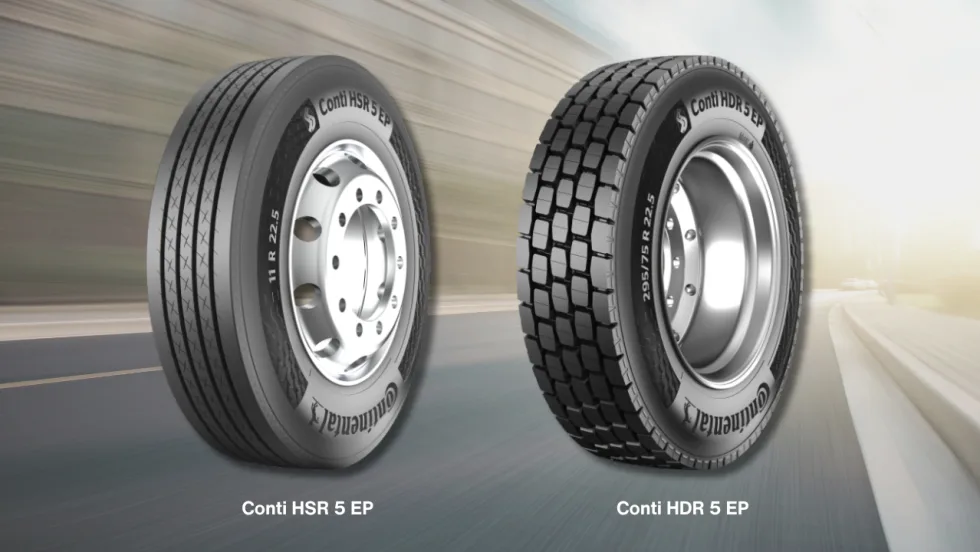
Continental Introduces New Regional Truck Tires
Continental says its new Generation 5 steer and drive tires for regional operations offer longer tread life, with estimated mileage gains of 22% and 19%, respectively.
Read More →
How AI Can Help Your Techs’ Efficiency
The technician shortage isn't going away, and no single fix can close the gap on its own. Trent Broberg makes the case that AI's real job in the shop is protecting the billable hours and job satisfaction of the techs you already have, not asking them to work faster.
Read More →
Color Match Smarter: Tools That Restore & Perform
For fleet managers and collision repair professionals keeping heavy-duty trucks on the road, getting the color right the first time isn't just about appearance — it's about efficiency, turnaround time, and bottom-line results. Discover how today's digital color tools are transforming the repair process from guesswork to precision.
Read More →


Wrong Repair Prompts Recall of Freightliner, Western Star 4x2 Trucks
DTNA is recalling more than 2,400 trucks that received an incompatible software fix instead of the hardware repair required to address brake valve corrosion.
Read More →
Truck Drivers Need More Than Another Alert
Fleets have more visibility into truck health, safety events, and driver activity than ever. The next challenge is turning all that information into useful guidance for the person who has to decide what to do next.
Read More →
The Maintenance Checks Trucking Fleets Should Prioritize Before Fall Freight Picks Up
Making it through August isn’t the same as being ready for the next several months of operation. Find out what systems may have suffered from summer heat and need to be checked out before fall.
Read More →
What Three Fleets Are Doing Differently When Buying Truck Parts in 2026
With freight improving but costs still climbing, fleet maintenance executives explain how they're balancing price, quality, and supplier relationships.
Read More →
Paccar Recalls 2027 Trucks Built This Summer for Possible Electrical Problem
The nearly 6,000 Kenworth and Peterbilt trucks in the recall could potentially lose engine power, among other things.
Read More →
Could New Engine Oils Mean Longer Drain Intervals?
New CL-4 and FB-4 engine oils are coming in 2027. Foodliner wants to know whether they could support longer oil drains, but it won’t change its maintenance schedule without data from its own trucks.
Read More →
Brake Safety Week to Focus on Drums and Rotors
Commercial vehicle inspectors are focusing on truck brakes during CVSA's Brake Safety Week, August 23-29.
Read More →