




5 Reasons to Outsource your Tire Maintenance
Tire maintenance is like preparing a fine meal. Unless you really like cooking and are very good at it, it's far easier – and safer sometimes – to visit a nice restaurant. Here are five reasons you might want to consider outsourcing your tire work.

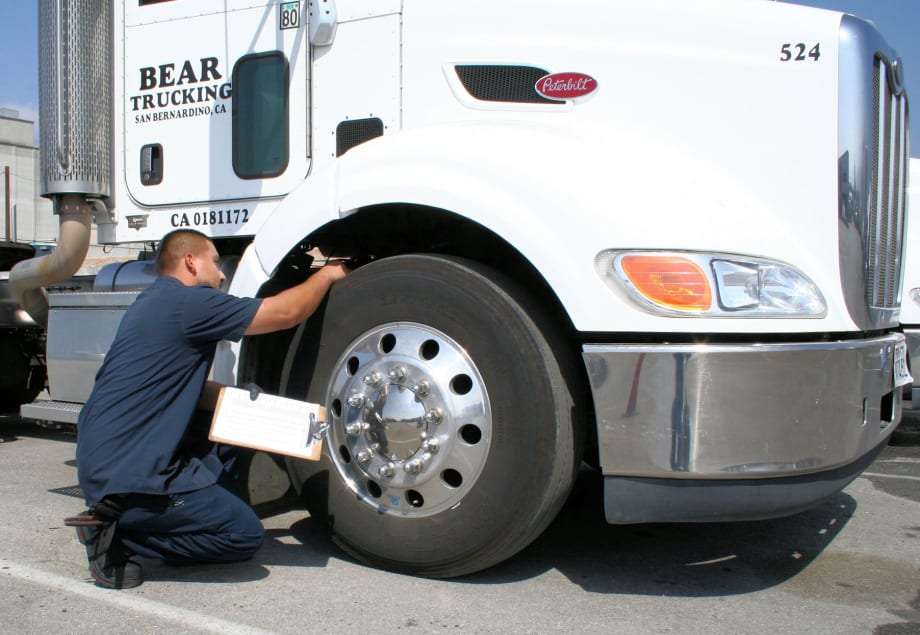
Service providers come to your yard or to remote yards, and do tire checks, pressure audits.
Service providers come to your yard or to remote yards, and do tire checks, pressure audits.
Tire maintenance is like preparing a fine meal. Unless you really like cooking and are very good at it, it's far easier – and safer sometimes – to visit a nice restaurant. At least when it comes to taking care of your tires, you don't have to dress up for the occasion.
Don't laugh. Successful tire maintenance isn't much different from cooking on a near-expert scale. You need the right ingredients, the right tools, the right skills, and you have to like doing it. Fleets muddle through using existing staff – likely not experts in tire care – and they carve off a few hundred square feet in the corner of the shop and call it a tire bay. Throw in a few tools and you have enough to handle the odd emergency as well as the routine tire and wheel mounting chores.
And you can't ignore the art form of cooking or tire maintenance. Chefs are called chefs, not cooks, for a reason. So it is with tire service technicians, minus the tall hat. These people know tires. You'll pay a little more for their expertise, but it's not unlike the difference between The Outback and Morton's.
Still want to tackle tires yourself? Go out for a nice dinner and give it some thought. Here are five good reasons why outsourcing your tire program will help you sleep better.
1) Reduce Overhead, Risk & Liability
Tire management can be risky business. There's heavy lifting involved and a sometimes volatile work environment. In short, people can and do get hurt in tire service. You can reduce your risk and exposure by outsourcing the work.
"Fleets can reduce the full-time-equivalent number of employees who do that work at your location by having a vendor come onsite and do it," says Terry Clouser, former director of maintenance at UPS, now retired after 27 years, and one of HDT's Truck Fleet Innovators for 2011. "Outsourcing can reduce your liability insurance too, along with the chances of an accident and your exposure to OSHA-related citations and violations."
As well, you can reduce the shop space needed for all the related equipment and space for inventory (good and bad tires). By reducing that space, you'll also reduce your utilities expenses. And there's no need to buy and maintain all the related equipment and tools and maintain employee certifications.
Clouser says it's the way to go for large and small companies. "It eliminates at lot of risk and exposure, as well as up-front non-productive costs, such as workers' comp, overhead, etc."
2) Full-Service Maintenance
Outsourcing tire maintenance is like having you own people do it, only better. Unless you have the resources to run your own retreading facility, wheel reconditioning shop, tire balancing and repair facilities, you aren't full service.
David Simpson is the corporate transportation and safety Manager at BWI Companies of Texarkana, Texas, a private fleet serving the company's network of garden centers, farm & feed stores, hardware stores, and grocery stores. Simpson has been using a single tire service vendor since the 1970s.
"Heintschel Tire of Texarkana does most of our tire maintenance at its main distribution center," Simpson says. "We have our own mechanic who does fleet checks and other light tire work, but Heintschel Tire does all the heavy lifting, like repairing and keeping track of our tires."
Simpson says Heintschel (part of Goodyear's national tire service network) comes over once a week and picks up tires and wheels that need work and returns the lot they picked up the week before. All the tires are tracked and inventoried, and the work done recorded and entered into the tracking system. They even do steel wheel restoration right on site.
"Whenever we dismount a tire and wheel, the wheel is stripped down, sandblasted and repainted, and a new valve core installed," Simpson says. "It's cheap compared to a leaking tire because the bead won't seal properly. That sets you up for the possibility of a blowout, or maybe just a casing failure because it's been run underinflated. Plus you get the aesthetic advantage. Powder coating keeps the wheels looking like new. The appearance of the equipment is important to us."
"Wheel reconditioning can't be done in-house because of the painting or powder coating and bead-blasting," Clouser notes from experience. "Vendors can set up and get economies of volume and get good ROI on that equipment. Few fleets could win there, so finding a vendor who does that too is a bonus."
Simpson says he hardly gives tires a second thought. "We keep an inventory here and at many of our distribution centers, and our people and can change out a tire anytime," he says. "Heintschel tracks what we keep in inventory and always has a fresh supply of painted and mounted tires and wheels ready when we need them."
[PAGEBREAK]3) Nationwide Partners
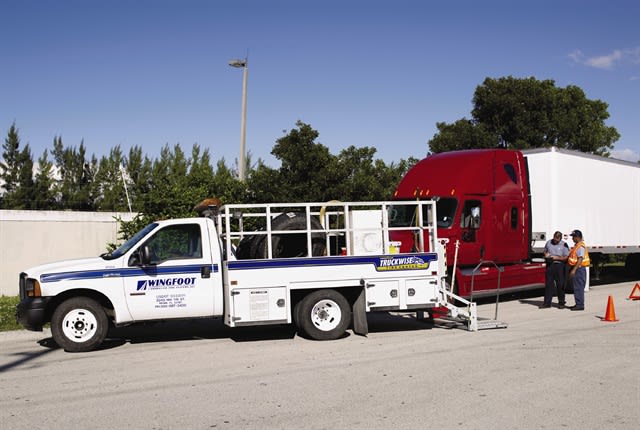
Outsourcing through a national provider gets you service anywhere in the country at a predetermined price.
If your service provider has a national presence, then you're covered anywhere you go. Not only can you negotiate nationwide service with consistent pricing, you may be able to get your vendor to visit off-site drop yards for trailer inspections. Talk about coverage.
Bill Guzick, vice president of business development for Michelin North Americas Truck Tires, says it's all possible.
"Dedicated fleet operations present an enormous opportunity," he says. "Trucks and trailers may not return to terminals for a long time. Michelin's Commercial Service Network can provide on-site tire maintenance at your customer's location, too."
On top of that, and depending on the vendor, fleets can have maintenance records and inspection documents compiled online so there's no outstanding or missing information. It's also possible to set up customized service manuals that outline the fleet’s specifications and requirements to both servicing dealers and the fleet’s terminals.
"Once the account is set up, the vendor has a record of the fleet's tire choice, and even inflation pressures." Guzick notes. "It's just like having your own people do the work."
And of course there's the assurance of consistency. Guzick says the service you get from network dealers through their technicians, professional equipment and casing management is subject to rigorous certification and audit standards. Try getting that from a roadside tire shop at 2 a.m.
4) Inventory Management
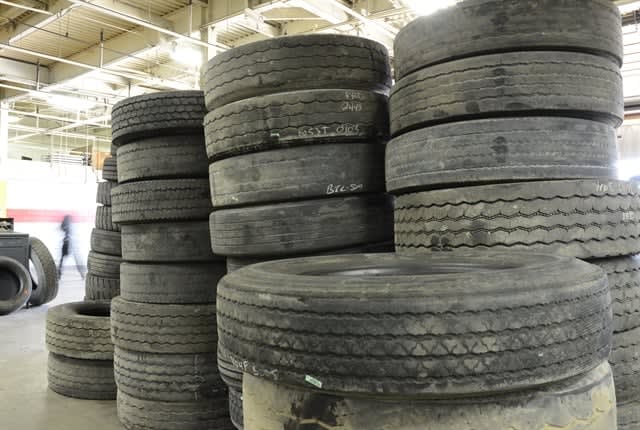
Carrying tire inventory costs money and space. Outsourcing is like just-in-time tire inventory. And you only pay for a tire when you use it.
Inventory is always a challenge, and more so in a mixed fleet. You need to keep a few tires in stock for emergencies, but how many and what type? How much are you paying to have those tire stacked on the corner of the shop? With an outside service provider, you don't pay for a tire until you need it.
"That reduces overhead," Guzick points out, "and gives you better ROI on the outsourcing program. It doesn't pay for it, but every bit helps."
Pick up and delivery schedules arranged with the vendor can be like a just-in-time tire inventory. "It's hard to predict when you'll have a failure, but you can build in a cushion for some spares," Clouser says.
5) Access to Experts
It's hard enough to find good technicians these days without frightening off the prospects with tire work. Nor are you likely to find expert tire technicians roaming the streets. When you contract your tire needs to a vendor, you get access to their experts – folks who can tell what's happened to a tire just by looking at it.
"The vendors know fleets are watching them," says Clouser. "I always do regular inspections of my vendors so they have a stake in keeping good people and managing their operation properly to their customers' standards."
There's the added benefit of knowing the work is done properly, and you, as the customer, have recourse, unlike having your own people do the work -- where all you have is liability.
"If an in-house repair fails, you have no warranty recourse. You eat the cost. You have warranty on work done by the tire vendor," Clouser notes. "Tire vendors do this work every day of the week. They are professionals. In-house people might do tires one day and change oil the next. Plus, the vendors are supported by manufacturers."
So what does all the convenience cost? Michelin's Guzick calls it a value proposition.
"It's hard to find cost savings in a process like this because regardless of who is doing the work, the costs won't be that different," he says. "The value lies in relieving the fleet of that one challenge and leaving more resources to focus on the operation."
But there is something to be said for not having to answer the driver calls at 2 a.m., and you'll get a price you can count on from a trusted vendor. That might even save enough money for a nice dinner at a decent restaurant.
More Maintenance

Color Match Smarter: Tools That Restore & Perform
For fleet managers and collision repair professionals keeping heavy-duty trucks on the road, getting the color right the first time isn't just about appearance — it's about efficiency, turnaround time, and bottom-line results. Discover how today's digital color tools are transforming the repair process from guesswork to precision.
Read More →
Wrong Repair Prompts Recall of Freightliner, Western Star 4x2 Trucks
DTNA is recalling more than 2,400 trucks that received an incompatible software fix instead of the hardware repair required to address brake valve corrosion.
Read More →
Truck Drivers Need More Than Another Alert
Fleets have more visibility into truck health, safety events, and driver activity than ever. The next challenge is turning all that information into useful guidance for the person who has to decide what to do next.
Read More →
The Maintenance Checks Trucking Fleets Should Prioritize Before Fall Freight Picks Up
Making it through August isn’t the same as being ready for the next several months of operation. Find out what systems may have suffered from summer heat and need to be checked out before fall.
Read More →
What Three Fleets Are Doing Differently When Buying Truck Parts in 2026
With freight improving but costs still climbing, fleet maintenance executives explain how they're balancing price, quality, and supplier relationships.
Read More →
Paccar Recalls 2027 Trucks Built This Summer for Possible Electrical Problem
The nearly 6,000 Kenworth and Peterbilt trucks in the recall could potentially lose engine power, among other things.
Read More →
Will API PC-12 Oil Change Trucking Fleet Maintenance?
The new API PC-12 heavy-duty engine oil category reflects the changing demands of modern diesel engines. But fleets like Foodliner are looking to getting their own data before making decisions on adopting the new oils and questions such as extending oil drain intervals.
Read More →
Brake Safety Week to Focus on Drums and Rotors
Commercial vehicle inspectors are focusing on truck brakes during CVSA's Brake Safety Week, August 23-29.
Read More →Possible Battery-Cable Fires Prompt Recall of 15,000+ International MV and HV Trucks
On the recalled vehicles, manufacturing variations can cause the battery interconnect cable to contact the auxiliary stud and hold down the bracket.
Read More →
Rush, MCT Team Up to Grow Refrigeration Service Network
The joint venture will operate MCT's network of Carrier Transicold dealerships and mobile service locations, with the companies promising greater service capacity and uptime for refrigerated fleets.
Read More →