




3 Truck Driver Recruiting & Retention Trends for 2022
Leah Shaver does more than track truck driver pay at the National Transportation Institute. She outlined some key trends for 2022 in driver recruiting and retention in an HDT interview.
January 26, 2022

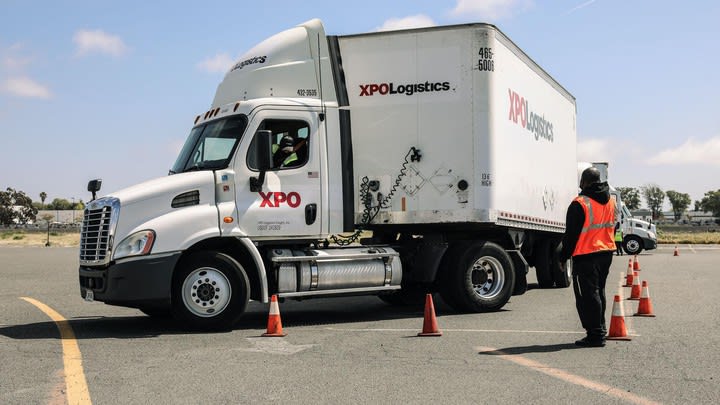
XPO is among the companies beefing up their driver training programs. It plans to double the number of graduates at its U.S. driver training schools this year over 2021.
Photo: XPO Logistics
5 min to read
Driver pay is likely to continue to increase in 2022, as high freight demand and supply-chain headaches are expected to continue through most of the year. But there are other trends at work in recruiting and retention, as well.
Leah Shaver has been tracking driver pay packages and talking to fleets and drivers for seven years as president and CEO of The National Transportation Institute and spent 14 years in driver recruiting and HR at a motor carrier. HDT talked to her about what trends she believes we’ll see in 2022 in terms of driver pay, recruiting, and retention.
“Pay for drivers, at least in a for-hire fleet, only goes up when we struggle with turnover, with driver supply, and when demand is high,” she said. “That market has been very consistent since Q3 of 2020. And that’s why we’ve seen pay increase since that period of time without any stops.”
But she also sees fleets exploring new ways to develop the driver candidate pool and attract new people to the industry, while retaining the current drivers as much as possible. She identified several trends:
1. Training
“We saw a huge surge in demand for training [in 2021],” Shaver said. “Fleets that haven’t trained in the past, or tabled their training efforts due to driver supply, they brought back those programs with a vengeance.”
That hasn’t been a smooth process, however. The impact of the COVID-19 pandemic means there have been delays in license and learners permit issuing at the state level. Social distancing efforts have limited the number of students schools can accommodate. New entry-level driver training standards go into effect this year. And there’s an overall high demand for workforce in general across all industries.
She believes 2022 will see more training being deployed at companies that previously didn’t use it. With that, however, comes the need to provide better conditions, support, and resources for trainers.
2. Making Trucking a First-Choice Career
“Historically, trucking is not a first-choice career for a driver,” Shaver said. “We are a second-third-fourth option for folks. We are, ‘I've tried all of these other things, what now can I do.’ And so that’s one area where we really saw folks wanting to make an impact. I think that there's going to be a lot more effort in that this year.”
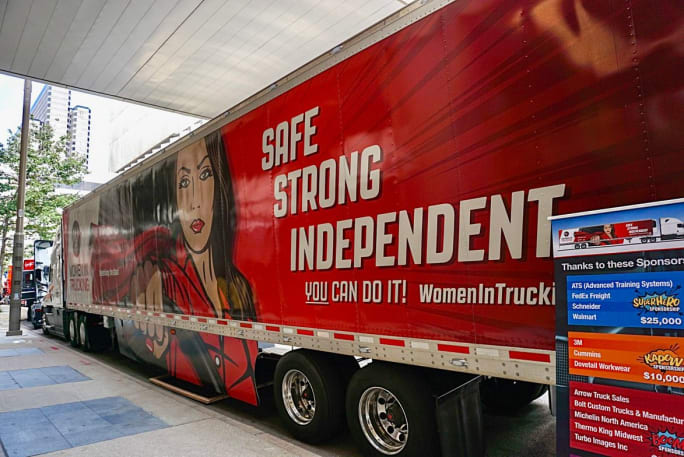
The Women in Trucking Association's new ambassador trailer is one example of how the industry is reaching out to try to make truck driving a first-choice job, not a last resort.
Photo: Vesna Brajkovic
As an example, she cited the Women in Trucking Association deploying a new driver ambassador. With the help of a new driver ambassador trailer, she said, “WIT will be not only going to shows and to schools, but also into communities that are underserved, where there are women that don’t have other job opportunities, or have had fewer job opportunities, to consider trucking earlier than rather than later after kids are raised where we've typically seen them enter the industry.
“So efforts to recruit folks earlier and not have trucking be a last choice but rather a first choice, I think that that’s going to be a huge trend in 2022.”
Related to that is a trend that Shaver expects to continue from 2021: a focus on new routes, on relays, and other opportunities to shorten the time a driver is away from home. This can not only improve driver retention, she said, but also make trucking a potential career for people who might be interested if the time away from home wasn’t going to be so impactful.
Another related trend, Shaver said, is the continued demand for team drivers. She predicts we will see companies “continuing to promote those opportunities and come up with routes where teams don’t necessarily have to be gone for terribly long periods of time [but] they can be highly productive …. They can do twice the amount of work in the same five-day period.” And not be away from home as much as what we traditionally see with teams in long-haul work.
Another way to bring new people into trucking is to put drivers in alternative vehicles for parts of the work or for all of the work. “Investing more in Class B and Class C type work where a driver can have any type of licensure experience, but still deliver freight locally. That started in 2021, it will become much larger this year.”
3. Creating career paths
By starting drivers out in smaller vehicles that don’t require a CDL, fleets can provide training and support for them to get their Class A CDL and “career-path them into more advanced roles,” Shaver said.
“Another trend that we’ve coached for a long time, but that we really saw in 2021 and I think will become a lot more prevalent, is not only identifying a career path for a professional driver, but articulating it well, to the outside folks, but also internally.” Moving up a career ladder would mean new challenges and more pay for drivers at each level.
That might involve starting a driver in a local position and advancing him or her to a regional position. Or starting a driver in a standard CDL role and helping them to obtain their hazmat endorsement. Another option would be to help drivers develop the skills needed to put them into a trainer role, “where not only can they help the company grow, but they can also increase their income and their status as a mentor and a trainer within the organization,” Shaver said.
And the desired career path will vary from driver to driver. Shaver recommends asking drivers what they want.
“The very best thing a company has been able to do over the last few years is not say, ‘a driver is a driver is a driver,” Shaver said. “These are the fleets that retain their people, these are the fleets that attract folks more, they’ve got diversity in their freight mix, diversity in their offerings, they have a whole catalog available for not only prospective drivers to join the company, but for the folks that work for them to achieve a greater career path in a non-traditional driving career.”
Subscribe to Our Newsletter
More Drivers

Truck Drivers Need More Than Another Alert
Fleets have more visibility into truck health, safety events, and driver activity than ever. The next challenge is turning all that information into useful guidance for the person who has to decide what to do next.
Read More →
FMCSA Removes 110 Truck Driver Training Schools from Certified ELDT List
Federal regulators also are targeting more than 160 additional training providers and launching a nationwide audit of third-party CDL skills testers as part of a broader crackdown on trucking fraud.
Read More →
Hours of Service Pilot Programs: FMCSA Readies for 2027 Rollout
Two pilot programs could eventually reshape hours-of-service rules, giving truck drivers options to pause their 14-hour clock or use longer split sleeper rest periods.
Read More →
Medical Cards, English Proficiency Reshape Roadcheck Violations
Medical-card violations jumped to the top of the driver out-of-service list during CVSA’s 2026 International Roadcheck, while English-language proficiency violations appeared among the leading violations for the first time.
Read More →
Driver Trust Can Make or Break the Success of Fleet Safety Technology
New Teletrac Navman research suggests that onboarding, transparency about driver data, and positive feedback can play a significant role in how commercial drivers respond to safety and coaching technology.
Read More →
EEOC Sues KLLM Over Alleged Sex Discrimination in Driver Training
KLLM is facing a federal sex-discrimination lawsuit over policies the EEOC alleges put female truck driver trainees at a disadvantage.
Read More →
FMCSA Moves to Codify English Language Requirements for Commercial Drivers
By changing regulations on English-language proficiency requirements for commercial drivers, rather than relying on a guidance memo, the FMCSA said future administrations won't be able to walk back the Trump administration's stricter enforcement with just a memo.
Read More →
Drivers Put Western Star Trucks to the Test at Star Nation Experience
Watch to get an inside look at the Western Star trucks, technology, and community behind the Star Nation Experience 2026!
Read More →
Trump Administration Looks to Put More Veterans Behind the Wheel
The Freedom Haulers program pulls together existing and expanded programs at several federal agencies to recruit veterans to drive commercial heavy-duty trucks and cut the red tape for them to get a CDL, training, and employment.
Read More →
Putting Mack’s Command Steer to the Test
A test drive of Mack’s Command Steer active steering system evaluates how it can make truck driving easier and less tiring.
Read More →