





Related: NATSO, ATA Call for Increased Driver Access to Truckstops
NATSO, Associations Argue for Private Sector EV Investment
The National Association of Truck Stop Owners, along with a group of like-minded associations, recently asked Congress to promote investment in America’s infrastructure and design policies that attract private sector investment in electric vehicle charging infrastructure.
June 3, 2020
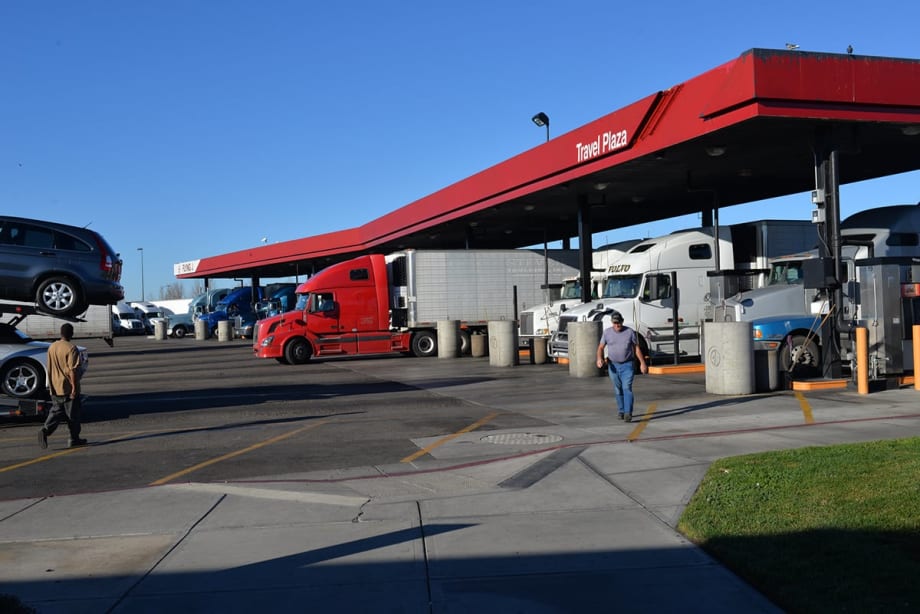
NATSO is stressing the need to keep EV charging out of rest areas and increase private investment in its infrastructure.
Photo: Paul Sullivan via Flickr
2 min to read
The National Association of Truck Stop Owners, along with a group of like-minded associations, recently asked Congress to promote investment in America’s infrastructure and design policies that attract private sector investment in electric vehicle charging infrastructure.
NATSO, along with the National League of Cities, National Association of Convenience Stores, Society of Independent Gasoline Marketers of America, the National Restaurant Association, National Federation of the Blind, National Retail Federation, and Asian American Hotel Owners Association, stressed the importance of the rest area commercialization ban, in light of some lawmakers’ interest in seeing an increase in EV infrastructure investments.
“It is critical that any incentives Congress develops toward that end do not undermine the rest area commercialization ban by allowing charging stations at Interstate rest areas. Instead, we urge Congress to explore policies that would encourage existing off-highway businesses to expand EV charging offerings,” wrote the group. “Lawmakers, therefore, must recognize that making available EV charging stations, similar to traditional refueling, is a commercial service. As such, installing EV charging infrastructure on the federal Interstate rights-of-way would require overturning the rest area commercialization ban that has been in place for more than 60 years.”
Earlier this year, NATSO and ChargePoint formed a partnership to create a National Highway Charging Collaborative, which would deploy charging stations at more than 4,000 travel plazas and fuel stops over the 10 years.
“Our industry has made significant investments in electric vehicle charging to meet growing demand for this alternative fuel,” said NATSO President and CEO Lisa Mullings. “Many would be forced to reconsider those investments if the government were to allow hand-picked vendors or utilities to sell fuel from an advantaged location on the Interstate right-of-way. Private businesses that continue to grapple with the tremendous effects of the Coronavirus pandemic will not be able to compete for customers with a government-sanctioned monopoly.”
More Drivers

Truck Drivers Need More Than Another Alert
Fleets have more visibility into truck health, safety events, and driver activity than ever. The next challenge is turning all that information into useful guidance for the person who has to decide what to do next.
Read More →
FMCSA Removes 110 Truck Driver Training Schools from Certified ELDT List
Federal regulators also are targeting more than 160 additional training providers and launching a nationwide audit of third-party CDL skills testers as part of a broader crackdown on trucking fraud.
Read More →
Hours of Service Pilot Programs: FMCSA Readies for 2027 Rollout
Two pilot programs could eventually reshape hours-of-service rules, giving truck drivers options to pause their 14-hour clock or use longer split sleeper rest periods.
Read More →
Medical Cards, English Proficiency Reshape Roadcheck Violations
Medical-card violations jumped to the top of the driver out-of-service list during CVSA’s 2026 International Roadcheck, while English-language proficiency violations appeared among the leading violations for the first time.
Read More →
Driver Trust Can Make or Break the Success of Fleet Safety Technology
New Teletrac Navman research suggests that onboarding, transparency about driver data, and positive feedback can play a significant role in how commercial drivers respond to safety and coaching technology.
Read More →
EEOC Sues KLLM Over Alleged Sex Discrimination in Driver Training
KLLM is facing a federal sex-discrimination lawsuit over policies the EEOC alleges put female truck driver trainees at a disadvantage.
Read More →
FMCSA Moves to Codify English Language Requirements for Commercial Drivers
By changing regulations on English-language proficiency requirements for commercial drivers, rather than relying on a guidance memo, the FMCSA said future administrations won't be able to walk back the Trump administration's stricter enforcement with just a memo.
Read More →
Drivers Put Western Star Trucks to the Test at Star Nation Experience
Watch to get an inside look at the Western Star trucks, technology, and community behind the Star Nation Experience 2026!
Read More →
Trump Administration Looks to Put More Veterans Behind the Wheel
The Freedom Haulers program pulls together existing and expanded programs at several federal agencies to recruit veterans to drive commercial heavy-duty trucks and cut the red tape for them to get a CDL, training, and employment.
Read More →
Putting Mack’s Command Steer to the Test
A test drive of Mack’s Command Steer active steering system evaluates how it can make truck driving easier and less tiring.
Read More →