





Related: Meritor's T.J. Reed on the Acquistion of TransPower and Electric Trucks
Kenworth to Work with Meritor on Electric T680
Meritor and Kenworth will partner on developing an electric Kenworth T680E, reported to be a short-hood day cab in tractor with an operating range between 100 to 150 miles, depending on application.
February 13, 2020
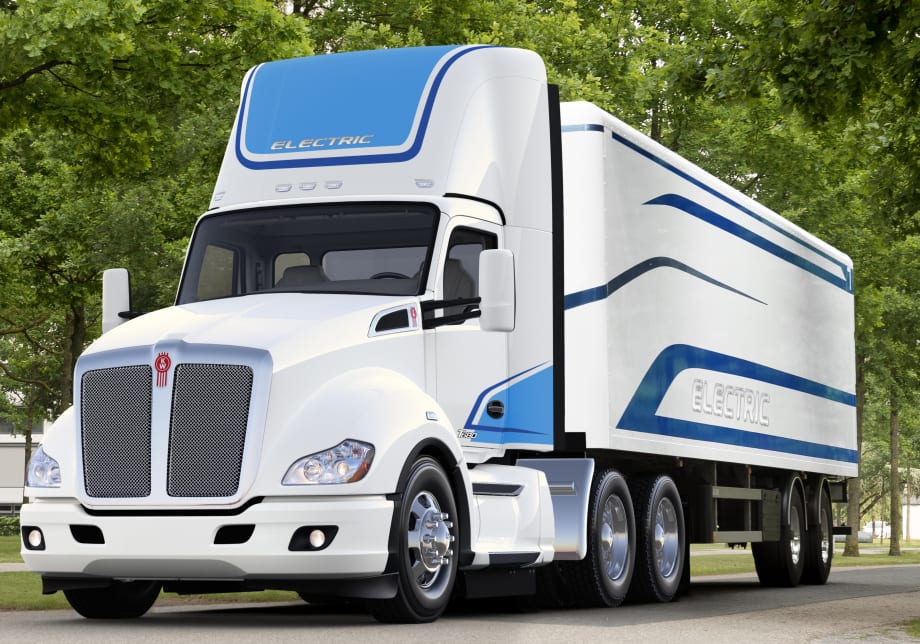
Kenworth's T680E Class 8 electric tractor is reported to be a short-hood day cab in tractor with an operating range between 100 to 150 miles, depending on application.
Photo: Kenworth
2 min to read
Kenworth announced it will collaborate with Meritor on electric powertrain development for Class 8 Kenworth T680E battery-electric vehicles, following a recent announcement of a partnership between Paccar and Meritor.
The electric Kenworth T680E will be available as a short-hood day cab in tractor configurations of 4x2 and 6x4 axles and as a 6x4 axle straight truck. The truck will offer fleets an operating range between 100 to 150 miles, depending on application.
“The Kenworth T680E development in collaboration with Meritor is a major advanced technology step in Kenworth’s evolution of zero-emission electric powertrain solutions for our customers,” said Kevin Baney, Kenworth general manager and Paccar vice president. “Initial production of the Kenworth T680E is expected to begin in the fourth quarter 2020 and ramp through 2021.”
“We look forward to working closely with Kenworth to help develop the Kenworth T680E as an important, viable battery-electric answer for the day cab market,” said T.J. Reed, vice president of Global Electrification for Meritor.
The announcement is the latest in a series of electronification partnerships between Meritor and Paccar, the parent company of both Kenworth and Peterbilt.
On Jan. 30, Meritor announced it will supply Paccar with electric powertrain components for electric versions of the Kenworth T680 and Peterbilt 579 and 520 models. Per that agreement, Meritor will be Paccar’s to be its non-exclusive supplier of electric powertrains for its Kenworth T680 and Peterbilt 579 and 520 battery-electric vehicles.
Under the auspices of the agreement, Meritor will be the initial launch partner and primary supplier for the integration of functional battery-electric systems on these refuse and heavy-duty chassis. Production is targeted to begin in early 2021.
Meritor has been making moves to bolster its presence in the rapidly evolving commercial vehicle electrification market independent of its OEM relationships. Also in January, the company announced it had acquired all the outstanding common shares of Transportation Power Inc., better known as TransPower.
The company said the addition of TransPower to its portfolio "aligns with the values of Meritor's Blue Horizon brand," the company's platform of advanced technologies centered on electrification.
“The opportunity to equip Kenworth and Peterbilt battery-electric vehicles with Meritor’s products allows us to partner with a valued customer and to continue bringing advanced technologies to market,” said T.J. Reed, vice president of Global Electrification for Meritor. “We look forward to delivering on our goal to be the premier supplier of electrification technologies for commercial vehicles.”
More Fuel Smarts

Record Diesel Prices Squeeze Trucking Fleets
Average U.S. diesel prices have climbed to nearly $6 a gallon, surpassing the 2022 record as tight refinery capacity and Middle East disruptions keep fuel costs elevated.
Read More →
Sponsored•September 9, 2026
How Fuel Delivery Shapes Engine Performance
Fuel delivery depends on more than what happens at the injector. For fleet, maintenance and technical professionals, looking at the full path from pump to injector can provide useful context for understanding engine performance.
Read More →
East Coast Port Launches $45M Electric Truck Push
The Port Authority of New York and New Jersey announced millions in incentives for zero-emission drayage trucks, yard tractors, and new charging hubs near the port.
Read More →

California Bill Could Shed Light on Electric Truck Prices
Why do battery-electric Class 8 trucks remain so expensive? A California bill headed to Gov. Gavin Newsom would give fleets and state agencies more visibility into what manufacturers charge.
Read More →
Detroit Opens Orders for EPA 2027 Engines
Detroit isn’t starting from scratch to meet EPA 2027 diesel emissions standards. Its Gen 6 DD13 and DD15 engines keep much of today’s platform while updating the fuel and aftertreatment systems.
Read More →
Zero-Emission Truck Corridor Planned for West Coast
California, Oregon, Washington, British Columbia and Baja California are coordinating plans for truck charging and hydrogen fueling from Canada to Mexico.
Read More →
A Closer Look at Kenworth’s Electric T880E Vocational Truck [Video]
Learn more about Kenworth's T880E battery-electric vocational truck at the Paccar Technical Center, including its range, applications, upfitting considerations, and PTO options, in this HDT Spotlight video.
Read More →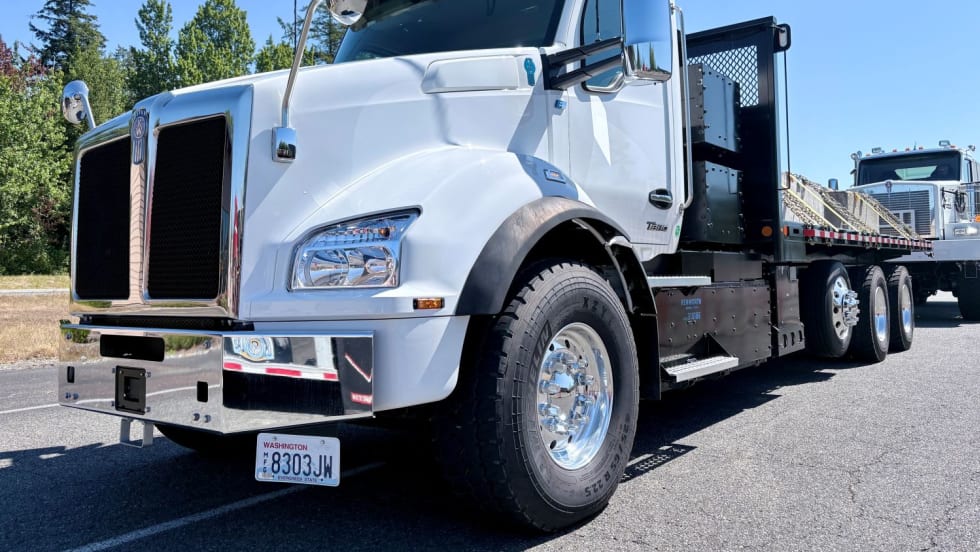
Kenworth T880E Brings EV Power to Vocational Trucks
A closer look at the Kenworth T880E’s range, charging, powertrain and upfit options — and where fleets are showing the most interest.
Read More →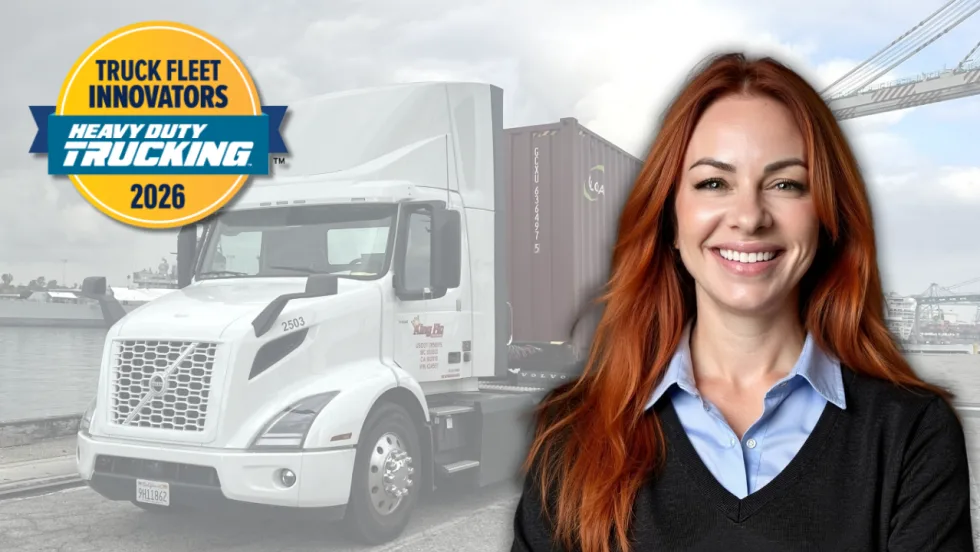
Jennie Abarca Is Proving Electric Trucks Can Do the Job
HDT Truck Fleet Innovator Jennie Abarca is building confidence in fleet electrification one load at a time while openly sharing the challenges she encounters along the way as a small-fleet owner.
Read More →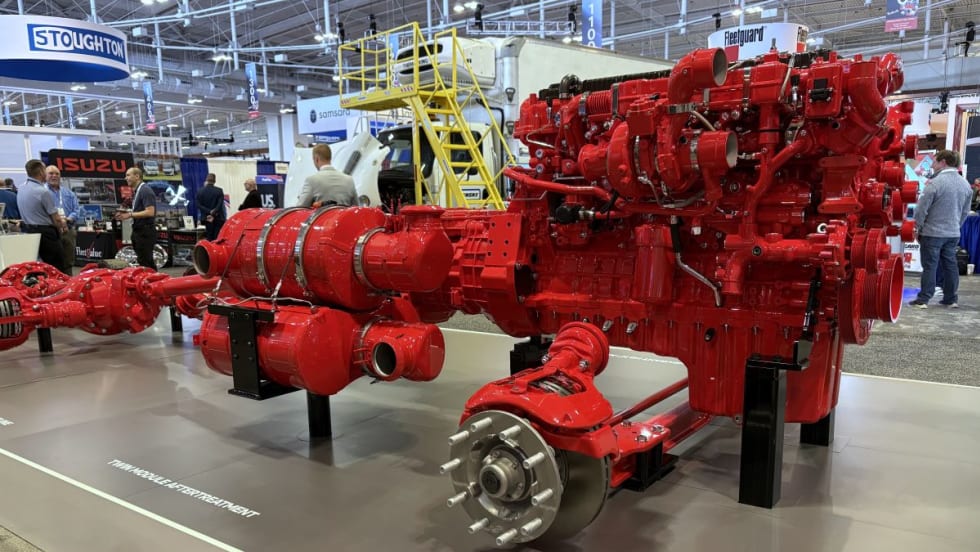
Cummins Adjusts 2027 Engine Rollout After EPA Proposal
The engine maker will gradually introduce its new Model Year 2027 diesel engines while continuing to offer current models during the transition, citing the EPA's proposed emissions rule changes.
Read More →