





Related: FMCSA Clarifies How to Request a Non-Preventable Crash Data Review
Trucking Groups Seek FMCSA Rulemaking on Crash-Preventability Data
A coalition of 10 trucking-related stakeholders is petitioning the Federal Motor Carrier Safety Administration to conduct a rulemaking if the agency intends to change how it analyzes and publishes data on motor carrier crashes.
June 20, 2019
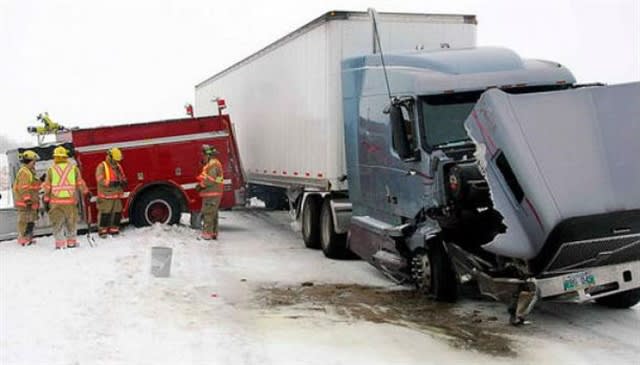
Trucking coalition has petitioned FMCSA to start a rulemaking on how it analyzes and publishes data on motor carrier crashes.
Photo: FMCSA
3 min to read
A coalition of 10 trucking-related stakeholders, including several lobbies for specialized carriers, is calling on the Federal Motor Carrier Safety Administration to conduct a rulemaking if the agency intends to change how it analyzes and publishes data on motor carrier crashes.
According to a June 19 press release issued by the nonprofit Alliance for Safe, Efficient and Competitive Truck Transportation, the petition was filed on June 14 by the Motor Carrier Regulatory Reform coalition, which includes ASECTT and other organizations that collectively represent more than 10,000 carriers, shippers, and brokers.
The MCRR coalition holds that “FMCSA officials have indicated that they plan to make permanent as a matter of enforcement policy its crash-preventability pilot program, which has been in place for nearly two years.”
The group points out that although, as of the end of this year’s first quarter, motor carriers had submitted nearly 11,000 requests for crash-preventability determinations under FMCSA’s “narrowly defined” program since August 2017, the program has not been subject to a formal rulemaking process.
The MCRR coalition’s petition argues that FMCSA must conduct a rulemaking “before adopting any permanent program to call balls and strikes on crashes.” More specifically, the group contends that “publication of preventability metrics would, among other things, constitute a violation of the Fixing America’s Surface Transportation (FAST) Act, the Administrative Procedure Act (APA), and federal executive orders intended to protect the industry against bureaucratic overreach in the name of guidance.”
A key problem for the coalition with FMCSA’s approach is that “the term ‘preventability’ is an artificial construct that does not equate to carrier fault, much less to a systemic violation of safety regulations.” By contrast, the MCRR coalition states that the publication of preventability data and metrics would result in increased insurance rates and lost business for carriers— even though FMCSA has acknowledged they are “fit to operate and, therefore, fit for shippers and brokers to use. The subjectivity of the preventability standard and its lack of due process suggest that adopting the trial program as policy guidance would hurt the industry, especially small carriers,” the group summed up.
Back on July 12, 2016, based on recommendations made by the American Trucking Associations and other public comments submitted about an agency crash-causation study, FMCSA proposed that it would accept requests from carriers for data review (RDRs) on accident determinations via a demonstration program.
Following up on that, on August 1, 2017, the agency launched a demonstration programthat it said would enable motor carriers to dispute the determination of certain truck crashes as “preventable.”
At the time, FMCSA said the program could lead to improved Compliance, Safety, Accountability scores for carriers-- if the agency reclassifies the cause of crashes previously deemed preventable.
The press release on the petition notes that the MCRR coalition is an affiliation of organizations that “frequently weigh in with FMCSA and Congress to promote reasonable regulation and enforcement affecting motor carriers and their business partners.” Coalition membership varies slightly depending on a given issue. For purposes of the crash-preventability rulemaking petition, the coalition includes:
Air and Expedited Motor Carriers Association
Alliance for Safe, Efficient and Competitive Truck Transportation
American Home Furnishings Alliance/Specialized Furniture Carriers
Apex Capital Corp.
Auto Haulers Association of America
National Association of Small Trucking Companies
Tennessee Motor Coach Association
The Expedite Alliance of North America
Transportation & Logistics Council
Transportation Loss Prevention & Security Association
More Safety & Compliance

FMCSA Pauses Biennial-Update Enforcement Amid Motus Transition
Carriers whose updates were due on or after June 1 have more time, while FMCSA works to stabilize its new registration system and warns of phishing sites impersonating its new carrier registration system, Motus.
Read More →
ZF Expands Commercial Vehicle Push in North America
ZF is expanding its North American commercial-vehicle presence with new transmission applications, electrification, trailer technology and autonomous-driving systems.
Read More →
Truck Drivers Need More Than Another Alert
Fleets have more visibility into truck health, safety events, and driver activity than ever. The next challenge is turning all that information into useful guidance for the person who has to decide what to do next.
Read More →
Tesla Wants a Self-Driving Semi. Are Cameras Enough?
Could Tesla’s camera-only autonomous driving technology work on an 80,000-pound Semi? In this commentary, HDT's Deborah Lockridge takes a look at Tesla, Cybercab, and how autonomous trucks see the road.
Read More →
What DOT’s Automated Vehicle Strategy Means for Trucking
The U.S. Department of Transportation issued a new automated-vehicle strategy that outlines plans for driverless-truck regulations, cross-state freight corridors, and federal safety standards.
Read More →
NYC Expands Speed, Pedestrian Safety Tech Across Fleet
New York City is expanding intelligent speed assistance and pedestrian-alert systems across its municipal fleet, moving the technologies from pilot programs into vehicle procurement and retrofit requirements.
Read More →
FMCSA Removes 110 Truck Driver Training Schools from Certified ELDT List
Federal regulators also are targeting more than 160 additional training providers and launching a nationwide audit of third-party CDL skills testers as part of a broader crackdown on trucking fraud.
Read More →
Beyond DOT Compliance: What Makes a Trucking Fleet Truly Safe?
A trucking fleet can follow every rule and still make unsafe decisions. The real test comes when safety conflicts with freight, productivity, or cost.
Read More →
Hours of Service Pilot Programs: FMCSA Readies for 2027 Rollout
Two pilot programs could eventually reshape hours-of-service rules, giving truck drivers options to pause their 14-hour clock or use longer split sleeper rest periods.
Read More →
New Guide Offers Pet Safety Tips for Truck Drivers
Hundreds of thousands of pets travel in truck cabs. A new safety guide from Volvo Trucks and the Center for Pet Safety offers practical advice for truck drivers who bring dogs and cats along for the ride.
Read More →