





Related: Where Did the Hours of Service Rules Come From, Anyway?
FMCSA Regulatory Reform Is Real, With a Caveat
Under the Trump administration, regulatory activity at the FMCSA has decreased – but enforcement activity has increased, according to Dave Osiecki, president of Scopelitis Transportation Consulting, speaking at a session during the Trimble In.Sight user conference.
September 10, 2018
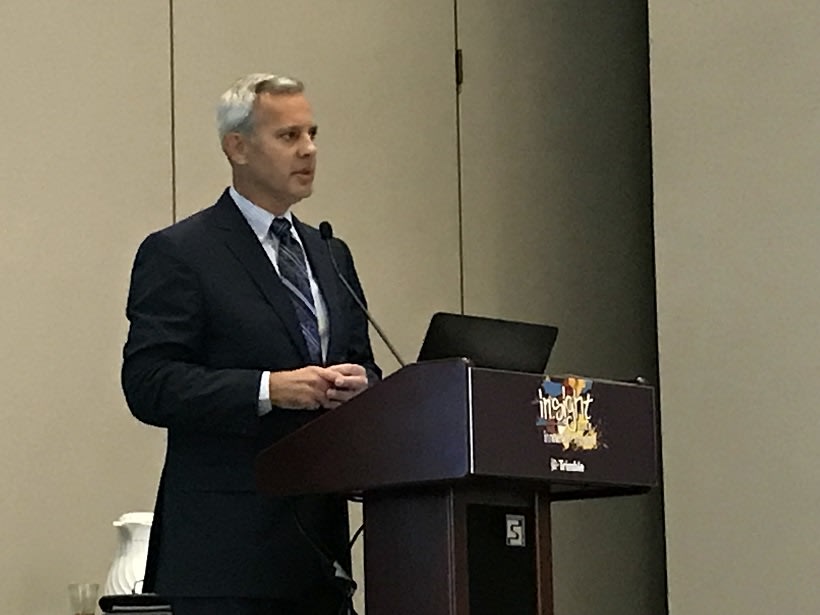
Dave Osiecki, president, Scopelitis Transportation Consulting.
Photo by Jim Beach
3 min to read
Under the new administration in Washington, regulatory activity at the Federal Motor Carrier Safety Administration has decreased, but enforcement activity has increased, according to Dave Osiecki, president, Scopelitis Transportation Consulting. Speaking at a session during the Trimble In.Sight user conference held Sept. 10 in Houston, Osiecki said that “some things are pointing toward less regulation, and that might be true.”
He said among proposed rules that have been withdrawn are those dealing with changes in safety ratings, liability insurance increases, and sleep apnea standards. Another rule that was not withdrawn is one that mandates the required settings and use of speed limiters, although he said that had been put on a “very back burner.”
Topics still in the rulemaking and guidance pipeline are those many within the industry might favor such as military license and CDL reciprocity, CLP reciprocity, UCR fee reductions, and allowing electronic records and signatures. The latter is an effort by FMCSA to make it easier and less burdensome to comply by using electronic documents and signatures, Osiecki said. Other initiatives include a grandfather provision to allow AOBRD software on ELD devices and changes in the personal conveyance rule for truckers.
“I think this regulatory reform is real. They are looking at things,” he said.
Hours-of-service changes have also been proposed in two pieces of legislation introduced in the House: HR 5417 (REST Act) and HR 6178, (HOURS Act). HR 6178 includes four provisions: an ag exemption, short-haul alignment, a reduction in supporting documents, and skipping an advanced notice of proposed rulemaking for a split sleeper rule.
HR 5417 contains provisions that would allow a rest break up to three hours, a 14-hour clock pause, and eliminate the 30-minute break requirement.
While both bills have bipartisan support, he said he is not sure either will advance out of the House.
Osiecki also noted that changes to hours-of-service rules will face stiff challenges from safety groups, as would a proposal to allow 18-21-year-olds with a CDL to drive in interstate commerce. Studies have shown that younger drivers have more crashes. "Trucking has been down this road before and it was a dead end,” he said, and that he wouldn’t be surprised if it was a dead end again.
Other proposals FMCSA is exploring include changes to the CSA model, hair testing for drug use, and the drug and alcohol clearinghouse. The clearinghouse rule was approved but is in a holding pattern, since the Department of Health and Human Services must develop guidelines for hair testing before DOT can change the rule.
While regulatory reform appears to be real, Osiecki said that “flying under the radar” was the fact that enforcement cases have risen each year since 2014 as have the dollar amounts settled in these cases — from $29 million in 2014 to $57 million in 2018.
He also noted that 30% of the larger carriers have been audited by DOT in the last few years.
The bottom line, according to Osiecki, is that “some HOS changes are expected,” as are changes in the CSA model. He doesn’t see the rules for sleep apnea testing going away, but he also doesn’t see any changes.
More Safety & Compliance
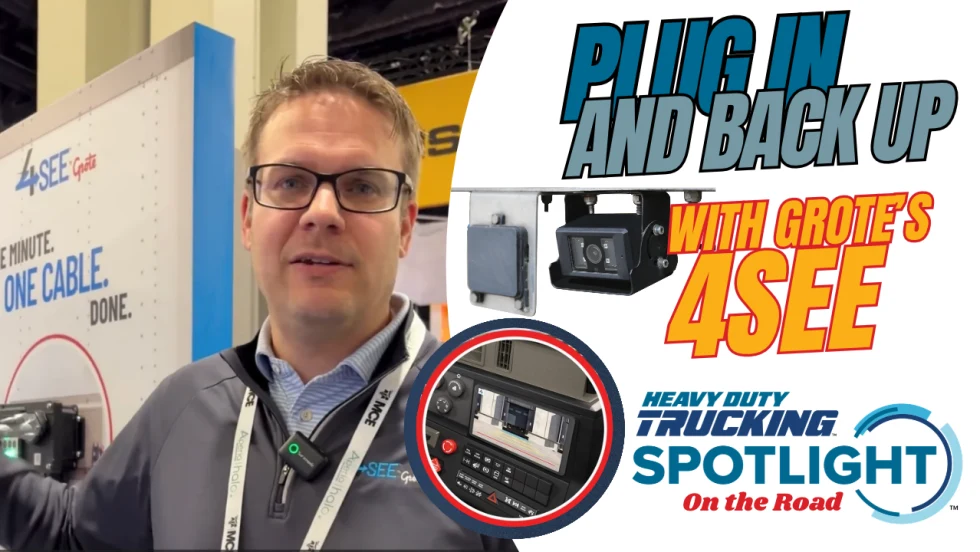
More Trailer Data Through the Same Seven-Way [Video]
Can trucking’s standard seven-way connector handle more cameras and trailer data? Grote’s Adam Slade shows HDT how the company is using new technology with its 4See trailer system, not only to add a new backup camera but also to expand other capabilities — without adding another connection.
Read More →
PrePass Intelligence Mines Fleet Bypass, Toll and Safety Data
PrePass Intelligence helps fleets measure bypass savings, flag potential toll overcharges, and spot suspicious transactions by combining data from separate systems.
Read More →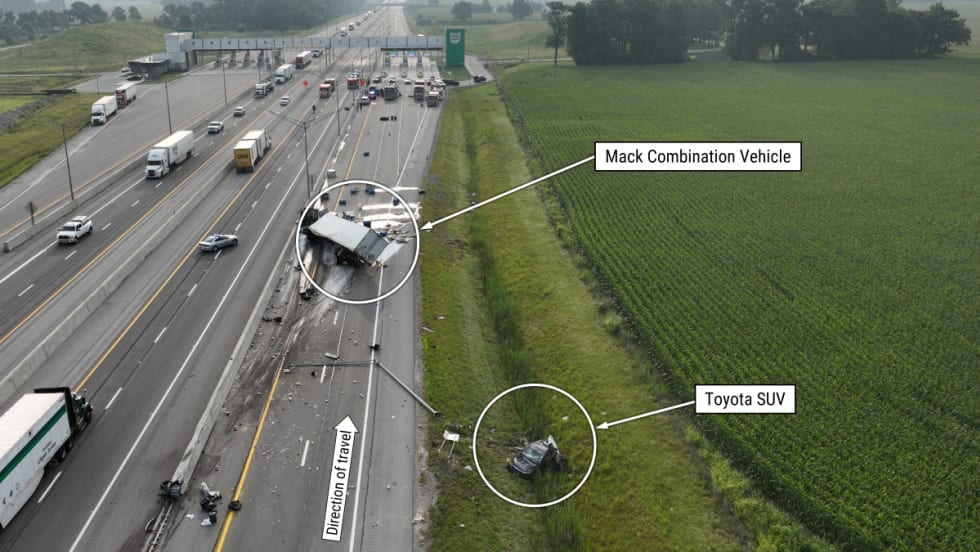
Fatal Crash Exposes Toll Plaza Risks
An NTSB investigation found that last-minute lane changes and large speed differences at an Ohio toll plaza created a hazard the truck driver couldn't avoid in time.
Read More →
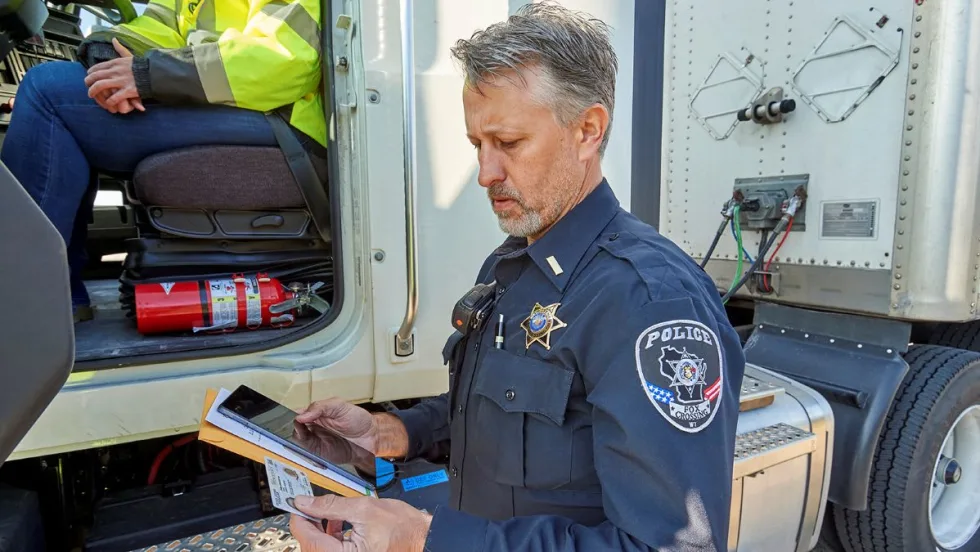
When Language Stops the Truck: The Return of ELP Out-of-Service Orders
English language proficiency rules for commercial drivers aren’t new, but renewed out-of-service enforcement has raised the stakes. Here’s what carriers need to know before a driver reaches a roadside inspection.
Read More →
Sponsored•October 6, 2026
A Camera Isn't a Safety Program. Here's What Brokers Are Screening for Now
Footage alone may not be enough to pass broker vetting processes. Here's what counts as a defensible safety program now.
Read More →
Marijuana and Trucking’s Drug-Testing Dilemma
Marijuana is getting stronger, laws are changing, and drug tests still can’t reliably establish impairment. What does that mean for truck drivers and the fleets that employ them?
Read More →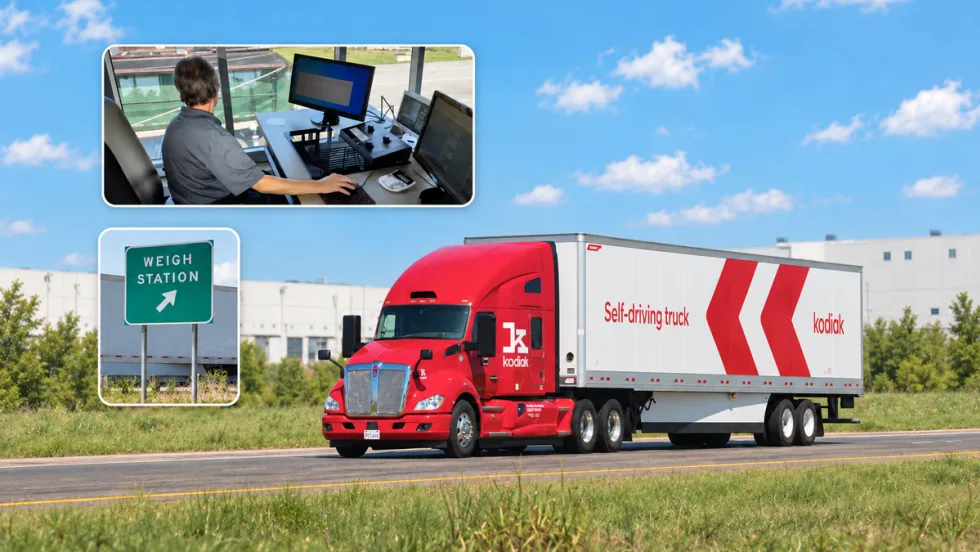
PrePass, Kodiak Connect Driverless Trucks to Roadside Enforcement
The system will allow enforcement agencies to verify Enhanced Inspection information and decide whether Kodiak’s autonomous trucks can bypass roadside screening sites.
Read More →
From One Generation to the Next: How Mentorship Builds Safer Truck Drivers
After three decades in trucking, Harold Perry shares what he's learned about driver safety, mentorship, and helping the next generation build confidence behind the wheel.
Read More →
FMCSA Pauses Biennial-Update Enforcement Amid Motus Transition
Carriers whose updates were due on or after June 1 have more time, while FMCSA works to stabilize its new registration system and warns of phishing sites impersonating its new carrier registration system, Motus.
Read More →
ZF Expands Commercial Vehicle Push in North America
ZF is expanding its North American commercial-vehicle presence with new transmission applications, electrification, trailer technology and autonomous-driving systems.
Read More →