




Natural Gas Is Still the King of Alternative Fuels
Fueling trucks with natural gas remains the best option for many fleets that must by law or by choice be greener than they can be on diesel.

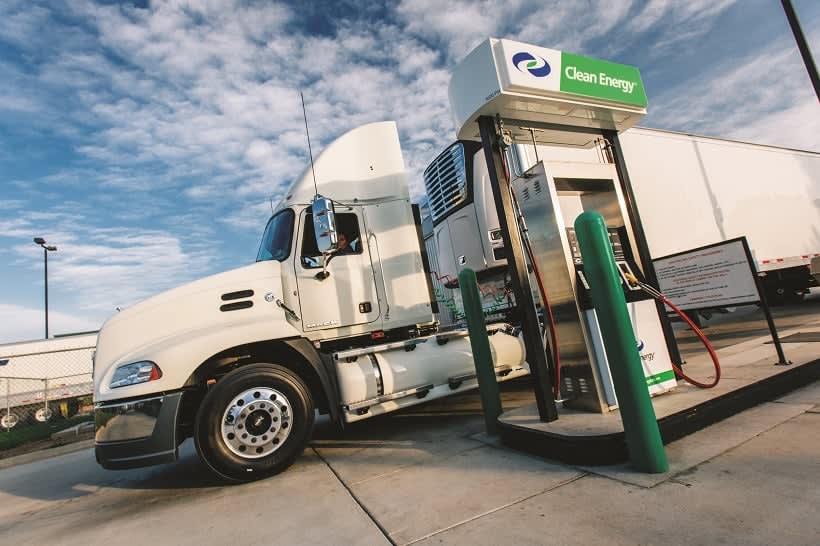
Clean Energy Fuels operates over 500 CNG and LNG stations in 43 states. Chad Lindholm, vice president of national accounts, says the company has expanded its network “exponentially to serve over-the-road trucks at or close to truckstops by offering a diesel-like fueling service.”
Photo: Clean Energy Fuels
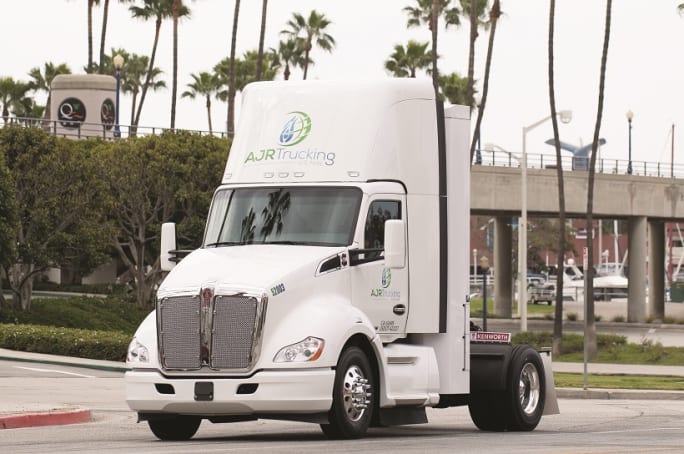
Positive test results led mail hauler AJR to put in for a contract bid with the USPS to use 20 Kenworth T680s powered by the Cummins Westport ISX12N Near Zero natural gas engine. The trucks will be dedicated to a 50-mile postal run, from Santa Clarita, California, to Los Angeles International Airport, and will replace 20 older diesel trucks.
Photo: Kenworth
The alternative power choice that has made the deepest inroads into trucking and will remain a key player for years to come is natural gas. Whether in its more popular compressed (CNG) or liquefied (LNG) form, natural gas is proving to have staying power, even in the face of reasonably low and fairly steady diesel fuel prices.
Of course, natural gas did not roll onto the scene aimed at being a cheaper-than-diesel fuel choice. Rather, it was adopted as a practical alternative for all types of truck fleets that need to cut tailpipe emissions of greenhouse gases, either to comply with environmental regulations or to meet corporate and/or customer sustainability requirements.
For many of those fleets, switching to natural gas paid off handsomely when diesel fuel prices shot skyward nine years ago. That phenomenon convinced still other fleets to run at least some natural gas trucks to cash in on what seemed would be an ever-widening price spread at the pump.
After diesel prices peaked in late 2012, a long slide back to Earth brought diesel fuel prices to a low point in early 2016. Since then, the price of diesel has been inching back up. At press time, the Energy Department had the national average retail price for on-highway diesel pegged at $3.20 a gallon, almost 50 cents higher than the year before.
The drop-off in the price of diesel made natural gas a less attractive option for fleets that were not running on it for strictly environmental reasons. But with diesel, of course, the question is always not just when its price may rise, but how high and for how long.
On the other hand, fleets that already invested heavily in natural gas trucks, fueling infrastructure, and changes in maintenance practices are unlikely to jump back out willy-nilly. Plus they appreciate the historic price stability of natural gas fuel vs. the volatility of diesel pricing.
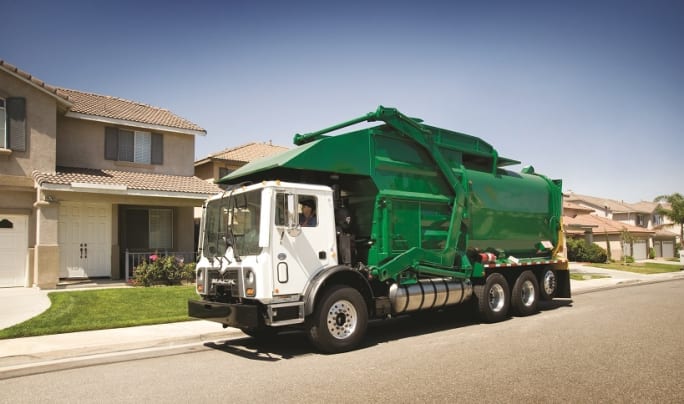
Natural gas first made its presence known in Class 8 trucking with refuse haulers and other centrally fueled vocational fleets that needed to be environmentally compliant to operate legally in non-attainment areas.
Photo: Mack Trucks
To stay or to go
“We live in very uncertain times for major business investment decisions on just about everything,” explains Jon Gabrielsen, president and CEO of J.T. Gabrielsen Consulting. ”The key crossover points for CNG vs. diesel prices remain as they were last year – and will be the same next year and the year after. The price of oil is far too uncertain to commit to investing in any fuel options other than ‘staying the course’ with whatever a fleet is already doing.
“If it were my personal money,” he adds, “I would not change anything.”
At Volvo Trucks North America, demand for natural gas has remained relatively flat over the past year, with most activity coming from fleets who were previously operating natural gas-powered trucks, says John Moore, Volvo Trucks North America product marketing manager - powertrain. “We foresee the role of natural gas as an alternative to diesel remaining at its current level until the cost differential between the two fuels expands.”
Scott Barraclough, Mack Trucks’ technology product manager, says the market for heavy-duty CNG trucks is “similar to past years…Fleets that have committed to the fuel continue to purchase vehicles for their natural gas fleets. With diesel fuel hovering close to the $3/gallon level, which is low, we’re currently not seeing as many converts to natural gas.”
Bob Carrick, Daimler Trucks North America’s vocational sales manager - natural gas, puts it this way: “It’s not rocket science. Diesel prices are what drove growth in natural gas trucks. In hindsight, who could have forecast that price drop-off? Now that we’re seeing diesel prices inch back up, the phone calls [about natural gas] are inching up, too.”
He says another drag on the natural-gas market continues to be vehicle resale. “Trade values for these trucks have never really been defined. We’ve seen values half that of a similar diesel truck. A secondary market for natural gas has not shown up yet, but I believe it will.”
Fueling demand
Mack’s Barraclough contends that “growth in natural gas fueling infrastructure has slowed as the rate of population growth of natural gas-powered trucks has slowed. It will probably take a spike in the price of diesel fuel before growth begins to pick up again.”
Daimler’s Carrick, on the other hand, says he’s “very pleased that efforts to increase fueling infrastructure have not slowed down. Existing and new [fueling network] entrants are putting in robust, high-performance stations that are suitable for fueling trucks.”
One major player in that arena, Clean Energy Fuels, alone operates more than 500 CNG and LNG stations in 43 states, according to Chad Lindholm, vice president of national accounts. He says in recent years, Clean Energy has “expanded our network exponentially to serve over-the-road trucks at or close to [existing] truckstops by offering a diesel-like fueling service. The idea is to support over-the-road regional haulers.”
He says convenient roadside fueling coupled with “Cummins Westport continuing to enhance their product, not only by reducing NOx but by increasing longevity and performance,” means that natural gas can be seen as “a long-standing solution” for fleets.
Clean Energy just rolled out its Zero Now Financing program, which Lindholm says “makes the cost of leasing or purchasing a new natural gas heavy-duty truck equipped with the cleanest engine in the world equal to the price or even lower than that of the same truck equipped with a diesel engine.”
Fleets that finance trucks through the Zero Now program will also be able to purchase natural gas fuel at a fixed price “significantly discounted” to diesel for the term of the financing/lease through a hedging program.
Lindholm notes that the dual program lets fleets “work closely with shippers on a ‘green truck’ program in a business-like manner to set rates, etc. Shippers want that,” he adds, “as many are looking for ways to be environmentally responsible and to operate sustainably.”
Rules at work
Fuel spend, fueling availability, and even the purchase/payback equation are not the major force driving this market. On top of all the fleets already running on (mostly) CNG to be legally or otherwise certified as being green, the federal greenhouse gas/fuel economy rules may also play a role in increasing the number of natural gas trucks. The Phase 2 rule that kicks in soon sets carbon dioxide limits for model year 2021 to 2027 trucks and tractors and MY 2018 to 2027 trailers as entire vehicles. It also includes provisions specifically for natural gas vehicles and engines to reduce methane emissions from the crankcase.
The GHG emissions of natural gas vehicles are about 20% lower overall than those of heavy-duty diesel vehicles, according to the California NGV Coalition. That’s entirely thanks to their engines, including two new ones available from Cummins Westport that are being hailed by some as NGV game-changers.
The first of these is the 8.9L ISL G Near Zero (NZ), which is the first certified by both the Environmental Protection Agency and the California Air Resources Board as meeting the 0.02 g/bhp-hr optional “Near Zero” NOx emissions standards for medium-duty applications.
The second is the heavy-duty ISX12N, which came in as the lowest of all engines certified as generating “Ultra Low” NOx emissions — at a level that’s 90% lower than current EPA standards. The 12L engine is available with ratings from 320 to 400 hp and up to 1,450 lb-ft. of peak torque, making it suitable for regional haul, refuse, and other vocational applications. The ISX12N features a new engine control module with improved durability, on-board diagnostics, an enhanced, maintenance-free three-way catalyst, and a closed crankcase ventilation system, says Cummins Westport. It entered full production in February.
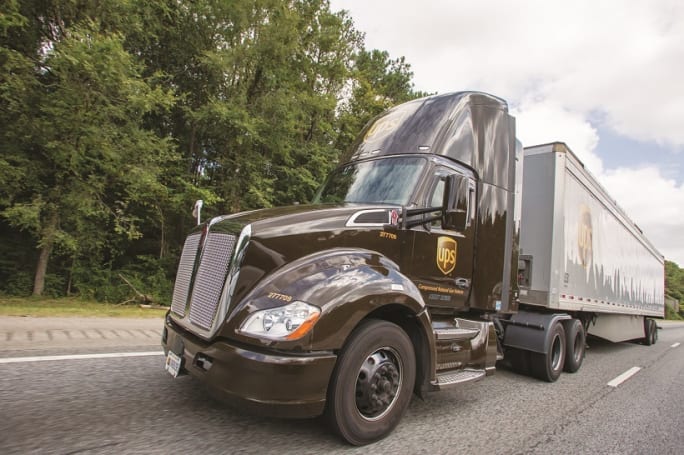
Package giant UPS remains committed to natural gas. Last year, it invested over $90 million in the alternative fuel, including building an additional six CNG stations and adding nearly 400 new CNG tractors and terminal trucks and 50 LNG vehicles to its alternative fuel and advanced technology fleet.
Photo: UPS
Engines as game-changers
“These engines are a game-changer, especially in California, where the emissions standards are tightest,” says Tom Hodek, general manager, new product development, for Cummins Westport. “The state also came out with three optional NOx reduction standards. We took the challenge and meet the lowest Near Zero limit, .02 grams. We’re actually at .01 grams, but certifying at .02 provides us some buffer.”
The optional limits were rolled out in 2013 by the California Air Resources Board with an eye to motivating the introduction of new technologies to reduce NOx emissions below the existing diesel engine emission standards for model years 2010 and later.
Speaking to the impact the pump price of diesel has on natural gas adoption, Hodek notes that “we came out with Near Zero engines just as diesel prices were coming up again.” He says when weighing price movement, bear in mind that “the big users of natural gas are the power plants. So, the price point on natural gas is dependent on power generation. Still, the [pump] price of natural gas prices is a lot more stable than diesel.”
Hodek says the biggest hurdle for fleets interested in natural gas, however, is the higher upfront cost of the vehicle. “The truck price premium is still there. But if a fleet can buy fuel at a reasonable cost difference vs. diesel, they can get the payback.”
In May, Kenworth became the first to launch the ISX12N into the market with a delivery to its customer AJR Trucking, according to Marketing Director Kurt Swihart. “After the 2017 launch of the Cummins Westport 8.9-liter ISL G, our customers requested a 12-liter CNG-powered truck,” he explains. “This is a game-changer in bringing to market a 400-hp engine for regional and vocational use.”
That initial low-emission Kenworth T680 was put into service on a 50-mile postal run, from Santa Clarita, California, to Los Angeles International Airport, operated by AJR, a contract mail hauler based in Rancho Dominguez, California. According to AJR co-owner Jack Khudikyan, the carrier tested a KW day cab with the new CNG engine last year. “We had to see how the truck and engine performed; how re-fueling went, and how are drivers worked with the truck,” he says.
Positive results led AJR to put in for a contract bid with the U.S. Postal Service to use 20 Kenworth T680s with the near-zero engine. “When we won the contract, we were helped with a grant from SoCalGas. So, it was a triple win,” says Khudikyan. “We received help from the grant to purchase near-zero trucks; we passed along some of the savings to the postal service; and the environment became greener since we removed 20 of our older diesel trucks from operation.”
AJR plans to add 70 more of the CNG trucks. Khudkyan is analyzing which routes could work with refueling stations. For the LAX run, the fleet relies on a commercial CNG station near the airport.
Behind the cab, a Worthington CNG fuel system and tanks with a diesel equivalency of 167 gallons gives the company a range of about 700 miles, so they will only need to fuel up every two or three days.
“In preparation of putting the 20 new T680s into service, we’ve been rotating drivers into our current Kenworth CNG truck, so everyone will hit the road running on re-fueling,” Khudkyan says.
He says AJR will add CNG trucks “where it makes sense,” noting that without counting grants, the fleet has projected payback to be about 1.5 years. “The cost of CNG is about half that of diesel, so there is a good ROI. When you factor in that we plan to run 1.3 million miles a year to LAX with the 20 T680s alone, the fuel savings are substantial.”
As for figuring out which option might best power a given fleet, ACT Research provides a free online calculator that helps measure power selection and vehicle cost, fuel and performance, and maintenance over a set time period or trade cycle for diesel and natural gas as well as hydrogen-fuel cell and electric powertrains.
More Fuel Smarts

Electric Yard Tractors Move Beyond Pilots
Operating-cost savings have overtaken sustainability goals as the leading reason surveyed fleets are adopting battery-electric terminal tractors, according to new NACFE research.
Read More →
Geotab Links Fleet Card to Vehicle Data
The new card combines fuel discounts with telematics-based purchase controls. Geotab’s analysis also points to potential savings from choosing lower-priced fuel stops.
Read More →
Fleet Economics Shape Electric Truck Outlook
ACT Research expects costs, charging infrastructure, and technology improvements to drive zero-emission commercial vehicle adoption as federal regulations and incentives retreat.
Read More →
Wex Adds Cardless Fuel Payments for Over-the-Road Customers
A new fuel card feature for Wex customers offers convenience and security.
Read More →
New California Law Could Shed Light on Electric Truck Prices
Why do battery-electric Class 8 trucks remain so expensive? A California bill signed by Gov. Gavin Newsom would give fleets and state agencies more visibility into what manufacturers charge.
Read More →
How Volvo Updated Its D13 for EPA 2027 [Watch]
Volvo’s updated D13 promises lower emissions without sacrificing performance or fuel economy. Take a closer look at what changed inside the engine in this HDT Spotlight video.
Read More →
Diesel Price Spike Shortens Payback for Natural Gas Trucks, Report Says
Energy Vision estimates fleets could recover the higher purchase price of an RNG-fueled Class 8 tractor in 1.3 to 2.8 years under current fuel-price scenarios.
Read More →
Calstart Becomes Catalyst Mobility, Reflecting Broader Focus
Calstart is now Catalyst Mobility, reflecting the nonprofit’s growing national role in clean transportation, including zero-emission trucks, infrastructure and incentive programs.
Read More →
Record Diesel Prices Squeeze Trucking Fleets
Average U.S. diesel prices have climbed to nearly $6 a gallon, surpassing the 2022 record as tight refinery capacity and Middle East disruptions keep fuel costs elevated.
Read More →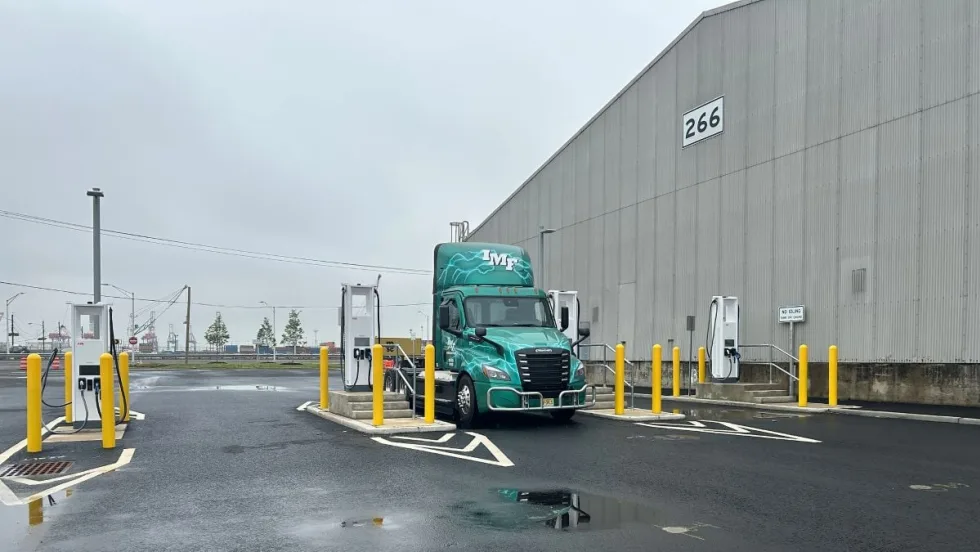
East Coast Port Launches $45M Electric Truck Push
The Port Authority of New York and New Jersey announced millions in incentives for zero-emission drayage trucks, yard tractors, and new charging hubs near the port.
Read More →