




More GOP Congressmen Question Legitimacy of EPA Glider Kit Study
Yet more Republican members of the House of Representatives have fired a broadside at the Volvo Group, as well as at the Engine Manufacturers Association, in the ongoing congressional questioning of the legitimacy of a study on glider kit regulations conducted recently by the Environmental Protection Agency.

Yet more Republican members of the House of Representatives have fired a broadside at the Volvo Group, as well as at the Engine Manufacturers Association, in the ongoing congressional questioning of the legitimacy of a study on glider kit regulations conducted recently by the Environmental Protection Agency.
On July 12, the Republican leadership of the House Science, Space, and Technology Committee sent a letter to EPA Acting Administrator Andrew Wheeler requesting information on the study, which was conducted by the National Vehicle and Fuel Emissions Laboratory.
Released in 2017, the study compared emissions from glider trucks to non-refurbished or unmodified or, simply put, conventionally manufactured trucks. In the report, EPA testing found that the NOx levels of glider vehicles are four to 40 times higher than that of current powertrains and that associated particulate matter levels are 50 to 450 times higher.
What the committee’s letter questions in no uncertain terms is whether the study was put together objectively, as would be expected. “Documents obtained by the Committee indicate that representatives from Volvo and the Truck and Engine Manufacturers Association engaged in what appears to be a concerted effort with EPA staff at the NVFEL to shape the study’s design to achieve a desired outcome,” the committee alleges in a press release on the letter.
“In one email, the representative from Volvo lays out the ‘ideal’ test program for the NVFEL, listing specifically the test articles to use and the schedule by which the test program should be conducted,” the committee’s letter states.
“These documents raise serious questions as to the objectivity and legitimacy of the NVFEL study,” the letter continues. “To better assist the Committee in understanding how EPA intends to uphold scientific integrity and how it undertakes decisions to perform scientific studies underlying regulation, we request a briefing for Committee staff by the appropriate EPA officials who are familiar with this matter.”
The committee also requested all documents related to the NVFEL glider study.
The letter was signed by Committee Chairman Lamar Smith (R-TX), Rep. Bill Posey (R-FL), Oversight Subcommittee Chairman Ralph Abraham, MD (R-LA), Oversight Subcommittee Vice Chairman Clay Higgins (R-LA), Environment Subcommittee Chairman Andy Biggs (R-AZ), Space Subcommittee Chairman Brian Babin (R-TX), and Rep. Gary Palmer (R-AL).
Commenting on the July 12 letter from the Science, Space, and Technology Committee leaders, Volvo Group spokesperson John Mies told HDT that, “Like most of the trucking industry, the Volvo Group for several years now has argued that the improper use of glider kits is bad for the environment and unfair to manufacturers who have invested in the latest environmental controls.
“All our communication and cooperation with the EPA on this issue has been an entirely appropriate part of a broad trucking industry advocacy effort – we did nothing improper,” he added.
Earlier this month, two other letters were sent to EPA — one sent jointly by four House GOP members and the other by the Republican chairman of the House Subcommittee on the Interior, Energy, and Environment— alleging that Sweden-based Volvo Group (parent firm of both Volvo Trucks North America and Mack Trucks) had undue influence with some employees at the agency, provided glider kits for the testing, and that the study was done without the approval or knowledge of EPA leadership. The letters also asked EPA to look into a potential lobbying violation by the Truck and Engine Manufacturers Association.
The back story to all the back and forth on glider kits is this: In October 2016, EPA and the National Highway Traffic Safety Administration issued the final GHG/Fuel Efficiency Phase 2 rule. Among other things, this rule required engines in new “glider” vehicles to meet the emissions standards for the year the vehicle was assembled, rather than the year the engine was manufactured.
In July 2017, after glider kit-maker Fitzgerald Glider Kits petitioned the agency to do so, EPA announced it intended to revisit the glider kit provisions. In November, it issued its official proposal, which would repeal emission requirements for glider vehicles, glider engines, and glider kits. The repeal proposal has yet to become a final rule.
The proposal to allow a glider kit loophole to the GHG/fuel economy regulations has drawn criticism from environmental groups, truck and engine makers, the American Trucking Associations, some large fleets such as FedEx and PepsiCo, two former EPA administrators, some state attorneys general, and some Democratic senators, among others.
The most recent development came on July 9, when EPA said it will not enforce for 2018 and 2019 a 300-unit production cap put in place on the manufacture of glider kits that do not comply with Phase 2 GHG emission rules.
EPA said this action is being taken because it is working to finalize its proposed rule to repeal “certain emission requirements” on glider kits that were imposed under the Phase 2 rules. News of the enforcement loophole was broken by The New York Times one day after the resignation of EPA Administrator Scott Pruitt on July 5.
Related : EPA Will Not Enforce 300-Unit Limit on Glider its through 2019
More Fuel Smarts

Why Diesel Price Relief Efforts May Fall Short
Diesel prices have eased from September’s record high, but doubts about additional Russian supply and limits on dyed-diesel tax relief mean trucking fleets still face expensive fuel. And prices could go higher.
Read More →
Why Small Fuel Savings Matter in Trucking
Can better fuel economy help pay for driver raises? In this podcast, GP Transco explains how small efficiency gains create room to reinvest in its people.
Read More →
How GP Transco Cuts Trucking Fuel Costs, a Tenth of a Gallon at a Time
What’s another tenth of a mile per gallon worth? GP Transco shares how equipment upgrades and driver coaching turn small gains into meaningful fuel savings.
Read More →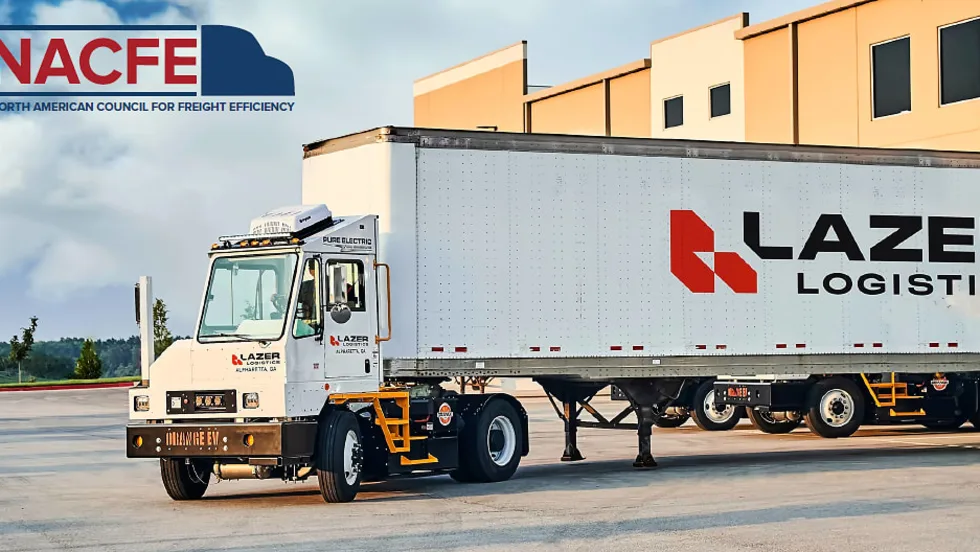
Electric Yard Tractors Move Beyond Pilots
Operating-cost savings have overtaken sustainability goals as the leading reason surveyed fleets are adopting battery-electric terminal tractors, according to new NACFE research.
Read More →
Geotab Links Fleet Card to Vehicle Data
The new card combines fuel discounts with telematics-based purchase controls. Geotab’s analysis also points to potential savings from choosing lower-priced fuel stops.
Read More →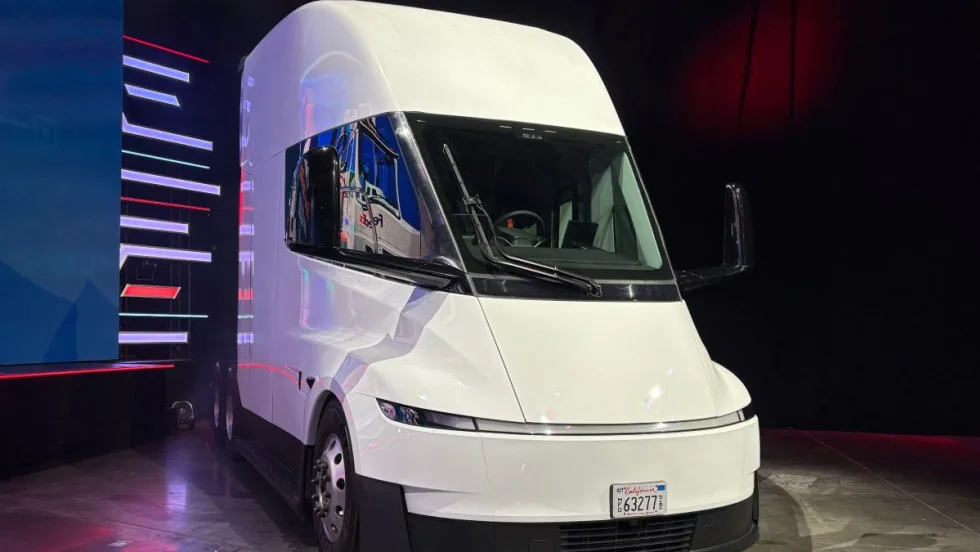
Fleet Economics Shape Electric Truck Outlook
ACT Research expects costs, charging infrastructure, and technology improvements to drive zero-emission commercial vehicle adoption as federal regulations and incentives retreat.
Read More →
Wex Adds Cardless Fuel Payments for Over-the-Road Customers
A new fuel card feature for Wex customers offers convenience and security.
Read More →
New California Law Could Shed Light on Electric Truck Prices
Why do battery-electric Class 8 trucks remain so expensive? A California bill signed by Gov. Gavin Newsom would give fleets and state agencies more visibility into what manufacturers charge.
Read More →
How Volvo Updated Its D13 for EPA 2027 [Watch]
Volvo’s updated D13 promises lower emissions without sacrificing performance or fuel economy. Take a closer look at what changed inside the engine in this HDT Spotlight video.
Read More →
Diesel Price Spike Shortens Payback for Natural Gas Trucks, Report Says
Energy Vision estimates fleets could recover the higher purchase price of an RNG-fueled Class 8 tractor in 1.3 to 2.8 years under current fuel-price scenarios.
Read More →