




Analysis: What Higher Fuel Prices Mean for Trucking
Trucking is enjoying some of the best business conditions in years, but could rising fuel prices curtail the good times? Analysis by Business Contributing Editor Evan Lockridge


Rising fuel prices may prevent the trucking industry from reaping all the benefits of the current booming business environment for freight.
HDT File Image
There’s little doubt that trucking has been enjoying some of the best business conditions in memory, with rates at or near record highs, thanks to plentiful freight and tight trucking capacity. But that could soon be curtailed to varying degrees, all due to fuel prices.
Fuel prices are on the rise, and while that obviously means increased expenses for fleets, there is also another concern. And this one has to do with the effect on freight demand.
Near the end of May, the national average cost of regular-grade gasoline moved up a little more than 55 cents compared to a year earlier, to just over just over $2.96 per gallon. Diesel prices over the same time period rose even more – almost 72 cents, to nearly $3.29 per gallon.
While this is still better than prices four or five years earlier, it’s significantly higher than during the halcyon days of late winter/early spring in 2016, when the national average price dipped below $2 per gallon for a brief time.
Outside of what your drivers pay at the pump, the immediate effect of high gasoline prices is that consumers have less money to spend on purchasing items such as a new television, clothes, a kitchen appliance, or anything else transported by truck.
During April, when gasoline rose an average of about 15 cents per gallon, this translated into nearly an extra $4.5 billion that Americans shelled out for gasoline that they could have spent on merchandise, according to a MarketWatch report.
The increase in the average price of regular grade gasoline during May was around the same at it was April, meaning that between the first of April and the end of May, the average cost of gasoline moved up a total of nearly 30 cents per gallon. So you could easily argue that Americans spent an extra $9 billion filling up their tanks at the end of May than they were spending at the start of April.
Now consider that retail sales in April totaled just under $500 billion, rising an expected 0.3%, down from an 0.8% growth seen in March. The billions more dollars people had to spend on putting gas in their tanks rather than purchasing other items is far more than the $1.5 billion difference between total March and April retail sales.
The Energy Department revised upward in April its forecast for the average cost of fuel this year and for next year. Diesel is expected to average $2.94 per gallon for all of 2018 and just 4 cents less in 2019. That compares to averages of $2.65 and $2.31 in 2017 and 2016, respectively. Gasoline prices are expected to rise by similar margins. And the department isn’t alone in expecting higher fuel prices.
Trucking economist Noel Perry pointed out in a blog post that “fuel is up more than 50% since early 2016 and looks like it will get higher.” The Oil Price Information Service said in late May “high diesel prices are in the forecast,” thanks to “a global supply-and demand scenario that sees inventories tracking to the lean side and consumption on the rise.”
However, OPIS also cited a Bank of America Merrill Lynch report that said high diesel prices and falling supplies could encourage more output of distillate fuel, and that could pull prices back.
While it remains to be seen if all this will happen, there is no doubt the stage is set for volatile diesel and gasoline prices. That could not only hurt your trucking operation, but also slow down the amount of freight moved by truck.
Evan Lockridge covers business and economic news for Heavy Duty Trucking magazine. A freelance writer, he has been covering the trucking industry in print, online and on the air since 1991.
Related: Prepare Your Fleet Now for Higher Fuel Prices Later
More Fuel Smarts

California Bill Could Shed Light on Electric Truck Prices
Why do battery-electric Class 8 trucks remain so expensive? A California bill headed to Gov. Gavin Newsom would give fleets and state agencies more visibility into what manufacturers charge.
Read More →
Detroit Opens Orders for EPA 2027 Engines
Detroit isn’t starting from scratch to meet EPA 2027 diesel emissions standards. Its Gen 6 DD13 and DD15 engines keep much of today’s platform while updating the fuel and aftertreatment systems.
Read More →
Zero-Emission Truck Corridor Planned for West Coast
California, Oregon, Washington, British Columbia and Baja California are coordinating plans for truck charging and hydrogen fueling from Canada to Mexico.
Read More →
A Closer Look at Kenworth’s Electric T880E Vocational Truck [Video]
Learn more about Kenworth's T880E battery-electric vocational truck at the Paccar Technical Center, including its range, applications, upfitting considerations, and PTO options, in this HDT Spotlight video.
Read More →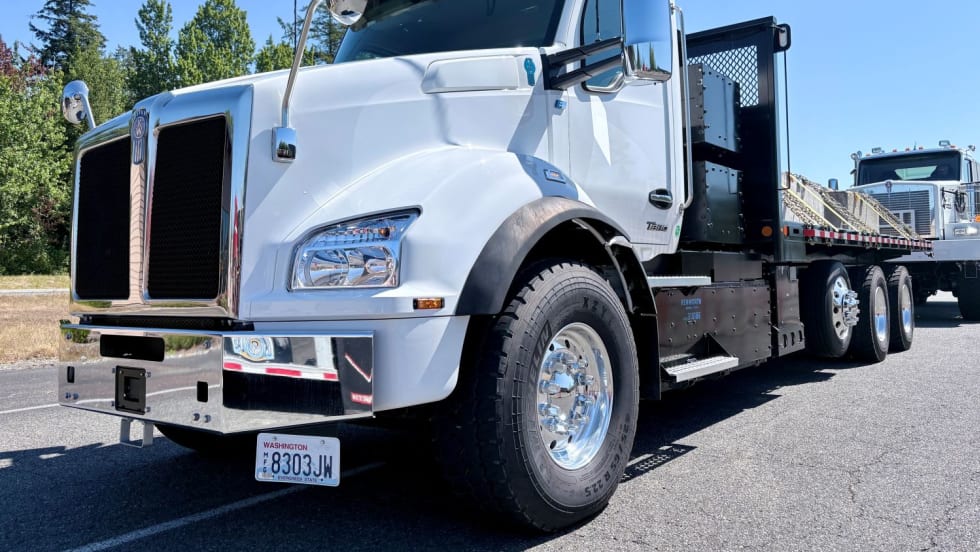
Kenworth T880E Brings EV Power to Vocational Trucks
A closer look at the Kenworth T880E’s range, charging, powertrain and upfit options — and where fleets are showing the most interest.
Read More →
Jennie Abarca Is Proving Electric Trucks Can Do the Job
HDT Truck Fleet Innovator Jennie Abarca is building confidence in fleet electrification one load at a time while openly sharing the challenges she encounters along the way as a small-fleet owner.
Read More →
Cummins Adjusts 2027 Engine Rollout After EPA Proposal
The engine maker will gradually introduce its new Model Year 2027 diesel engines while continuing to offer current models during the transition, citing the EPA's proposed emissions rule changes.
Read More →
EPA Proposal Could Ease 2027 Truck Costs and Buying Uncertainty
The proposal doesn't change the tougher NOx standard, but it would revise key implementation requirements that manufacturers say have driven up costs and complicated fleet purchasing decisions.
Read More →
Cummins, Paccar Ease DEF Derates After EPA Guidance
Updated diesel engine software gives truck operators more time to address emissions-system issues while staying compliant with EPA emissions standards.
Read More →
Maintenance in the Messy Middle Part 3: Biodiesel
Biodiesel can reduce emissions, improve fuel-system lubricity and use existing diesel infrastructure. But NACFE’s Messy Middle maintenance report says fleets must actively manage storage, cold-weather operation, filters and oil drain intervals to avoid problems.
Read More →