




How Will Trump’s Tariffs Affect Trailer Pricing?
Frank Maly of ACT Research figures the average trailer's price might go up by about $900. Some would be more. Meanwhile, how big a materials villain is China? Blog commentary by Senior Contributing Editor Tom Berg.

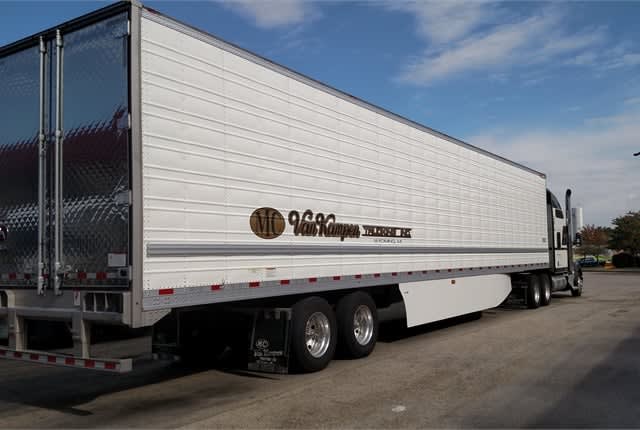
New trailers will cost more because prices for primary metals would go up under the president's tariff threats. Images: Tom Berg
When President Trump announced tariffs of 25% on steel and 10% on aluminum, and they set off a tumble in the stock market, as investors feared a debilitating trade war.
His primary target seemed to be China, which he and other observers charge with dumping products in the United States, to the detriment of workers in the metals industries. Tariffs would affect all foreign countries unless waived, which has been done for several U.S. allies.
The tariffs are not yet in effect, because the president can’t impose them on his own; there are procedures to go through. But if they do happen, they will raise the cost of imported materials and give domestic metals producers, and their workers, a better chance at competing. Experts say the domestic producers also will be able to more easily raise their prices, and probably will.
How much? That’s a complex area, but the important thing to truck operators is, how will tariffs affect prices of vehicles made with steel and aluminum? I posed that question to Frank Maly, director of commercial vehicle transportation analysis and research for ACT Research.
We talked while I was in an airport, about to board an airplane, so he got to the point: “We’ve looked into this on trucks, and concluded that the cost from tariffs would be about $1,000 per vehicle. We have not looked specifically at trailers, but we’ve extrapolated the numbers and figure it to be about $900 per trailer.
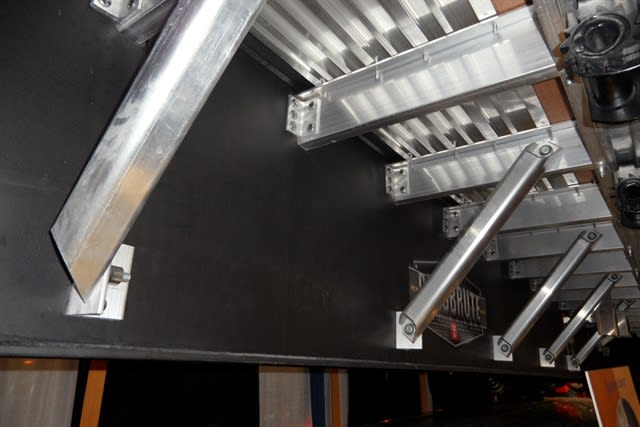
The more steel and aluminum a trailer has, the higher its price will be if President Trump's 25% and 10% tariffs go through.
“That’s an average impact across all trailers; how much depends of course on the amount of steel and aluminum that goes into various types, like vans, flatbeds, and so forth, so the impact on vocational-oriented trailers could likely be higher," he added. Aside from flatbeds, vocational types would include dumps and tankers, Maly said.
Like trucks, sales of trailers have been hot, reaching record levels as motor carriers, flush with cash from strong freight shipments plus profits from the famous cut in the corporate tax rate, are enthusiastically ordering new equipment. Will they step back if vehicle prices go up substantially? Maybe, though prices have been rising steadily for many years, and the current order rate cannot last too long anyway.
How Much Metal Comes from China, Anyway?
The market for primary metals is highly complex, and Steve Latin-Kasper, director of market data and research with the National Truck Equipment Association, discusses it in an article in the April NTEA News. China, he says, is the world’s largest producer of “primary” aluminum and steel, the kind that’s shipped in sheets, coils, and bars. But China consumes most of those primary materials itself, partly to build products for its own markets and partly as exports of those products.
While the U.S. buys innumerable products from China, aluminum isn't one of them. The U.S. purchases 43% of its aluminum from Canada, Latin-Kasper says. The next biggest source, supplying 11%, is Russia. Canada has taken over much aluminum production from the U.S. because it mines a lot of bauxite and electricity rates are lower there. Aluminum production requires copious amounts of electricity, and rising rates here have forced production to go north.
China also doesn't show up as a sizeable supplier of steel and steel products to the U.S. First again is Canada, but its share is just 16%. Next in line are Brazil (13%), South Korea (10%), Mexico (9%), and Russia (9%), followed by many other countries, according to Latin-Kasper’s study.
The North American Free Trade Agreement exempts most products of the U.S., Canada, and Mexico from tariffs, and with some exceptions, they flow unhindered among the three countries. As long as NAFTA lasts (a big question, because Trump is challenging it, as we know) prices shouldn’t be affected. Besides, the president has exempted Canada from his 25/10 tariffs and has said he might exempt Mexico.
Back to China: It has reacted to the Trump tariffs by threatening its own duties on numerous products from the U.S., many of them agricultural commodities, which would hurt American farmers. Trade war, here we come?
Related: Feds Offer Exclusion from Tariffs on Steel and Aluminum
More Blog Posts
Pulsing Back-of-Trailer Lamps Aim to Prevent Crashes
Can the addition of a pulsing brake lamp on the back of a trailer prevent rear-end collisions? FMCSA seems to think so, if its exemptions are any indication.
Read More →
Designing a 14-Foot Trailer
Trailers are 13 feet, 6 inches high, right? Not for Hub Group, which developed a special 14-foot-high trailer spec for a dedicated customer based in California. Learn more in the Trailer Talk blog.
Read More →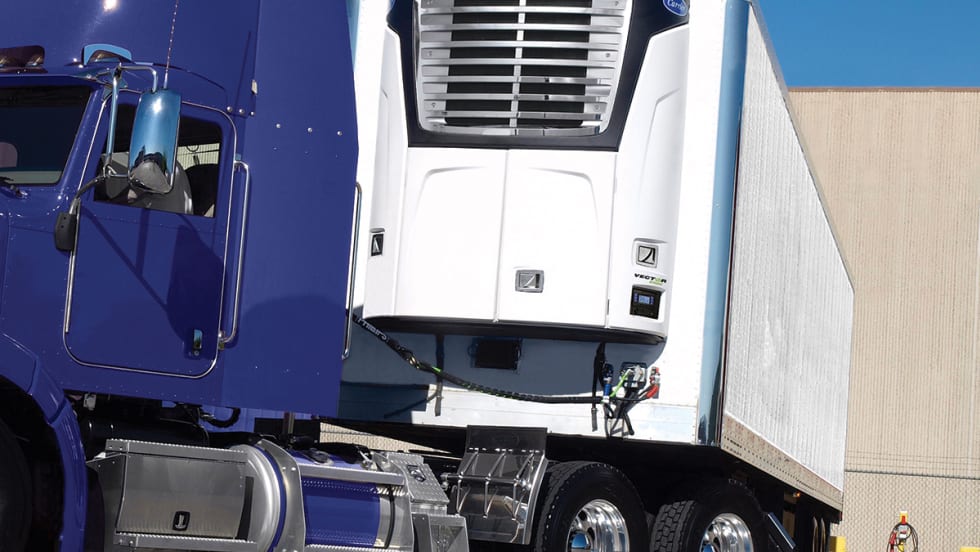
CARB Comes for Reefer Trailers
A new round of emissions control regulations decreed by the California Air Resource Board will begin affecting refrigerated trailer and TRU design and operations next year.
Read More →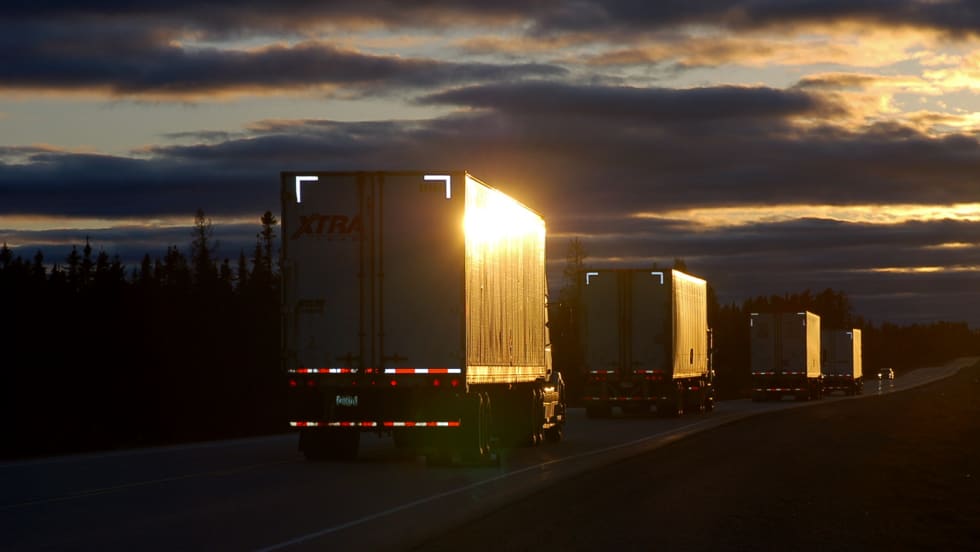
5 Ways Data Analysis Maximizes the Value of Trailer Telematics
Are you getting the most out of your trailer telematics investment?
Read More →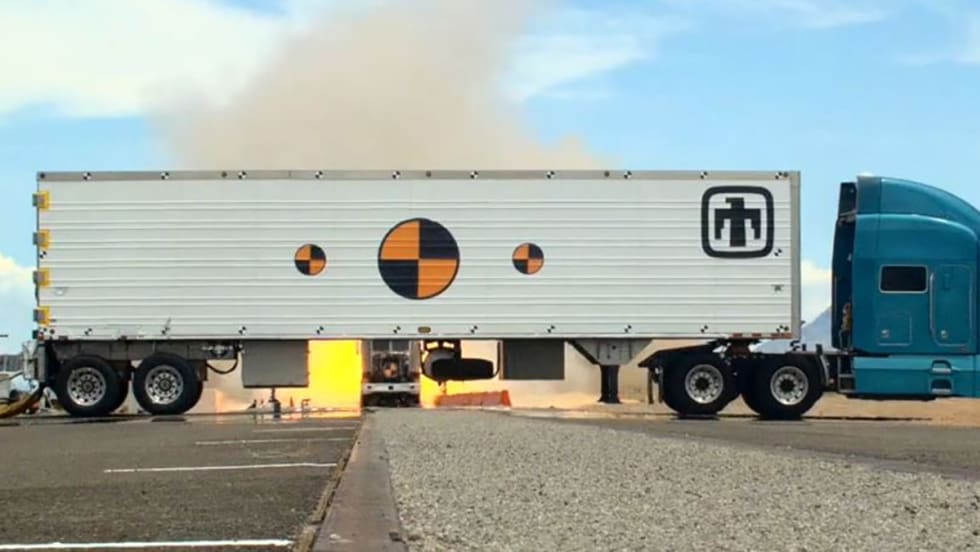
Can You Guess What's in That Trailer?
You don’t always know what’s in the trailers that pass you on the road. But some of those trailers are carrying something a little more dangerous that frozen food or new bedding…like, maybe, a nuclear weapon. But this isn’t an ordinary trailer; this is a trailer specifically made to not only carry this type of payload, but protect it at all costs.
Read More →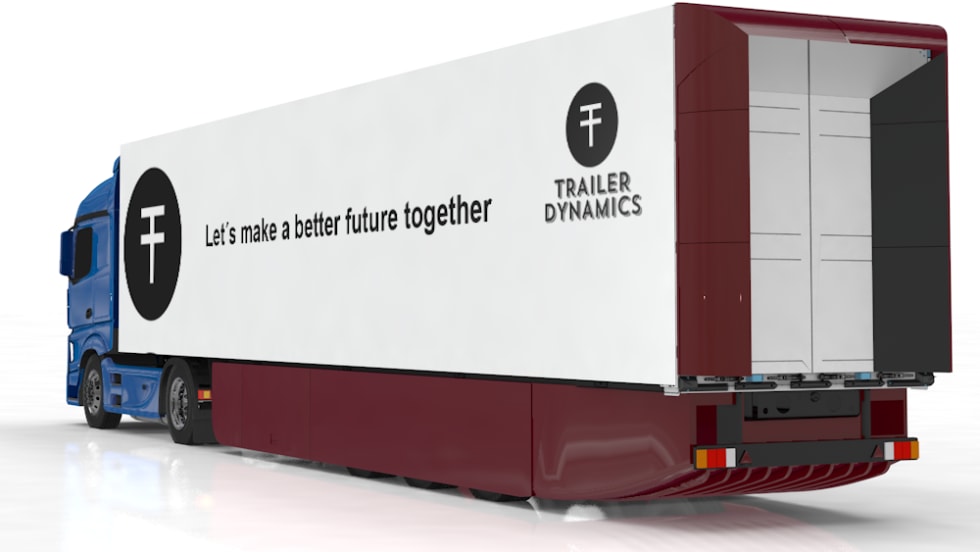
How Trailers Are Harnessing 'Free' Energy
Can trailers play a more active role in sustainable transport beyond aerodynamic add-ons or low-rolling-resistance tires? Some companies think so.
Read More →
Wrapping a Trailer for COVID’s Everyday Heroes
“We don’t only deliver freight. We deliver awareness.” That’s what Jim Barrett, president and CEO of Road Scholar Transport, likes to say about the Dunmore, Pennsylvania-based carrier’s “awareness fleet.” Its latest trailer wrap honors the everyday heroes of the pandemic.
Read More →
How a Tanker Fleet is Using Unorthodox Trailer Lighting to Fight Rear-End Collisions
Groendyke Transport watched the number of rear-end collisions with its trailers rise steadily until it tried an unorthodox and then unapproved method of alerting following drivers that its trucks were applying brakes and slowing down.
Read More →
The Role Trailers are Playing in COVID-19 Funerals
In places such as New York City and Detroit, overwhelmed hospitals and mortuaries are using refrigerated trailers to store the bodies of people killed by COVID-19.
Read More →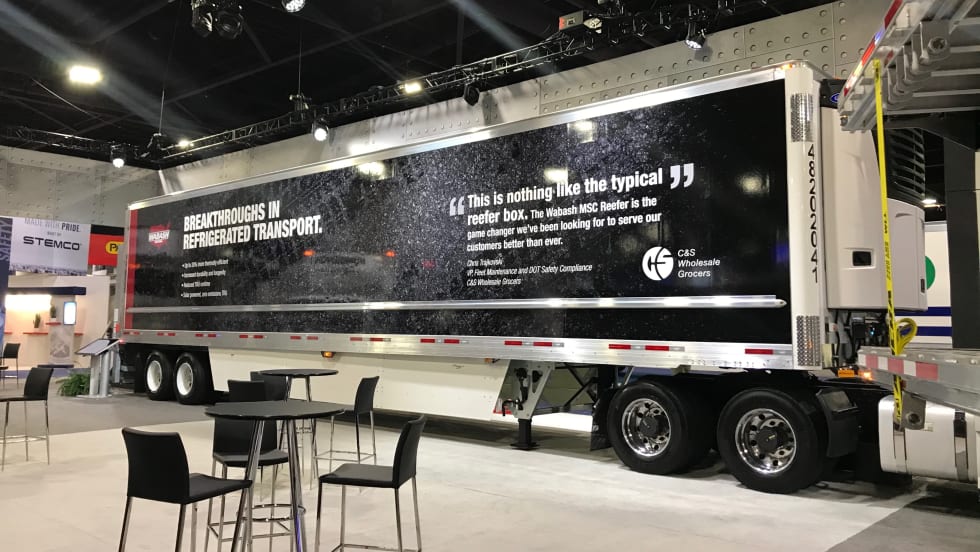
Reefer Trailer Aims to Help Reach Zero Emissions
Wabash National is partnering with C&S Wholesale Grocers to test a new type of zero-emissions refrigerated trailer.
Read More →