Cummins is repositioning itself as Cummins Integrated Power. The new name denotes both the company’s expertise in technology integration and its reach into different alternative fuel segments, including diesel, natural gas, hybrid and battery-electric.
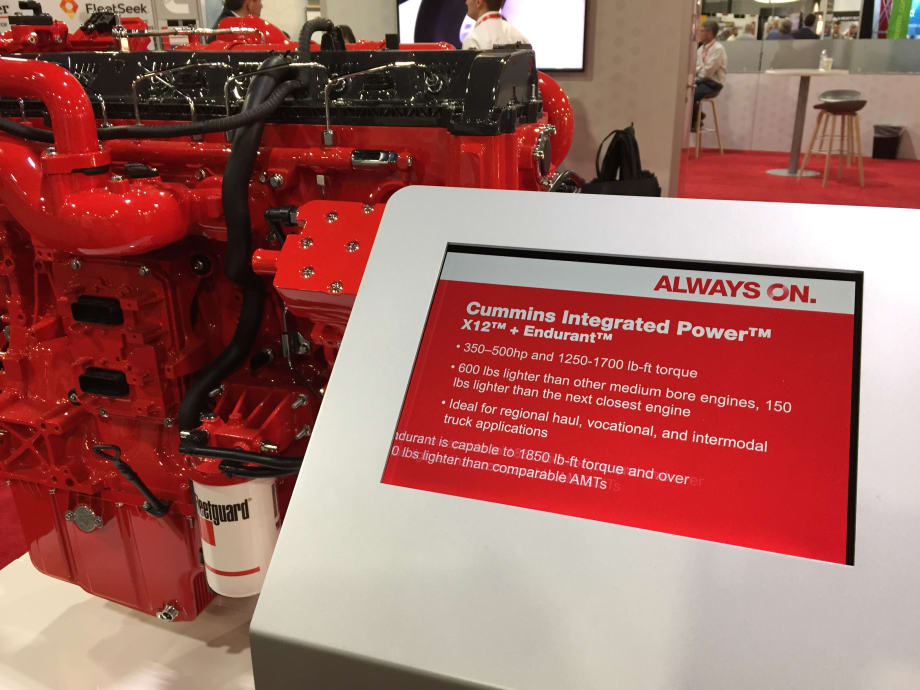
Cummins highlighted the new name at its booth at the Technology & Maintenance Council annual meeting.Photo: Deborah Lockridge
3 min to read
Cummins highlighted the new name at its booth at the Technology & Maintenance Council annual meeting. Photo: Deborah Lockridge
Cummins is repositioning itself in the heavy-duty marketplace with a new name for its expanding portfolio of motive technologies. The new name, Cummins Integrated Power, denotes both the company’s expertise in technology integration and its reach into different alternative fuel segments, including diesel, natural gas, hybrid and battery-electric.
Ad Loading...
Cummins Integrated Power made its debut at ATA’s Technology & Maintenance Council Annual Meeting in Atlanta earlier this month.
Ad Loading...
“As a global, independent supplier, Cummins is uniquely positioned to work with a variety of partners and suppliers to provide the broadest portfolio of integrated power to our customers,” said Srikanth Padmanabhan, president of Cummins Engine Business. “Our expanding portfolio of diesel, natural gas, hybrid and electrified power is a testament to our dedication to delivering the right technology at the right time.”
CPI’s diesel engine side will feature the X12 and X15 engine platforms, both of which can be paired with Eaton Cummins Automated Transmission Technologies’ Endurant transmissions for optimum efficiency. Each of these integrated diesel powertrains harnesses the power of Cummins’ Adept suite of fuel-saving features, capitalizing on the electronic capabilities of the engine and transmission to make powertrain control decisions in real time.
“The joint venture with Eaton has provided complete transparency between the two components and we are working more closely together now which brings additional efficiency to the powertrain,” said Teresa Voors, Cummins’ global powertrain sales and marketing director.
Rounding out the Cummins Integrated Power portfolio, for now, are hybrid and battery-electric vehicles. In 2017, Cummins unveiled the AEOS electric concept vehicle, on display at TMC. Photo: Deborah Lockridge
On the alternative fuel side, CIP natural gas power portfolio offer several engines from its joint venture with Westport (Cummins Westport), including the B6.7N, L9N, ISX12 G and the Ultra-Low NOx ISX12N. Voors said production volumes for these engines have remained very consistent even though natural gas is not talked about as widely as it once was.
“The natural gas engines do quite well for customers with certain sustainability goals,” she said. “It's still an important product line, and we have the economies of scale to keep up a platform like natural gas, offering it across a broad range of OEM trucks.”
Ad Loading...
Rounding out the Cummins Integrated Power portfolio, for now, are hybrid and battery-electric vehicles. In 2017, Cummins unveiled the AEOS electric concept vehicle. It’s still early in the game, but Voors said CIP is looking at a 2019 launch for a battery-electric transit bus powertrain.
“That's the market that makes the most sense right now, so that’s where you will see us first,” she said.
By offering more than one solution and more than one type of fuel, CIP is well positioned to offer customers the best choice of powertrain options that fit with their individual sustainability goals, according to the company.
“Cummins has a long history of delivering reliable power and service to our customers, and our commitment to a growing Cummins Integrated Power portfolio will only enhance our offerings,” said Mike Taylor, general manager, global powertrain integration.
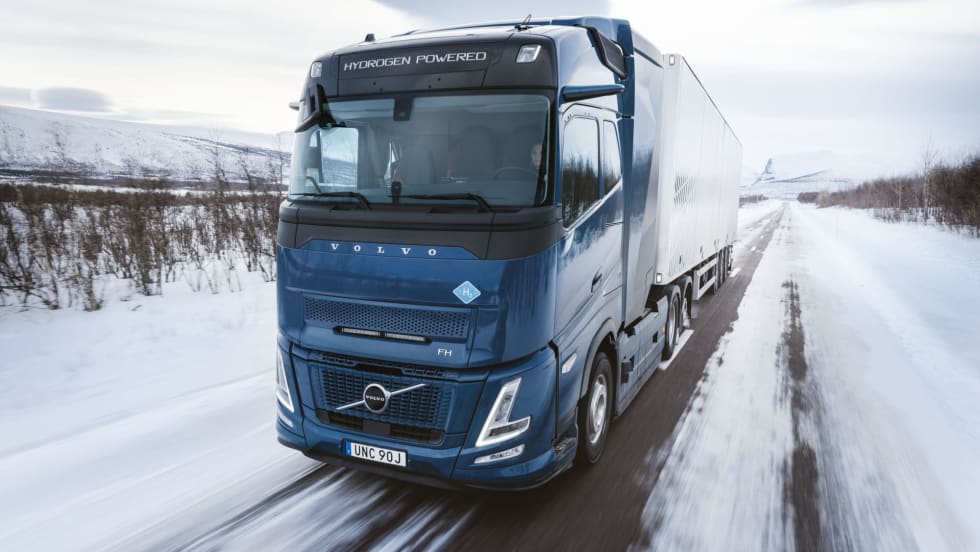
Hydrogen combustion engine trucks will be especially suitable over longer distances and in regions where there is limited charging infrastructure or time for recharging of battery-electric trucks, according to the company.
Trucking operators are slowing speeds, cutting empty miles, and declining unprofitable freight as diesel costs continue to rise due to conflict in the Middle East.
New guidance allows engine makers to replace problematic DEF sensors with NOx-based systems, aiming to reduce unnecessary derates and downtime caused by failures in the sensors designed to monitor diesel exhaust fluid on trucks.
Artificial intelligence, the software-defined vehicle, telematics, autonomous trucks, electric trucks and alternative fuels, and more in this HDT Talks Trucking interview
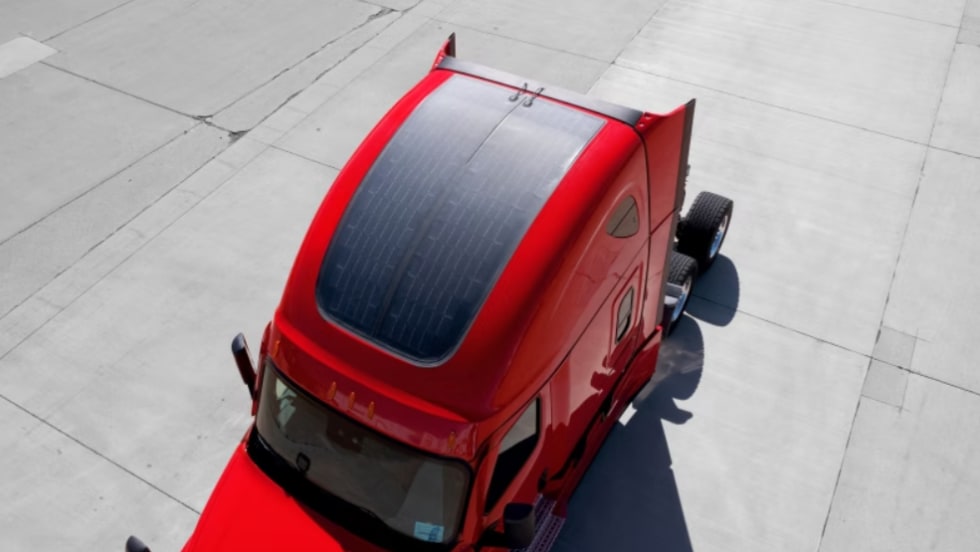
The company’s expanded EPEQ ecosystem includes flexible solar panels, lithium batteries, hydraulic power systems, and a portable fast charger for electric trucks.
Listen as Mike Roeth of the North American Council for Freight Efficiency shares insights into battery-electric trucks, natural gas, biofuels, and clean diesel on this episode of HDT Talks Trucking.