UPS has 90,000 trucks, tractors and package cars around the world is known for its push to adopt alternative fuels and powertrains, which run “green miles.” But the greenest miles are the ones you never run, says the giant parcel carrier.
It’s been a long-standing rule: Whether burning propane, gasoline, natural gas or diesel, engines in the parcel carrier’s package cars are shut off when drivers leave to make a delivery or pick-up.Photo: UPS
3 min to read
It’s been a long-standing rule: Whether burning propane, gasoline, natural gas or diesel, engines in the parcel carrier’s package cars are shut off when drivers leave to make a delivery or pick-up. Photo: UPS
Saving fuel in over-the-road trucking is relatively easy, because high road speeds and unhindered running make for significant payback from aerodynamics and low-rolling-resistance tires. It’s not so easy in stop-and-go operations, where engine efficiency is inherently low and vehicle inertia must be repeatedly overcome. Drivers in such operations are also more intent on doing their delivery or service-provider jobs, not to mention putting up with traffic and other distractions, than conserving fuel.
Ad Loading...
UPS is one fleet to look to for a success story in this area. The giant parcel carrier with 90,000 trucks, tractors and package cars around the world is known for its push to adopt alternative fuels and powertrains, which run “green miles,” as the company puts it. However, a large majority of its fleet still runs on diesel and gasoline.
Ad Loading...
UPS tries to match the vehicle to the needs of the routes, and it’s constantly looking for ways to make its vehicles more fuel efficient regardless of the powertrain. For instance, it worked with Isuzu and Utilimaster to develop lighter-weight composite-body diesel vans that achieved a 40% increase in fuel economy over traditional aluminum vans in testing.
The company plans routes carefully and instructs its drivers to shut off their engines whenever possible.
“The greenest miles are the ones you never run,” David Abney, UPS’s chief operating officer, told an audience at an industry meeting recently.
The company uses computerized route planning and a “smart pick-up” system based on communications with customers to avoid needless miles.
A proprietary system of telematics combines information about the behavioral and mechanical variables that affect fuel efficiency. UPS matches routes to vehicles that get better mileage at the speeds the route requires. Routes are also designed to have the minimum number of stops and starts and still be on time.
Ad Loading...
Drivers help revise and refine their routes almost constantly. Among the goals: Avoid left turns because they take time and risk collisions with opposing traffic. It’s better to go around the block in a series of quick right turns than wait to make a left turn.
“There was a time when we used to stop everywhere every day, even if there were no pick-ups” from regular customers, says Abney, who began his career as a part-time loader and later worked as a route driver. “Those days are gone.” About 200 million miles are thus saved each year.
A cast-in-stone rule for UPS drivers: Shut off the engine when leaving the truck. Doing this can save fuel, not just during deliveries but also during delays, such as when a long, slow train is blocking a grade crossing, long red traffic lights, and while stopping at the office.
The strict anti-idle policy has cut the amount of time delivery trucks idle by 24 minutes per driver per day, which has led to a fuel savings of $188 per driver in one year.
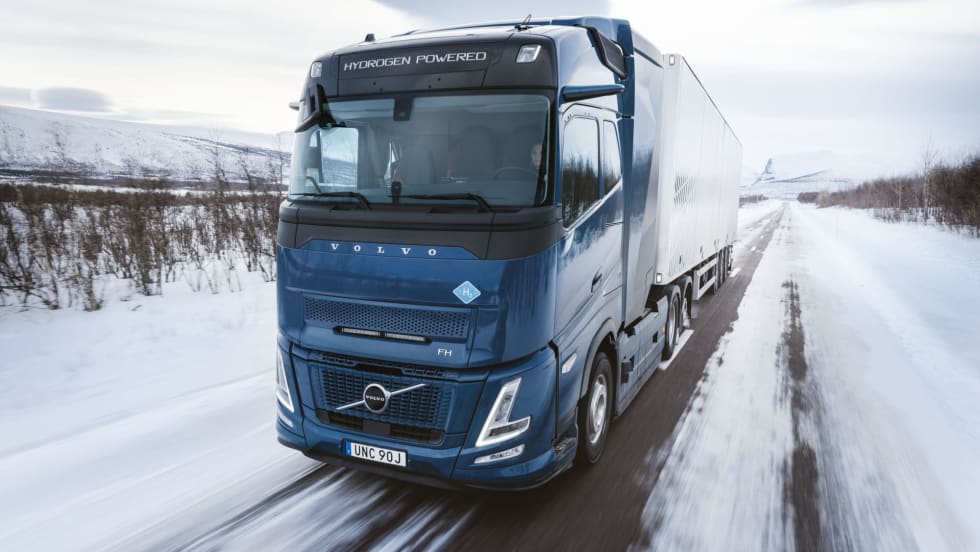
Hydrogen combustion engine trucks will be especially suitable over longer distances and in regions where there is limited charging infrastructure or time for recharging of battery-electric trucks, according to the company.
Trucking operators are slowing speeds, cutting empty miles, and declining unprofitable freight as diesel costs continue to rise due to conflict in the Middle East.
New guidance allows engine makers to replace problematic DEF sensors with NOx-based systems, aiming to reduce unnecessary derates and downtime caused by failures in the sensors designed to monitor diesel exhaust fluid on trucks.
Artificial intelligence, the software-defined vehicle, telematics, autonomous trucks, electric trucks and alternative fuels, and more in this HDT Talks Trucking interview
The company’s expanded EPEQ ecosystem includes flexible solar panels, lithium batteries, hydraulic power systems, and a portable fast charger for electric trucks.
Listen as Mike Roeth of the North American Council for Freight Efficiency shares insights into battery-electric trucks, natural gas, biofuels, and clean diesel on this episode of HDT Talks Trucking.