




Rough Seas Ahead: How Changes to a Maritime Treaty May Affect Trucking
A storm brewing at the waterfront over containerized cargo may have a substantial impact on trucking interests further inland. The debate centers around who, exactly, is responsible for weighing cargo containers.
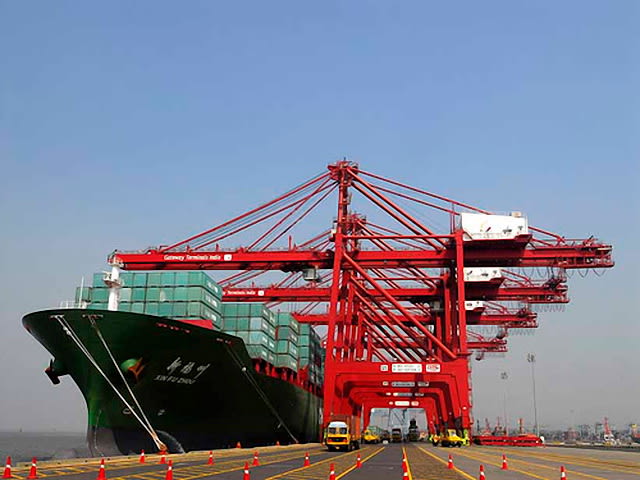
Photo: Jaxer at English Wikipedia
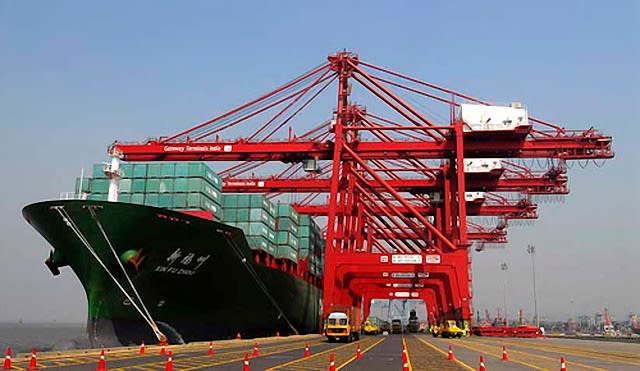
Photo: Jaxer at EnglishWikipedia
A storm brewing at the waterfront over containerized cargo may have a substantial impact on trucking interests further inland. The disagreement centers on the Coast Guard’s proposed implementation of major changes to an international treaty and pits two trucking customer bases against each other.
The controversy centers on recent changes made to the Safety of Life at Sea Convention (SOLAS), an international treaty implemented by the International Maritime Organization in London. As a signatory to the treaty, the United States is responsible for enforcing SOLAS at its ports, and the United States Coast Guard is charged with administering it.
Until recently, containerized cargo could be loaded onto a vessel for its international voyage without any party knowing the container’s exact weight. This system often led to missing or inaccurate weights assigned to containers. However, the current revisions to SOLAS change that requirement. Starting July 1, containerized cargo loaded onto a vessel must bear a Verified Gross Mass and may not be loaded onto its vessel absent that verified weight.
The treaty is motivated by the real dangers that result from unverified cargo on vessels at sea. Mislabeled or unlabeled cargo weights can result in a heavier container being loaded on a lighter container and crushing it. More importantly, imbalanced container loading could cause a vessel to sink at sea. For example, after the MOL Comfort broke apart in the Indian Ocean, investigators said mislabeled container weights likely contributed to the disaster.
What SOLAS means for shippers
While all parties realize the value of verified cargo weights, there is much debate over who is responsible for weighing containers. Under SOLAS, originating shippers are tasked with providing verified weights for cargo, not vessel owners or the ports. Predictably, domestic originating shippers far removed from the waterfront are uncomfortable with a maritime organization sitting in London pushing the dramatic costs of cargo weight verification onto their plates.
Those domestic shippers scored a major win in the battle over who would verify weight when a Coast Guard admiral told a global shipping conference this month that while SOLAS remains mandatory, the Coast Guard’s only concern was that containers loaded onto vessels had a verified weight. How the cargo got that weight was a business decision to be worked out between shippers and maritime carriers, whether it was weighed at the point of origination, on the dock, or at some point in between.
Those comments have led many domestic shippers to state that they intend to continue operating as normal. In response, maritime terminals have stated that they may refuse to allow a container into the port if a verified weight hasn’t been received. The Maher Terminals at the Port of New York/New Jersey, for instance, have said they will require electronic documentation of a container’s weight before it makes it into the terminal.
Considerations for trucking companies
Domestic carriers, including trucking companies, need to begin thinking about how they will navigate this conflict starting July 1. At its most basic level, carriers must decide whether they are willing to accept containerized cargo without a verified weight from an originating shipper. Originating shippers are likely to expect carriers to accept unverified cargo under the belief that the responsibility for verification ultimately falls on terminals and vessel owners. However, accepting unverified cargo potentially ends with a truck and its containerized cargo being turned away at a terminal’s gates.
Carriers should also educate themselves on the differing policies that may exist from port-to-port. For instance, while the Maher Terminals have stated its intention to turn away unverified cargo, the Port of Charleston has suggested a willingness to weigh and verify cargo at the port. Whether the destination port is willing to weigh and verify cargo in conformity with SOLAS may affect whether a carrier accepts the container from the originating shipper at all.
Not only should carriers learn the requirements of their various delivery ports, but companies should review their policies to ensure that a plan is in place if cargo is refused at the port. Not only should companies ensure that a contingency plan exists for the refusal of unverified cargo, but they will need to educate their drivers on those policies. Once a container is refused by a port for unverified weight, drivers and dispatchers will need to act quickly to minimize issues and delays.
On the business side, companies should review their agreements with shippers to ensure that delays resulting from the refusal of unverified cargo are addressed. Delays in cargo delivery are ripe for litigation, especially given the tight windows in which maritime carriers operate. Domestic trucking companies will need to ensure that their interests are properly protected in the layers of contracting that go into every international shipment of containerized cargo.
The implementation of SOLAS on July 1 may result in a host of other issues. For instance, shippers may request that carriers take on the job of verifying container weights. While providing verified weights may prove a lucrative opportunity in this uncertain regulatory scheme, such an added responsibility brings with it increased legal exposure if weights are inaccurate or missing. Companies will also need to decide whether to allow their drivers to rely on the verified weight for their own transportation weight requirements.
While the Coast Guard and the various parties have agreed to discuss SOLAS’s implementation in an effort to head off the potential conflict, trucking companies will need to prepare for a verified world on July 1.
This article was authored under the guidance and editorial standards of HDT's editors to provide useful information to our readers. McGuireWoods partners John D. Padgett (jpadgett@mcguirewoods.com) and J. Brian Jackson (bjackson@mcguirewoods.com) co-chair the firm’s transportation industry team. Padgett advises clients on matters relating to international trade and U.S. customs’ compliance issues, as well as maritime law and litigation relating to cargo damage and other transportation issues. Jackson represents a broad range of clients in the transportation industry and has extensive experience advising clients in motor carrier litigation management. Benjamin P. Abel (babel@mcguirewoods.com) is an associate at McGuireWoods, where he focuses his practice on transportation law, general business litigation and other areas of litigation.
More Fleet Management

FMCSA Pauses Biennial-Update Enforcement Amid Motus Transition
Carriers whose updates were due on or after June 1 have more time, while FMCSA works to stabilize its new registration system and warns of phishing sites impersonating its new carrier registration system, Motus.
Read More →
2026 Blueprint for Countering Smarter Supply Chain Theft
Cargo theft is no longer just the cost of doing business. It's a multi-billion-dollar criminal enterprise exploiting vulnerabilities across your fleet, drivers, and supply chain.
Read More →
How Telematics Improves Visibility, Control, and Performance in Refrigerated Fleets
Explore how telematics help refrigerated fleets improve visibility, uptime, efficiency, compliance, and cargo protection across connected cold chain operations.
Read More →

What the U.S.-Canada Trade War Means for Trucking
Escalating U.S.-Canada tariffs could disrupt cross-border freight, reduce truck volumes, raise costs, and create new uncertainty for carriers on both sides of the border.
Read More →
What Are Trucking’s Top Concerns for 2026?
The American Transportation Research Institute wants to know what's worrying trucking fleet managers, drivers, and other stakeholders in its annual Industry Issues survey.
Read More →
American Trucking Associations Looks for a New Leader
ATA President and CEO Chris Spear abruptly left his job at the association on August 21, at a pivotal time for the trucking industry.
Read More →
Public Wi-Fi Cybersecurity Risks: How Truck Drivers and Fleets Can Protect Their Data
Public Wi-Fi can expose truck drivers and fleets to credential theft, malware, and other cyber threats. Here’s how to reduce the risk on the road.
Read More →
For Nicky Cupp, Fleet Innovation Starts With Frustration
HDT Truck Fleet Innovator Nicky Cupp turns everyday pain points at Fraley & Schilling into opportunities for better technology and smarter processes.
Read More →
Adam Buttgenbach’s Approach to Electric Trucks: Start With Where They Fit
HDT Truck Fleet Innovator Adam Buttgenbach helped PepsiCo build one of North America’s largest EV fleets by focusing on where electric trucks make operational sense.
Read More →
Deen Albert: Let Automation Do the Math, People Make the Decisions
HDT Truck Fleet Innovator Deen Albert makes sure people are still at the heart of operations at Grand Island Express, even while adopting artificial intelligence tools. AI-assisted dispatch helped boost revenue 25% with the same number of trucks.
Read More →