




Bypassing Tolls and Weigh Stations with Technology
Toll and weigh station bypass technology can help fleets cut costs and time, while the vehicle keeps rolling down the road.

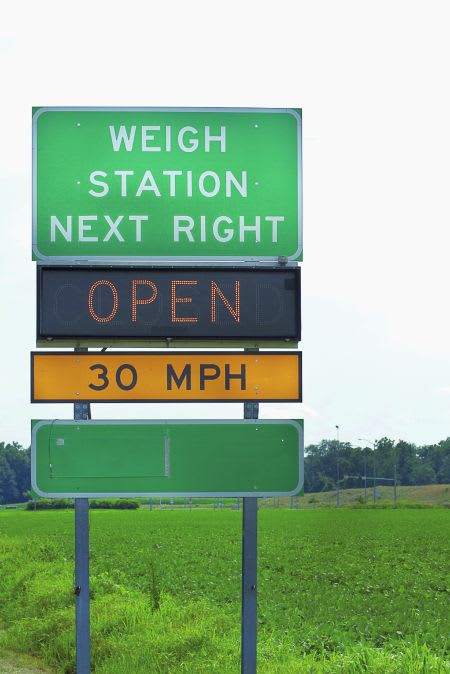
Bypassing weigh stations can save fleets time and fuel, which can cut costs immensely when multiplied over numerous vehicles. Photo: istockphoto.com
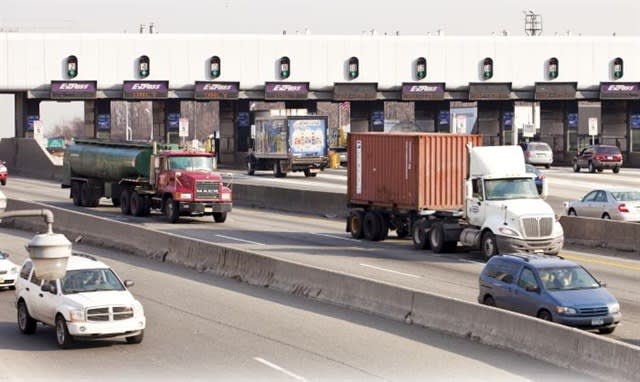
Photo: istockphoto.com
How much can you save from something as simple as being able to bypass a weigh station? Try $8.68.
The cliché “time is money” is a hard truth in the world of trucking. More than one company is ready to help fleets save time and money with bypass and automated toll technology.
According to a 2007 study sponsored by the U.S. Department of Transportation, a single bypass can save fleets approximately $8.68. This number represents the estimated time savings per bypass times the documented heavy-duty truck operation costs per minute. The total net benefits associated with the study’s 10-year analysis ranged from $3.2 million to $219.4 million per company.
“But a single study can’t predict what ROI a fleet can expect, since not all fleets are the same,” says Brian Heath, president of Drivewyze, a weigh station bypass service that runs on a smartphone or in-cab device.
To help solve this issue for its clients, the company created PreClear Analytics, which looks at the hidden costs of actual weigh station and inspection site pull-ins. The complimentary weigh station bypass cost-analysis tool was created by establishing multiple geofences at each of the more than 740 temporary and permanent weigh stations across the U.S. With this geofencing, Drivewyze records the approach, entry, exit and, most importantly, the amount of time a truck spends at each weigh station.
One company, running a fleet of 6,400 trucks, analyzed a little more than 900 trucks operating in the Southeast. In just one month, the company measured 450 hours in lost drive time and more than $60,000 in costs due to weigh station delays. The report determined the loss using the company’s own operating costs. Data from the report also provided additional information that the company can use to improve operational efficiencies.
Behind the bypass
The technology involved in the actual bypass — advance vehicle identification and weigh-in-motion systems — are two key components of the process, says Mark Doughty, vice president and COO of HELP Inc., a non-profit public/private partnership that provides PrePass weigh station bypass.
“They both continue to produce the fastest and most accurate results,” he says.
When a vehicle approaches a weigh station, radio-frequency identification, or RFID, transponders communicate with an electronic reader on a boom over the road, which automatically scans the transponder and identifies the vehicle. After validating the truck to ensure compliance with state requirements, it sends a signal back to a second boom, which includes a green light to tell the driver to go ahead and bypass the facility.
“RFID technology is the basis for the majority of tolling operations around the world because it is inexpensive, low maintenance, 99.9% accurate and simple to use,” Doughty explains.
Tolling with technology
Bypassing weigh stations can save fleets time and fuel, which can cut costs immensely when multiplied over numerous vehicles. Photo: istockphoto.com
The same technology that allows drivers to bypass weigh stations also gives them the green light to forgo the tolling buckets or (sometimes) smiling faces of toll booth attendants.
According to John Andrews, president and CEO of Bestpass, toll transponders provide a time savings for drivers, which is especially important in terms of new hours of service regulations. Bestpass provides bulk toll purchasing and streamlined toll management services to commercial fleets. It recently introduced Data Interchange, an integrated toll management technology for fleet enterprise systems, to provides better management of toll and vehicle related information with fleet back office systems.
“For fleets it also makes processing receipts and repaying drivers quicker. There are back office savings for having consolidated billing for those fleets that use reconciliation services.” Without such services, he says, “electronic tolls can actually introduce back office costs that cannot easily be captured in shipping rates.”
One recent tolling technology development, however, is causing more headaches for the back office.
“The use of video plate tolling (taking photos of license plates instead of transponders) has become more prevalent," Andrews says. "This technology use actually brings with it more ad hoc billing, which results in more back office pain for validation and reconciliation of tolls across a fleet. It’s a backwards evolution which really isn’t in the best interest of our industry.”
Beyond time and money
Bypass systems have a number of other benefits, according to HELP Inc.'s Doughty, including safety.
“Both bypass and automated toll technology solutions help ease congestion before, in and after weigh stations and manual-pay toll booths. They also help eliminate the safety issues that all drivers encounter when trying to merge off and onto the highway,” he says.
Doughty also points out that electronically screening and prequalifying commercial vehicles for weigh station bypass benefits state commercial and enforcement agencies by allowing them to focus their limited resources on trucks and carriers that may be at risk.
The future could also change how these types of technology are used. With autonomous vehicles on the horizon, bypass and tolling systems could see changes in how they communicate and identify vehicles on the roads.
“One consistent theme in the industry," Doughty says, "is to make sure that the technologies that are deployed for mission-critical activities are both reliable and can ensure both data privacy and security.”
More Fleet Management

Color Match Smarter: Tools That Restore & Perform
For fleet managers and collision repair professionals keeping heavy-duty trucks on the road, getting the color right the first time isn't just about appearance — it's about efficiency, turnaround time, and bottom-line results. Discover how today's digital color tools are transforming the repair process from guesswork to precision.
Read More →
FMCSA Pauses Biennial-Update Enforcement Amid Motus Transition
Carriers whose updates were due on or after June 1 have more time, while FMCSA works to stabilize its new registration system and warns of phishing sites impersonating its new carrier registration system, Motus.
Read More →
2026 Blueprint for Countering Smarter Supply Chain Theft
Cargo theft is no longer just the cost of doing business. It's a multi-billion-dollar criminal enterprise exploiting vulnerabilities across your fleet, drivers, and supply chain.
Read More →


How Telematics Improves Visibility, Control, and Performance in Refrigerated Fleets
Explore how telematics help refrigerated fleets improve visibility, uptime, efficiency, compliance, and cargo protection across connected cold chain operations.
Read More →
What the U.S.-Canada Trade War Means for Trucking
Escalating U.S.-Canada tariffs could disrupt cross-border freight, reduce truck volumes, raise costs, and create new uncertainty for carriers on both sides of the border.
Read More →
What Are Trucking’s Top Concerns for 2026?
The American Transportation Research Institute wants to know what's worrying trucking fleet managers, drivers, and other stakeholders in its annual Industry Issues survey.
Read More →
American Trucking Associations Looks for a New Leader
ATA President and CEO Chris Spear abruptly left his job at the association on August 21, at a pivotal time for the trucking industry.
Read More →
Public Wi-Fi Cybersecurity Risks: How Truck Drivers and Fleets Can Protect Their Data
Public Wi-Fi can expose truck drivers and fleets to credential theft, malware, and other cyber threats. Here’s how to reduce the risk on the road.
Read More →
For Nicky Cupp, Fleet Innovation Starts With Frustration
HDT Truck Fleet Innovator Nicky Cupp turns everyday pain points at Fraley & Schilling into opportunities for better technology and smarter processes.
Read More →
Adam Buttgenbach’s Approach to Electric Trucks: Start With Where They Fit
HDT Truck Fleet Innovator Adam Buttgenbach helped PepsiCo build one of North America’s largest EV fleets by focusing on where electric trucks make operational sense.
Read More →