



How often do you feel you’re working blind? If you’re in charge of spec’ing trucks, how do you know you’re choosing well?
 MENU
MENU SEARCH
What new technology that you’ve used in the last 10 years has made a real difference to your operation? Do you know?

Rolf Lockwood, Executive Contributing Editor
How often do you feel you’re working blind? If you’re in charge of spec’ing trucks, how do you know you’re choosing well?
Well, your knowledge options are few. Unless you run a very big operation with the budget to experiment with new technologies, you’re up the creek with too few paddles. Manufacturers can easily work with big fleets, but what if you run 25 trucks out of Nowheresville, Utah? Now you’re up that creek with no canoe, let alone paddles. No wonder you don’t have a big sense of adventure in how you spec your vehicles.
Fact is, a lot of the bigger fleets apparently operate that way, too. That’s according to my good friend Itamar Levine, who spent many years as the maintenance chief at Bison Transport in Winnipeg, Manitoba, one of North America’s best fleets. For the last few years, he’s worked on the supplier side, first as director of sales and marketing for Hendrickson’s trailer systems division, and nowadays as general manager at Freightliner Manitoba. He knows his stuff.
Levine spoke at a recent Performance Innovation Transport conference in Toronto. Always ready to provoke, he said he routinely asks the fleet people he visits one key question: What new technology that you’ve used in the last 10 years has made a real difference to your operation? They all pause, he said, and then can’t answer — either because they don’t test and measure, or because they simply haven’t ventured very far into the “new.”
So how do truck operators identify what works and what doesn’t? They don’t, said Levine. Too often they spend thousands or even millions spec’ing products based on flimsy evidence, if any. They don’t, he said, demand to see factual data like SAE test results. They don’t even ask for the names of fleets that have experience with a given product.
The crux of the matter is that we need knowledge, now more than ever, yet we have too few ways to acquire it. There’s the Technology and Maintenance Council, of course, but it’s not alone.
PIT is one answer. Based in Montreal, Quebec, it’s an unbiased testing organization — with a big test track — to help manufacturers evaluate and refine prototypes and to assist fleet managers in choosing the best cost-saving technologies. Fleets are encouraged to join, and the cost is small — about $30 per truck — which buys access to data from serious, legitimate testing of aerodynamic devices, among other things. Although it’s in Canada, American carriers are also members.
Then there’s the North American Council for Freight Efficiency, which often works closely with PIT, and you can join this one too. Membership costs about $100 and offers an online environment where you can learn about technologies and practices that are actually improving fleet efficiency in the real world. It was created for exactly the reasons I’ve been talking about, because few operations can afford to take leaps of faith.
Formed by the industry itself, NACFE is neutral, and it’s doing good things: an exhaustive study on 6x2 axles, one on tire-pressure maintenance devices, and another on idle-reduction tools. In the works is a study on the pros and cons of automated manual transmissions.
NACFE’s Fleet Fuel Benchmark Report is also mighty useful, now in its third iteration. In that report, 10 major North American fleets share their adoption experiences with various products and practices for fuel efficiency. It includes data for 10 years and 60 technologies, as well as describing the fleets’ best practices.
You owe it to yourself to check out these options.
Rolf Lockwood is vice president, editorial, at Newcom Business Media, which publishes Today’s Trucking. He writes for HDT each month on the making, maintaining and using of trucks.
He can be reached at rolf@newcom.ca or 416-315-1829.
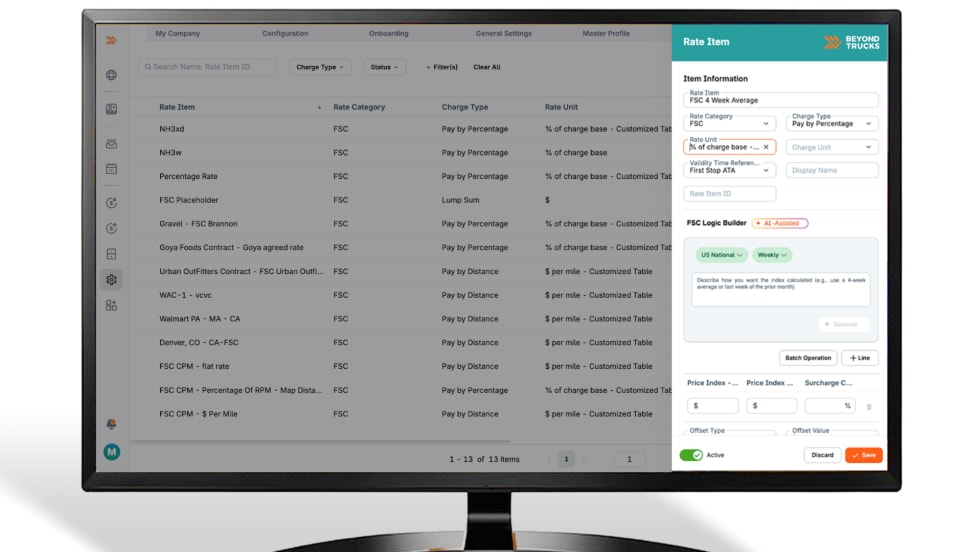
BeyondTrucks says its new RateAgents can turn plain-language rate logic into working code, starting with fuel surcharges — a critical but notoriously complex piece of carrier revenue.
Read More →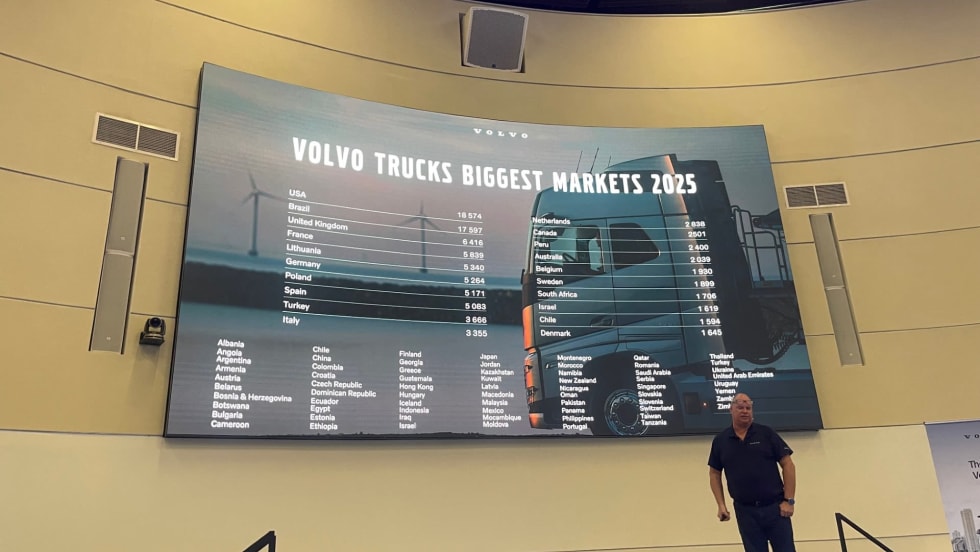
Soft freight conditions persist, but aging fleets, strong order intake, and new-product momentum signal a more optimistic second half of 2026, Volvo Trucks North America says.
Read More →
Cargo theft is evolving from regional smash-and-grab operations to sophisticated fraud schemes. Strategic theft now accounts for roughly a third of cargo crime, with incidents rising sharply in recent years. Here’s how the schemes work — and what fleets can do to protect themselves.
Read More →
Heavy Duty Trucking's Top 20 Products awards recognize the best new products and technologies. Check out the award presentations at the 2026 Technology & Maintenance Council annual meeting.
Read More →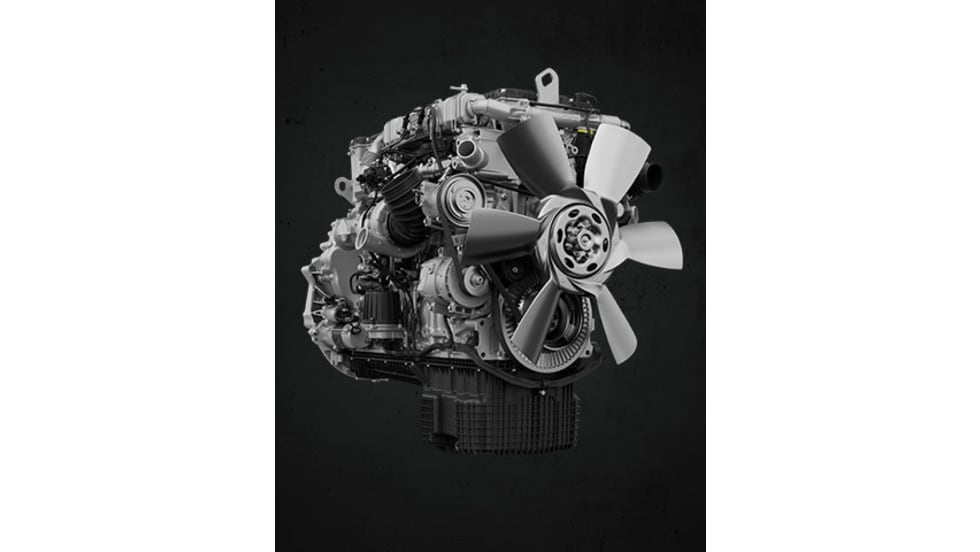
The Detroit® Gen 6 engine platform proves that real progress doesn’t require a complete redesign. Built on 20 years of trusted technology, these engines are designed for efficiency, stronger performance, and greater reliability than before. And they do it all while complying with 2027 EPA standards on every mile.
Read More →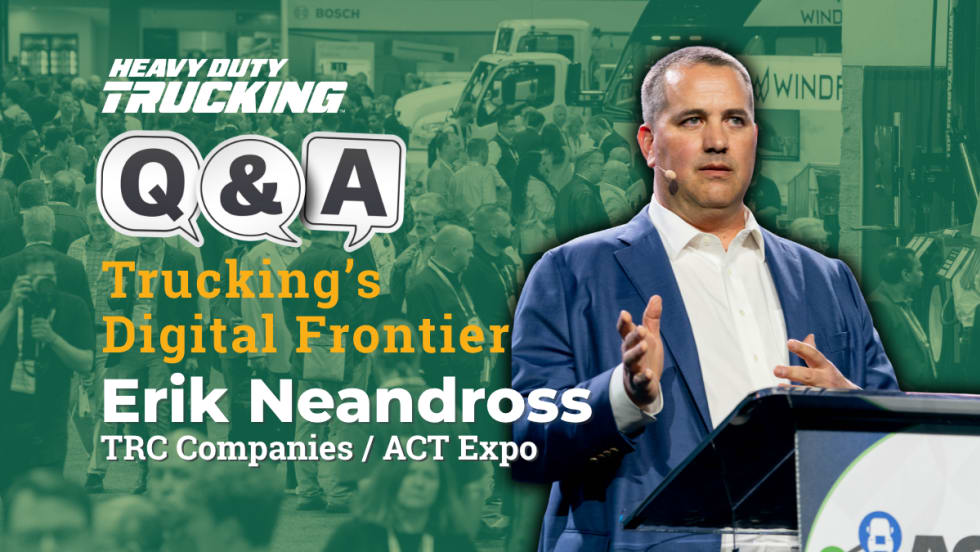
The 2026 ACT Expo is focusing heavily on what organizer Erik Neandross calls trucking's digital frontier. This interview excerpt dives into artificial intelligence, zero-emission vehicles, and tips to make sense of it all.
Read More →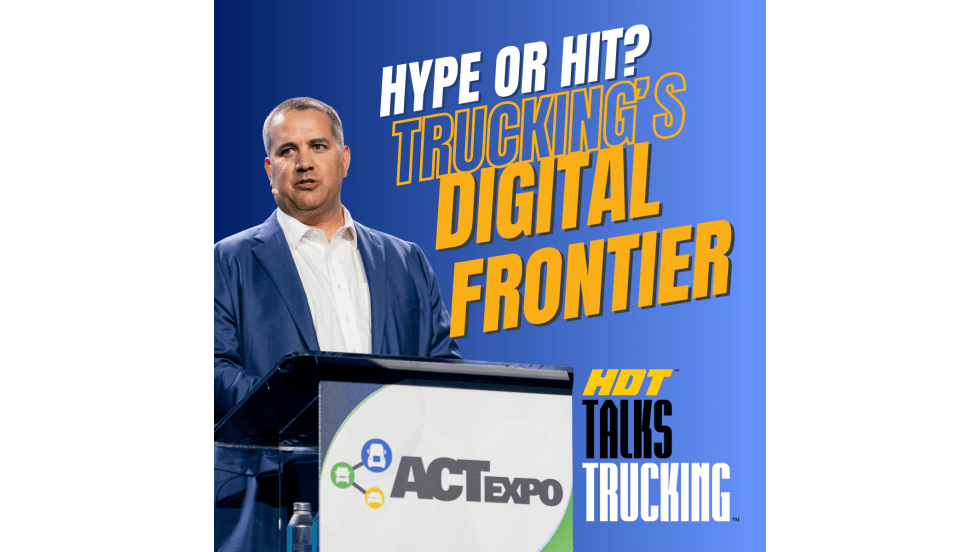
There's an amazing amount of new technology for trucking out there. For fleets, the challenge is figuring out what’s real, what’s hype, and what’s worth investing in.
Read More →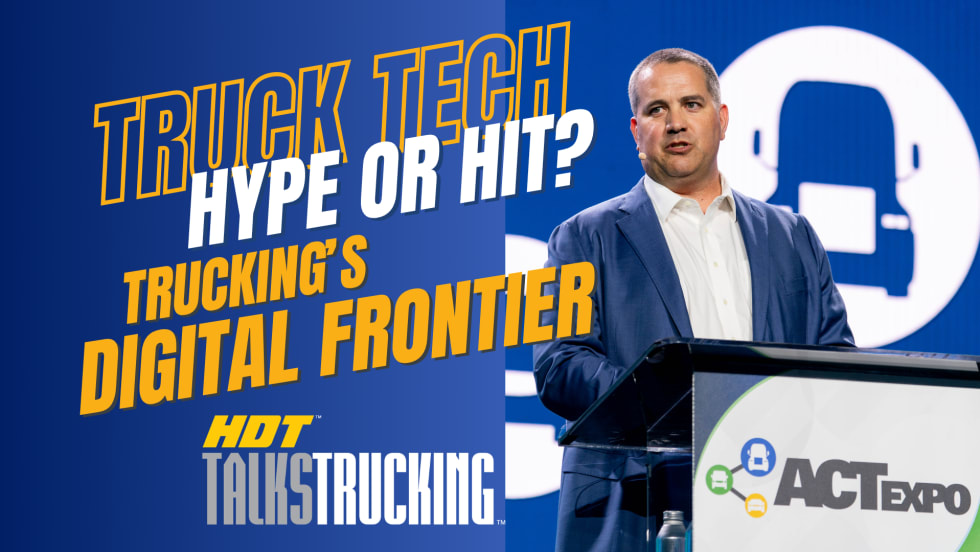
Artificial intelligence, the software-defined vehicle, telematics, autonomous trucks, electric trucks and alternative fuels, and more in this HDT Talks Trucking interview
Read More →
ACT Research data shows volumes hitting a four-year high and supply-demand balance strengthening, but higher oil prices are undercutting tariff relief and tempering optimism.
Read More →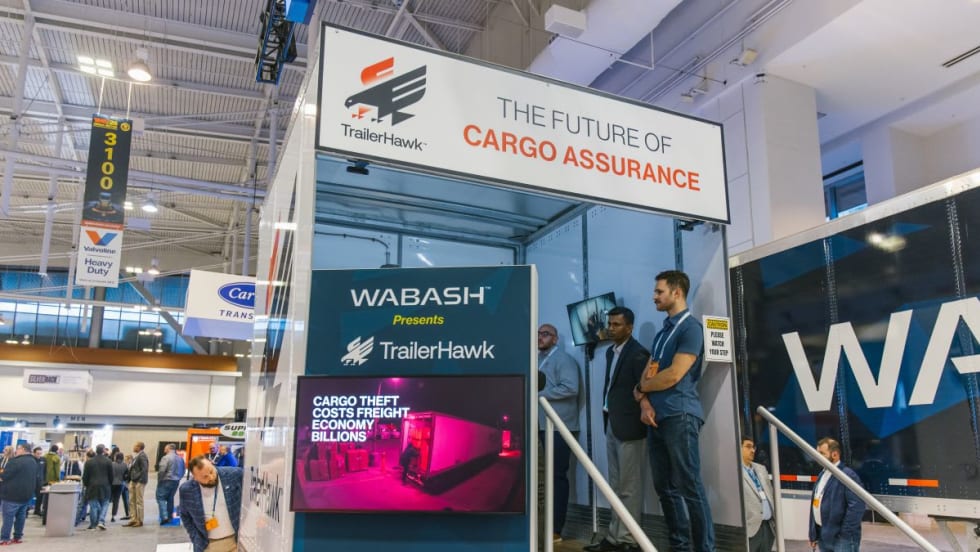
The patent-pending cargo solution integrates a digitally connected cargo door and an intelligent locking system with the TrailerHawk.AI technology platform.
Read More →