



A strategically timed front page feature in the Dec. 3 edition of the New York Times pointed a finger at the trucking industry, the Bush administration and the Republican-controlled Congress for causing unnecessary deaths on our highways.
 MENU
MENU SEARCH
Is the New York Times this prejudicial, or is it just naïve?

A strategically timed front page feature in the Dec. 3 edition of the New York Times pointed a finger at the trucking industry, the Bush administration and the Republican-controlled Congress for causing unnecessary deaths on our highways.
To say this piece is slanted would be an understatement. It could have been ghost-written by Joan Claybrook, head of Public Citizen. Both, as most people know, are harsh critics of the industry.
The story followed the standard truck-bashing formula: Start with a tragic truck-at-fault crash (this one involved the death of a 62-year-old woman and a rookie truck driver). Bring in the contention that it might not have happened if safety regulations were stronger. Then blame someone (guess who?) for not making them stronger.
In this case, the reporter said regulators have rejected stricter truck driver hours rules "after intense lobbying" by trucking, that the Bush administration has loosened safety standards, and that its actions have gone unchecked by Congress.
The reporter described trucking as "America's most treacherous industry, as measured by overall deaths and injuries from truck accidents." But he failed to present supporting data.
Adding insult to injury, the Times followed up a few days later with an editorial attacking trucks entitled "Making the Highways Less Safe."
Several trucking groups and individuals wrote the Times in rebuttal. American Trucking Associations President Bill Graves said: "The Times' fundamental premise that trucking rules have been 'eased' is wrong. The safety rules governing trucking were toughened and strengthened under the Bush administration, as they have been under Republicans and Democrats alike since economic deregulation in 1980."
ATA officials supplied the Times reporter, Stephen Labaton, with its safety agenda and goals, but none of them appeared in the story. Instead, Labaton wrote of ATA's power in the White House, insinuating that it has a chokehold on safety progress.
The paper also drew the ire of the Department of Transportation. "In their frenzy to find fault, the New York Times has cherry-picked data, rewritten history, and incorrectly reported the most basic facts," wrote Brian Turmail, DOT director of communications. "The New York Times needs to admit its errors and set the record straight."
We agree, but as of this writing, it hasn't. Don't hold your breath.
The story and editorial ran just as the courts were due to review truck driver hours of service rules. Considering that timing, and the writer's generous use of materials and claims from the anti-truck crowd, we wonder if this has become an agenda for the esteemed Times. Or maybe it was just a lousy job by a naïve reporter.
We truly hope it was the latter. The Times should be above publishing diatribes that facts don't support.
Item of interest: Late last month, Canada introduced its new hours of service rules. They are nearly identical to ours, and in the few instances where different, are less restrictive.
Do you suppose the Times will blame Bush, ATA and Republicans everywhere for that, too.
E-mail Deb Whistler at dwhistler@truckinginfo.com

BeyondTrucks says its new RateAgents can turn plain-language rate logic into working code, starting with fuel surcharges — a critical but notoriously complex piece of carrier revenue.
Read More →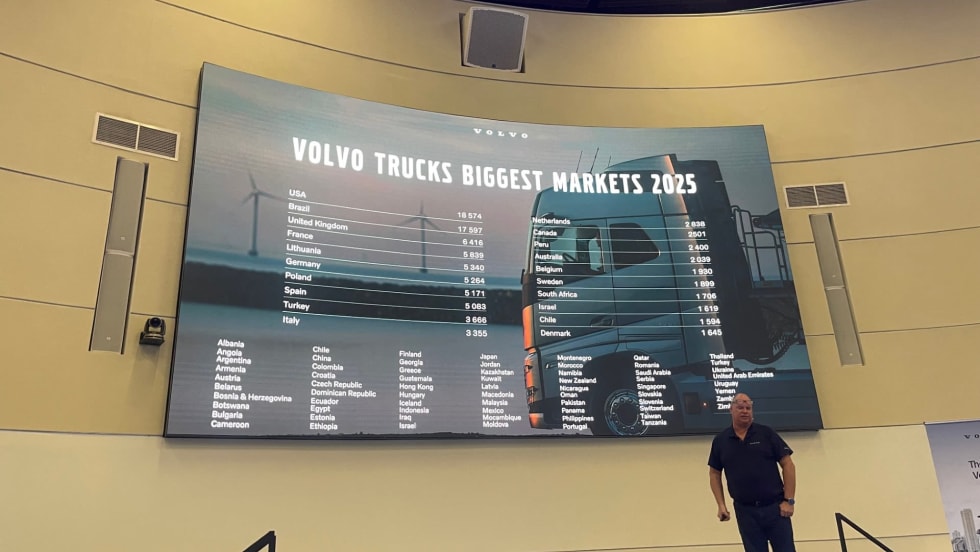
Soft freight conditions persist, but aging fleets, strong order intake, and new-product momentum signal a more optimistic second half of 2026, Volvo Trucks North America says.
Read More →
Cargo theft is evolving from regional smash-and-grab operations to sophisticated fraud schemes. Strategic theft now accounts for roughly a third of cargo crime, with incidents rising sharply in recent years. Here’s how the schemes work — and what fleets can do to protect themselves.
Read More →
Heavy Duty Trucking's Top 20 Products awards recognize the best new products and technologies. Check out the award presentations at the 2026 Technology & Maintenance Council annual meeting.
Read More →
The Detroit® Gen 6 engine platform proves that real progress doesn’t require a complete redesign. Built on 20 years of trusted technology, these engines are designed for efficiency, stronger performance, and greater reliability than before. And they do it all while complying with 2027 EPA standards on every mile.
Read More →
The 2026 ACT Expo is focusing heavily on what organizer Erik Neandross calls trucking's digital frontier. This interview excerpt dives into artificial intelligence, zero-emission vehicles, and tips to make sense of it all.
Read More →
There's an amazing amount of new technology for trucking out there. For fleets, the challenge is figuring out what’s real, what’s hype, and what’s worth investing in.
Read More →
Artificial intelligence, the software-defined vehicle, telematics, autonomous trucks, electric trucks and alternative fuels, and more in this HDT Talks Trucking interview
Read More →
ACT Research data shows volumes hitting a four-year high and supply-demand balance strengthening, but higher oil prices are undercutting tariff relief and tempering optimism.
Read More →
The patent-pending cargo solution integrates a digitally connected cargo door and an intelligent locking system with the TrailerHawk.AI technology platform.
Read More →