





In fact, the technology and much of the computing power to do such things already exists. Mobile communications providers have touted the ability of their systems to monitor a truck's performance, including engine and other component fault codes, while down the street or across the country.
Psychic On board
Today's truck technology and computing power can predict failures before they happen.
July 1, 2007
9 min to read
Theoretically, many maintenance and business management systems currently available are capable of taking this information and delivering predictive scenarios, but only a very few fleets are yet exploring these capabilities.
"I don't see any technological barriers to this kind of prognostics," says Jeff Sipio, strategic vertical marketing director for Intermec Technologies Corp. "The data is there. The ability to communicate this information in near real-time is there. The kind of horsepower necessary to analyze and comb though this data is available. Everything is there. The question is, do you want it? It's more an individual fleet's return on investment or focus on this area. It almost has to become a major issue for them to focus funds, and most fleets just haven't done that, other than one or two of the big fleets that may be messing with it – the fleets that have the resources to look at it. For the smaller fleets, it hasn't been delivered on a platter just yet." Smaller fleets, for that matter, he says, struggle with the kind of in-depth analysis needed to make such sophisticated prognostics happen.
"On the telematics/prognostics side, the idea of picking the fault codes that are coming off the engine and have them feed into the maintenance system and create a work pending, something to check – that is very, very doable," agrees Rick Rosenberg, general manager of TMW Fleet Maintenance Software. Rosenberg, formerly president of TMT Software, which was acquired by TMW in May, says the only real hurdle is an issue of standardization.
"There is no standardization on the fault codes," he says. "To really be able to make this sort of system sing, some sort of standardization would be required."
From the business management side, the capability is there, but some providers have yet to develop such tools. "To tell you the truth, we haven't done that yet," says Dave Mook, COO of TMW Systems. "We've certainly got the business intelligence tools to do the analysis for that, where you aggregate data and look for trends. We're in the early process of marrying up our business intelligence product with the maintenance business side of TMT. We have locked down a relationship between when a maintenance or repair order comes in and allowing dispatch to use the system. In other words, if you've got a truck scheduled to go in for a repair, you lock it out of the dispatch process so that when somebody attempts to plan it on the trip, it stops that and reroutes it to the shop."
Such a system would work similarly to the alert systems TMW uses with its business management software. "We've build an alert engine called the Dog," Mook says. "But we haven't written specific alerts yet that say, 'if these three facts are true, predicatively, then you should take action.' That's something we will be exploring in the next couple of months. Right now what we have is a generic alert engine that you can tell 'if any of these facts are true, go tell somebody about it.' We also have a workflow engine behind that so that once you've generated an alert, that says, 'this truck has to go in for a water pump repair,' or whatever. It can aggregate data, it can look at multiple data, it can require user action and it can do additional machine queries into the system, even possibly send an e-mail to a third party or even to the driver through his mobile com unit."
What such a system essentially boils down to is an automated service writer, says ITC's Sipio. "If your maintenance system were set up to handle your system codes, you could set thresholds in your data management tool and look for trends. Say you learn from your trend analysis that if you see this particular fault code three times in one day, most likely, you have a water pump failure. You could create a service order on that truck saying it is a potential water pump failure. Then, if you know you have a truck coming in that has a potential water pump failure, you should have all the parts on hand to do that job. Theoretically, you could validate that against the parts in stock, or you could be generating a parts order list that's transmitted to a parts house by your parts man, or maybe you transmit it to the parts house electronically."
In essence, you would go through the entire process automatically, from the truck's onboard computer transmitting the fault codes, to the dispatch system routing the truck to the shop, to ordering the parts needed for that repair.
Such an alert ideally would go to a shop foreman or skilled service writers, Sipio says. It should not go to dispatch, because the dispatcher has other priorities, such as taking care of customers' freight. But a skilled service writer could review such an alert and either agree with the systems recommendation or override it.
"The part that is not being used is the telematics prognostic part," Rosenberg says. "Having the truck tell you what's going on and then having your system accept that information and act on it. The technology is there."
While getting telematics integrated into the maintenance process is in its infancy, there is still plenty of computer power that can be used to predict and prevent downtime.
When talking about uptime, the consensus is that the best bang for your buck comes from a solid preventive maintenance program, and technology helps here too.
"When you talk about uptime, the first thing I think of is perhaps the simplest, and that is strict compliance to your PM scheduling," Rosenberg says. "Virtually any maintenance system will do this. Make sure you have your PM schedules set up appropriately and then make sure from a management point of view and a process point of view that you have adherence and the reporting behind it to make sure those PMs are done on time."
In addition, the maintenance systems and business systems need to be linked to share information. "I want to underscore how important the integration between the maintenance system and dispatch system is," Rosenberg says. "The idea of dispatch knowing a PM is due is as powerful as can be. Often dispatch is here and maintenance is there. But if you are interested in uptime, PM compliance is about as important as it gets, and the idea of dispatch having that maintenance information right there on their screen is really strong."
PROACTIVE PARTS CHANGING
Business and maintenance systems can also help fleets be more proactive in terms of parts, both from the standpoint of knowing what level of inventory you should stock for each part and when those parts should be changed out. A maintenance management system will also help identify problem parts and vehicles and it reduces the amount of re-work done.
Fleet maintenance and management software does this automatically, just through operating the program day to day, according to Charles Arsenault, Arsenault & Associates. He notes that just by entering parts orders and repair orders, fleet maintenance software is building a database in the background that can be mined later for valuable information.
This information can be used to predict when parts will fail and allow fleet managers to take proactive steps to prevent that failure.
"We've talked about this with customers for several years," Rosenberg says, "the idea of proactive switching out of parts. Honestly, I only know a few people who have experimented with it. I don't know anybody that does it as a rule. But I know a few people who have it on their list of the next plateau of maintenance, at least with respect to parts."
The idea is to collect information, which maintenance programs can do, and then turn that information into an expected life for various parts. If water pumps, for example, usually last for 150,000 miles before replacement, a proactive approach would be to change out the water pump at 140,000 or 145,000 miles.
"The mentality has always been to drive it as hard as you can as long as you can," Rosenberg notes. "So the idea of somebody actually taking something off that really works is a leap that I'm not sure the whole industry is ready to take yet, but it's on its way."
From a business systems standpoint, prognostics means predictive intelligence, Mook says. "It's a correlation of different factors and patterns. If you see a pattern in the way a certain part is wearing out, it makes more sense to change them out earlier if uptime is more critical. The industry right now is against doing that. But really, the technology is there, but nobody is marrying it up to do it right now."
Information systems also help fleets keep the right kinds of parts, which also helps keep trucks on the road, Sipio notes.
"What I've seen in my past is the dramatic shift you get in your maintenance processes when going from a manually organized shop to an advanced, paperless, well-organized, barcode shop," he says. "When I had maintenance departments reporting to me, we saw a dramatic difference in our ability to keep the trucks on the road when we had better control of our inventory and better control of our mechanics and their performance.
"When you talk about uptime, if you have better control of the parts in your parts room, you can maintain your minimums and maximums and you can do a better job of making sure you have frequently failing parts and consumable parts on hand at all times."
And, according to Sipio, there's no better place than your parts purchasing history to tell what kinds of parts are failing more frequently. "It's much more difficult to do that with a manual system." You need a system to track that data.
"Without some sort of inventory system that's managing exactly what parts you're taking in and what parts you are using, you can't really know how many types of that filter or that turbocharger you are using." With such a system, you can start figuring out failure rates, and it helps you become more proactive at that maintenance process."
Sipio says that in his experience with a manual shop, they didn't buy parts until they ran out because there was no way to predict the future. With the right kind of maintenance and management systems in place, predicting the future becomes much easier – at least in terms of what parts or components may fail. With that kind of prognostic information, fleets can take proactive steps to keep more trucks running and reduce downtime.
Subscribe to Our Newsletter
More Fleet Management
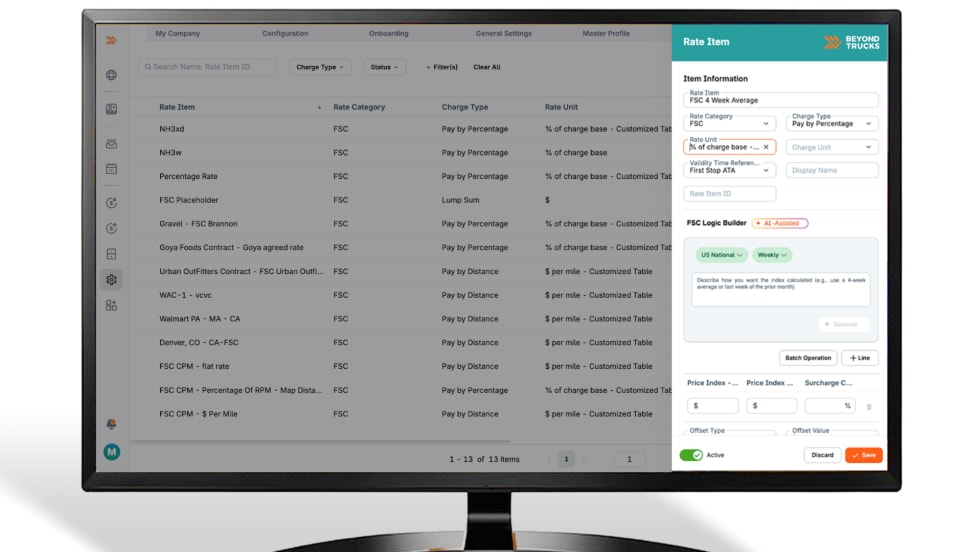
BeyondTrucks Targets Rate Complexity with New AI RateAgents
BeyondTrucks says its new RateAgents can turn plain-language rate logic into working code, starting with fuel surcharges — a critical but notoriously complex piece of carrier revenue.
Read More →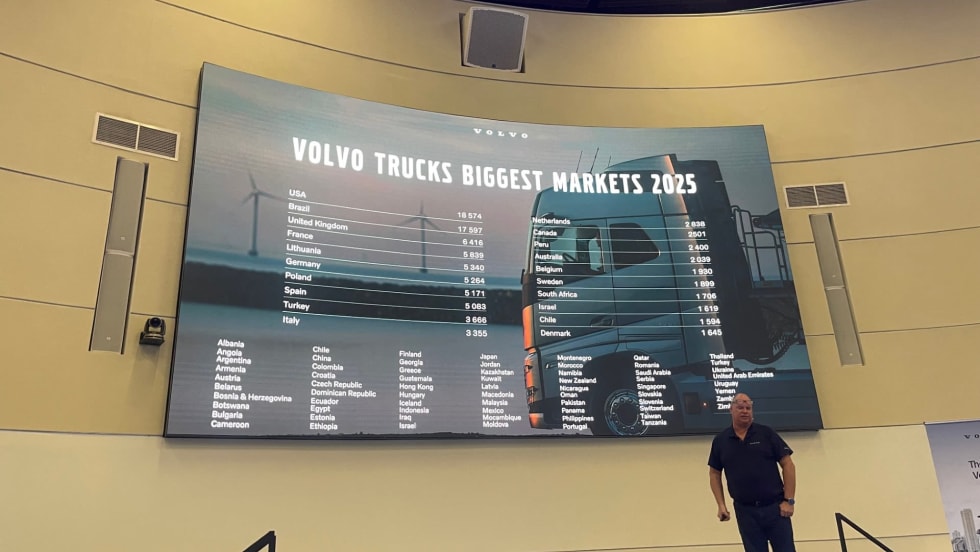
Volvo Sees Market ‘Tipping Point’ as New VNL Orders Surge
Soft freight conditions persist, but aging fleets, strong order intake, and new-product momentum signal a more optimistic second half of 2026, Volvo Trucks North America says.
Read More →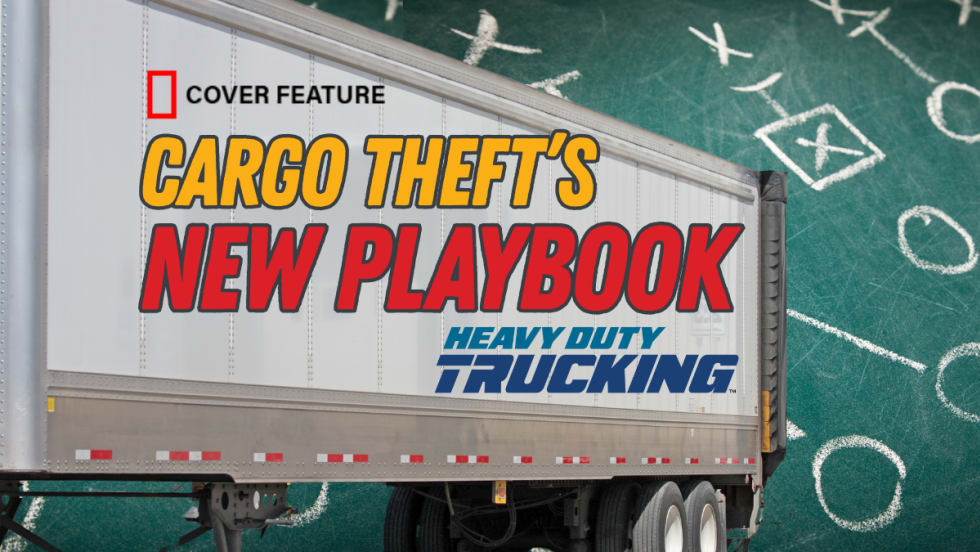
Cargo Theft’s New Playbook: Strategic Fraud, Double Brokering, and Cybercrime Hit Trucking
Cargo theft is evolving from regional smash-and-grab operations to sophisticated fraud schemes. Strategic theft now accounts for roughly a third of cargo crime, with incidents rising sharply in recent years. Here’s how the schemes work — and what fleets can do to protect themselves.
Read More →
HDT Honors the Best New Products of 2025 at TMC [Photos]
Heavy Duty Trucking's Top 20 Products awards recognize the best new products and technologies. Check out the award presentations at the 2026 Technology & Maintenance Council annual meeting.
Read More →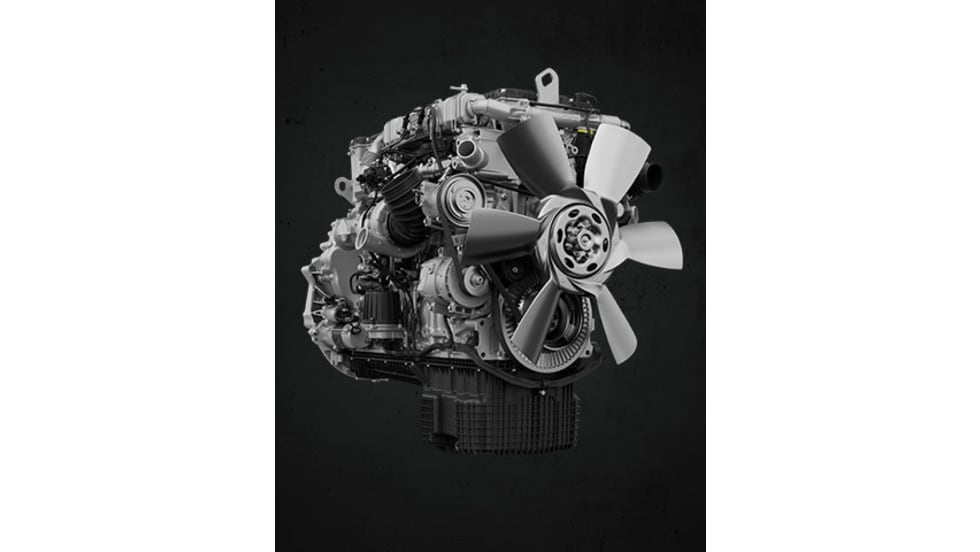
Sponsored•March 31, 2026
Detroit Engines: Trusted Performance, Built for What's Next
The Detroit® Gen 6 engine platform proves that real progress doesn’t require a complete redesign. Built on 20 years of trusted technology, these engines are designed for efficiency, stronger performance, and greater reliability than before. And they do it all while complying with 2027 EPA standards on every mile.
Read More →
Q&A: What's Real in Advanced Truck Tech? ACT Expo's Erik Neandross Weighs In
The 2026 ACT Expo is focusing heavily on what organizer Erik Neandross calls trucking's digital frontier. This interview excerpt dives into artificial intelligence, zero-emission vehicles, and tips to make sense of it all.
Read More →
Trucking's Digital Frontier: AI, Connected Vehicles, Alternative Fuels and More
There's an amazing amount of new technology for trucking out there. For fleets, the challenge is figuring out what’s real, what’s hype, and what’s worth investing in.
Read More →
What's Real in Advanced Truck Technology? ACT Expo's Erik Neandross Weighs In
Artificial intelligence, the software-defined vehicle, telematics, autonomous trucks, electric trucks and alternative fuels, and more in this HDT Talks Trucking interview
Read More →
ACT: Trucking Volumes Rise, Capacity Tightens as Fuel Prices Cloud Outlook
ACT Research data shows volumes hitting a four-year high and supply-demand balance strengthening, but higher oil prices are undercutting tariff relief and tempering optimism.
Read More →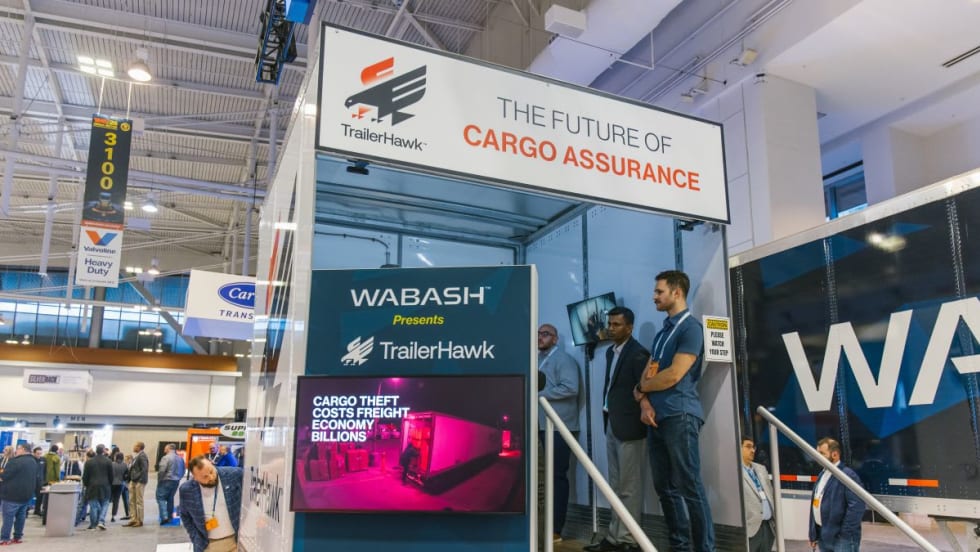
Wabash Teams Physical Security With Digital Tech For Better Cargo Visibility
The patent-pending cargo solution integrates a digitally connected cargo door and an intelligent locking system with the TrailerHawk.AI technology platform.
Read More →