




Workers' Compensation has fast become a leading cost factor in business insurance programs.
Premiums are at an all-time high within many business classes and the indirect costs associated with employee injuries are often two to three times the premium. Many businesses are left feeling helpless in controlling these costs and do not realize the level of control they can have.
HNI Risk Services created a program, Comp Clarity, consisting of 10 proven methods to control Workers' Compensation costs. They call it Comp Clarity because it offers a clear path to control costs using three types of strategies: Preventing, Managing and Financing. Any company can implement each strategy without hiring a consultant or making a large financial investment. The real investment is long-term commitment.
Once you are committed, you may want to look beyond a traditional insurance broker to find a "risk advisor" who can help you create a plan that fits your unique environment and needs.
Strategy 1: Build a totally accountable safety culture from the top down
This is the catalyst of any successful loss control program. Your leadership team must set the tone for the culture by exemplifying the standards to which you expect all your employees to adhere. There are many facets of a company's culture, but it all boils down to your ability to establish "What is Normal?" This is the baseline for behaviors within your organization.
Strategy 2: Educate employees on the factor that influence the company's Experience Modification Factor
Your experience mod is the number insurance companies use in the determination of your premium. Share your mod as well as the cause, cost and impact of an injury with your employees. You will build awareness and see a major difference in behaviors and their individual commitment to helping the company improve.
Strategy 3: Establish effective hiring and orientation procedures that reduce the likelihood of accidents caused by new hires.
Studies indicate that more than 40% of all workplace injuries occur within the first year of employment. You can control this number through consistent policies such as pre-employment physicals, detailed job descriptions, training/mentoring with "ideal" employees, and safety orientation tests.
Strategy 4: Designate a Workers' Compensation Coordinator
Creating these strategies and putting them in writing is one thing, but implementing and following through is the most difficult task. Your coordinator should be someone within your current leadership team, and should of course fully endorse your philosophy.
Strategy 5: Develop a system to actively manage claims to ensure proper reporting and filing.
Both frequency and severity impact your costs and each claim should be proactively managed to minimize its impact. At minimum, conduct quarterly claims reviews including status reports and action items. Work with your risk advisor and claims adjuster to mitigate the cost of each claim.
Strategy 6: Conduct thorough accident investigations to strengthen loss control efforts.
Aside from regulatory reasons, thoroughly investigating the cause of each accident will allow you to prevent recurrences. Your coordinator and/or supervisors should be the first contact upon an accident. Establishing accident review teams (including management) is also effective in ensuring corrective action and compliance. Another function of the review team is to research the legitimacy of the claim to protect your company from fraud.
Strategy 7: Establish an effective Early-Return-to-Work program.
Getting an employee back to work after an accident can be paramount in controlling your overall costs. A claim with lost work time impacts your costs considerably more than a medical-only claim. Utilize modified duties and communicate your program to physicians and clinics. A qualified risk advisor will assist you with the many elements of a successful return-to-work program. This program will have a tremendous impact on your company's culture as well.
Strategy 8: Implement an incentive program.
Although sharing the impact of your costs with employees and mandating policies is effective, most employees respond to incentives for safe behaviors. Many organizations use company-wide challenges for no lost-time injuries within a certain time period or accident frequency goals. You will find that employees will make a strong effort not to be the individual who ruins it for everyone else!
Strategy 9: Conduct thorough audit verifications.
Many experience mods are incorrect due to clerical errors. Most often the errors are found in payroll classifications. Each classification is associated with a different rate, so be sure each of your employees is properly designated. There are other auditing methods that your risk advisor should provide on annual basis.
Strategy 10: Establish systems and procedures to lower the medical costs of each claim.
The most common procedure in this strategy is the use of preferred physicians and/or occupational health clinics. These providers are trained in occupational injuries and often have unique treatment practices that minimize costs and work with employers to return employees back to work as soon as possible. Promoting wellness in your company is also critical to the success in this strategy.
This program works best when it is integrated with a company's unique dynamics and specific needs. It is more important to identify and develop the strategies that will have the most impact on your bottom line rather than attempting to implement all 10 at once.
Adapted from an HNI white paper. HNI is a non-traditional insurance brokerage that "helps clients attack and conquer risk."
10 Ways to Control Workers' Compensation Costs
Workers' Compensation has fast become a leading cost factor in business insurance programs
More Fleet Management

HDT Top 20 Products 2026: The New Tools, Technologies, and Ideas Shaping Trucking
From pricing intelligence and compliance tools to charging infrastructure, diagnostics, tires, and AI, HDT’s 2026 Top 20 Products recognize the new tools, technologies, and ideas heavy-duty trucking fleets are using to run their businesses.
Read More →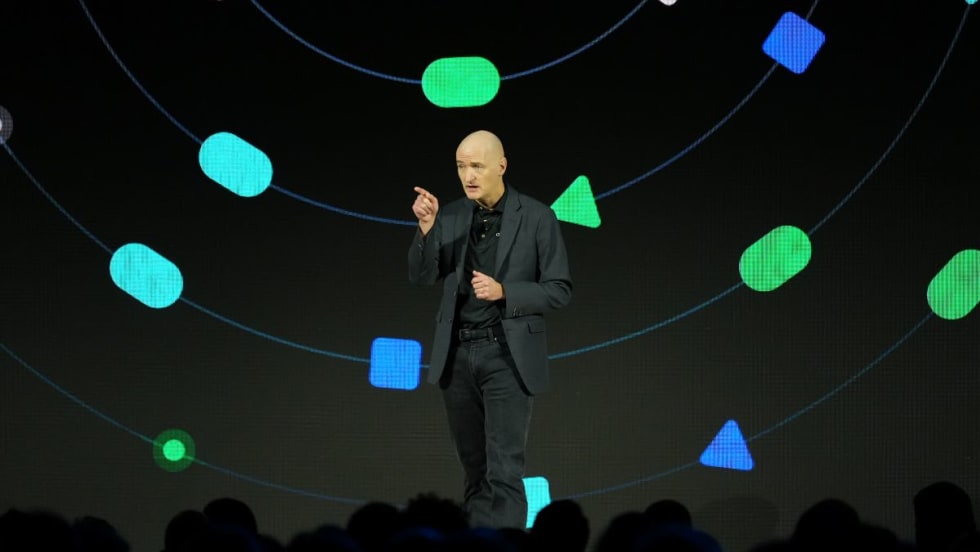
Adapt or Die: Geotab’s Neil Cawse on AI’s Rapid Reinvention of Fleet Management
Artificial intelligence is evolving faster than fleets can keep up, and telematics must evolve with it, Cawse said during Geotab Connect. The future? A single AI coordinating every system — and leaders who know how to guide it.
Read More →
After Three Years of Pressure, Motor Carriers and Brokers See Early Signs of a Turn
Survey data show carriers and brokers expect improving demand in 2026, even as rates lag and capital investment remains on hold.
Read More →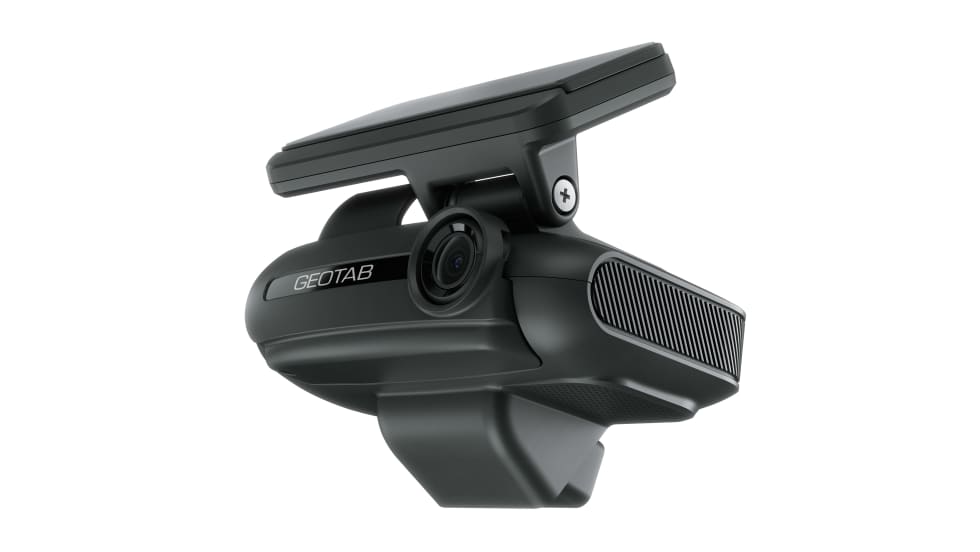
Geotab Launches AI-Powered GO Focus Pro Dash Cam With 360-Degree Visibility
Geotab launches GO Focus Pro, an AI-powered 360-degree dash cam designed to reduce collisions, prevent fraud, and protect fleets from nuclear verdict risk.
Read More →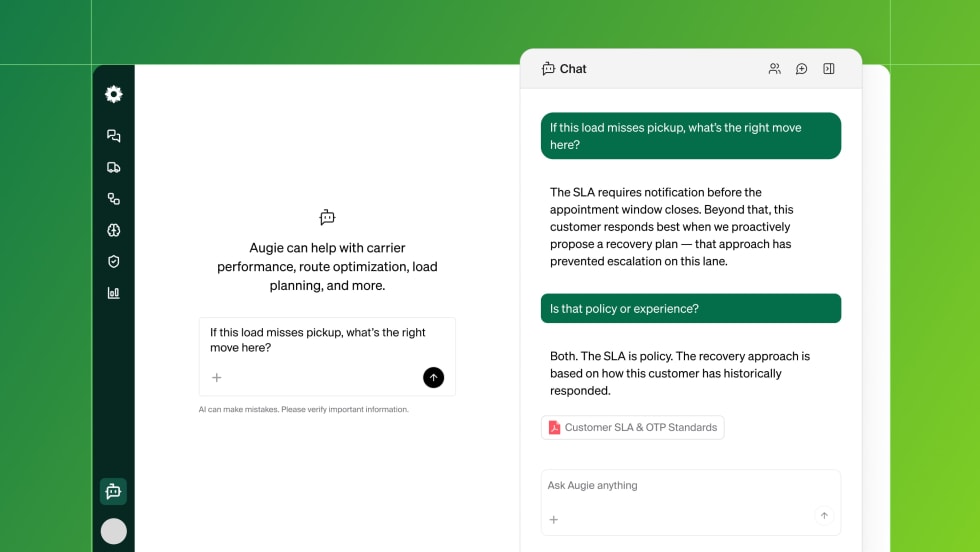
Augment Launches Freight-Native Knowledge Hub to Preserve Operational Know-How
Knowledge Hub is designed to turn scattered tribal knowledge into execution-ready intelligence and help logistics teams make faster, more consistent decisions.
Read More →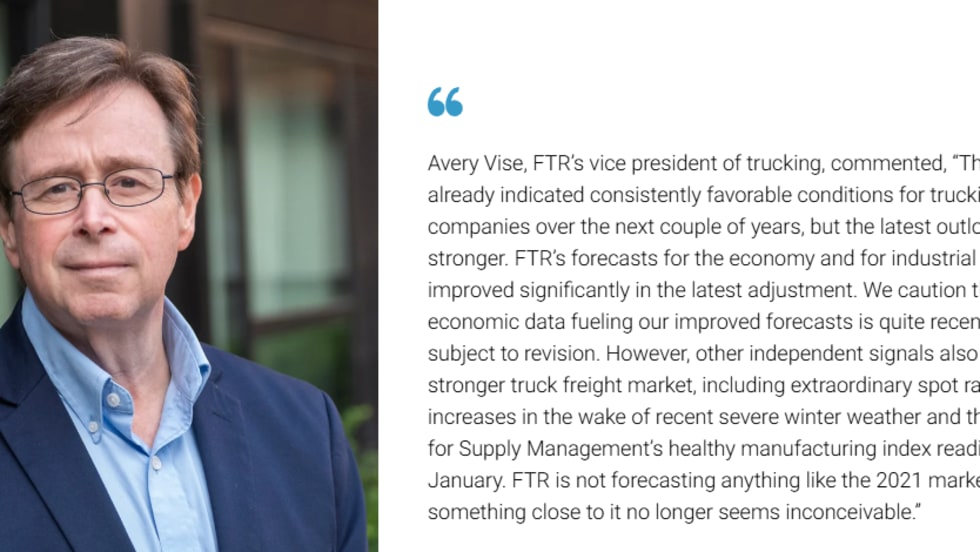
FTR: Trucking Conditions Hit Four-Year High as Rates and Capacity Tighten
Improving freight rates and tighter capacity push FTR’s Trucking Conditions Index to its highest level in nearly four years.
Read More →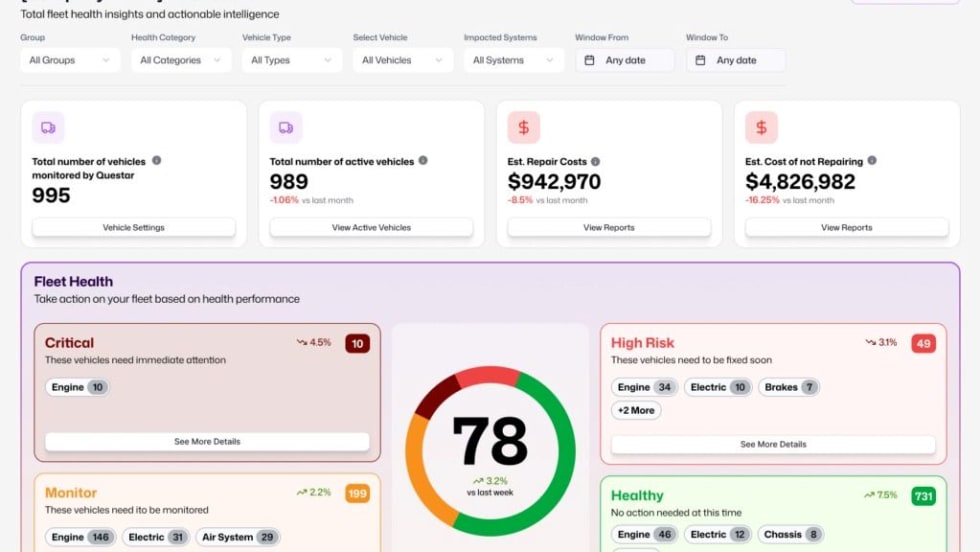
Questar Predictive Fleet Health Platform Now Available Through Geotab Marketplace
Quester’s AI-driven maintenance insights aim to help fleets reduce unplanned downtime, improve repair planning, and better understand the true cost of maintenance decisions.
Read More →
Truckload Carriers Association Names Jim Mullen President
Mullen has trucking experience with government, associations, trucking companies and suppliers.
Read More →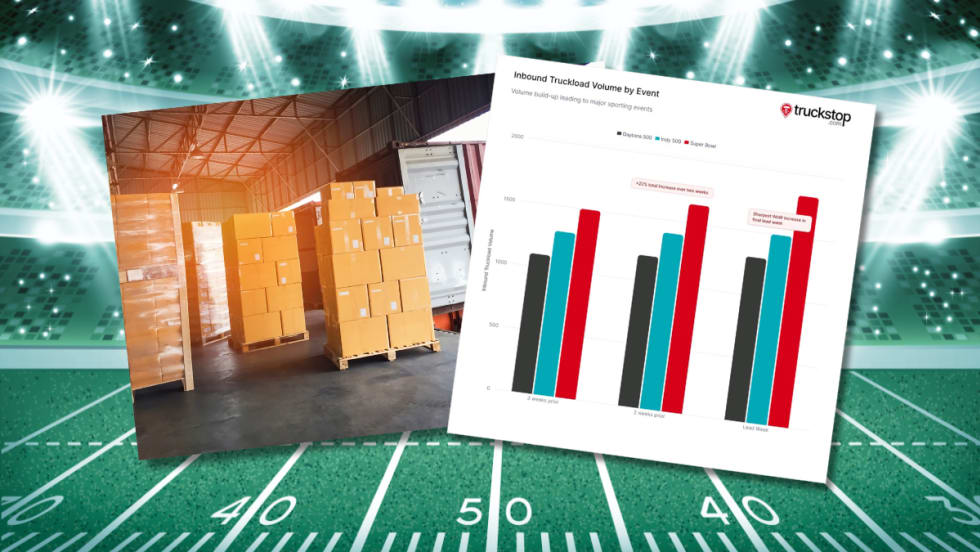
How The Big Game Impacted Freight Volumes
Super Bowl LX drove a spike in trucking freight volumes into San Jose. New data shows which equipment types benefited most.
Read More →
How Cybercrime Is Reshaping Cargo Theft and Fleet Risk in 2026
Artificial intelligence is changing how cybercriminals and cargo thieves target trucking fleets—and how fleets defend themselves. As phishing, impersonation, and cargo theft converge, cybersecurity is becoming a core part of fleet safety and operations.
Read More →