





The emergence of the regional transportation market is causing many fleets to rethink their equipment demands.
Test Drive: Kenworth's T660 Regional Hauler
The emergence of the regional transportation market is causing many fleets to rethink their equipment demands
October 11, 2011
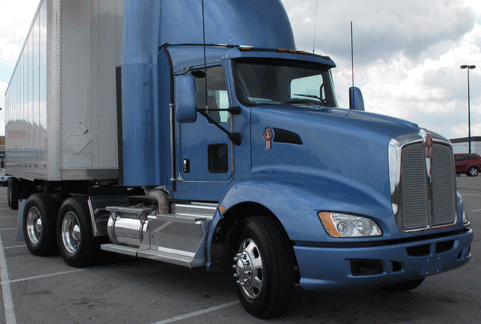
The day cab aero package includes cab-side fairings and a roof-mounted air deflector. the DPF/SCR package is under the passenger access step. (Photo: Jim Park)
6 min to read
If regional is defined as hauls of 500 miles or less, then the power unit may or may not require a sleeper. A day cab would do fine in many regional applications, especially on delivery routes where drivers can make the entire trip in a single shift.
Regional trucks are lighter, generally more maneuverable because they are shorter, and almost always less expensive than an over-the-road truck. But because regional work - shorter highway runs - still involves a good percentage of time operating at highway speeds, aerodynamic efficiency remains a high priority.
Kenworth waded ably into these waters in March, launching its T660 regional hauler configuration at the Mid-America Trucking Show.
Senior Editor Tom Berg and I each drove the one you see here, though in different locations. This review features both of our observations.
More of what you want
Kenworth has a very capable regional tractor in its T800 model, and it will remain available configured as such. This new version of the T660 offers the maneuverability and fuel capacity of the T800, but it comes wrapped in a more aerodynamic package.
Previous day-cab versions of the T660 included chassis-mounted under-cab fairings that limited potential fuel-carrying capacity. Frame space is necessarily limited on a short-wheelbase tractor. In some cases this forced fleets to run with smaller capacity fuel tanks. Sometimes this costs money because fuel must be sourced on the road at higher prices.
To address this problem, Kenworth engineers replaced the under-cab fairing with a cab-mounted extension of the hood fender. This allows larger diameter 24.5-inch and 28.5-inch fuel tanks to fit under the cab. Previously, only 22.5-inch tanks fit in that space.
By increasing the diameter of the fuel tanks, engineers were able to reduce the wheelbase by up to 19 inches with 24.5-inch diameter tanks. Using a 28.5-inch diameter tank provides a potential wheelbase reduction of up to 34 inches. That's not insignificant given the packaging challenges associated with DPF/SCR systems and DEF reservoirs. The truck I drove had a modest 175-inch wheelbase, and as you can see from the photos, there's not much extra room on that frame.
In cases where wheelbase is not critical to an operation, customers can order the same wheelbase as a standard T660, but with greater fuel capacity. While some would argue all that extra fuel is just dead weight to lug around that hurts fuel economy, others will tell you that saving a few cents a gallon is a higher priority. Kenworth now lets the customer make that call.
Kenworth claims the new configuration also reduces weight by at least 250 pounds from a comparably equipped Kenworth T660 with forward fairings. This either provides the truck with more payload capacity, or compensates for the weight of that "extra fuel."
If you're still looking for reasons to switch from the workhorse T800 to the sexier new T660, with the new one you get Kenworth's advanced forward lighting system. Kenworth claims the halogen projector headlamps provide 40% more light than sealed beam lamps and last three times longer.
If you do a lot of night driving in deer-infested areas of the country, you might want to consider the optional High Intensity Discharge (HID) headlamps. They are said to provide 75% more light and last 11 times longer than sealed beam lamps.
Curb appeal
In the view of some managers, a truck is just a tool. Like a hammer, does it really matter what it looks like if it gets the job done? Actually, it matters a lot. When you're recruiting drivers from a very slim field of qualified candidates, the type of equipment you offer makes a difference. Drivers watch what is going down the road beside them, and if they are sitting in a boxy, stripped-down, rubber and vinyl lunch-box-on-wheels, a passing T660 will get their attention.
The Kenworth brand has its own innate driver appeal. And the aero styling is not just for show. You get the benefit of the advanced aero-engineering that went into the highway version of the T660, albeit slightly scaled back. The hood, fenders, bumper, etc. are all the same as the original. The sculpted side skirts are absent, but that would be a trade-off for the fuel capacity enhancements.
In his notes, Mr. Berg described the T660 regional tractor as "an entirely capable and reasonably comfortable vehicle that will please most drivers." I'd second that, and add that while the truck we drove did not have the top-of-the-line interior package, it was heads and shoulders above utilitarian. It had the expected rubber floor mats, vinyl accent panels, etc. But the styling and the general build quality of the cab puts it firmly into the upper-middle-class of day cabs.
Captain's quarters
Says Berg, "There was a basic solidness to the cab that is decidedly Kenworth. Width-wise the cab is a little cramped by today's standards, but the Extended Cab option adds 6 inches of length, and most of that converts to leg and belly room. The cab is air tight, and I had to crank down my window slightly to securely close the door - something I have had to do on almost every KW I've driven. It rode fine, too, though it might not be the smoothest thing on 10 wheels."
Like Berg, I prefer the small-cab environment of trucks like the T660 to the larger full-width cabs found on the likes of the T700. My only complaint about the T660 cab - and it's typical of the entire Kenworth narrow-cab product line - is the angle of the floor at the firewall and the position of the throttle pedal.
It's just too steep to be comfortable over the long term. Cruise control alleviates the problem to some degree, but in my case, throttle pedal management suffers because it's awkward to rest the heel of my shoe on the floor and use my ankle to work the throttle. In this case, I need to lift my whole leg, and work the throttle with the toe of my shoe. That, in my opinion, deserves a little attention.
Otherwise, I find no fault with the driving environment. It's reasonably quiet for a day cab. The Extended Cab feature adds roominess and a few cubic feet of behind-the-seats gear storage for drivers. Visibility is fine, especially with the rear windows, and the dash is very driver-friendly.
High marks for the radio placement. It's at the top of the dash panel rather than the middle. This allowed me to rest a couple of fingers on the top of the dash while manipulating the radio controls - thus stabilizing my reach and allowing me to feel my way around the radio rather than staring and poking while my arm is subject to the whims of the seat suspension. I think there should be a regulation requiring finger perches for radios.
Out on the road
I picked up the truck at the Kenworth assembly plant in Chillicothe, Ohio. Berg drove the same truck, but at the Paccar engine plant in Columbus, Miss. He called the powertrain adequate.
"It was enough for the type of service the tractor will see. The power and torque numbers suggest near-Big Power performance, but it didn't feel like that to me. I suspect it will need all the ratios in its Fuller 10-speed to yank heavily loaded trailers into motion and keep them going at highway speeds, especially if there are any hills involved."
I found the four-and-a-quarter Cummins ISX 11.9 ideal for the application. With 1,650 pounds-feet of torque, it would easily manage any hill it was likely to encounter.
Nine- or ten-speed transmissions are de rigueur in a regional application, so I'd call the spec sensible. Berg says he'd prefer the 9-speed or an AMT over a manual 10, but he admits he's getting lazy in his senior years, and would rather not have to shift so darned many gears. Given the aging d
Subscribe to Our Newsletter
More Equipment

From Long Haul to Short Loops: The New Math Behind Day Cabs
As warehouse networks expand, predictable regional routes are replacing long-haul runs—reshaping how fleets spec, operate, and resell day cabs.
Read More →
Hyundai Translead Bringing Trailer Production to U.S.
The new Hyundai Translead production sites will improve trailer and body delivery to customers by reducing lead times and leveraging a growing dealer network.
Read More →
HDT Honors the Best New Products of 2025 at TMC [Photos]
Heavy Duty Trucking's Top 20 Products awards recognize the best new products and technologies. Check out the award presentations at the 2026 Technology & Maintenance Council annual meeting.
Read More →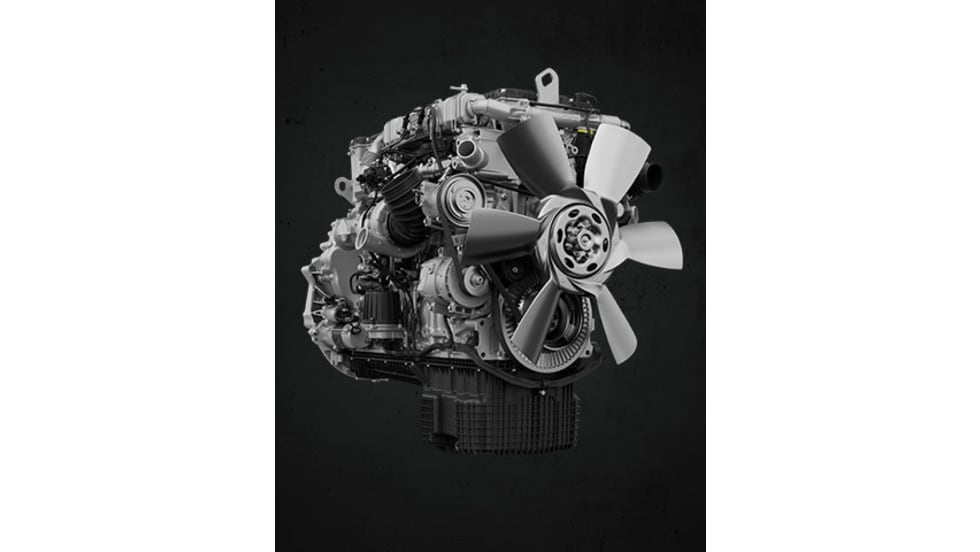
Sponsored•March 31, 2026
Detroit Engines: Trusted Performance, Built for What's Next
The Detroit® Gen 6 engine platform proves that real progress doesn’t require a complete redesign. Built on 20 years of trusted technology, these engines are designed for efficiency, stronger performance, and greater reliability than before. And they do it all while complying with 2027 EPA standards on every mile.
Read More →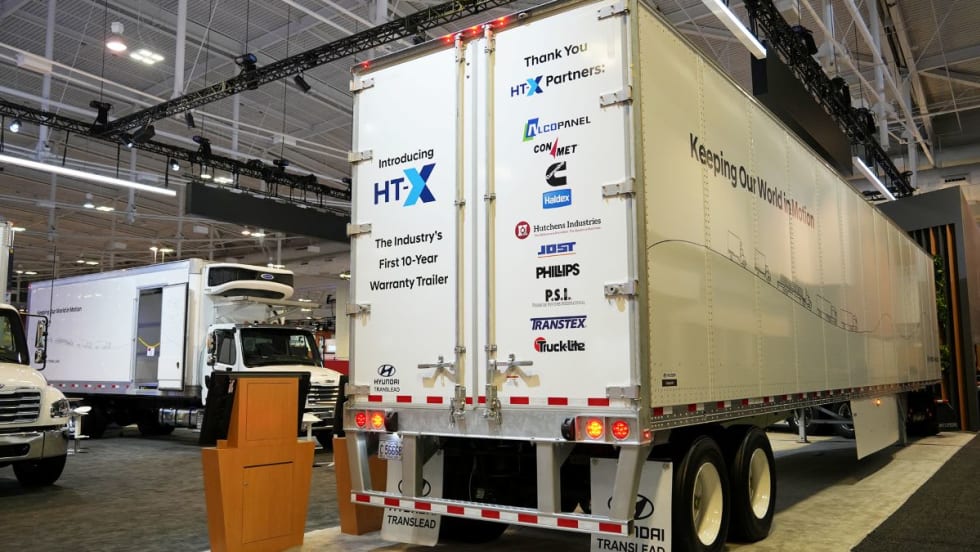
Hyundai Translead Expands Trailer Tech, Introduces Long-Life Dry Van, New Refrigerated Body
Smart safety systems, AI-powered visibility, a 10-year-warranty dry van, and a modular refrigerated body debuted at TMC.
Read More →
EPA Targets DEF Sensor Failures Behind Truck Derates
New guidance allows engine makers to replace problematic DEF sensors with NOx-based systems, aiming to reduce unnecessary derates and downtime caused by failures in the sensors designed to monitor diesel exhaust fluid on trucks.
Read More →
Heavy Duty Trucking is Searching for the Top Green Fleets of 2026
Is your company a leader in sustainability efforts among trucking fleets? If so, Heavy Duty Trucking's editors want to hear from you.
Read More →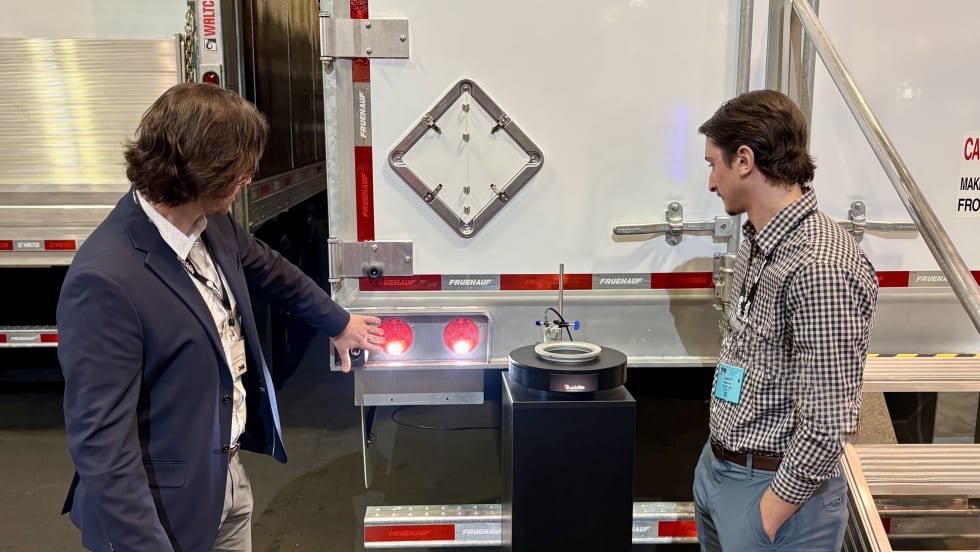
Clarience Technologies Expands Safety and Visibility Portfolio at TMC
From advanced connectivity to AI-powered cameras and next-gen fuel filtration, Clarience companies outlined a roadmap for safer, more connected trailers at TMC’s Annual Meeting.
Read More →
What's Real in Advanced Truck Technology? ACT Expo's Erik Neandross Weighs In
Artificial intelligence, the software-defined vehicle, telematics, autonomous trucks, electric trucks and alternative fuels, and more in this HDT Talks Trucking interview
Read More →
Freightliner Donates Fifth Generation Cascadias to Be Pro, Be Proud
Freightliner has donated three Cascadia trucks to support Be Pro, Be Proud, expanding mobile training efforts aimed at building interest in skilled trades careers.
Read More →