





Real-life fuel consumption reduction numbers never live up to the numbers some tire makers tout when promoting fuel efficiency. One reason is that tire makers conduct their testing and evaluation under ideal conditions on test tracks to control as many variables as possible.
According to Bridgestone, drivers, loads, trucks, trailers and test courses remain constant throughout a single test.
"If it's too windy, or too hot or too cold, or if it rains or snows, the day's testing is canceled," says Guy Walenga. "In the real world, you don't have the luxury of controlling everything, so the numbers are going to be different."
Michelin's Don Baldwin adds that driver habits, truck aerodynamics, tire pressure and engine maintenance are also significant factors in real-world fuel economy.
"A tire with higher rolling resistance will take more energy to move down the road. Choosing tires with lower rolling resistance and maintaining the pressure in those tires will save fuel," he says. "The percentage of the total will depend on how the other factors are controlled. We have calculators that will predict the effect of the tires based on rolling resistance, including how rolling resistance evolves over the life of the tire. This effect is always taking place, even if it is difficult to see because other factors are not being controlled."
Another reason the numbers don't always add up is apples-to-oranges comparisons. A half-worn, non-fuel-efficient tire may actually be almost as fuel-efficient as a brand-new low-rolling-resistance tire. Tires are at their least efficient when the tread is new and deep. As tread wears away, the rolling resistance improves. While one might be tempted to run, say, a three-month comparison between in-service tires and new fuel-efficient tires, the results might not do justice to the fuel-efficient tire.
The best way to evaluate fuel-efficient tires is over their life cycle - including acquisition cost and casing credit, miles-per-thousandth of tire life, and fuel consumption improvements between the baseline vehicle and the test vehicle, Bridgestone advises.
"Bearing in mind that not all SmartWay-approved tires will yield the same performance, you will save more money on fuel with a low-rolling-resistance tire than you will give up in tire life," says Goodyear's Larry Tucker. "When we did those calculations, fuel was still at $2 a gallon."
From the June 2011 Issue of Heavy Duty Trucking
Why Real-World Fuel Efficiency Numbers Don't Match up to Lab Tests
Real-life fuel consumption reduction numbers never live up to the numbers some tire makers tout when promoting fuel efficiency. One reason is that tire makers conduct their testing and evaluation under ideal conditions on test tracks to control as many variables as possible
More Fleet Management

BeyondTrucks Targets Rate Complexity with New AI RateAgents
BeyondTrucks says its new RateAgents can turn plain-language rate logic into working code, starting with fuel surcharges — a critical but notoriously complex piece of carrier revenue.
Read More →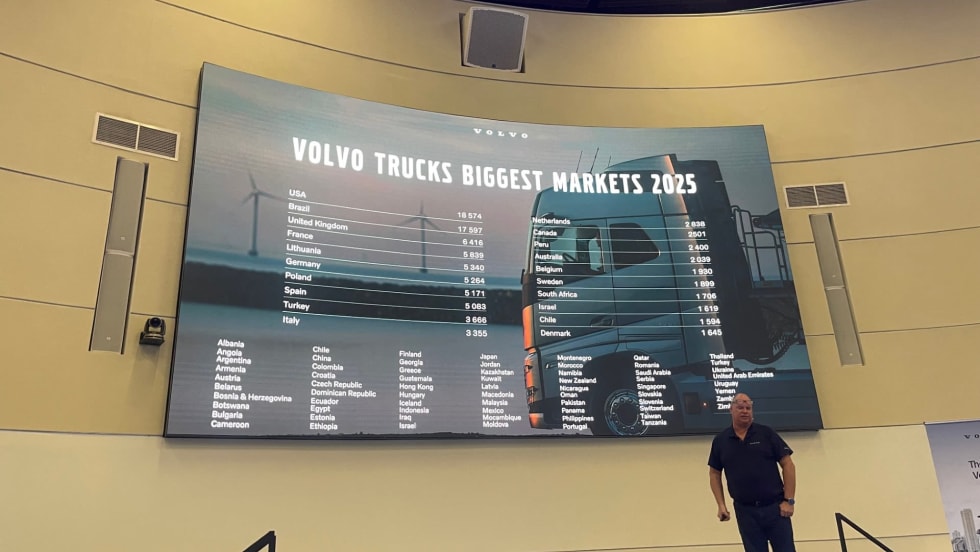
Volvo Sees Market ‘Tipping Point’ as New VNL Orders Surge
Soft freight conditions persist, but aging fleets, strong order intake, and new-product momentum signal a more optimistic second half of 2026, Volvo Trucks North America says.
Read More →
Cargo Theft’s New Playbook: Strategic Fraud, Double Brokering, and Cybercrime Hit Trucking
Cargo theft is evolving from regional smash-and-grab operations to sophisticated fraud schemes. Strategic theft now accounts for roughly a third of cargo crime, with incidents rising sharply in recent years. Here’s how the schemes work — and what fleets can do to protect themselves.
Read More →
HDT Honors the Best New Products of 2025 at TMC [Photos]
Heavy Duty Trucking's Top 20 Products awards recognize the best new products and technologies. Check out the award presentations at the 2026 Technology & Maintenance Council annual meeting.
Read More →
Detroit Engines: Trusted Performance, Built for What's Next
The Detroit® Gen 6 engine platform proves that real progress doesn’t require a complete redesign. Built on 20 years of trusted technology, these engines are designed for efficiency, stronger performance, and greater reliability than before. And they do it all while complying with 2027 EPA standards on every mile.
Read More →
Q&A: What's Real in Advanced Truck Tech? ACT Expo's Erik Neandross Weighs In
The 2026 ACT Expo is focusing heavily on what organizer Erik Neandross calls trucking's digital frontier. This interview excerpt dives into artificial intelligence, zero-emission vehicles, and tips to make sense of it all.
Read More →
Trucking's Digital Frontier: AI, Connected Vehicles, Alternative Fuels and More
There's an amazing amount of new technology for trucking out there. For fleets, the challenge is figuring out what’s real, what’s hype, and what’s worth investing in.
Read More →
What's Real in Advanced Truck Technology? ACT Expo's Erik Neandross Weighs In
Artificial intelligence, the software-defined vehicle, telematics, autonomous trucks, electric trucks and alternative fuels, and more in this HDT Talks Trucking interview
Read More →
ACT: Trucking Volumes Rise, Capacity Tightens as Fuel Prices Cloud Outlook
ACT Research data shows volumes hitting a four-year high and supply-demand balance strengthening, but higher oil prices are undercutting tariff relief and tempering optimism.
Read More →
Wabash Teams Physical Security With Digital Tech For Better Cargo Visibility
The patent-pending cargo solution integrates a digitally connected cargo door and an intelligent locking system with the TrailerHawk.AI technology platform.
Read More →