




Extend Tire Life: Learn How to Tell When Your Trucks are Killing Your Tires
Thousands of tires are cast prematurely onto scrap piles every month. That's hundreds of thousands of miles of operation fleets give up because their tires die untimely, unnatural and often unnecessary deaths. And the tires themselves are rarely to blame

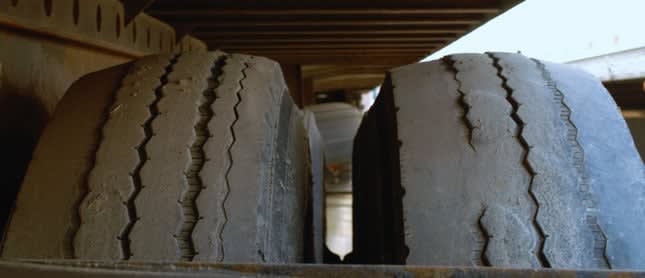
Irregular wear on trailer tires could be a combination of pre-existing wear and poor maintenance of the trailer. (Photo by Jim Park)
Thousands of tires are cast prematurely onto scrap piles every month. That's hundreds of thousands of miles of operation fleets give up because their tires die untimely, unnatural and often unnecessary deaths. And the tires themselves are rarely to blame.
Take a stroll through your scrap pile and study the carnage. You're bound to find shoulder wear, feathering, cupping, scalloping, punch wear, flat spotting and more. All are almost entirely preventable.
Once they are on the scrap heap, however, it's too late to identify what's causing the wear. You need to do that while the tire is still on the truck.
"Tires can tell you a lot about the condition of the vehicle, but if you just throw them on the scrap pile, you're losing that link to what's going on with the truck," says Tim Miller, Goodyear's commercial tire marketing communications manager. "Train your shop people to note the tire and wheel position so you can trace problems back to the truck or axle. Better still, check tire condition while they are still on the truck."
Examine in-service tires carefully at each preventive maintenance to check for tell-tale signs of irregular wear. In many cases, preliminary signs will appear when the tire is fairly fresh - usually in the first 20% to 30% of its expected life. If you catch the wear early, the tire can often be salvaged by remounting it or moving it to another wheel position, even to another vehicle.
But what about the next tire? Resolving the problem at its source will prevent similar wear on that one.
The industry-standard reference for tire wear analysis remains Recommended Practice 219C from the American Trucking Associations' Technology & Maintenance Council, "Radial Tire Wear Conditions and Causes: A Guide to Wear Pattern Analysis." The recently updated guide lists 13 common wear conditions for steer and trailer tires, and seven for drive tires.
RP 219C breaks these wear patterns down into subgroups based on cause: maintenance and operations; wheels, rims, brake drums, and hubs; and tires themselves. Of the three, the tire-specific subgroup is the smallest.
Common mechanical problems associated with premature tire wear include misalignment of any axle on the truck, poorly maintained suspension and/or steering components, loose, bent or broken suspension and shock absorbers, excessive imbalance, and of course poor management of inflation pressures.
Among the wheel-end-specific problems associated with irregular wear are improper tire mounting or non-concentric mounting (including radial or lateral run out) and loose wheel bearings, and worn wheel mounting studs.
Where the tires themselves are to blame, it's usually the result of inadequate design and construction - in other words, cheap tires - or misapplications, where tires designed for one purpose are used for another.
Each of the above problems, except the tire issues, leaves a signature wear pattern on a tread. The tire wear itself is often viewed as the problem. In fact, it's just a symptom. The solution is not to replace the tire, but to remedy the cause of the irregular wear.
One challenge is that a single mechanical problem can produce several different types of wear. When two or more mechanical defects are present, the wear patterns can be misleading.
Drive axle misalignment, for example, will show up on steer tires as shoulder wear, but on the same sides of both steer tires - inner shoulder wear on one tire, outer shoulder wear on the opposite tire. It's caused by the steer tires countering an off-centerline push from the crooked drive axles.
The problem in this case is not even steer-axle related, but could be confused with steer axle problems such as improper camber settings, loose bearings or kingpins, or even excessive axle loads.
Mike McCoy, national accounts sales manager at Beeline, says as many as half the trucks and trailers on the road are not properly aligned.
"Depending on the magnitude of the problem, you could be giving up a third or half of the tire's life expectancy by running the truck out of alignment," he says. "If you're seeing irregular wear, don't wait until the tires are destroyed. A $200 alignment could repay itself several times over in reduced steer and drive tire wear."
The other top tire wear problem is inadequate inflation pressure. All tires are subject to this, but it's worse on inside duals and on trailer tires because of infrequent pressure checks.
Shoulder wear, center wear, and cupping and scalloping are common symptoms of inflation-related irregular wear. But these symptoms also show up from a number of other causes, so the obvious - low tire pressure - could be overlooked.
Roads, loads, and driving behavior all have an impact on tires as well, and each will leave its own indelible mark. The difference in road crowns and pavement texture will affect tire wear, and if trucks spend a lot of time on less than ideal road surfaces, the wear could be accelerated.
High-speed driving and cornering will affect tires too, as will loads with high centers of gravity. All of these will stress the shoulders of the tires, and wear may appear as flattening or smoothing of the shoulders - not unlike the wear caused by improper camber or misalignment.
Irregular wear on trailer tires is another issue altogether. Probably under-maintained, your trailers could be causing wear on drive and steer axle tires. But since tractors and trailers aren't typically mated for life, the chain of responsibility will be impossible to establish. Making it harder, many of the tires used on trailers have been moved from other wheel positions and probably have "pre-existing conditions."
Greg Brook, heavy-duty training instructor at Hunter Engineering, notes that TMC's RP 642A recommends a full vehicle alignment every 80,000-100,000 miles or 12-18 months as a preventive measure.
"Even if you aren't getting specific complaints about a trailer, such as dog-tracking, an alignment isn't going to do any harm," says Brook. "It's a bit more than a shot in the dark. If irregular wear is occurring, don't wait until the tires are destroyed. Have the unit aligned, and step up the pressure checks. Those are two easy ways to keep your tires in service longer."
Ironically, irregular wear on wide-single tires in trailer positions is focusing some attention on trailer mechanical conditions. It's not that the tires aren't up to the task, or that trailers are suddenly going out of alignment, notes Doug Jones, Michelin's customer engineering support manager. It's that fleets pay more attention to irregular wear on wide-base trailer tires. (See related story.)
"There's always a cause for the irregular wear, so now more than ever it pays to do a careful analysis of the wear conditions so that solutions can be implemented," Jones stresses.
Among the more complex and even contentious issues surrounding steer tires is the situation where one brand of tire appears to wear better than another. You might find, for example, that Continental tires wear longer on the steer axles of your Peterbilt 387s than do Michelin tires, but your Michelins consistently outlive the Goodyear tires on your Freightliner Cascadias.
"It often comes down to a combination of factors that include tire construction, tread design and compounding, aligning with the steering geometry and suspension characteristics of a particular vehicle - and even the truck's work environment," explains Mike Beckett, owner of MD Alignment in Des Moines, Iowa. "But before you blame the tire, you need to eliminate the truck
More Maintenance

Mack Expands Extended Coverage With Four Chassis System Plans
Mack Trucks' new system-specific coverage options allow heavy-duty fleets to select protection for driveline, cab, HVAC, electronics, and advanced safety components.
Read More →
What an Out-of-Service Order Really Costs, and How to Plan for One
The repair invoice is the first number you see — and often one of the smallest. Here’s what else an out-of-service order can cost a fleet, and how planning can reduce the damage.
Read More →
International Launches Online Truck Parts Store
Fleetrite.com lets fleets and repair shops find OEM and all-makes parts, check prices and availability, and order without calling a parts counter.
Read More →

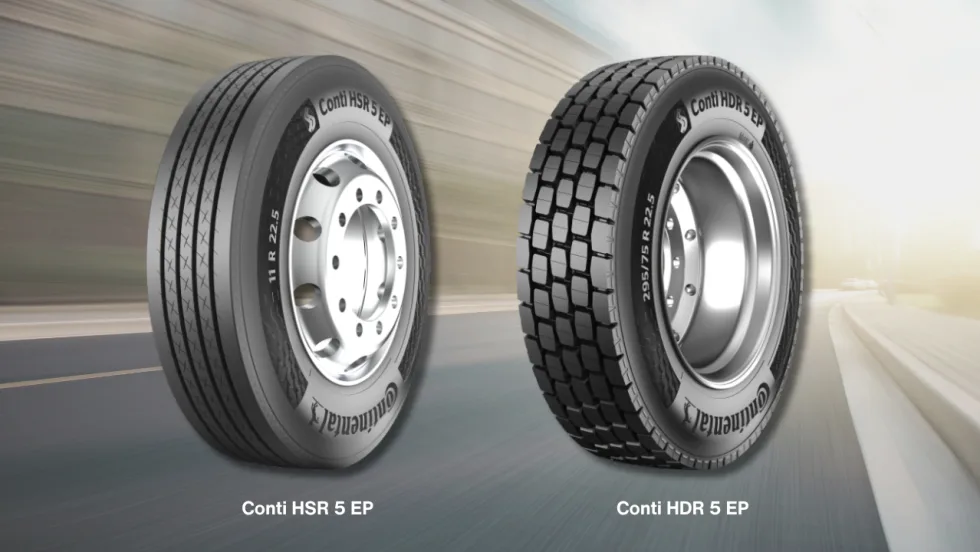
Continental Introduces New Regional Truck Tires
Continental says its new Generation 5 steer and drive tires for regional operations offer longer tread life, with estimated mileage gains of 22% and 19%, respectively.
Read More →
How AI Can Help Your Techs’ Efficiency
The technician shortage isn't going away, and no single fix can close the gap on its own. Trent Broberg makes the case that AI's real job in the shop is protecting the billable hours and job satisfaction of the techs you already have, not asking them to work faster.
Read More →
Color Match Smarter: Tools That Restore & Perform
For fleet managers and collision repair professionals keeping heavy-duty trucks on the road, getting the color right the first time isn't just about appearance — it's about efficiency, turnaround time, and bottom-line results. Discover how today's digital color tools are transforming the repair process from guesswork to precision.
Read More →
Wrong Repair Prompts Recall of Freightliner, Western Star 4x2 Trucks
DTNA is recalling more than 2,400 trucks that received an incompatible software fix instead of the hardware repair required to address brake valve corrosion.
Read More →
Truck Drivers Need More Than Another Alert
Fleets have more visibility into truck health, safety events, and driver activity than ever. The next challenge is turning all that information into useful guidance for the person who has to decide what to do next.
Read More →
The Maintenance Checks Trucking Fleets Should Prioritize Before Fall Freight Picks Up
Making it through August isn’t the same as being ready for the next several months of operation. Find out what systems may have suffered from summer heat and need to be checked out before fall.
Read More →
What Three Fleets Are Doing Differently When Buying Truck Parts in 2026
With freight improving but costs still climbing, fleet maintenance executives explain how they're balancing price, quality, and supplier relationships.
Read More →