




Nitrogen Tire Inflation
Nitrogen is not some magic gas with mystical properties, nor is it some philosopher's stone capable of changing the properties of tire rubber

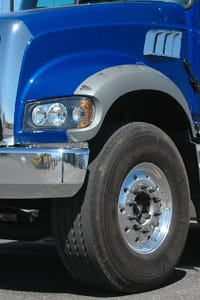
Nitrogen tire filling helps maintain proper inflation pressure longer. (Photo by Jim Park)
Nitrogen is not some magic gas with mystical properties, nor is it some philosopher's stone capable of changing the properties of tire rubber.
Yet, proponents say, relatively pure nitrogen is a superior medium for inflating tires compared to air. It's a naturally occurring inert gas making up roughly 78 percent of the air we breathe - the same air we compress to inflate tires. If it's so innocuous, how does it produce the fuel economy and tire life benefits we hear about?
First, a little clarification. You're not putting anything new into your tires; nitrogen is already there in air - along with about 21 percent oxygen and 1 percent trace elements. The so-called nitrogen generators used in tire inflation systems don't make nitrogen; they use a membrane process to remove most of the oxygen from the air, leaving you with an inflation medium that is 95 to 98 percent pure nitrogen.
The key benefit to nitrogen tire inflation is that it slows the natural pressure loss in tires. Oxygen is able to permeate tire rubber, producing the expected 1 to 5 percent loss of inflation pressure over a month or so. Nitrogen permeates more slowly because nitrogen molecules are physically larger than oxygen molecules. Barring leaks, poorly seated beads, bad valves, etc., a tire inflated with nitrogen will retain a constant pressure longer than one filled with air, minimizing the headaches caused by under-inflation or mismatched inflation across sets of duals.
Additionally, nearly pure nitrogen is devoid of moisture, so you won't have water sloshing around in the tire, possibly corroding steel wheels, or freezing tire valves in winter. It is also believed that as it passes through the walls of the tire, oxygen causes minor degradation of the liner and casing rubber through oxidation.
We contacted three fleets who use nitrogen to inflate their tires, and two out of three said they are very pleased with tire performance. The third was equally pleased, but said they got the same results using an automatic tire inflation system.
"We used the nitrogen system for about a year, and it worked just the way they told us it would," says Chuck Frost, maintenance manager for Gypsum Express in Syracuse, N.Y. "We weren't dissatisfied with it, but we found PSI's automatic tire inflation system to be more cost-effective."
Paul Mincy of Adams Motor Express in Carnsville, Ga., on the other hand, swears by nitrogen.
"We're running a five-to-one trailer-to-tractor ratio, and lots of those are dropped trailers. Some are away from the shop three months at a time, but we've seen little if any pressure loss on those tires," he says. "We've got 2,800 tires on nitrogen now, and we haven't had a soft-tire blowout in four years. The year before we started we had 63 pressure-related failures."
Mincy says he hasn't even tried to calculate the fuel economy benefits because there are too many other variables to worry about here, but he says tread wear has improved, and time spent checking pressure and airing up tires has all but disappeared from his billing roster.
"Our pressure compliance is close to 100 percent now, at no additional cost to the fleet for drivers' or shop time to maintain pressure," he says. "Some fleets might not notice, or might expect too much from the system, but a fleet with a good tire tracking program will see the advantages very quickly."
Walmart is such a fleet. That company currently has nitrogen inflation systems installed at more than 50 of its fleet service centers. Walmart does not discuss its maintenance strategies publicly, but Chris Sultemeir, the retailer's senior vice president of transportation services, appears in a promotional video on Walmart's corporate website saying tire inflation is part of their fuel savings and emission reduction strategy.
"What we plan to do from a tire standpoint, and what we're currently testing, is nitrogen filled tires or an automatic filling process to maintain a constant air pressure," he says. "It's critical from the standpoint of rolling resistance with the tires that we keep a constant pressure in these tires for maximum fuel efficiency."
Paying for air?
On the surface, it might seem like you're paying a lot for air just to get nitrogen inflation. Compressed air is basically free and available anywhere, but the quality of that air and its moisture content is suspect at some locations. Shop air, generally, is clean and dry, but you have to invest a little money in a good shop air system. With nitrogen filling, you're investing a little more money to get a better quality inflation medium that, all things being equal, will alleviate some of the downstream grief associated with tire pressure maintenance - like pleading with drivers to check their tires, and paying technicians to fill tires that drivers didn't check.
Tire pressure monitoring systems will alert you to a low tire, but won't top it up. Automatic inflation systems will top up a tire for you, but won't necessarily tell you which tire is leaking - although a combination of the two can resolve that. Tire inflation systems can mask tire punctures if the driver isn't aware that the system is working, or it comes on only briefly. If a puncture exists, moisture can still seep into the casing, possibly compromising the steel cord.
It all comes down to the return on your investment. According to Bill Hyatt of Inflation Solutions Group, a capital investment of $45,000 amortized over a fleet of 200 trucks leads to a one-time cost of $225 per truck at start-up. How long it might take to recover $225 per truck from failed tires is the question. After that - and a little ongoing system maintenance - nitrogen, like air, is basically free.
The tire manufacturers do not endorse nitrogen as a fill medium, nor do they prohibit it. Several acknowledge the benefits of lower seepage rates relative to maintaining proper inflation pressure.
Fuel economy benefits from properly inflated tires are tangible, but nitrogen alone isn't the instrument of improvement. Nitrogen will slow a tire's rate of pressure loss relative to air, and thus maintain a set pressure for longer, but those tires can't be ignored. They can always suffer a puncture, and that will let the air out of your tire maintenance plans as quickly as anything else.
For more information:
Go Nitro Tire
www.gonitrotire.com
Inflation Solutions Group
www.isgfleet.com
Kaeser UltraFill 99+
www.kaeser.com/ultrafill99
NitrogenMan
www.nitrogenman.com
Parker Tire Saver
www.tiresavernitrogen.com
Get Nitrogen Institute
www.getnitrogen.org
From the August 2010 issue of Heavy Duty Trucking.
More Equipment
Kenworth Names Peter Ahrens General Manager
Leadership changes at Kenworth take effect July 1 as the OEM promotes two longtime Paccar executives to key management roles.
Read More →
Hino Adds Electric Class 6/7 Truck
Hino says the Le Series is an important step in the company's efforts to reduce environmental impact and support its customers’ sustainability goals.
Read More →
ACT Expo 2026: Highlights in Photos
The 2026 Advanced Clean Transportation Expo featured a broad range of commercial vehicle technologies, from EVs to autonomous trucks to the latest diesel and alternative-fuel engines.
Read More →
Hendrickson Debuts Electraax E-Axle for Medium-Duty Trucks
Developed with Driventic, Hendrickson's new integrated e-axle is designed to improve efficiency, reduce weight, and extend range in Class 6-7 EV applications.
Read More →
Peterbilt Unveils Freedom 250 Special Edition Model 589
Peterbilt’s just-announced limited-run patriotic Model 579 tractor celebrates America’s 250th birthday with custom styling and premium features.
Read More →
Mack Unveils EPA 2027-Compliant MP13 Engine With More Power, Better Fuel Economy
Along with unveiling its EPA 2027-compliant MP13 engine, Mack outlined powertrain changes across its Class 6-8 lineup, including new Cummins-based X10 engines.
Read More →
Kodiak and Roehl Transport Launch Autonomous Route Between Dallas and Houston
Kodiak AI and Roehl Transport have begun autonomous freight operations on a regular Dallas-Houston route, marking another step toward Kodiak’s planned driverless launch by the end of 2026.
Read More →
Autonomous Trucks at ACT Expo 2026
Autonomous trucks commanded a lot of attention from attendees at ACT Expo this year. Check out this photo gallery.
Read More →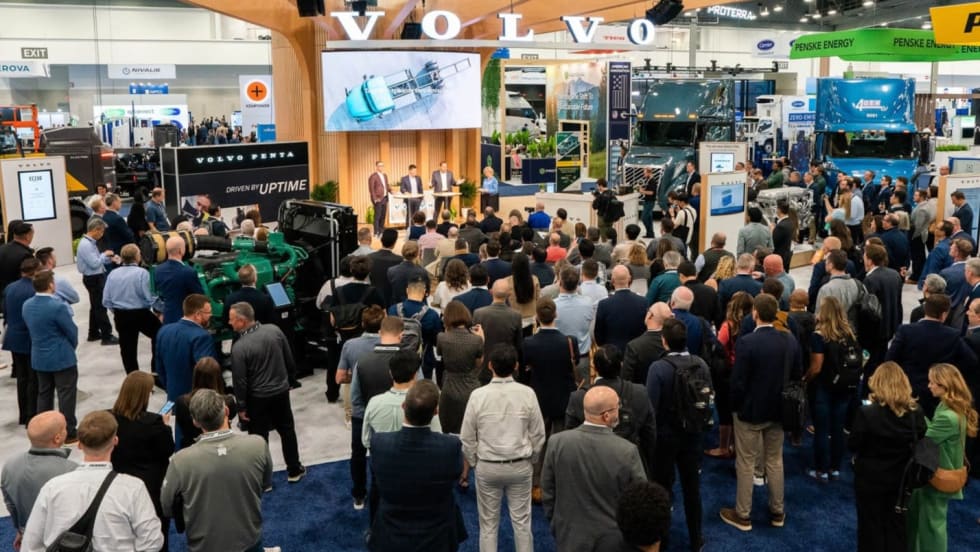
How Volvo’s New D13 Engine Meets EPA 2027 Emissions Without Sacrificing Power or Fuel Efficiency
Volvo says advances in combustion and aftertreatment helped its new EPA 2027 D13 engine avoid the fuel-economy penalties many once expected from tighter NOx emissions limits.
Read More →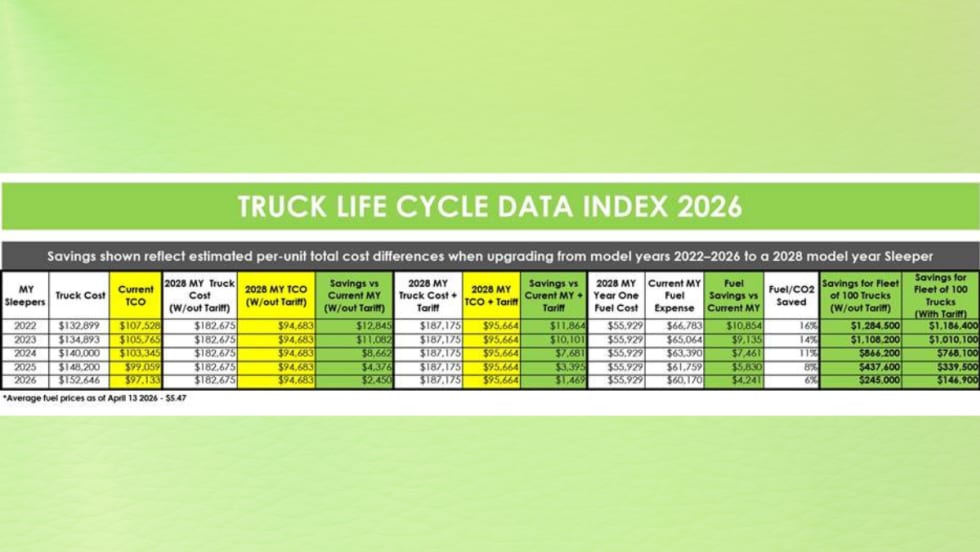
Fleet Advantage TLDI Highlights Rising Costs of Aging Fleet Equipment Amid Higher Diesel Prices
Fleet Advantage’s latest Truck Life Cycle Data Index shows fleets operating older Class 8 trucks could face significantly higher costs as diesel prices rise, while newer 2028 equipment may deliver savings of more than $12,000 per truck annually.
Read More →