




Case Study: The Fuel Efficiency Czar
New Jersey-based NFI Industries has improved its year-over-year fuel efficiency by 3.5 percent. From 2008 to 2009, its drivers slashed idle time by almost 44 percent
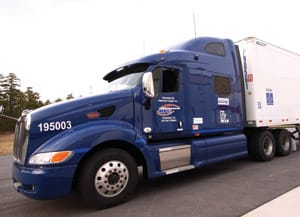
At NFI, fuel efficiency is a company-wide effort; everyone pitches in.
New Jersey-based NFI Industries has improved its year-over-year fuel efficiency by 3.5 percent. From 2008 to 2009, its drivers slashed idle time by almost 44 percent.
In 2008, the company managed to eliminate 145,362 tons of carbon dioxide, about 18.5 tons of particulate matter, and 568.9 tons of nitrogen oxide emissions.
How did the logistics company accomplish this?
"It requires a recognition on the part of the company as a whole that this has to be a priority," says Rob Barron, senior vice president and general counsel at NFI.
In addition to his daily duties, Barron also serves as NFI's "Fuel Efficiency Czar," an internal title that emphasizes Barron's task of organizing this company-wide effort to be greener and more fuel-efficient. He leads the company's 'Sustainability Team,' a group of about 10 employees throughout NFI that meet once a month and brainstorm ideas for improving fuel efficiency.
Barron is responsible for the creation, development and execution of strategies aimed at improving the company's overall mpg results through employee and driver work habits, technology, corporate policy decisions and other innovations.
When it was first established, one of the initial goals of the 'Sustainability Team' was "to catch up with the 21st century," Barron says. This meant getting a handle on the latest and greatest technologies to improve fuel efficiency.
Barron and his team have adopted an interdisciplinary approach towards researching, testing and implementing ideas and techniques aimed at balancing reductions in emissions and fuel consumption with cost management, as well as employees and customer satisfaction.
NFI has installed a lot of auxiliary power units, both fuel-powered and electric. They've worked on engine configurations, turning down governors and lowering horsepower on all engines. The company has also purchased lower horsepower engines to achieve greater efficiency.
Aerodynamics has also played a significant role in NFI's fuel efficiency exploration. The company has tested what Barron calls 'fly swatter' mud flaps, which let air and water flow through, as well as aerodynamic trailer skirts. Most recently, NFI has been testing airtabs, small plastic devices that mount on the back of the trailer. This technology, Barron says, redirects air flow and breaks up suction in the back of the truck.
But driver behavior is the single greatest contributor to fuel efficiency, Barron says.
NFI's Maximize Miles campaign uses letters, posters, driver-manager messages, newsletters and stickers placed on tractor dashboards to remind drivers of four steps to maximize miles and reduce idling:
* Shifting gears at the right RPM for maximum power and efficiency
* Starting trucks in the most fuel-efficient gear
* Eliminating unnecessary idling
* Checking tire pressure before every trip
In addition, Barron and his team are in the initial stages of looking into an in-cab driver feedback and monitoring system.
Barron says NFI will always push to improve fuel efficiency, regardless of where fuel prices are. In the long run, he says it's better for the company to improve its carbon footprint.
"Of course we want to keep our costs down when fuel prices rise, but even when prices fall, we continue to aggressively focus on fuel efficiency," Barron says. "We strive to be as efficient as we can be, because we're preparing for the future, not just for profit."
From the June 2010 issue of Heavy Duty Trucking.
More Fuel Smarts

How Volvo Updated Its D13 for EPA 2027 [Watch]
Volvo’s updated D13 promises lower emissions without sacrificing performance or fuel economy. Take a closer look at what changed inside the engine in this HDT Spotlight video.
Read More →
Diesel Price Spike Shortens Payback for Natural Gas Trucks, Report Says
Energy Vision estimates fleets could recover the higher purchase price of an RNG-fueled Class 8 tractor in 1.3 to 2.8 years under current fuel-price scenarios.
Read More →
Calstart Becomes Catalyst Mobility, Reflecting Broader Focus
Calstart is now Catalyst Mobility, reflecting the nonprofit’s growing national role in clean transportation, including zero-emission trucks, infrastructure and incentive programs.
Read More →

Record Diesel Prices Squeeze Trucking Fleets
Average U.S. diesel prices have climbed to nearly $6 a gallon, surpassing the 2022 record as tight refinery capacity and Middle East disruptions keep fuel costs elevated.
Read More →
How Fuel Delivery Shapes Engine Performance
Fuel delivery depends on more than what happens at the injector. For fleet, maintenance and technical professionals, looking at the full path from pump to injector can provide useful context for understanding engine performance.
Read More →
East Coast Port Launches $45M Electric Truck Push
The Port Authority of New York and New Jersey announced millions in incentives for zero-emission drayage trucks, yard tractors, and new charging hubs near the port.
Read More →
California Bill Could Shed Light on Electric Truck Prices
Why do battery-electric Class 8 trucks remain so expensive? A California bill headed to Gov. Gavin Newsom would give fleets and state agencies more visibility into what manufacturers charge.
Read More →
Detroit Opens Orders for EPA 2027 Engines
Detroit isn’t starting from scratch to meet EPA 2027 diesel emissions standards. Its Gen 6 DD13 and DD15 engines keep much of today’s platform while updating the fuel and aftertreatment systems.
Read More →
Zero-Emission Truck Corridor Planned for West Coast
California, Oregon, Washington, British Columbia and Baja California are coordinating plans for truck charging and hydrogen fueling from Canada to Mexico.
Read More →
A Closer Look at Kenworth’s Electric T880E Vocational Truck [Video]
Learn more about Kenworth's T880E battery-electric vocational truck at the Paccar Technical Center, including its range, applications, upfitting considerations, and PTO options, in this HDT Spotlight video.
Read More →