




Chinese Company to Test Autonomous Trucks in Arizona
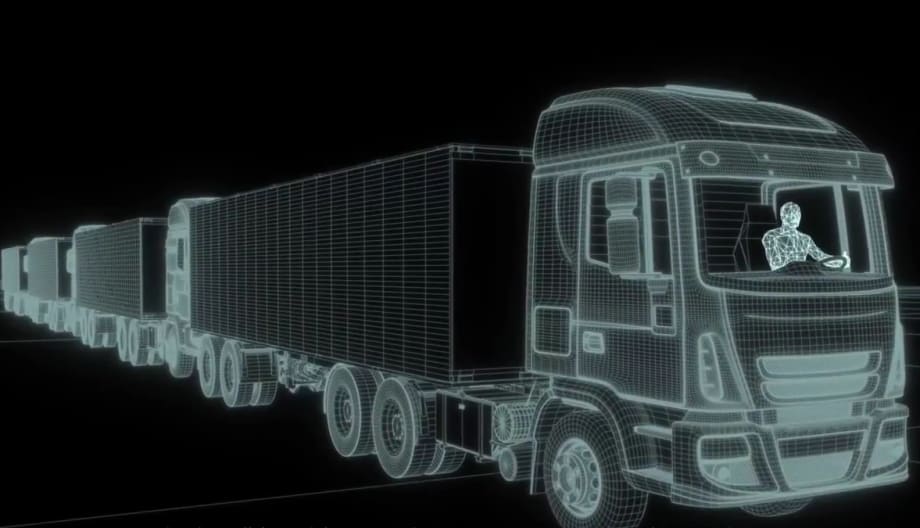
TuSimple, a Chinese autonomous truck startup, has chosen Tucson, Arizona, as the site of its autonomous truck development and testing.
Screenshot via TuSimple
Screenshot via TuSimple
TuSimple, a Chinese autonomous truck startup, has chosen Tucson, Arizona, as the site of its autonomous truck development and testing, according to a report in the Tucson Sentinel.
The company chose a site in Tucson because of Arizona laws that allow the for the testing of autonomous vehicles on public roads – which has been an issue for some Silicon Valley companies in California – and because of the lower cost of living and proximity to a skilled workforce.
The company will operate out of a warehouse on the west side of the city with as many as 30 engineers rotating between Tuscon and the company’s San Diego office. TuSimple plans to begin testing its vehicles on Arizona highways within months with a fleet of 10-25 vehicles.
The company is ultimately working toward completely autonomous vehicles, but plans to test current technologies with drivers in the cab, building up millions of test miles to prove the safety of self-driving vehicles.
TuSimple is being backed by computer chip maker Nvidia, which recently announced an investment in TuSimple, and has already worked with Paccar on self-driving truck technology through its Nvidia Drive PX 2 artificial intelligence computing platform, powered by the company’s computer chips.
More Equipment

How Volvo Updated Its D13 for EPA 2027 [Watch]
Volvo’s updated D13 promises lower emissions without sacrificing performance or fuel economy. Take a closer look at what changed inside the engine in this HDT Spotlight video.
Read More →
Michelin Tire Improves Efficiency and Durability for Regional Fleets
The Michelin X Multi Energy D2 is a regional haul drive tire engineered to help fleets improve fuel efficiency, durability and traction in demanding stop-and-go operations.
Read More →
ZF Expands Commercial Vehicle Push in North America
ZF is expanding its North American commercial-vehicle presence with new transmission applications, electrification, trailer technology and autonomous-driving systems.
Read More →
Tesla Wants a Self-Driving Semi. Are Cameras Enough?
Could Tesla’s camera-only autonomous driving technology work on an 80,000-pound Semi? In this commentary, HDT's Deborah Lockridge takes a look at Tesla, Cybercab, and how autonomous trucks see the road.
Read More →
Kodiak: Driverless Long-Haul Truck Launch on Track for 2026
Kodiak AI says its driverless long-haul safety case is 93% complete and it remains on track to begin commercial operations by year-end 2026.
Read More →
What DOT’s Automated Vehicle Strategy Means for Trucking
The U.S. Department of Transportation issued a new automated-vehicle strategy that outlines plans for driverless-truck regulations, cross-state freight corridors, and federal safety standards.
Read More →
East Coast Port Launches $45M Electric Truck Push
The Port Authority of New York and New Jersey announced millions in incentives for zero-emission drayage trucks, yard tractors, and new charging hubs near the port.
Read More →
PlusAI Going Public to Fund Autonomous Truck Launch
A SPAC deal could provide PlusAI with up to $300 million as it works toward a 2027 commercial launch of factory-built autonomous trucks.
Read More →
NHTSA Moves to Rewrite Truck Fuel-Economy Rules
The National Highway Traffic Safety Administration says it lacks authority to regulate medium- and heavy-duty truck engines separately from complete vehicles, but the existing standards have not yet been eliminated.
Read More →
Detroit Opens Orders for EPA 2027 Engines
Detroit isn’t starting from scratch to meet EPA 2027 diesel emissions standards. Its Gen 6 DD13 and DD15 engines keep much of today’s platform while updating the fuel and aftertreatment systems.
Read More →