TMT's new Predict.Fault Code is a maintenance application designed to predict engine and aftertreatment component failures up to three days in advance. HDT's Jim Beach digs deeper with this report from the TMW/PeopleNet user conference.
The new TMT predictive maintenance system uses the PeopleNet Mobile Gateway.Photo: PeopleNet
2 min to read
The new TMT predictive maintenance system uses the PeopleNet Mobile Gateway. Photo: PeopleNet
NASHVILLE, TN -- One of the products introduced during the in.sight User Conference + Expo in Nashville was TMW Systems' TMT Predict.Fault Code, a predictive maintenance application designed to predict engine and aftertreatment component failures up to three days before they happen.
In an interview, Renaldo Adler, TMW's principal of asset maintenance, fleets and service centers, said the goal was to predict faults before "the red light goes on."
Ad Loading...
The system uses predictive models with data from 80,000 vehicles that have traveled over 1 million miles. The data was then analyzed by a team of scientists to identify patterns that occur before a part fails.
Using the PeopleNet Mobile Gateway, the application gathers 80 performance variables from the engine and aftertreatment system. Those variable are then transmitted to the cloud where they are fed into eight models, which were developed by Vusion (a sister Trimble company), and then analyzed for indicators of possible failures.
The amount of data is key, Adler explained. Typically fleets have used historical data to set maintenance intervals for various components. As a result, the more historical information gathered, the better. A fleet of 1,000 trucks and lots of miles will have better info than a fleet with 20 or 30 trucks, he says.
The Predict.Fault Code application takes advantage of the aggregated data to develop a fuller picture of vehicle health. The application is currently available for vehicles equipped with a factory-installed or aftermarket-installed PMG (PeopleNet Mobile Gateway).
The system can alert fleet managers of a possible failure and the vehicle can be called in for a full checkup. Over time, Alder said, the application will be able to provide technicians with more detailed instructions. As he pointed out, the more data that is collected, the more refined the predictions can be and, down the road, the hope is to predict even more problems.
The American Transportation Research Institute's annual analysis of truck speeds through congested interchanges yielded a new worst bottleneck this year.
From pricing intelligence and compliance tools to charging infrastructure, diagnostics, tires, and AI, HDT’s 2026 Top 20 Products recognize the new tools, technologies, and ideas heavy-duty trucking fleets are using to run their businesses.
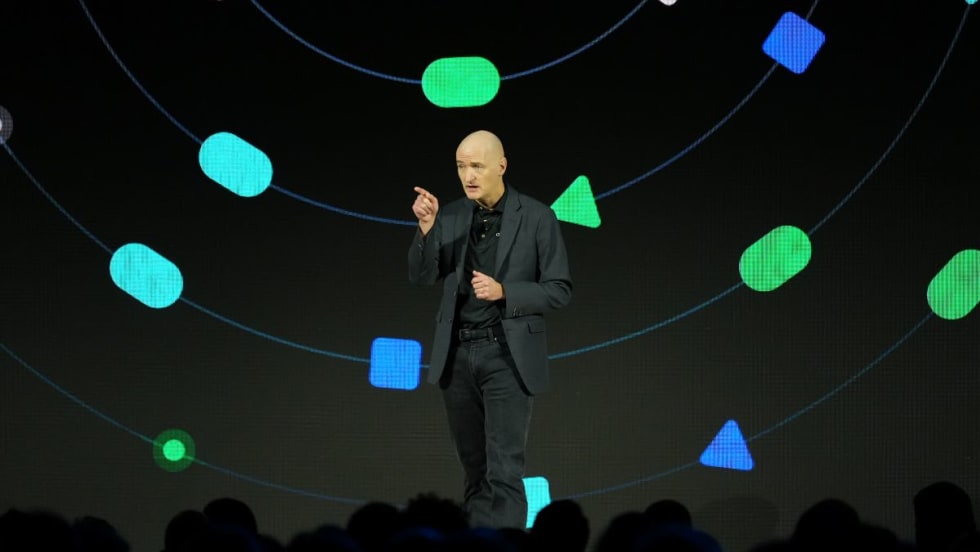
Artificial intelligence is evolving faster than fleets can keep up, and telematics must evolve with it, Cawse said during Geotab Connect. The future? A single AI coordinating every system — and leaders who know how to guide it.
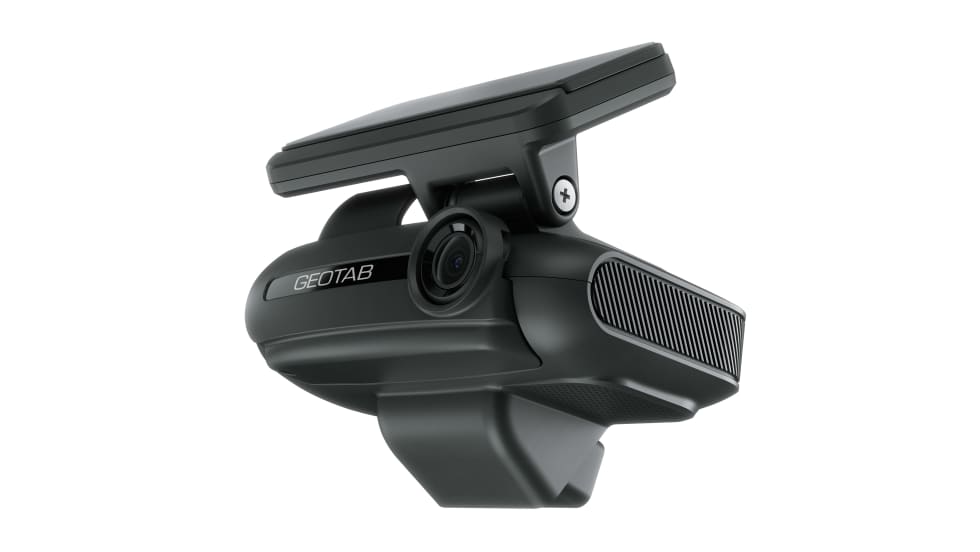
Geotab launches GO Focus Pro, an AI-powered 360-degree dash cam designed to reduce collisions, prevent fraud, and protect fleets from nuclear verdict risk.
Knowledge Hub is designed to turn scattered tribal knowledge into execution-ready intelligence and help logistics teams make faster, more consistent decisions.
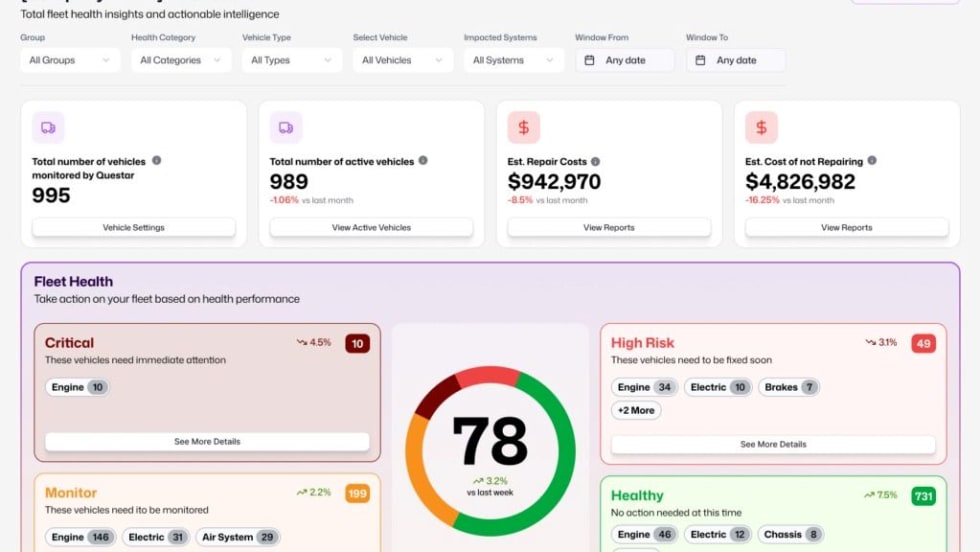
Quester’s AI-driven maintenance insights aim to help fleets reduce unplanned downtime, improve repair planning, and better understand the true cost of maintenance decisions.