




Related: When Will We See DME-Powered Trucks?
New York City's Sanitation Department Begins DME Test
DSNY will run the Mack tractor at the Fresh Kills Landfill on Staten Island, New York, and evaluate performance and overall drivability of the engine burning Oberon dimethyl ether fuel.
by Staff
January 12, 2017
DME-fueled Pinnacle tractor waited at Mack's Allentown customer center last fall for test to begin. Photos: Tom Berg
3 min to read
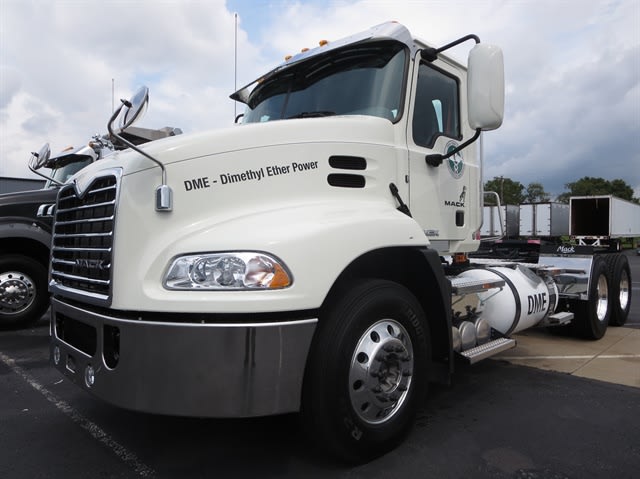
DME-fueled Pinnacle tractor waited at Mack's Allentown customer center last fall for test to begin. Photos: Tom Berg
Oberon Fuels and Mack Trucks say a demonstration of a dimethyl ether-fueled tractor has commenced with New York City’s Department of Sanitation. First announced last fall, the project got underway after issues with storage of the unusual fuel were resolved.
DSNY will run the vehicle at the Fresh Kills Landfill on Staten Island, New York, and evaluate performance and overall drivability. The test will take several weeks and results will be announced later this year.
The test is the first step in the city’s evaluation of both DME trucks and DME fuel as a potential long-term strategy to help greatly reduce greenhouse gas emissions and to achieve the city’s goal of sending no waste to its landfill by 2030, the announcement said.
The tractor is a Mack Pinnacle axle-back model equipped with a 12.8-liter MP8 engine modified to run on DME, which is stored at moderate pressure in steel fuel tanks like those used for propane. The tandem rear-axle tractor has an mDrive automated manual transmission, and will pull equipment trailers to support DSNY operations.
New York City recently announced a plan to reduce greenhouse gas emissions by 80% in 2050 compared with 2005. In order to achieve this goal, the city must cut 43 million metric tons of GHG emissions from its fleet vehicles. If produced from organic waste, DME also could effectively reduce waste stream to the landfill.
“The New York City Department of Sanitation is committed to seeking opportunities to reduce our environmental footprint,” said Rocco DiRico, DSNY’s deputy commissioner. “DME could be one solution to help us achieve this goal, and we are pleased to be partnering with Mack Trucks on this endeavor.”
“It is an honor to work with Mack Trucks and DSNY to showcase the benefits of DME fuel to New York City,” said Oberon's president, Rebecca Boudreaux, Ph.D. “There is no better testing ground than NYC, and we are thrilled to partner with the city.”
DME fuel, which is approved for use in all 50 states, delivers the same performance as diesel and burns cleanly without producing any soot, she said. DME emits zero soot, which can lead to substantial health improvements in areas where air quality is a high concern.
When produced from local organic waste, DME can reduce greenhouse gas emissions by 68 to 101% compared to diesel, as calculated by the U.S. Environmental Protection Agency and recently published by U.S. Department of Energy’s Argonne National Laboratory.
These greenhouse gas reductions make it one of the first fuels for heavy trucks that can result in a net carbon dioxide reduction, Boudreaux said. DME engines need no exhaust aftertreatment equipment, so are also easier to maintain, offer excellent cold weather performance, and run quieter than diesels.
“We are proud to call New York City one of Mack’s largest customers, and we are pleased to deliver the first customer-ready DME-powered Mack truck to DSNY,” said Dennis Slagle, president of Mack Trucks. “We are looking forward to working with DSNY and Oberon to evaluate the performance of the Mack Pinnacle as we run it through its paces.”
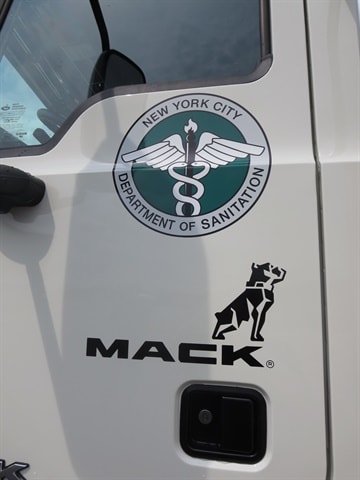
DSNY will evaluate the startability and driveability of the DME-fueled engine.
In the demonstration, the truck will use Oberon’s fuel-grade DME, produced with the company’s proprietary catalytic distillation technology. The small footprint of production units allows them to be easily placed near local feedstock sources, like food waste, landfill gas, animal waste, and wastewater treatment gas, she said. This provides cities an opportunity to reduce waste going to landfills and meet energy needs.
Currently, one-third of all waste collected in New York City is organic. By recycling organic waste into DME fuel, New York and other cities can reduce land fill use, lower overall emissions, and improve overall air quality, Boudreaux said.
More Fuel Smarts

Why Diesel Price Relief Efforts May Fall Short
Diesel prices have eased from September’s record high, but doubts about additional Russian supply and limits on dyed-diesel tax relief mean trucking fleets still face expensive fuel. And prices could go higher.
Read More →
Why Small Fuel Savings Matter in Trucking
Can better fuel economy help pay for driver raises? In this podcast, GP Transco explains how small efficiency gains create room to reinvest in its people.
Read More →
How GP Transco Cuts Trucking Fuel Costs, a Tenth of a Gallon at a Time
What’s another tenth of a mile per gallon worth? GP Transco shares how equipment upgrades and driver coaching turn small gains into meaningful fuel savings.
Read More →
Electric Yard Tractors Move Beyond Pilots
Operating-cost savings have overtaken sustainability goals as the leading reason surveyed fleets are adopting battery-electric terminal tractors, according to new NACFE research.
Read More →
Geotab Links Fleet Card to Vehicle Data
The new card combines fuel discounts with telematics-based purchase controls. Geotab’s analysis also points to potential savings from choosing lower-priced fuel stops.
Read More →
Fleet Economics Shape Electric Truck Outlook
ACT Research expects costs, charging infrastructure, and technology improvements to drive zero-emission commercial vehicle adoption as federal regulations and incentives retreat.
Read More →
Wex Adds Cardless Fuel Payments for Over-the-Road Customers
A new fuel card feature for Wex customers offers convenience and security.
Read More →
New California Law Could Shed Light on Electric Truck Prices
Why do battery-electric Class 8 trucks remain so expensive? A California bill signed by Gov. Gavin Newsom would give fleets and state agencies more visibility into what manufacturers charge.
Read More →
How Volvo Updated Its D13 for EPA 2027 [Watch]
Volvo’s updated D13 promises lower emissions without sacrificing performance or fuel economy. Take a closer look at what changed inside the engine in this HDT Spotlight video.
Read More →
Diesel Price Spike Shortens Payback for Natural Gas Trucks, Report Says
Energy Vision estimates fleets could recover the higher purchase price of an RNG-fueled Class 8 tractor in 1.3 to 2.8 years under current fuel-price scenarios.
Read More →