



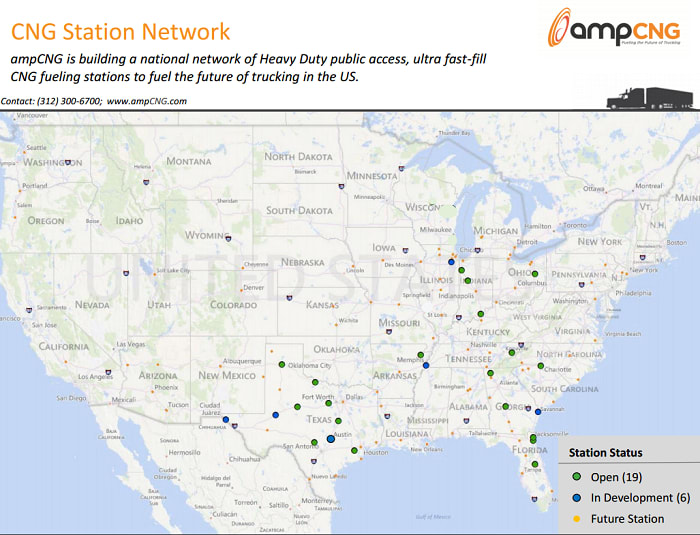
US Foods and compressed natural gas fueling solutions company ampCNG have announced a fueling and station agreement to build a public-access fueling station in Buda, Texas to serve US Foods.
 MENU
MENU SEARCH
US Foods and compressed natural gas fueling solutions company ampCNG have announced a fueling and station agreement to build a public-access fueling station in Buda, Texas to serve US Foods.
Source: ampCNG
US Foods and compressed natural gas fueling solutions company ampCNG have announced a fueling and station agreement to build a public-access fueling station in Buda, Texas to serve US Foods.
The new station will be located adjacent to the US Foods distribution center on Turnersville Road in Buda. The ampCNG ultra-fast-fill CNG station will have two dual-hose dispensers serving two lanes. ampCNG expects to break ground in early 2017 and will open the station in the summer.
“We’re extremely proud to partner with US Foods, a clear leader in the foodservice industry and a fellow Chicago-based company,” said Grant Zimmerman, CEO of ampCNG. “We’re also grateful for the support we’ve received from the Texas Commission on Environmental Quality as we bring our eighth station online in Texas. We share in TCEQ’s commitment to reducing emissions and improving air quality.”
The station will be ampCNG’s eighth in Texas, bringing its total station network to 20.
The company’s other stations in Texas are located in Amarillo, Harrold, Waco, Brock, Rosenberg, Sweetwater and Kerrville. The ampCNG ultra-fast-fill CNG fueling stations are located across the U.S. on heavily traveled highway corridors, supporting some of the largest CNG fleets in the country with partners in the food and beverage, agriculture and dairy industries.
“US Foods continues to make improvements across the company to reduce our environmental footprint and allow us to serve our customers in an energy efficient way,” said Dario Skocir, vice president of transportation, US Foods. “Increasing the number of CNG vehicles in our fleet allows us to continue to reduce our annual fuel costs while reducing the amount of emissions emitted during our daily deliveries to customers.”
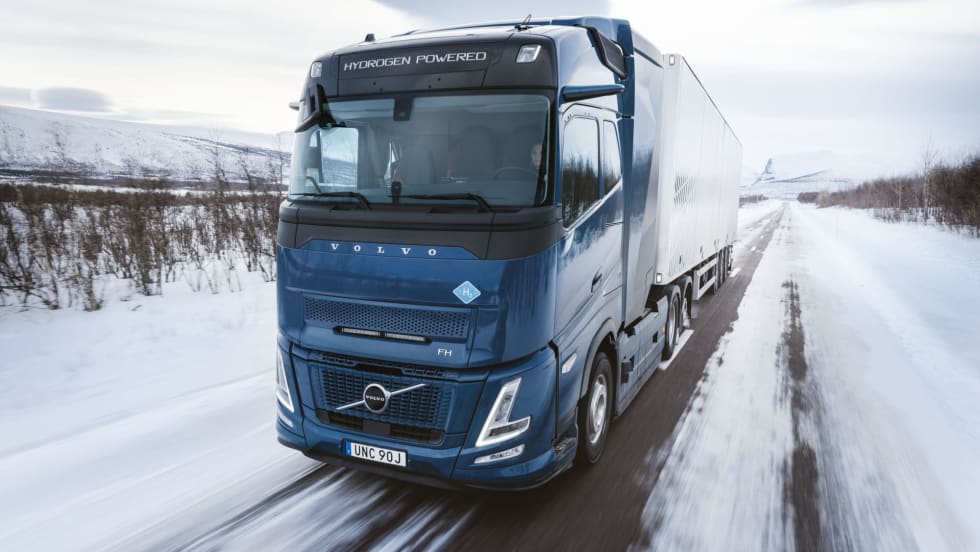
Hydrogen combustion engine trucks will be especially suitable over longer distances and in regions where there is limited charging infrastructure or time for recharging of battery-electric trucks, according to the company.
Read More →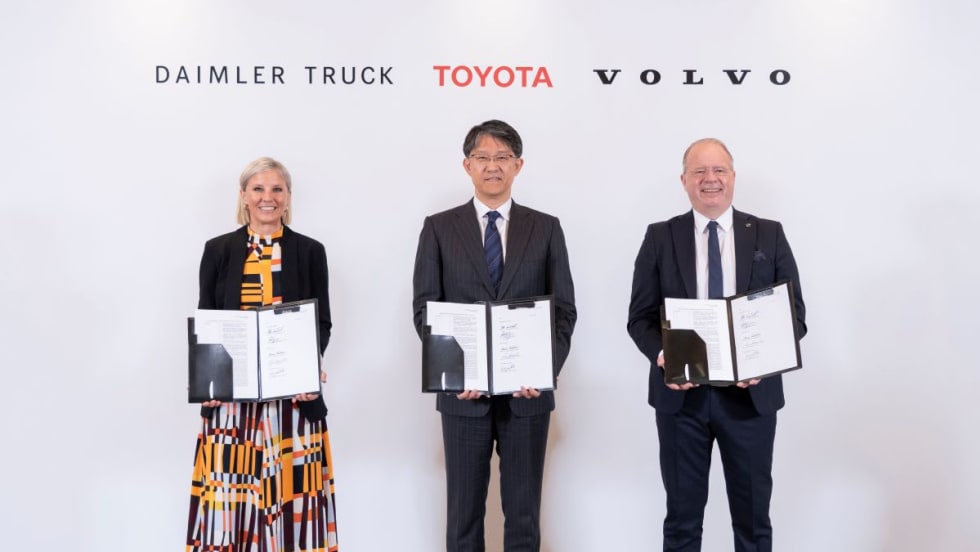
By joining Daimler Truck and Volvo, Toyota brings fuel cell expertise to a joint effort aimed at making hydrogen viable for heavy-duty transport.
Read More →
Trucking operators are slowing speeds, cutting empty miles, and declining unprofitable freight as diesel costs continue to rise due to conflict in the Middle East.
Read More →
New guidance allows engine makers to replace problematic DEF sensors with NOx-based systems, aiming to reduce unnecessary derates and downtime caused by failures in the sensors designed to monitor diesel exhaust fluid on trucks.
Read More →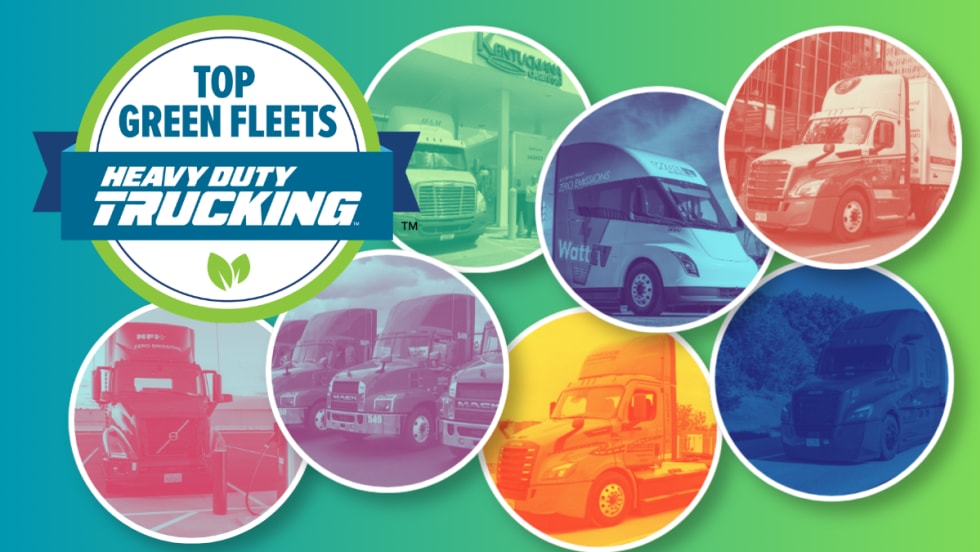
Is your company a leader in sustainability efforts among trucking fleets? If so, Heavy Duty Trucking's editors want to hear from you.
Read More →
Artificial intelligence, the software-defined vehicle, telematics, autonomous trucks, electric trucks and alternative fuels, and more in this HDT Talks Trucking interview
Read More →With global oil flows disrupted, U.S. diesel prices have topped $5 across every region, climbing sharply in the past few weeks.
Read More →
The impact of the Iran conflict extends beyond fuel costs, bringing more fraud and cybersecurity risks to the trucking industry.
Read More →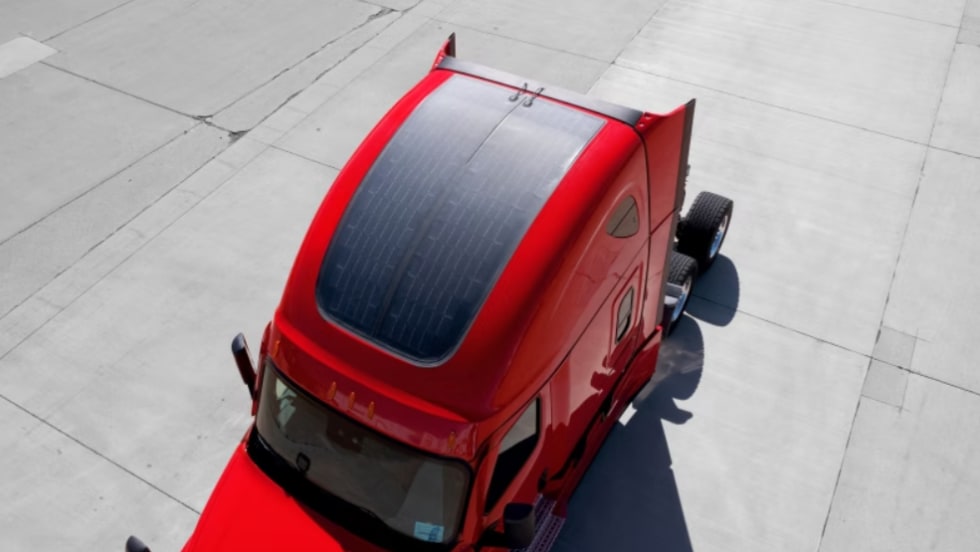
The company’s expanded EPEQ ecosystem includes flexible solar panels, lithium batteries, hydraulic power systems, and a portable fast charger for electric trucks.
Read More →
Listen as Mike Roeth of the North American Council for Freight Efficiency shares insights into battery-electric trucks, natural gas, biofuels, and clean diesel on this episode of HDT Talks Trucking.
Read More →