




Economic Watch: Unemployment Falls, Trade Deficit Jumps
Both trucking and the wider economy added jobs in July, according to new Commerce Department figures, while separate reports show the U.S. trade deficit grew in June to a one-year high and new factory orders fell again.


Both trucking and the wider economy added jobs in July, according to new Commerce Department figures, while separate reports show the U.S. trade deficit grew in June to a one-year high and new factory orders fell again.
A total of 255,000 non-farm jobs were added in the U.S., far better than many economists were expecting, while the unemployment rate held steady at 4.9%.
For-hire trucking contributed 1,700 of these job additions, but it was not enough to outweigh the 6,300 trucking job losses in June and is the first increase since January. The broader transportation and warehousing sector in July saw 11,700 job additions.
Overall June payrolls were revised up from 287,000 to 292,000 and May payrolls were revised higher from 11,000 to 24,000, resulting in a net revision gain of 18,000 more jobs. Also, the three-month average increased from 147,000 to 190,000 in July. That's a sizable improvement although still a net loss of momentum from a near 300,00 pace at the start of the year, according to Stifel Fixed Income Chief Economist Lindsey Piegza.
“Another strong employment report this morning, reigniting optimism that the U.S. labor market and by extension the U.S. economy is back on track," Piegza said. "It is difficult, however, to draw such a positive conclusion from just two payroll reports with an average pace of hiring still below 200k and following a minimal rise in second quarter growth suggesting the economy averaged 1% growth across the first six months of the year,” she said.
According to Piegza, given the unevenness of the data and still-present imbalance in the economy across sectors with a relatively solid consumer and markedly weak business investment, Federal Reserve policy makers are likely to wait for further information regarding the longer-term trajectory of overall economic activity.
“After all, the recent surge in payrolls at the end of second quarter and start of the third quarter does not align with lackluster, sub-trend growth and three consecutive quarters of negative corporate investment,” she said. “The question at this point remains, which data point is more telling of the underlying momentum in the economy; an average 1% GDP or an average [increase] of 200,000 payrolls? Until the Fed can answer with confidence, caution will remain the name of the game.”
The jobs report also showed the civilian labor force increased by 407,000 in July following a 414,000 increase the month prior, pulling the participation rate higher by one-tenth to 62.8%.
Average hourly earnings rose 0.3% in July, and are up 2.6% over the past 12 months, on par with the annual growth rate reported last month.
U.S. Trade Deficit Grows
Meantime, a separate Commerce Department report shows the U.S. trade deficit increasing in June, hitting a one-year high of $44.5 billion.
A key contributor was the petroleum component where the deficit rose to $5.3 billion from $2.9 billion in May with oil imports rising by 19.4%, with gains in both oil import prices and energy import volumes
Deterioration in the June 2016 trade deficit was in line with what the federal government estimated in compiling the second-quarter 2016 gross domestic product (GDP) report that was released last week, according to RBC Economics. Despite the rise in the June trade deficit, the second-quarter GDP report indicated that net exports added to growth in the quarter, with the volume of exports rising by 1.4% and imports falling by 0.4%.
“Our expectation is that the strong U.S. dollar and modest strengthening in business investment will have more of an upward effect on import growth during the second half of 2016,” said Paul Ferley, assistant chief economist at RBC. “We expect that this will result in net exports subtracting from growth, as was the case through 2015, however, projected strengthening in investment spending should provide an offset along with continued growth in consumer spending.”
Factory Orders Decline Again
Both reports follow a full report from the Commerce Department on Thursday showing new factory orders in the U.S. fell for the second straight month in June.
The decline of 1.5% follows a May downwardly revised drop of 1.2%, however shipments of factory made goods moved 0.7% higher after a 0.1% increase in May. Transportation orders posted the biggest decline in June, falling 10.5%. Excluding the sector, which can be volatile, orders were up 0.4%.
On the plus side, a measure of business investment, new factory orders for nondefense good minus aircraft, increased 0.4% in June, rather than the 0.2% level that was in the earlier preliminary report. Shipments of the so-called “core capital goods” still declined, but the downturn for June was 0.2% rather than the originally report 0.4% drop and still a negative for GDP calculations.
Inventories of factory-made goods fell 0.1%, the thirteenth drop in the past 14 months as the inventory to shipments ratio edged down to 1.35
More Fleet Management
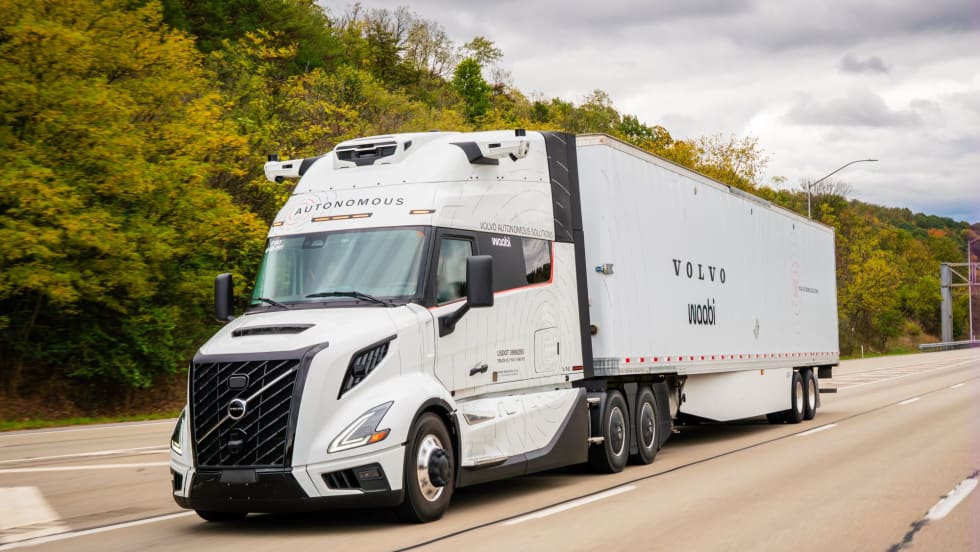
Volvo, Waabi Start Commercial Autonomous Operations in Texas
Volvo VNL Autonomous trucks, powered by the Waabi Driver, are hauling freight directly to third-party facilities for a customer in Texas.
Read More →
Samsara Launches Custom AI Agent Builder
Agent Studio lets fleets create AI tools for hours-of-service monitoring, reporting and driver support, including agents that communicate by phone.
Read More →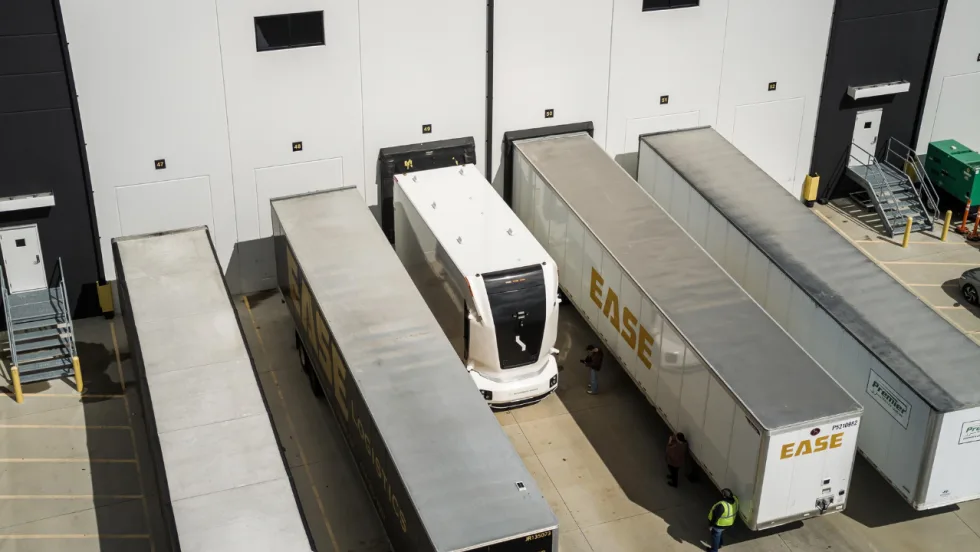
Einride Driverless Electric Trucks Begin Daily Freight Operations in Ohio
Two cabless electric trucks are hauling freight between EASE Logistics facilities in Marysville, Ohio, as part of a multi-state truck automation project.
Read More →
Geotab Links Fleet Card to Vehicle Data
The new card combines fuel discounts with telematics-based purchase controls. Geotab’s analysis also points to potential savings from choosing lower-priced fuel stops.
Read More →
How MFA Helps Protect Trucking Fleets
Multi-factor authentication adds protection when passwords are stolen. Here’s how it works and where fleets should start.
Read More →
How Better Freight Data Helps Trucking Teams Get Ahead of Disruption
Trucking and logistics teams have plenty of data. The problem is getting the right information in front of the right people soon enough to act. Better-connected data can help teams spot trouble earlier and make smarter decisions before small problems become big ones.
Read More →
Trimble: Taking Artificial Intelligence in Trucking Beyond Faster Tasks
At Insight 2026, Trimble executives argued that fleets may need to redesign workflows to get more from AI as it introduced new products and enhancements. AI’s value will depend on how fleets combine automation with their people's knowledge.
Read More →
Build a bulletproof fleet: Uniting ELDs and dash cams for total compliance
An ELD can prove compliance, but it cannot always prove what happened on the road. Discover how uniting accurate ELD data with AI-powered dash cam video can help your fleet strengthen compliance, defend against liability, protect drivers and reduce operational costs.
Read More →
Nominations Open for HDT Emerging Leaders
Heavy Duty Trucking is looking for accomplished trucking fleet professionals under 40 who are making an impact and helping lead the industry forward.
Read More →
Why Private Fleets Are Taking More Freight
Private fleets are putting their own trucks on demanding customers and high-cost lanes as companies seek greater control over service, costs, and capacity.
Read More →