



Volvo Trucks announced that it has certified all of its Euro 5 engines for use with 100% Hydrotreated Vegetable Oil, a form of renewable diesel fuel.
 MENU
MENU SEARCH
Volvo Trucks announced that it has certified all of its Euro 5 engines for use with 100% Hydrotreated Vegetable Oil, a form of renewable diesel fuel.
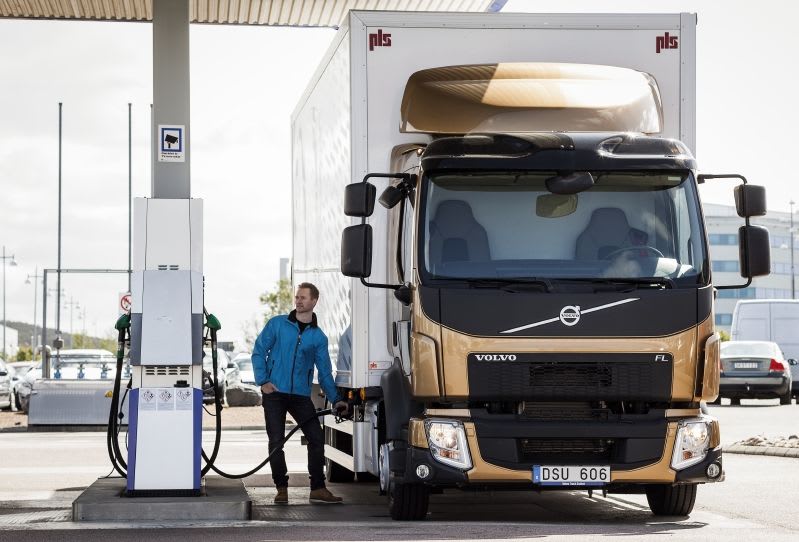
HVO reduces CO2 emissions between 30 and 90 per cent, depending on the raw material. Photo courtesy of Volvo Trucks
Volvo Trucks announced that it has certified all of its Euro 5 engines for use with 100% Hydrotreated Vegetable Oil, a form of renewable diesel fuel.
In 2013, Volvo Trucks began field testing its engines with 100% HVO to see how it would affect engine performance and components. The six field test trucks were equipped with Euro 5 engines and covered over 600,000 miles in commercial service in a two-year period.
As a fuel, HVO acts like regular diesel and reduces CO2 emissions between 30% and 90%, says Volvo Trucks, depending on the feedstock used.
"The field test showed that the HVO works very well in our engines and can be used under the same conditions as regular diesel. It is also possible to freely mix diesel and HVO," says Tobias Bergman, product manager for alternative fuels and hybrids at Volvo Trucks.
With the positive field test results, Volvo Trucks has approved the use of HVO in all of its Euro 5 engines with unchanged service intervals. In September 2015, the company plans for a global certification of HVO in the D5 and D8 engines for Euro 6. Work is also underway to certify the D11, D13 and D16 engines.
HVO is produced from renewable raw materials such as vegetable and animal fats, rapeseed oil or abattoir waste. The fuel can be distributed through existing diesel depots and uses the same types of tanks and pumps as regular diesel.
"We believe in HVO's potential and see an increasing interest from both customers and transport buyers,” said Lars Mårtensson, director of environment and innovation at Volvo Trucks. “We therefore hope that our investment in fuel will contribute to increased demand and that the HVO can be used in many other parts of the world in future.”
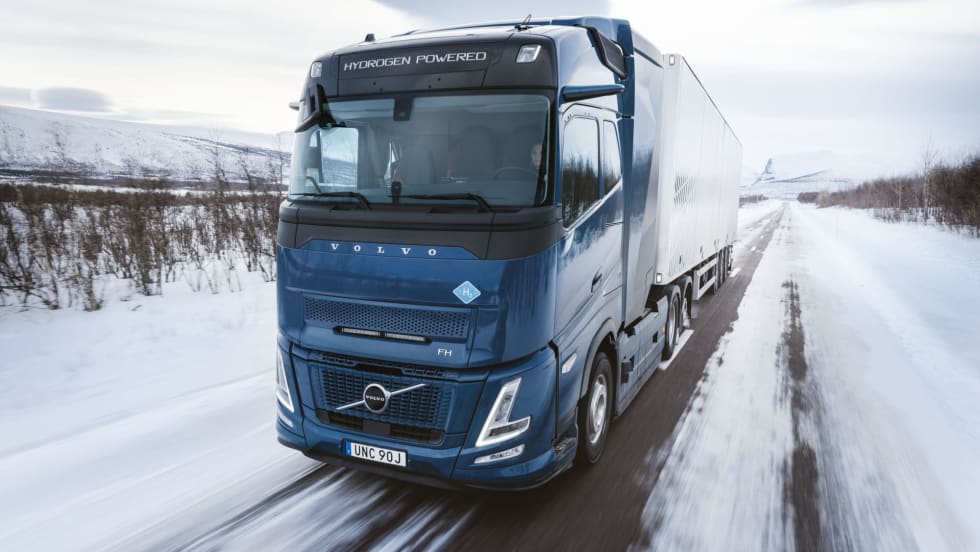
Hydrogen combustion engine trucks will be especially suitable over longer distances and in regions where there is limited charging infrastructure or time for recharging of battery-electric trucks, according to the company.
Read More →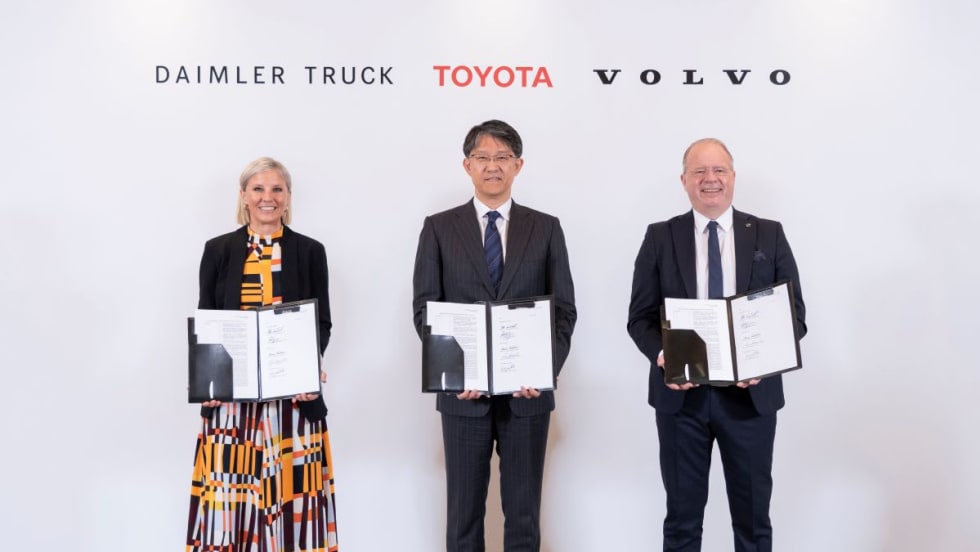
By joining Daimler Truck and Volvo, Toyota brings fuel cell expertise to a joint effort aimed at making hydrogen viable for heavy-duty transport.
Read More →
Trucking operators are slowing speeds, cutting empty miles, and declining unprofitable freight as diesel costs continue to rise due to conflict in the Middle East.
Read More →
New guidance allows engine makers to replace problematic DEF sensors with NOx-based systems, aiming to reduce unnecessary derates and downtime caused by failures in the sensors designed to monitor diesel exhaust fluid on trucks.
Read More →
Is your company a leader in sustainability efforts among trucking fleets? If so, Heavy Duty Trucking's editors want to hear from you.
Read More →
Artificial intelligence, the software-defined vehicle, telematics, autonomous trucks, electric trucks and alternative fuels, and more in this HDT Talks Trucking interview
Read More →With global oil flows disrupted, U.S. diesel prices have topped $5 across every region, climbing sharply in the past few weeks.
Read More →
The impact of the Iran conflict extends beyond fuel costs, bringing more fraud and cybersecurity risks to the trucking industry.
Read More →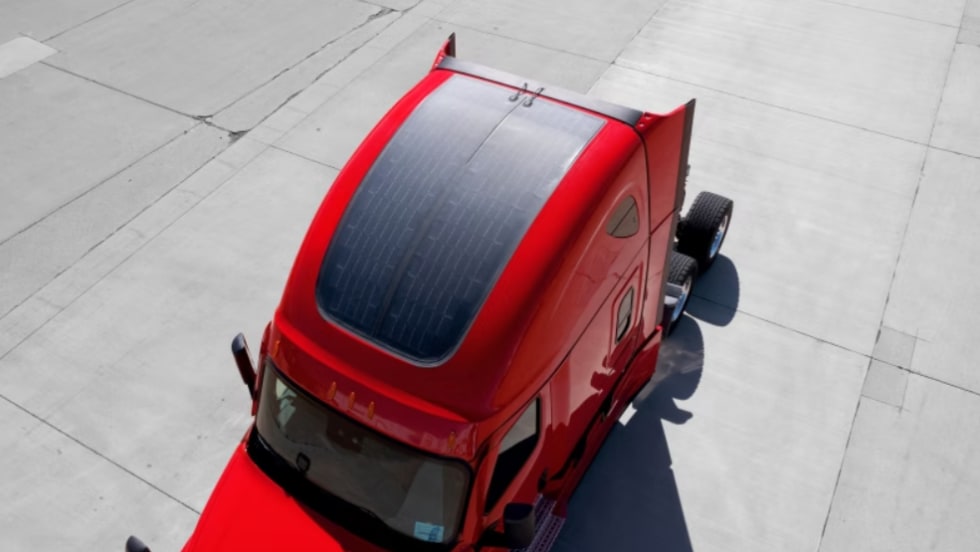
The company’s expanded EPEQ ecosystem includes flexible solar panels, lithium batteries, hydraulic power systems, and a portable fast charger for electric trucks.
Read More →
Listen as Mike Roeth of the North American Council for Freight Efficiency shares insights into battery-electric trucks, natural gas, biofuels, and clean diesel on this episode of HDT Talks Trucking.
Read More →