




NHTSA Proposes Stability Control Mandate
The National Highway Traffic Safety Administration proposed a first-ever federal motor vehicle safety standard to require electronic stability control (ESC) systems on large commercial trucks and buses
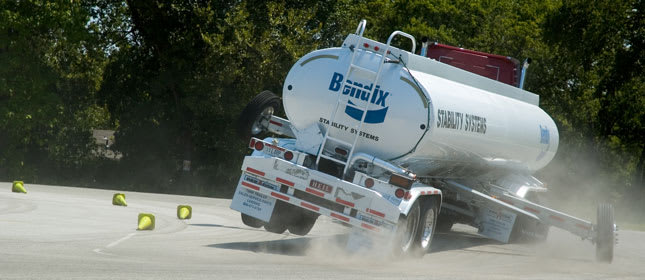
The National Highway Traffic Safety Administration proposed a first-ever federal motor vehicle safety standard to require electronic stability control (ESC) systems on large commercial trucks and buses.
The rule would affect vehicles with a gross vehicle weight rating of more than 26,000 pounds. As proposed, the rule would take effect between two and four years after the standard is finalized, depending on the type of vehicle. The proposal also includes standards for performance testing of the technology.
Agency research shows the technology could prevent up to 56% of rollover crashes each year and another 14% of loss-of-control crashes.
An extensive NHTSA research program to determine how available stability control technologies affect crashes involving commercial vehicles found ESC systems to be the most effective tool for reducing the propensity for heavy vehicles to rollover or lose control.
"We've already seen how effective stability control can be at reducing rollovers in passenger vehicles-the ability for this type of technology to save lives is one reason it is required on cars and light-duty trucks beginning with model year 2012," said NHTSA Administrator David Strickland.
"Now, we're expanding our efforts to require stability enhancing technology on the many large trucks, motorcoaches, and other large buses on our roadways."
RSC vs. ESC
The proposal answers the big question that industry observers have wondered about the proposal: Would the agency proposal call for ESC, or the less-expensive roll stability control (RSC)?
Both systems perform a similar function: if sensors detect the risk of rollover or instability, the control module slows the vehicle by cutting back the throttle and applying the brakes automatically.
The difference is that RSC is triggered only when the system detects roll instability, which might occur when a truck is going too fast into a turn or maneuvers too quickly. ESC reacts to both roll instability and yaw instability, such as a skid that could lead to a jackknife. In addition to slowing the vehicle to prevent a rollover, it applies the brakes on the wheel that needs to be slowed to counteract the skid.
Studies have demonstrated that both systems are effective, but not equally so. In 2009 the University of Michigan Transportation Institute concluded that if all 5-axle tractor-trailers had RSC, there would be 3,489 fewer crashes and 106 fewer deaths each year. If all of these trucks had ESC, there would be 4,659 fewer crashes and 126 fewer deaths.
In this proposal, NHTSA estimates that a standard requiring ESC on the nation's large trucks and large buses would prevent up to 2,329 crashes, eliminate an estimated 649 to 858 injuries, and prevent between 49 and 60 fatalities a year.
The other difference is cost. ESC is more expensive. According to manufacturers who discussed the issue last fall, costs range from $800 to $1,600 for RSC, while ESC might go for $1,800 to $2,300. But discounts are common and prices should go down due to economies of scale after the mandate takes effect.
NHTSA's cost estimates in this proposal are slightly different. It puts the average ESC cost at $1,160. Its estimate of the incremental cost of ESC over RSC is $520 per vehicle.
The agency said it considered going with an RSC requirement, but the net benefit of that approach would be lower than the net benefit of the ESC mandate.
Already in Use
Many carriers already have adopted stability control systems. Major suppliers Bendix Commercial Vehicle Systems and Meritor Wabco Vehicle Control Systems estimate that as many as 25% of new trucks have these controls.
These figures are buttressed by the agency's research, which estimates that 26% of tractors built in the 2012 model year will be equipped with ESC, while 16.5% will have RSC. Tank truck carriers typically install such systems on all of their new equipment.
The Owner-Operator Independent Drivers Association will likely oppose it because of the cost burden.
While many truck tractors and large buses can currently be ordered with this technology, the proposed standard would require ESC systems as standard equipment on these types of vehicles.
Both Bendix and Meritor Wabco issued statements late yesterday in response to the FMCSA's announcement. Meritor Wabco said its SmarTrac Electronic Stability Control, of which it has installed more than 150,000 in North America, would help truck and bus makers meet the mandate. Bendix said it has delivered more than 175,000 of the Bendix ESP Electronic Stability Program full-stability system since it was introduced in early 2005.
"The government's notice makes a clear statement, underscoring the advantages of full-stability technology, as opposed to roll-only technology," said Fred Andersky, Bendix director of government and industry affairs."Bendix produces both roll-only and full-stability systems, but in our view, full stability is the superior technology, and the cost it adds is minimal."
The agency's Notice of Proposed Rulemaking is being published in the Federal Register and members of the public will have the opportunity to comment on the proposal for 90 days. NHTSA will also hold a public hearing on the proposed safety standard to solicit further public comment. The date and location of that hearing will be published in the coming weeks.
You can download the complete proposal here.
More Drivers

Truck Drivers Need More Than Another Alert
Fleets have more visibility into truck health, safety events, and driver activity than ever. The next challenge is turning all that information into useful guidance for the person who has to decide what to do next.
Read More →
FMCSA Removes 110 Truck Driver Training Schools from Certified ELDT List
Federal regulators also are targeting more than 160 additional training providers and launching a nationwide audit of third-party CDL skills testers as part of a broader crackdown on trucking fraud.
Read More →
Hours of Service Pilot Programs: FMCSA Readies for 2027 Rollout
Two pilot programs could eventually reshape hours-of-service rules, giving truck drivers options to pause their 14-hour clock or use longer split sleeper rest periods.
Read More →
Medical Cards, English Proficiency Reshape Roadcheck Violations
Medical-card violations jumped to the top of the driver out-of-service list during CVSA’s 2026 International Roadcheck, while English-language proficiency violations appeared among the leading violations for the first time.
Read More →
Driver Trust Can Make or Break the Success of Fleet Safety Technology
New Teletrac Navman research suggests that onboarding, transparency about driver data, and positive feedback can play a significant role in how commercial drivers respond to safety and coaching technology.
Read More →
EEOC Sues KLLM Over Alleged Sex Discrimination in Driver Training
KLLM is facing a federal sex-discrimination lawsuit over policies the EEOC alleges put female truck driver trainees at a disadvantage.
Read More →
FMCSA Moves to Codify English Language Requirements for Commercial Drivers
By changing regulations on English-language proficiency requirements for commercial drivers, rather than relying on a guidance memo, the FMCSA said future administrations won't be able to walk back the Trump administration's stricter enforcement with just a memo.
Read More →
Drivers Put Western Star Trucks to the Test at Star Nation Experience
Watch to get an inside look at the Western Star trucks, technology, and community behind the Star Nation Experience 2026!
Read More →
Trump Administration Looks to Put More Veterans Behind the Wheel
The Freedom Haulers program pulls together existing and expanded programs at several federal agencies to recruit veterans to drive commercial heavy-duty trucks and cut the red tape for them to get a CDL, training, and employment.
Read More →
Putting Mack’s Command Steer to the Test
A test drive of Mack’s Command Steer active steering system evaluates how it can make truck driving easier and less tiring.
Read More →