




Appeals Court Upholds Personal Injury Decision Against Swift
The U.S. Court of Appeals for the 10th Circuit has upheld a personal injury verdict against Swift Transportation, thought to be the largest personal injury verdict in Kansas history
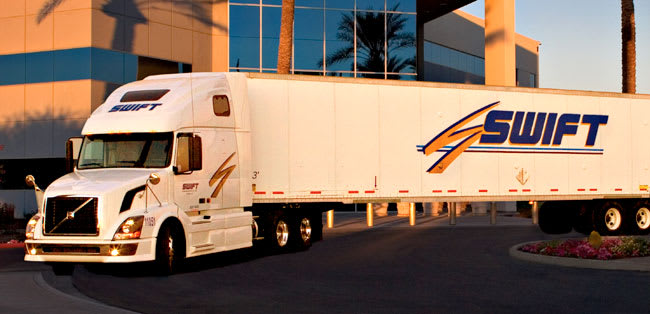
The U.S. Court of Appeals for the 10th Circuit has upheld a personal injury verdict against Swift Transportation, thought to be the largest personal injury verdict in Kansas history.
In 2006, a Yellow Freight tractor-trailer collided with a Swift truck, as the Swift driver was entering a rest stop off of U.S. Highway 54 in New Mexico, according to court documents. The driver of the Yellow Freight truck died, while the co-driver, Terry Frederick, who was in the sleeper berth, suffered paralyzing injuries in the accident. Frederick and his wife, Donna, sued Swift for damages.
The U.S. District Court in Wichita, Kan., ruled in favor of the Fredericks for a total of $23.5 million. However, the jury found the other driver was partly at fault and reduced the award to $15.3 million.
Swift decided to appeal the court's decision, arguing that the rulings resulted in an unfair trial. Swift challenged the court's ruling on several jury instructions and the admissibility of certain witness testimony and evidence, the court documents said.
Swift and the Fredericks' attorneys differed on their version of how the accident happened. The only eyewitness was the Swift driver involved, who testified that the Yellow truck rear-ended her as she was attempting to enter the rest area. The plaintiff's lawyers argued, successfully, based on the accident evidence, that the Swift driver was actually backing into oncoming traffic because she was not able to make the turn into the rest area properly.
In the appeal, Swift argued against the district court's motion to strike the testimony of Robert Reed, Swift's expert on trucking safety and regulatory compliance. The court held that several exhibits, including a turning study conducted at the scene of the accident and a perception study showing what a driver could have seen on the night of the accident, fell within areas outside the scope of Reed's expertise.
Another issue was that the Swift driver tested positive for methamphetamine in a drug test several hours after the accident. In its appeal, Swift argued that "whether its driver consumed methamphetamine before or after the accident is a disputed fact."
Swift also argued that regulations broken by the driver only apply to "driver," not "employers," and that Swift should not be held liable. But the court said the driver was Swift's employee and acting within the course of scope of her employment when the accident occurred. Therefore, Swift would be responsible for her negligent behavior.
Other arguments in the appeal involved whether the driver was experienced enough for her recent move to a transcontinental fleet; and the admissability of evidence regarding the Swift driver's prior license suspensions, drug use, convictions, and failures on different portions of the necessary licensing exams.
Swift officials issued the following statement: "Swift"s sympathies and apologies go out to the victims and their families for this tragic accident. The Swift truck, according to the police investigation, was struck from behind while making a legal turn. The Yellow driver, who failed to brake prior to impact, was found by the jury to have significant fault. Swift has a zero tolerance policy for drugs. This driver, who is no longer employed with Swift, had been previously drug tested and the test came back clean. Swift is considering further appellate options."
(Updated 11 a.m. CDT 8/16/2010 to add Swift's statement.)
More Drivers

Driver Trust Can Make or Break the Success of Fleet Safety Technology
New Teletrac Navman research suggests that onboarding, transparency about driver data, and positive feedback can play a significant role in how commercial drivers respond to safety and coaching technology.
Read More →
EEOC Sues KLLM Over Alleged Sex Discrimination in Driver Training
KLLM is facing a federal sex-discrimination lawsuit over policies the EEOC alleges put female truck driver trainees at a disadvantage.
Read More →
FMCSA Moves to Codify English Language Requirements for Commercial Drivers
By changing regulations on English-language proficiency requirements for commercial drivers, rather than relying on a guidance memo, the FMCSA said future administrations won't be able to walk back the Trump administration's stricter enforcement with just a memo.
Read More →
Drivers Put Western Star Trucks to the Test at Star Nation Experience
Watch to get an inside look at the Western Star trucks, technology, and community behind the Star Nation Experience 2026!
Read More →
Trump Administration Looks to Put More Veterans Behind the Wheel
The Freedom Haulers program pulls together existing and expanded programs at several federal agencies to recruit veterans to drive commercial heavy-duty trucks and cut the red tape for them to get a CDL, training, and employment.
Read More →
Putting Mack’s Command Steer to the Test
A test drive of Mack’s Command Steer active steering system evaluates how it can make truck driving easier and less tiring.
Read More →
Competition Heating Up for Truck Drivers
New report reveals rising driver hiring costs, the return of sign-on bonuses, growing AI advantages, and the operational factors shaping driver retention.
Read More →
How Fraley & Schilling Improved Logbook Compliance by Over 50%
Fraley & Schilling needed a way to close a compliance workflow gap in its ELD system without adding more work from driver training, reminders, and back-office follow-ups. It found the answer in a custom driver app.
Read More →
Volvo Goes Gaming
Volvo has roared into American Truck Simulator with two new flagship trucks.
Read More →
What the Best Fleets to Drive For Teach About Driver Retention
Survey fatigue, AI-powered routing, owner-operator expectations, and the decline of social media all emerged as themes from this year's Best Fleets to Drive For program.
Read More →