





Werner Appeal Victory Could Curb ‘Reptile Theory’ Tactics in Trucking Lawsuits
Werner Expands Dedicated Fleet Nearly 50% With FirstFleet Acquisition
The $283 million acquisition of FirstFleet makes Werner the fifth-largest dedicated carrier and pushes more than half of its revenue into contract freight.
January 29, 2026

Werner’s purchase of FirstFleet strengthens its dedicated trucking business and expands scale in grocery and consumer goods.
HDT Graphic
4 min to read
Werner Enterprises has expanded its dedicated fleet by nearly 50% with the acquisition of dedicated carrier FirstFleet, a move that positions the Omaha, Nebraska-based motor carrier as the fifth-largest dedicated carrier in the U.S. by power units.
Werner is acquiring the privately held First Enterprises Inc., parent company of FirstFleet, for $245 million in cash. A separate transaction to buy 11 real estate properties from FirstFleet for $37.8 million brings the total deal value to approximately $282.8 million.
The transaction will be funded using operating cash on hand and Werner’s existing revolving credit facility.
FirstFleet will operate as a business unit within Werner’s Truckload Transportation Services (TTS) segment, complementing Werner’s existing Dedicated division. Werner plans to retain the majority of FirstFleet’s management team and maintain its headquarters in Murfreesboro, Tennessee.
FirstFleet Brings Long-Term Dedicated Contracts and Stable End Markets
FirstFleet was founded in 1986 and has sustained profitable growth for nearly four decades. Werner said the carrier has built deep, long-standing relationships with top-tier customers under multi-year contracts.
FirstFleet’s operations include:
Approximately 2,400 tractors and 11,000 trailers
An average 17-year tenure among its top 10 customers
Lower-than-average driver turnover
37 strategically located properties near 130 customer sites nationwide
The carrier serves durable end markets including grocery, bakery goods, and corrugated packaging.
“By uniting FirstFleet's expertise in complementary new verticals with our resources and nearly 5,000 dedicated trucks, we will improve our competitive position and accelerate profitable growth,” said Werner Chairman and CEO Derek Leathers in a news release.
Acquisition Pushes Dedicated to Majority of Werner Revenue
Over the past several years, Werner has been increasing the share of revenue generated by its higher-margin, long-term contractual dedicated business. With the addition of FirstFleet, Werner expects dedicated revenues to grow by approximately 50%, while increasing its reach into resilient categories such as grocery and baked goods.
“Importantly, our combined company mix shifts a larger portion of our portfolio toward Dedicated, which grows from roughly 43% of total revenues today to approximately 52% on a combined basis,” Leathers said during an investor conference call.
Werner's One-Way Truckload and logistics operations are expected to account for approximately 22% and 24% of total revenues, respectively.
“This transaction drives a 20% increase in our total revenues, a 30% increase in TTS, and almost a 50% increase in Dedicated,” Leathers said.
Following the acquisition, the combined company will operate more than 9,800 trucks within its TTS fleet. Dedicated operations will account for roughly three-quarters of that total, with approximately 7,365 dedicated trucks and about 2,480 One-Way Truckload units. As of Sept. 30, 2025, the combined fleet included nearly 40,000 trailers.
With FirstFleet’s complementary footprint across the eastern half of the U.S., Werner expects benefits from improved network density, greater fixed-cost absorption, enhanced purchasing power, and increased asset utilization.
Werner Targets $18 Million in Synergies From FirstFleet Deal
Company officials said FirstFleet has remained profitable across market cycles, though its margins are slightly lower than those typically seen in Werner’s Dedicated business.
Some of that reflects differences in mix, including more trailer pools and higher trailer intensity, as well as some operating leases, said Chris Neil, senior vice president of pricing and strategic initiatives, in an investor conference call.
Werner expects to generate approximately $18 million in synergies over the next 18 months, with opportunities to improve margins over time. Those synergies are expected to come from purchasing power, in-house maintenance, improved backhaul revenue, and enhanced surge capacity.
“Synergies don't come from changing driver pay or messing with people's W-2," Werner said. "It's about blocking and tackling — maintenance, tires, tractors, trailers, fuel. And that's the best kind of synergies. because we can just go out and have more purchasing power and ... improve the experience of the customer, driver and everybody in between."
Leathers said the acquisition improves density for the combined company.
In Dedicated, although the assets are dedicated to particular customers, he explained, the greater density the company has in an area provides an opportunity to provide additional capacity, giving the customer a better product while saving costs on the fleet end.
Werner plans to keep its traditional, one-way truckload fleet at roughly its current size, viewing it as both a standalone offering and a source of surge capacity for Dedicated operations.
“We believe One-Way is about the size it should be,” Leathers said. “It serves the over-the-road market and provides surge capability within Dedicated, which now has even more demand following the acquisition.”
Will FirstFleet Be Rebranded?
For now, Werner does not plan to rebrand FirstFleet.
“That’s a delicate thing,” Leathers said in response to a question on the conference call, noting FirstFleet’s long-standing customer relationships. “If you look at our prior four acquisitions, in two of the four, we rebranded and rebranded …. in short order."
Any future branding decisions, he said, will involve collaboration with FirstFleet leadership and customers.
“But if you think about some of the synergies and some of the efficiencies of more of a universal trailer fleet, the asset flexibility, if you will, of universal assets, It's certainly on the table.”
More Fleet Management

What the U.S.-Canada Trade War Means for Trucking
Escalating U.S.-Canada tariffs could disrupt cross-border freight, reduce truck volumes, raise costs, and create new uncertainty for carriers on both sides of the border.
Read More →
What Are Trucking’s Top Concerns for 2026?
The American Transportation Research Institute wants to know what's worrying trucking fleet managers, drivers, and other stakeholders in its annual Industry Issues survey.
Read More →
American Trucking Associations Looks for a New Leader
ATA President and CEO Chris Spear abruptly left his job at the association on August 21, at a pivotal time for the trucking industry.
Read More →
Public Wi-Fi Cybersecurity Risks: How Truck Drivers and Fleets Can Protect Their Data
Public Wi-Fi can expose truck drivers and fleets to credential theft, malware, and other cyber threats. Here’s how to reduce the risk on the road.
Read More →
For Nicky Cupp, Fleet Innovation Starts With Frustration
HDT Truck Fleet Innovator Nicky Cupp turns everyday pain points at Fraley & Schilling into opportunities for better technology and smarter processes.
Read More →
Adam Buttgenbach’s Approach to Electric Trucks: Start With Where They Fit
HDT Truck Fleet Innovator Adam Buttgenbach helped PepsiCo build one of North America’s largest EV fleets by focusing on where electric trucks make operational sense.
Read More →
Deen Albert: Let Automation Do the Math, People Make the Decisions
HDT Truck Fleet Innovator Deen Albert makes sure people are still at the heart of operations at Grand Island Express, even while adopting artificial intelligence tools. AI-assisted dispatch helped boost revenue 25% with the same number of trucks.
Read More →
Trimble’s New AI Agent Takes Aim at Fleet Back-Office Busywork
Arc Agent works across Trimble TMS products to automate repetitive tasks such as freight orders, maintenance, invoices, fuel costs and more.
Read More →
How HDT’s 2026 Truck Fleet Innovators Are Rethinking Fleet Operations
Meet five trucking leaders who are challenging assumptions, solving operational problems, and putting innovative ideas to work.
Read More →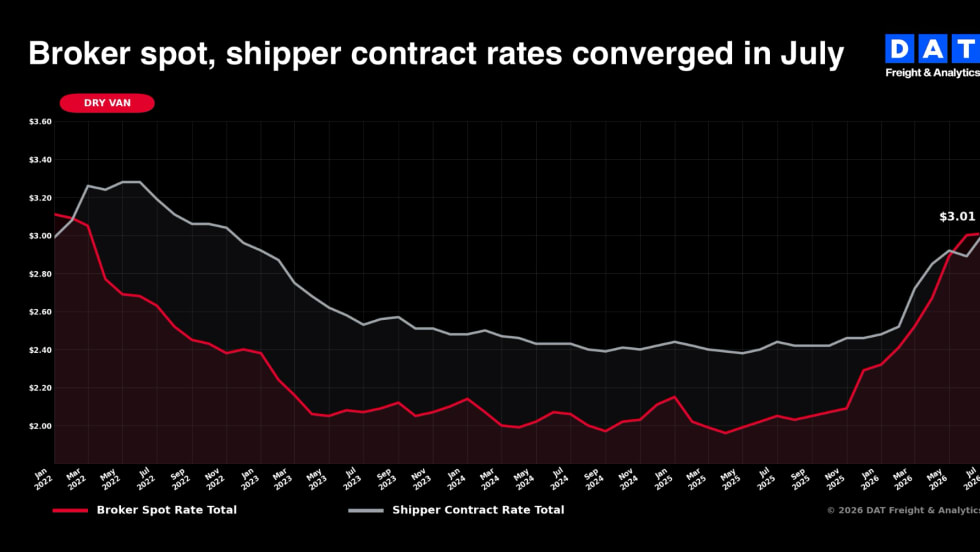
Tight Trucking Capacity Pushes Rates Higher Even as Freight Volumes Fall
“Spot rates moving ahead of contract rates have historically signaled a tightening market, but we haven’t seen a capacity-driven market quite like this one,” said DAT's Dean Croke.
Read More →