




Greenlane Announces Second Commercial Freight Charging Corridor
Greenlane also announced a strategic electric truck partnership with Windrose.

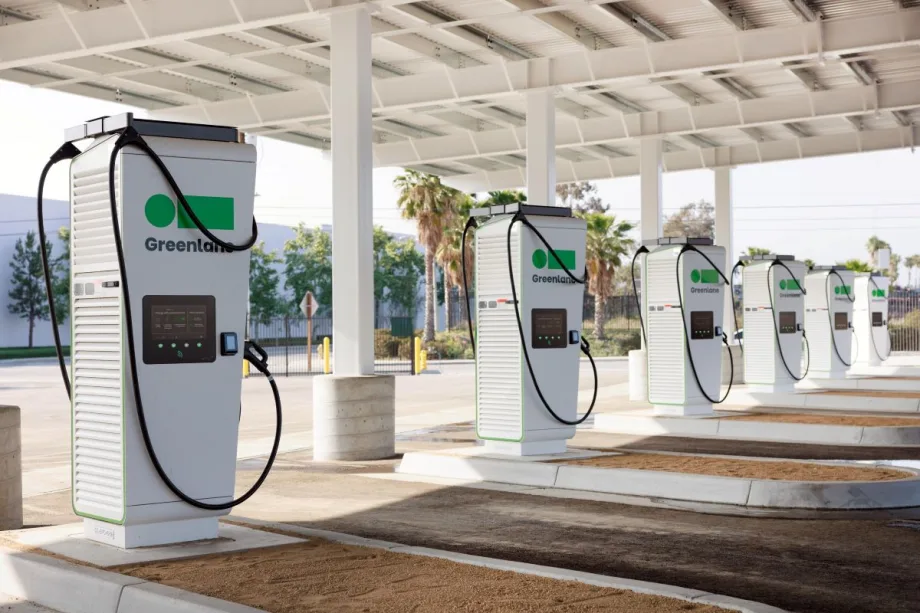
Greenlane said its newly announced corridor is one of several planned routes as it works to develop a nationwide network of commercial EV charging for medium- and heavy-duty fleets.
Photo: Greenlane
Public charging infrastructure developer Greenlane is establishing its second commercial charging corridor.
The company said it is addressing a critical gap in infrastructure for electric trucking along one of America’s busiest freight highways. It will do so by establishing an EV charging corridor connecting Southern California to Phoenix via Interstate 10.
In April, Greenlane opened its first flagship charging center in Colton, California. The facility features more than 40 high-speed chargers, including 12 pull-through and 29 bobtail lanes for medium- and heavy-duty electric vehicles (EVs). It also includes amenities such as restrooms and Wi-Fi, carports, 24/7 security, and additional offerings like office space and parking.
Windrose Strategic Partnership
The corridor expansion is supported by a new strategic partnership with Windrose Technology.
According to Greenlane, Windrose recently validated the viability of long-haul electric trucking through successful single-charge journeys from Colton, to San Bernardino and then Phoenix.
Looking ahead, Windrose plans to manufacture 2,000 electric trucks in 2026 and scale up to 10,000 in 2027 globally — unlocking a new era of freight movement, powered by Greenlane’s expanding public charging network, the company said.
"Our second corridor was strategically selected to best support the carriers and shippers who keep our economy moving,” said Patrick Macdonald-King, CEO of Greenlane. “Windrose's remarkable achievements during testing demonstrate that our high-performance charging network can handle the most demanding freight operations, giving us confidence that this I-10 corridor will serve as a critical backbone for zero-emission freight. By establishing charging infrastructure along key transportation arteries, we're providing the foundation fleets need to scale their electric operations.”
The corridor is one of several planned routes as the company works to develop a nationwide network of commercial EV charging for medium- and heavy-duty fleets.
The second corridor includes the recently opened flagship Greenlane Center in Colton, next to San Bernardino in the Inland Empire, as well as new sites to be developed in Blythe, California, and Greater Phoenix, Arizona.
Successful Single-Charge EV Trucking Run
Windrose's R700 Class 8 electric semi successfully completed single-charge journeys from Greenlane's Colton location to both Buckeye, AZ, near Phoenix (I-10 corridor) and Las Vegas (I-15 corridor). The truck had a gross combined weight rating (GCWR) of 74,420 pounds.
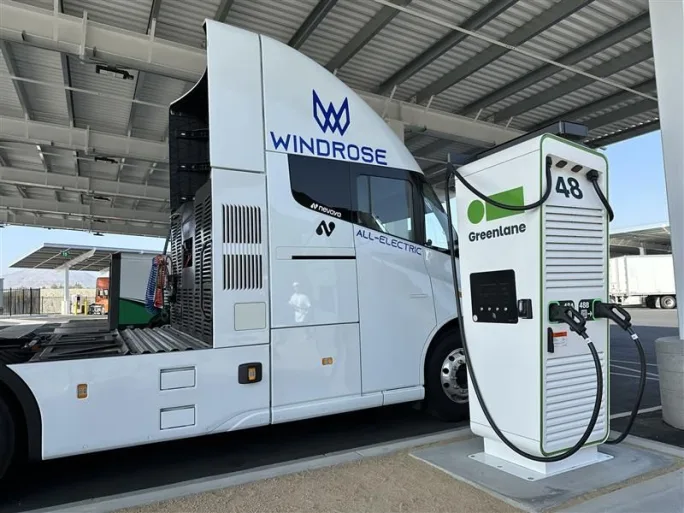
Windrose plans to manufacture 2,000 electric trucks in 2026 and scale up to 10,000 in 2027 globally.
Photo: Greenlane
Greenlane said the Phoenix route represents a particularly significant milestone, as the nearly 300-mile journey with near-maximum payload demonstrates the real-world capability of electric trucks for demanding long-haul freight operations.
Additionally, the company said, these single-charge hauls follow successful interoperability testing at the Colton site, where the Windrose R700 Class 8 electric truck achieved a peak charge rate of 772 kW with its dual-gun charging technology.
This exhibits Greenlane's ability to support rapid turnaround times essential for freight operations, the company added.
"Achieving nearly 300 miles with a GCWR of 74,420 pounds on a single charge with 12% battery left proves that electric long-haul trucking isn’t just theory—it’s proven real-world performance,” said Wen Han, founder and CEO of Windrose Technology. “This is what happens when innovative vehicle platforms meet world-class charging infrastructure. Our next step is to prove diesel parity in the United States, Europe, Oceania and South America, as we have already proven in China.”
An Infrastructure Breakthrough
Under a new strategic partnership, Windrose will utilize Greenlane’s flagship center in Colton as its base of operations for several vehicles and to power its R700 electric truck for pilot customers along the I-15 and I-10 freight corridors.
One of the first customers on these routes will be Nevoya, a next-generation electric trucking carrier focused on helping shippers and third-party logistics carriers transition to electric transportation.
Nevoya plans to operate battery-electric trucks along the I-15 and I-10 corridors, with the Greenlane Center in Colton serving as a base for charging and driver support.
"Greenlane's I-10 charging network creates the infrastructure breakthrough that electric trucking needs—and Nevoya is positioned to capitalize on it," said John Verdon, chief commercial officer at Nevoya. “As we launch operations on the I-10, this partnership allows us to demonstrate that long-haul electric trucking is not just possible—it’s practical, scalable, and the future of freight.”
More Fuel Smarts
Trucking’s Diesel Squeeze Isn’t Letting Up
With diesel topping $6 a gallon nationally, ATA's Bob Costello explains why fleets should prepare for continued pressure at the pump.
Read More →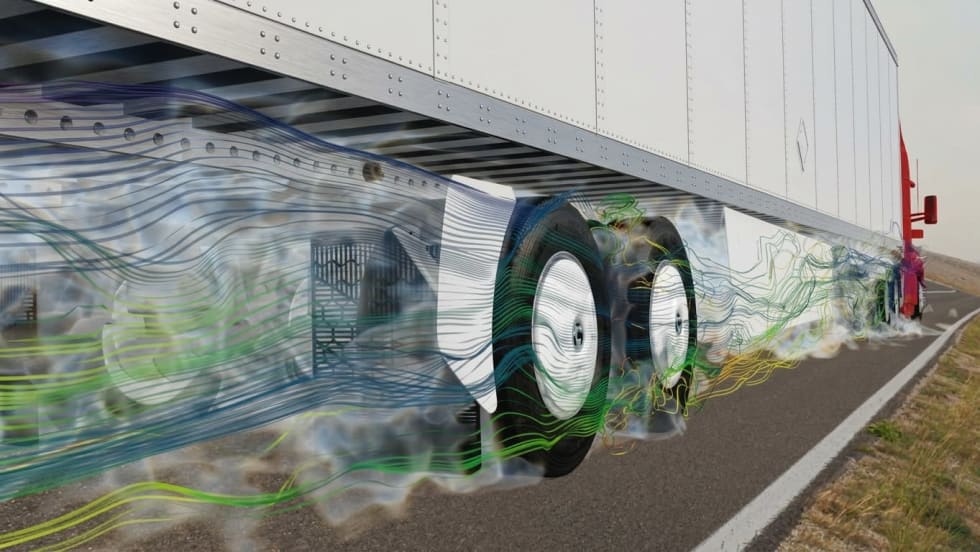
FlowBelow Redesigns Trailer AeroSlider to Cut Fuel Use
The lighter trailer aerodynamic system installs in less than 45 minutes, according to the company, with potential payback in under a year depending on fuel prices and trailer mileage.
Read More →
Why Diesel Price Relief Efforts May Fall Short
Diesel prices have eased from September’s record high, but doubts about additional Russian supply and limits on dyed-diesel tax relief mean trucking fleets still face expensive fuel. And prices could go higher.
Read More →
Why Small Fuel Savings Matter in Trucking
Can better fuel economy help pay for driver raises? In this podcast, GP Transco explains how small efficiency gains create room to reinvest in its people.
Read More →
How GP Transco Cuts Trucking Fuel Costs, a Tenth of a Gallon at a Time
What’s another tenth of a mile per gallon worth? GP Transco shares how equipment upgrades and driver coaching turn small gains into meaningful fuel savings.
Read More →
Electric Yard Tractors Move Beyond Pilots
Operating-cost savings have overtaken sustainability goals as the leading reason surveyed fleets are adopting battery-electric terminal tractors, according to new NACFE research.
Read More →
Geotab Links Fleet Card to Vehicle Data
The new card combines fuel discounts with telematics-based purchase controls. Geotab’s analysis also points to potential savings from choosing lower-priced fuel stops.
Read More →
Fleet Economics Shape Electric Truck Outlook
ACT Research expects costs, charging infrastructure, and technology improvements to drive zero-emission commercial vehicle adoption as federal regulations and incentives retreat.
Read More →
Wex Adds Cardless Fuel Payments for Over-the-Road Customers
A new fuel card feature for Wex customers offers convenience and security.
Read More →
New California Law Could Shed Light on Electric Truck Prices
Why do battery-electric Class 8 trucks remain so expensive? A California bill signed by Gov. Gavin Newsom would give fleets and state agencies more visibility into what manufacturers charge.
Read More →