




Windrose Releases EV Sleeper Cab Truck for North America
Windrose has teamed up with JoyRide Logistics and EO Charging to unveil a new, zero-emission, long-haul sleep cab truck for operations in the Southwest U.S.

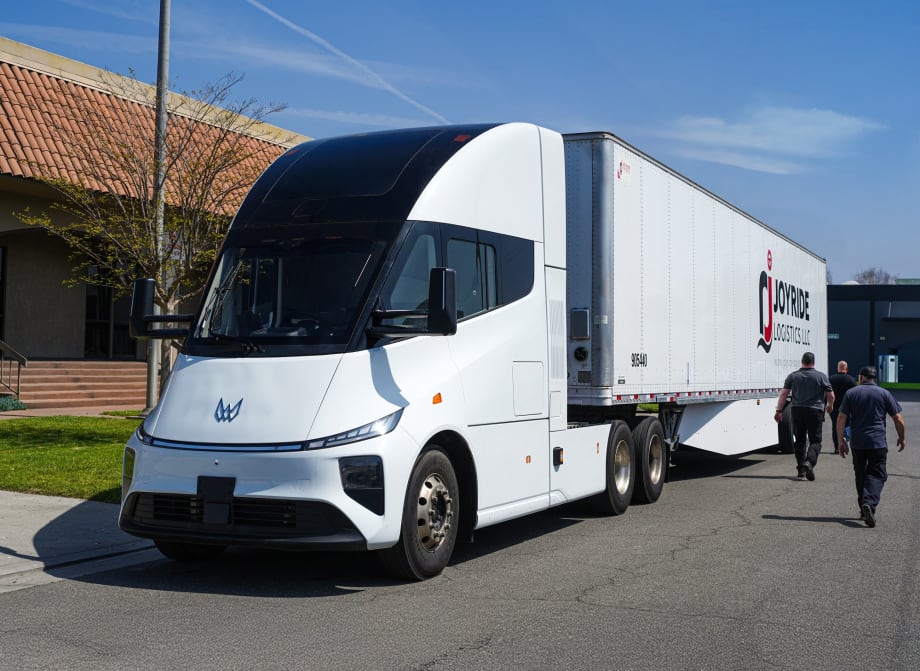
JoyRide Logistics is rolling out Windrose electric trucks on long-haul routes in the Southwestern United States.
Photo: Windrose Trucks
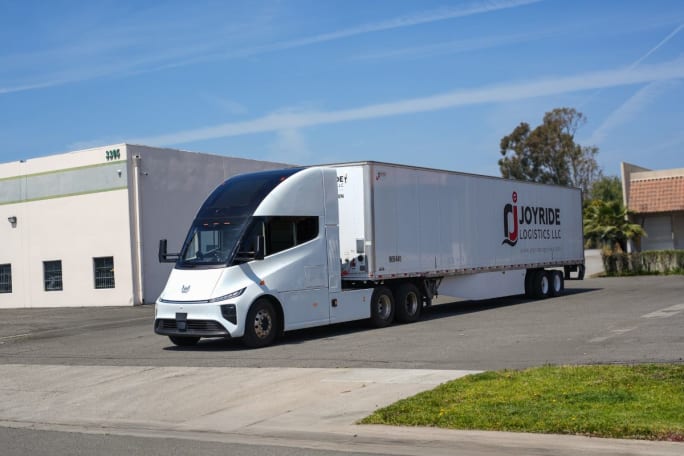
Windrose' Class 8 sleeper truck features 420 miles of range on a single charge.
Photo: Windrose Trucks
Windrose Technology has officially launched the first-ever all-electric long-haul sleeper truck in the United States, the company said.
Windrose is a global electric vehicle manufacturer active on four continents.
According to the OEM, the new truck is designed for real-world logistics. It features a 420-mile range and is now set for commercial deployment in the United States.
Partnership with JoyRide Logistics
Windrose said the launch of the new truck is being carried out in partnership with JoyRide Logistics.
Joyride is a Phoenix, Arizona-based carrier. The fleet claims to be the first U.S. regional trucking company to operate fully electric sleeper trucks.
All of the Windrose trucks operated by JoyRide will be powered by EO Charging.
EO is a developer of electric charging (EV) solutions for mission critical depot-based fleets.
The initial rollout begins in Arizona, California and Nevada, with nationwide expansion in sight.
"This isn't just a prototype or promise-this is a fully operational, long-range electric truck that's ready to haul freight today," said Wen Han, founder, chairman, and CEO of Windrose. "We've validated our technology globally and are proud to bring it to the U.S.-one of the most important logistics markets in the world."
A Long-Haul EV Sleeper Truck
Windrose noted that its trucks have undergone extensive real-world testing across Asia, Europe, Oceania, and North America.
In a recent U.S. field test, the Windrose sleeper completed a 2,800-mile cross-country trip using only public charging stations.
Windrose also completed a 3,000-plus mile loaded trip shipping clothing from the Hong Kong area to the China-Kazakhstan border. The OEM called this run a clear demonstration of its range, reliability, and charging compatibility.
The new truck is designed for full-length hauls with 420 miles of range.
The Windrose electric sleeper includes a comfortable bunk area, fast-charging capabilities (MCS & CCS), and over 700kWh of battery offering with both LFP and NMC battery types. The truck maintains Class 8 performance standards and weighs under 26,000 lbs., according to the OEM.
Driving the Shift in Regional Freight
JoyRide Logistics is an expanding regional carrier with a fleet of over 250 trucks operating in six states.
The fleet is leading the adoption of electric long-haul trucks in the U.S., according to Windrose.
"Partnering with Windrose allows us to stay ahead-not just on sustainability, but on total operational performance," said Adis Danan, President at JoyRide Logistics. "We're talking fuel savings, reduced maintenance, and a future-ready fleet that our customers can get behind. We want to make electric logistics efficient, scalable-and cool."
Danan said JoyRide already partners with multiple Fortune 500 customers, many of whom are actively working to reduce Scope 3 emissions.
The integration of EV's into their fleet is a direct response to those sustainability benchmarks.
Powering the rollout is EO Charging.
The company’s approach leverages real-estate acquisition, charging infrastructure deployment and vehicle financing. EO also maintains a more-than-99% uptime promise, to help deliver a cost-competitive service for shippers.
"Together, Windrose, JoyRide and EO Charging are making electrified long-haul freight a reality-not years from now, but today," said Charlie Jardine, president and founder at EO Charging. "We're proud to support this shift with innovative infrastructure solutions designed to optimize costs and help customers reach diesel parity."
Pioneering A Defining Moment for American Trucking
With or without regulation, the shift toward electrification is being led by forward-thinking companies, Windrose said.
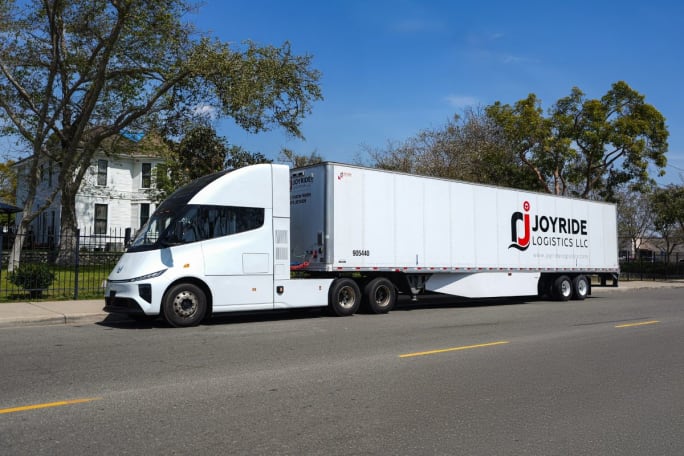
The new Windrose electric sleeper truck recently completed a 2,800 mile cross-country trip in the U.S. using only public charging stations.
Photo: WIndrose Trucks
According to the OEM, it, along with JoyRide, and EO Charging are proving that zero-emission trucking can meet performance, efficiency, and customer-driven sustainability goals now-not someday.
With the 420-mile all-electric sleeper truck already in operation, Windrose said it now stands as both a global innovator and a practical solution provider for the future of freight.
More Fuel Smarts

How Volvo Updated Its D13 for EPA 2027 [Watch]
Volvo’s updated D13 promises lower emissions without sacrificing performance or fuel economy. Take a closer look at what changed inside the engine in this HDT Spotlight video.
Read More →
Diesel Price Spike Shortens Payback for Natural Gas Trucks, Report Says
Energy Vision estimates fleets could recover the higher purchase price of an RNG-fueled Class 8 tractor in 1.3 to 2.8 years under current fuel-price scenarios.
Read More →
Calstart Becomes Catalyst Mobility, Reflecting Broader Focus
Calstart is now Catalyst Mobility, reflecting the nonprofit’s growing national role in clean transportation, including zero-emission trucks, infrastructure and incentive programs.
Read More →

Record Diesel Prices Squeeze Trucking Fleets
Average U.S. diesel prices have climbed to nearly $6 a gallon, surpassing the 2022 record as tight refinery capacity and Middle East disruptions keep fuel costs elevated.
Read More →
How Fuel Delivery Shapes Engine Performance
Fuel delivery depends on more than what happens at the injector. For fleet, maintenance and technical professionals, looking at the full path from pump to injector can provide useful context for understanding engine performance.
Read More →
East Coast Port Launches $45M Electric Truck Push
The Port Authority of New York and New Jersey announced millions in incentives for zero-emission drayage trucks, yard tractors, and new charging hubs near the port.
Read More →
California Bill Could Shed Light on Electric Truck Prices
Why do battery-electric Class 8 trucks remain so expensive? A California bill headed to Gov. Gavin Newsom would give fleets and state agencies more visibility into what manufacturers charge.
Read More →
Detroit Opens Orders for EPA 2027 Engines
Detroit isn’t starting from scratch to meet EPA 2027 diesel emissions standards. Its Gen 6 DD13 and DD15 engines keep much of today’s platform while updating the fuel and aftertreatment systems.
Read More →
Zero-Emission Truck Corridor Planned for West Coast
California, Oregon, Washington, British Columbia and Baja California are coordinating plans for truck charging and hydrogen fueling from Canada to Mexico.
Read More →
A Closer Look at Kenworth’s Electric T880E Vocational Truck [Video]
Learn more about Kenworth's T880E battery-electric vocational truck at the Paccar Technical Center, including its range, applications, upfitting considerations, and PTO options, in this HDT Spotlight video.
Read More →