




PacLease Trucks Featuring Cummins X15N Engine Enter Service
The first PacLease trucks powered by the Cummins X15N natural gas engine entered service with Bosum Trucking in Chambersburg, Pennsylvania.

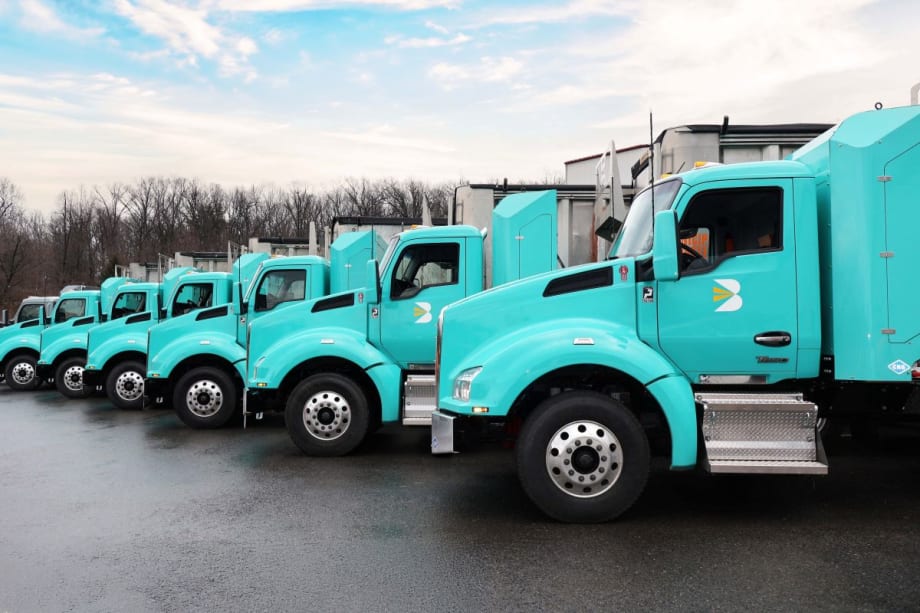
Bousum Trucking, a waste hauling company based in Chambersburg, Pennsylvania, began running Kenworth T880 day cabs with Cummins’ new X15N CNG engine.
Photo: Paccar
Pennsylvania air got a little bit cleaner on February 27. That’s the day Bousum Trucking, a waste hauling company based in Chambersburg, Pennsylvania, began running Kenworth T880 day cabs with Cummins’ new X15N CNG engine.
Bousum operates eight of these units with the majority of the trucks leased through Motor Truck PacLease – the local PacLease franchise.
These units represent the first CNG trucks featuring the X15N engine that PacLease has put into a lease program.
Near-Zero Emissions
The eight new near-zero emission trucks emit CO2 and NOx at levels that are 90% below current EPA standards.
They are being used in Centre County -- in central Pennsylvania near State College -- to move waste from the county’s transfer station to a landfill in Laurel Highlands, about 80 miles away.
The landfill itself converts waste into renewable natural gas (RNG), which is then sold as fuel. A solar powered RNG refueling station near the landfill refuels the Kenworth trucks daily allowing these CNG trucks to accumulate nearly 130,000 miles per year.
According to Ted Onufrak, Executive Director of the Centre County Recycling and Refuse Authority, the county uses 22 RNG recycling collection trucks.
Why Hexagon Agility Loves RNG as a Truck Fuel
“And we’re now pleased to see Bousum Trucking continue that momentum by adding CNG trucks to take approximately 110,000 tons of waste annually from our transfer station to the Waste Management landfill” he added. “We’re all committed to reducing emissions in our area.”
Liam Tanelli, CFO for Bousum Trucking, said the introduction of the 15-liter Cummins CNG engine is a “game changer” in allowing the company to move forward with an alternative fuel.
“It meant we could now confidently handle heavy loads on the haul from the transfer station to the landfill,” he said. “The trucks are rated at 450 horsepower with 1,650 lb.-ft. of torque and utilize 12-speed automated transmissions – that’s the right spec for our operation. Each truck makes three round trips per day; drive time is 1-1/2 hours each way, and the trucks can face steep grade changes ranging from 8-12%. So, we needed the horsepower and torque of the industry’s first 15-liter CNG engine.”
Positive Driver Feedback
Preliminary test runs, based on driver reports (and feedback) praise the performance of these CNG-powered trucks and how comparable they drive versus their diesel equivalent.
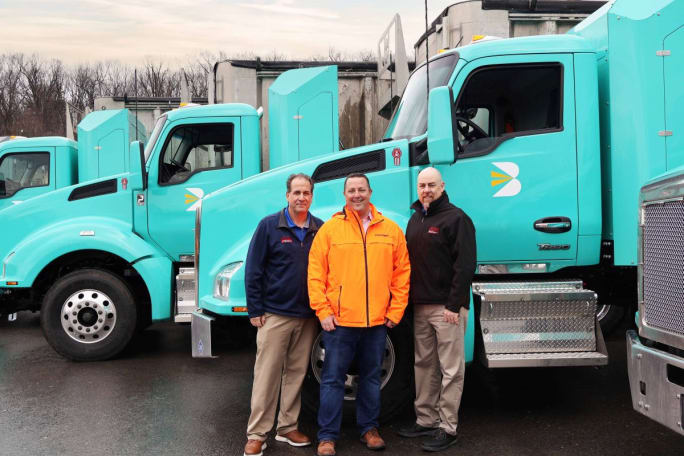
From left: Jay White, Lease Sales Motor Truck PacLease, Liam Tanelli, CFO Bousum Trucking, Mike Wiseman, General Manager, Motor Truck, PacLease.
Photo: Paccar
“But obviously, the big difference is there are virtually no emissions from our CNG engines, and that’s a great benefit for everyone,” said Tanelli. “We will watch the performance and life-cycle costs closely as we use these trucks as our test bed as we look toward the future.”
The move toward CNG came after Bousum Trucking purchased their first Kenworth T880 CNG unit.
Tanelli met with PacLease to see about the possibility of leasing seven Kenworth T880s with CNG engines.
“PacLease had all their ducks in a row to simplify the process of bringing in new technology. We didn’t have to worry about a thing,” he said. “That went from spec’ing the trucks, to working with Pennsylvania to apply grant money to these trucks (the Pennsylvania Alternative Fuels Incentive Grant provided a $40,000 offset for each truck), to how maintenance and service would be handled – including working with Cummins in nearby Altoona. We had used PacLease in other areas and the trucks and service has been great. We have a lot of confidence in PacLease as a partner.”
More Fuel Smarts

How Volvo Updated Its D13 for EPA 2027 [Watch]
Volvo’s updated D13 promises lower emissions without sacrificing performance or fuel economy. Take a closer look at what changed inside the engine in this HDT Spotlight video.
Read More →
Diesel Price Spike Shortens Payback for Natural Gas Trucks, Report Says
Energy Vision estimates fleets could recover the higher purchase price of an RNG-fueled Class 8 tractor in 1.3 to 2.8 years under current fuel-price scenarios.
Read More →
Calstart Becomes Catalyst Mobility, Reflecting Broader Focus
Calstart is now Catalyst Mobility, reflecting the nonprofit’s growing national role in clean transportation, including zero-emission trucks, infrastructure and incentive programs.
Read More →

Record Diesel Prices Squeeze Trucking Fleets
Average U.S. diesel prices have climbed to nearly $6 a gallon, surpassing the 2022 record as tight refinery capacity and Middle East disruptions keep fuel costs elevated.
Read More →
How Fuel Delivery Shapes Engine Performance
Fuel delivery depends on more than what happens at the injector. For fleet, maintenance and technical professionals, looking at the full path from pump to injector can provide useful context for understanding engine performance.
Read More →
East Coast Port Launches $45M Electric Truck Push
The Port Authority of New York and New Jersey announced millions in incentives for zero-emission drayage trucks, yard tractors, and new charging hubs near the port.
Read More →
California Bill Could Shed Light on Electric Truck Prices
Why do battery-electric Class 8 trucks remain so expensive? A California bill headed to Gov. Gavin Newsom would give fleets and state agencies more visibility into what manufacturers charge.
Read More →
Detroit Opens Orders for EPA 2027 Engines
Detroit isn’t starting from scratch to meet EPA 2027 diesel emissions standards. Its Gen 6 DD13 and DD15 engines keep much of today’s platform while updating the fuel and aftertreatment systems.
Read More →
Zero-Emission Truck Corridor Planned for West Coast
California, Oregon, Washington, British Columbia and Baja California are coordinating plans for truck charging and hydrogen fueling from Canada to Mexico.
Read More →
A Closer Look at Kenworth’s Electric T880E Vocational Truck [Video]
Learn more about Kenworth's T880E battery-electric vocational truck at the Paccar Technical Center, including its range, applications, upfitting considerations, and PTO options, in this HDT Spotlight video.
Read More →