





Related: Faster Truck Development Cycles Help Muddy the Definition of Production
Leasing to the Rescue
Lessors say they are applying technological and management savvy to bring down the cost and risk of operating trucks and trailers for more customers than ever.
March 11, 2020
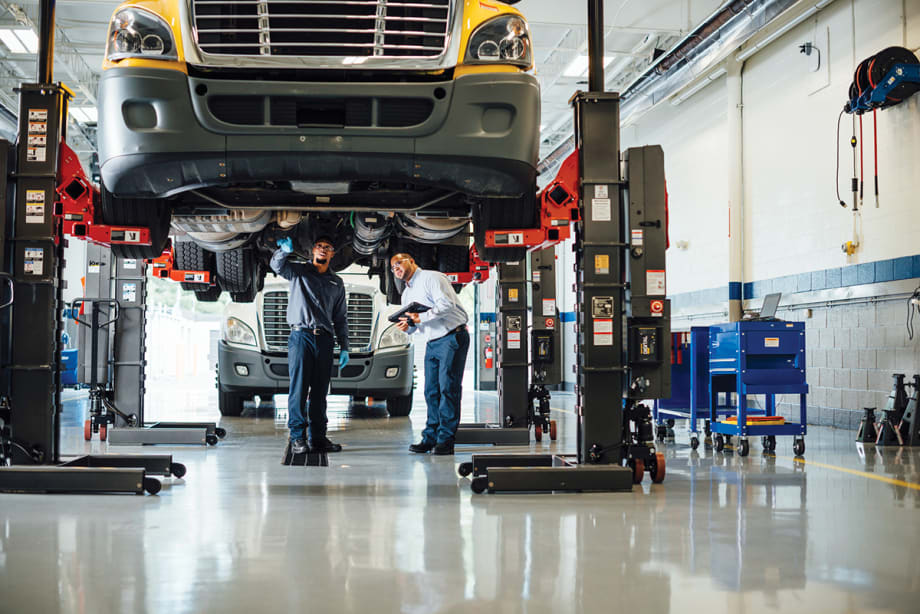
“Leasing takes the highs and the lows out of costs for fleets — and does it from the front end to the back end,” says Penske’s Jim Lager.
Photo: Penske
8 min to read
As 2020 unfolds, all sorts of market drivers are pointing to this being a very good time to be leasing and renting trucks and trailers. And the lessors of that equipment might argue that those same forces are making what they offer more valuable than ever to fleet operators.
The rental and leasing market for medium- and heavy-duty truck sales in North America is expected to expand at a compound annual growth rate of 5.4% from 2019 to 2025. That’s according to a recent study by market-research firm Research and Markets, which points to several factors strongly favoring leasing as a truck-financing method. Along with meeting customers’ financial and operation requirements, these chiefly include concern about yearly total mileage, desired replacement cycle, and duty cycle influence on wear and tear.
More specifically, the study points to how fleets are turning to advanced safety technologies to help boost Compliance, Safety and Accountability (CSA) scores and cut insurance premiums. Of course, they’re doing that while also dealing with more complex low-emissions diesel engines, or natural gas and even electric trucks, to attain sustainability goals.
“Leasing enables fleets to constantly upgrade fleets with advanced technologies,” the study’s authors note. And the “high initial costs, uncertainty over residual costs, and rapid technological changes in alternate fuel segments are making leasing attractive for fleet managers.”
In addition, they find that “last-mile innovations are driving truck demand in the regional haul and urban delivery segments, with a large number [of these] fleets preferring full-service leasing to focus on their core competencies.”
The study shows that “operational” (full-service) leasing will experience a 6.4% and 7.2% compound annual growth rate during the 2019-2025 timeframe in the Class 4-7 and Class 8 segments, respectively. Full-service leasing will win out “where fleets try to reduce the amount of capital tied to non-core assets, avoid residual risk, and constantly upgrade to newer vehicle models.” On the other hand, finance leasing will be favored “where fleets require greater control over asset utilization and [can handle] disposal with expertise in remarketing.”
All these findings track seamlessly with what executives at several major full-service lessors and at a provider of equipment financing and business intelligence tell HDT are the major forces growing full-service leasing.
Collectively, they describe the winds driving leasing forward in 2020 as being stirred mainly by fleet concerns about:
Selling used trucks in a glutted market
Absorbing the rapid pace of technological change in trucking equipment
Finding and retaining technicians and keeping maintenance shops up to date
Leveraging telematic systems to boost fleet efficiency
Understanding the impact of running battery-electric trucks
The lessors also speak to the value of their offering fuel-buying services to leasing customers and of being one-stop shops for leasing both power units and semi-trailers.
Avoiding the Truck Glut
There’s a glut of late-model used trucks on the market, which can lead fleets to keep older trucks longer for fear of giving them away in a buyer’s market. But holding them prevents fleets from benefiting from often-yearly advances in new truck technology.
“The phenomenal three-year run of new truck sales has forced down used-truck prices in recent months,” says Mike Willey, assistant general manager of Paccar Leasing Company (PacLease). “That makes it hard to sell off vehicles and not take large losses. So, fleets may run those trucks longer.
“But moving to a FMV [fair market value] lease would take them out of the used-truck market and let them bring in more efficient trucks with the latest technology.” Willey adds that all those trucks sold in the past 36 months or so will re-enter the market in a few years, causing another glut.
“Choosing leasing is a great pathway” for fleets to manage technological change and other industry issues, such as driver retention, by making it easy to switch to shorter trade cycles, advises Brian Holland, president and CFO of Fleet Advantage, which provides equipment financing and business intelligence to fleet operators.
He points out that setting trade cycles “depends on a lot of factors, including fuel mileage, maintenance costs, and secondary value. We use an algorithm to determine the ‘tipping point’ for when it is cheaper to move to new equipment. Typically, it’s before 500,000 miles and usually reached in three to four years.”
Smoothing the Bleeding Edge
The ever-faster clip at which technology is rolling into trucking is “driving more fleets to consider leasing instead of managing equipment and shops,” says Art Trahan, senior manager, national account technical support, for Ryder Truck Rental.
“Leasing lets them focus on their core business,” he continues. “Back in the early ‘90s when I started here, leasing was seen as more of a balance-sheet decision. Now, it’s more of a total cost of ownership model. With TCO, the math is simple. And everything comes into play, from staffing techs to managing truck residual values.”
Jim Lager, Penske Truck Leasing’s senior vice president of sales, contends that “the complexity of technology and its rapid advance is making it more expensive to buy and work on trucks. Leasing takes one out of the game, so to speak. Then a fleet doesn’t have to deal with the complexity. Leasing takes the highs and the lows out of [operating] costs for fleets — and does it from the front end to the back end.”
Leasing allows fleets to “keep up with truck technology and the related capital cost of trucks, which has almost doubled since 2007,” says Dean Vicha, president of NationaLease, which consists of 137 family-run local/regional lessors. “It also helps fleets keep up with changing regulations, such as for ELDs. Leasing companies have been ahead of the game with the data from ELDs; showing customers how the data [can be leveraged] for scheduled and predictive maintenance.”
Techs and Shops
“Look at changing [greenhouse gas/fuel efficiency] regs, ELDs, the introduction of automated transmissions and new safety systems,” says Ryder’s Trahan. “What these advances drive is the need for specialized technicians.” He says Ryder started down this road with aftertreatment systems, launching a certified aftertreatment tech program. And he makes this point: “If you struggle now to find someone with the training and tools for just one location, think about how much less it costs to have maintenance centralized for a number of customers.”
Lessors are also investing in technology to make shops and techs more efficient. “Our Dallas shop is validating a voice-guided preventive maintenance system,” notes PacLease’s Willey. “We’re piloting it to see how much it helps with quality and time.”
Penske’s Lager says that because it’s getting harder and harder to recruit technicians, many fleets are already partially outsourced. “And equipment is becoming obsolete faster. A tech may have to work on a truck that is completely different than the one he’d been working on for six or seven years. Our approach is to develop techs all the way up to the supervisory level. Our scale lets us do that.”
NationaLease’s Vicha says lessors “tend to be ahead of the curve on technology, which helps us lead on predictive or scheduled maintenance. That’s a huge value we offer — being able to cut, slice and use all the data now coming off trucks.”
Smart Connections
Telematics is a game-changer and leasing companies know it. “Telematics is at the heart of our value proposition,” says Fleet Advantage’s Holland. “There’s been an avalanche of solutions to leverage telematics data to impact maintenance practices and strategies — the idea being to optimize the asset and the financing of that asset.”
Lager says Penske has built a platform to use the data from different telematics providers. “It’s driving predictive maintenance. We know where the vehicle is. We have more information to diagnose it. And from there, we can schedule it — predict it — before any failure can result.”
“OEM telematics keep getting better, with their connected-fleet solutions,” says Rich Mohr, Ryder System’s CTO. He adds that telematics already “shortens the whole breakdown process. We can send the right tech, the right parts and the right tools to get the truck back on the road.”
With the switch from 3G to 4G networks in 2021-22, followed by 5G, telematics will enable an even higher level of diagnostics, and leasing companies will be using that data.
Electric Road Ahead
With major unknowns stlll ahead regarding electric trucks, from charging to maintenance to lifecycles, leasing companies are in the forefront.
“We’re prepared for electric vehicles,” says PacLease’s Willey. “Over the next 12 to 18 months, we’ll start seeing production and pricing [by OEMs]. We’re already receiving requests on them from companies that want to be at the forefront of adoption.
“There are a lot of questions yet on maintenance costs and residual values before establishing lease rates,” he continues. “PacLease will definitely be there to lease electric trucks and for charging stations and for training techs to work on them.”
Ryder’s Mohr says electric trucks will take their place among diesel and natural gas trucks. “We’ll see a stunningly mixed fleet for a time,” he says. “EV use will come down to how will the truck be used, such as for final mile. The biggest element will be charging infrastructure, which will be a lot for small to medium fleets to handle. We’re assessing our facilities out West. The age of the facility and the electric grid that supports it has to be taken into account before charging station can be installed.”
“Electric trucks may serve as an entree to leasing for some fleets,” says Fleet Advantage’s Holland. “A benchmark study of electric and hydrogen fuel-cell trucks we did found 53% don’t see the value of and won’t consider the technology for 10 years. That’s now. That view will moderate as the technology advances.”
But Wait, There’s More
Telematics and electric trucks are of the sexy present and near future, but all nationwide lessors point out that their services cover the waterfront, including spec’ing and maintaining trailers and fuel-buying services.
“We offer fuel at our facilities, at customer sites, and via a truckstop network,” says Penske’s Lager. “The pricing is competitive, but cost is just one aspect. Fuel quality is also important. Poor-quality fuel can wreak havoc on aftertreatment systems.”
“There’s a lot more propensity to lease trailers now,” says Ryder’s Trahan. He says that growth is due to trailers simply becoming more technical in nature. “There’s a need for smart trailers. In the next five years that trend will increase as more systems leverage the internet of things as well as remote diagnostics, not to mention integrating with digital freight networks.”
Correction, 3/12/2020: Brian Holland's title has been corrected; he is president and CFO of Fleet Advantage. We apologize for the error.
Subscribe to Our Newsletter
More Equipment
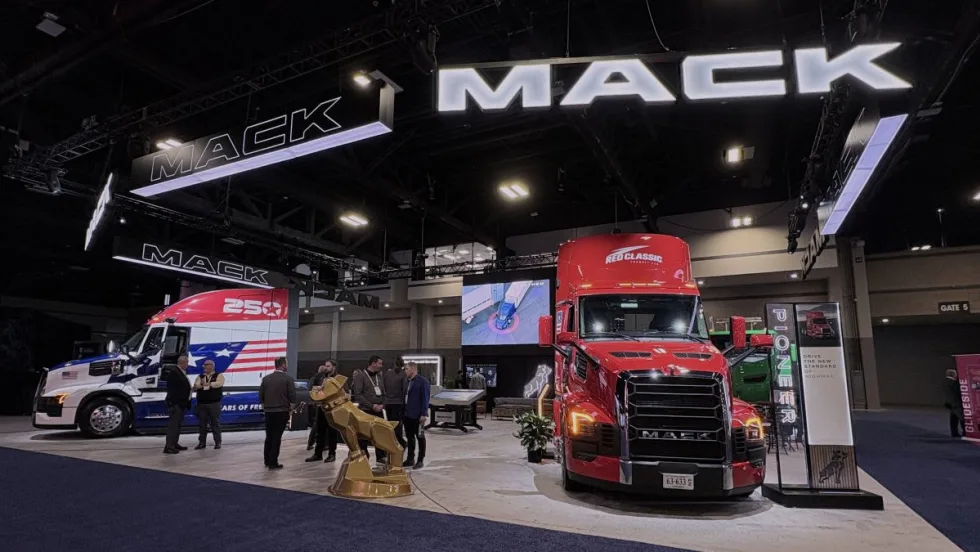
Trucks at ATA's 2026 MC&E in Charlotte, North Carolina [Photos]
From rigs decked out in patriotic America's 250 paint schemes to autonomous trucks and more, check out these photos from ATA's 2026 Management Conference & Exhibition.
Read More →
Help HDT Find Trucking’s Top Products
Have you come across a new product that could make a difference for trucking fleets? Nominate it for HDT’s 2027 Top 20 Products Awards by November 9.
Read More →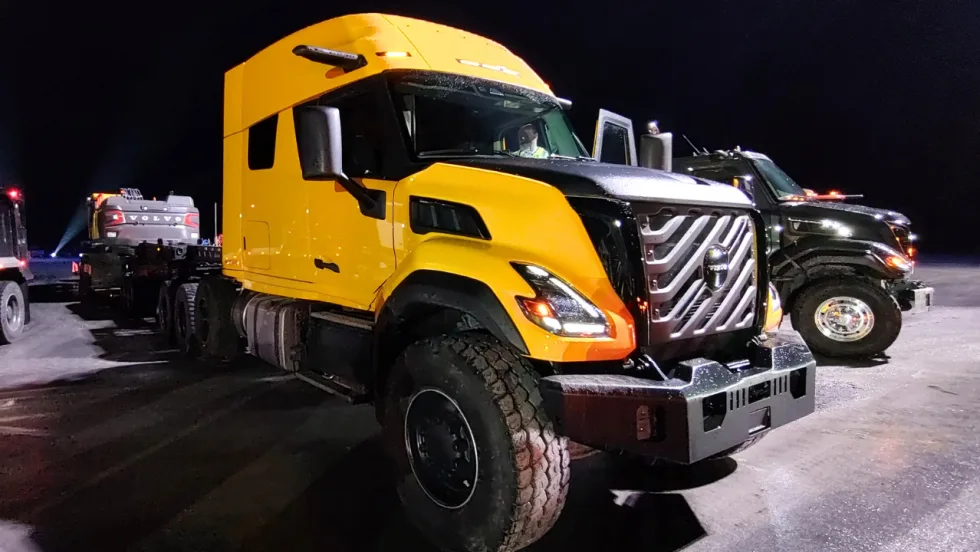
Volvo Unveils New VNX Heavy-Haul and Vocational Truck
Volvo Trucks has launched the VNX, a new vocational truck also available as a tractor in day cab and two sleeper configurations, with one heavy-haul model. The Volvo VNX is powered by Volvo's D13 platform, which delivers up to 540 horsepower and 1,950 pound-feet of torque and is EPA 2027-compliant.
Read More →
How GP Transco Cuts Trucking Fuel Costs, a Tenth of a Gallon at a Time
What’s another tenth of a mile per gallon worth? GP Transco shares how equipment upgrades and driver coaching turn small gains into meaningful fuel savings.
Read More →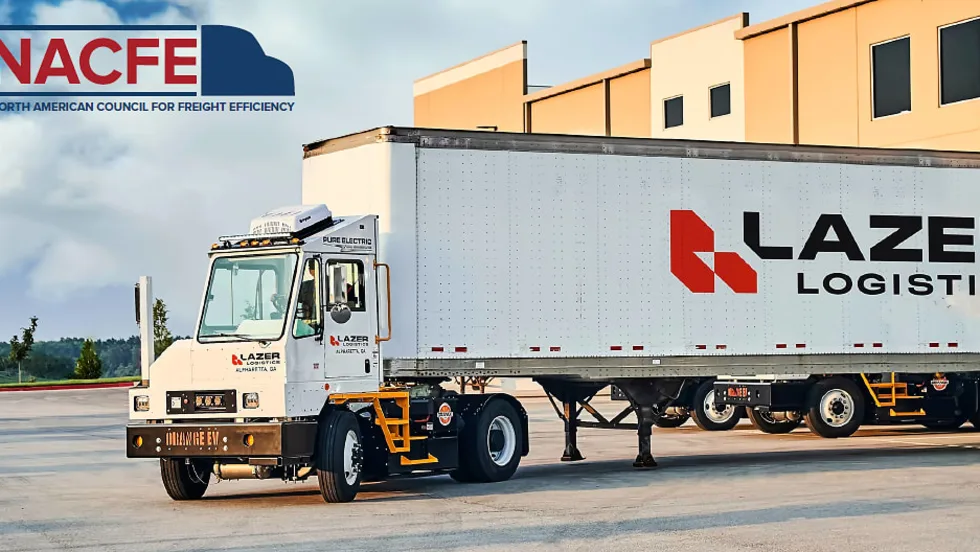
Electric Yard Tractors Move Beyond Pilots
Operating-cost savings have overtaken sustainability goals as the leading reason surveyed fleets are adopting battery-electric terminal tractors, according to new NACFE research.
Read More →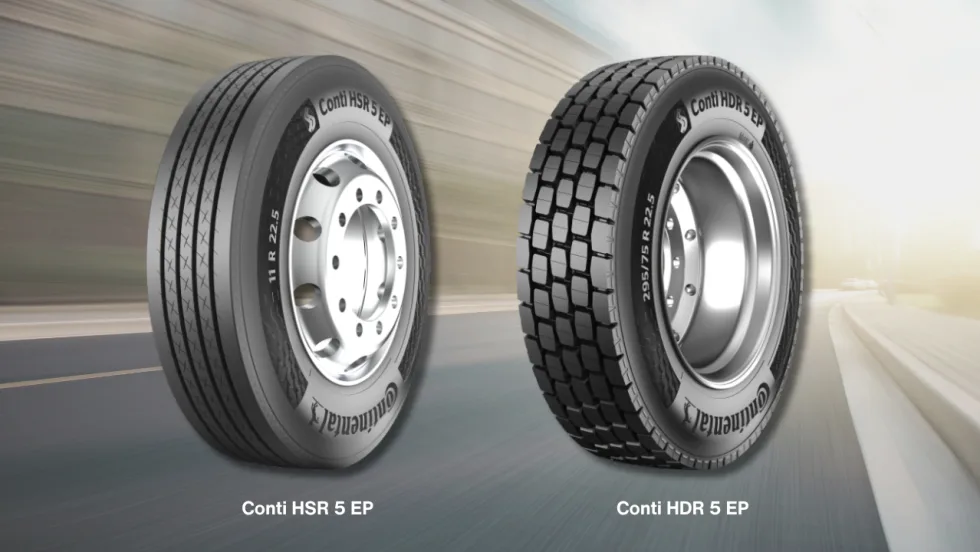
Continental Introduces New Regional Truck Tires
Continental says its new Generation 5 steer and drive tires for regional operations offer longer tread life, with estimated mileage gains of 22% and 19%, respectively.
Read More →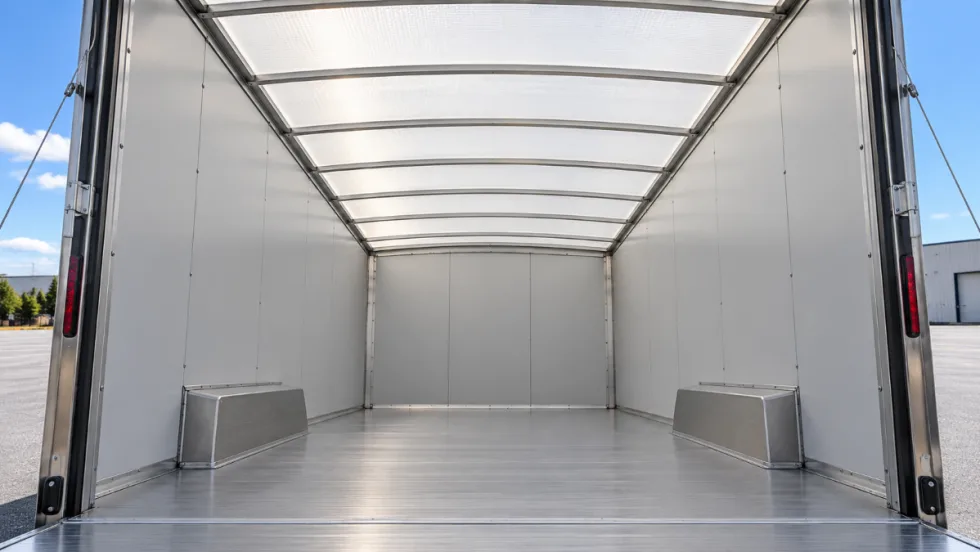
Tekmodo Introduces CargoBright Brand for Translucent Trailer Roofs
CargoBright is designed to diffuse daylight across the cargo area while performing as a working vehicle roof.
Read More →
Fleet Economics Shape Electric Truck Outlook
ACT Research expects costs, charging infrastructure, and technology improvements to drive zero-emission commercial vehicle adoption as federal regulations and incentives retreat.
Read More →
Kodiak Targets Dallas–Houston for Driverless Trucks
The company says its autonomous trucks are completing the I-45 run without a safety observer taking control. It plans to remove the observer by the end of 2026.
Read More →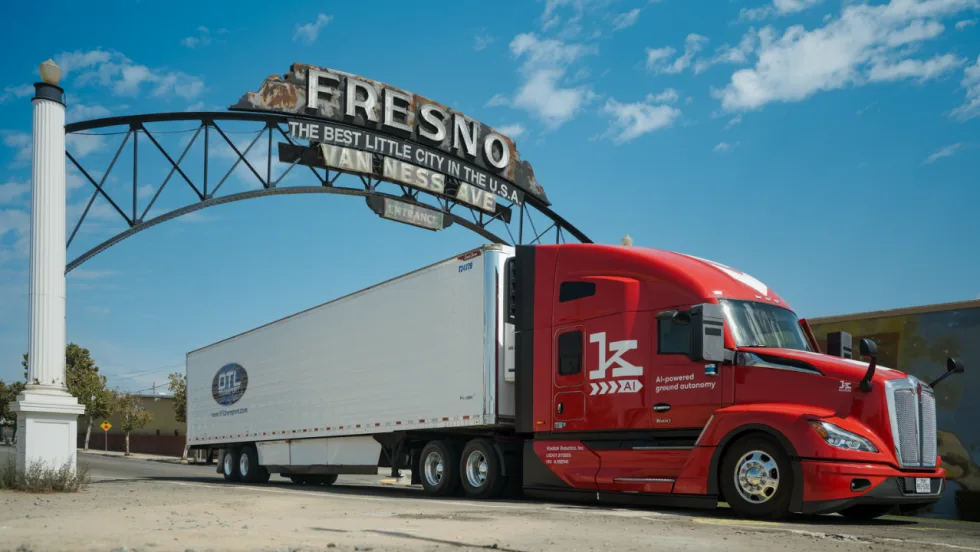
Kodiak Hauls Produce in California Autonomous Truck Pilot
Kodiak AI and DTL Transport have begun hauling produce between Fresno and Los Angeles under California’s new rules for testing heavy-duty autonomous trucks. A safety driver remains behind the wheel.
Read More →