





Why Plus Says it's Roadmap to Autonomous Trucks is Different
Plus Unveils Open Platform Autonomous Control System
Plus said its new open-platform autonomous control technology uses AI-based technology for highly automated and fully autonomous driving solutions.
February 20, 2024
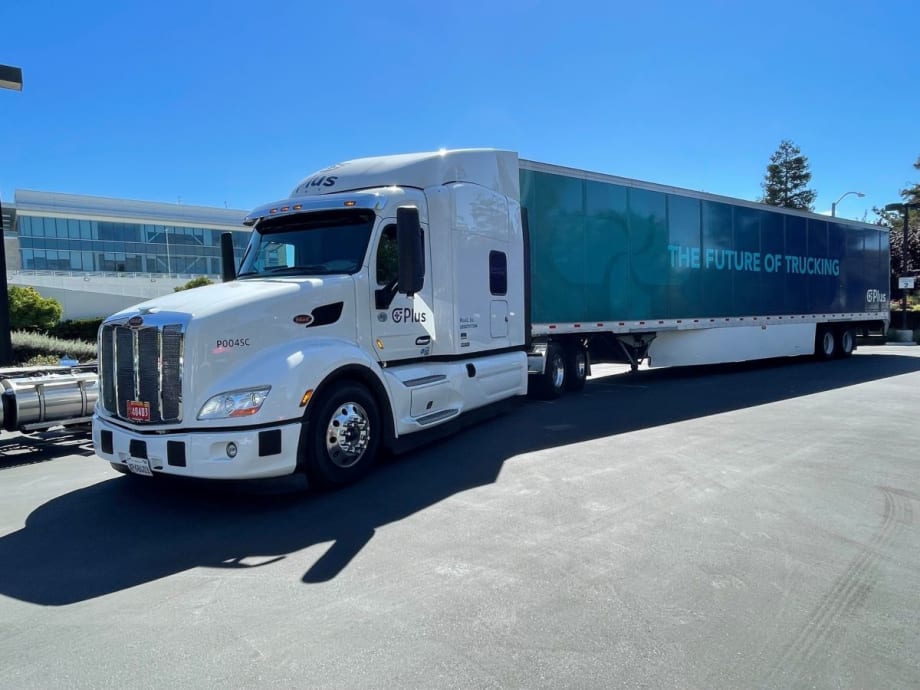
Plus said its new Open Platform for Autonomy system will make it easier for fleets to transition to self-driving trucks.
Photo: Jack Roberts
3 min to read
Autonomous truck developer Plus unveiled its Open Platform for Autonomy (OPA), a new open-platform autonomous control technology that uses AI-based technology for highly automated and fully autonomous driving solutions.
According to the company, OPA is an open and modular software platform powered by the latest AI models for autonomous vehicle control systems. Plus said OPA supports all levels of autonomy, adapts to specific customer needs, and is optimized for cost-to-performance ratio.
OPA will enable autonomous driving capabilities on customizable configurations across different sensors, processors, vehicle platforms and powertrains, according to a press release. Plus said it has packaged OPA into a suite of solutions that span driver-in next generation safety systems to its “highly automated” PlusDrive and driver-out Level 4 SuperDrive control systems.
There are three main advantages to OPA, according to Plus:
Open platform leverages latest AI-based technology to enable next-generation safety systems for highly automated and fully autonomous driving solutions.
Modularization of software platform designed to give customers maximum flexibility to personalize driving experiences.
Use of common underlying Level 4 autonomous driving software will accelerate speed and ease of transition to higher levels of autonomy in subsequent generations of vehicles.
Modularity, Flexibility and Scalability by Design
Plus’s OPA consists of off-board modules, autonomous vehicle functional modules, and vehicle integration modules. Plus described it as a “brain” that connects all systems needed to enable autonomous driving capabilities. These range from sensor suites that are “seeing” the world to the computing platform that processes all the data and the actuation systems that control the vehicle.
According to Plus, OPA will enable customers to integrate automated driving capabilities into their vehicles, while retaining ultimate control over their autonomy solutions.
OPA supports use cases across all levels of autonomy by using the foundational Level 4 autonomous driving software as its common base. Next-generation safety systems benefit from perception technology in the OPA.
The L2++ PlusDrive solution is already in commercial use to deliver freight across the U.S. and being tested on public roads in Europe.
According to Plus, these deployments give customers the opportunity to benefit from safer and more fuel-efficient automated driving today.
Over-the-air software updates of OPA enable continuous improvement and expansion of features for drivers, supporting customer OEMs’ software-defined vehicle strategies. OEM customers expanding their vehicle range to include higher levels of automation in the future will experience a seamless and faster transition, both from technology and end user standpoint, according to the company.
Plus’s L4 SuperDrive solution is also being deployed to help bring autonomous trucks to Australia.
Calling it a "game-changer," Shawn Kerrigan, Plus COO and co-founder, said in a release, "Not only does it provide vehicle manufacturers and Tier 1s maximum flexibility to develop products customized for their audiences, it’s a natural pathway to evolve their offerings into higher levels of automation over time.”
More Equipment

How Volvo Updated Its D13 for EPA 2027 [Watch]
Volvo’s updated D13 promises lower emissions without sacrificing performance or fuel economy. Take a closer look at what changed inside the engine in this HDT Spotlight video.
Read More →
Michelin Tire Improves Efficiency and Durability for Regional Fleets
The Michelin X Multi Energy D2 is a regional haul drive tire engineered to help fleets improve fuel efficiency, durability and traction in demanding stop-and-go operations.
Read More →
ZF Expands Commercial Vehicle Push in North America
ZF is expanding its North American commercial-vehicle presence with new transmission applications, electrification, trailer technology and autonomous-driving systems.
Read More →
Tesla Wants a Self-Driving Semi. Are Cameras Enough?
Could Tesla’s camera-only autonomous driving technology work on an 80,000-pound Semi? In this commentary, HDT's Deborah Lockridge takes a look at Tesla, Cybercab, and how autonomous trucks see the road.
Read More →
Kodiak: Driverless Long-Haul Truck Launch on Track for 2026
Kodiak AI says its driverless long-haul safety case is 93% complete and it remains on track to begin commercial operations by year-end 2026.
Read More →
What DOT’s Automated Vehicle Strategy Means for Trucking
The U.S. Department of Transportation issued a new automated-vehicle strategy that outlines plans for driverless-truck regulations, cross-state freight corridors, and federal safety standards.
Read More →
East Coast Port Launches $45M Electric Truck Push
The Port Authority of New York and New Jersey announced millions in incentives for zero-emission drayage trucks, yard tractors, and new charging hubs near the port.
Read More →
PlusAI Going Public to Fund Autonomous Truck Launch
A SPAC deal could provide PlusAI with up to $300 million as it works toward a 2027 commercial launch of factory-built autonomous trucks.
Read More →
NHTSA Moves to Rewrite Truck Fuel-Economy Rules
The National Highway Traffic Safety Administration says it lacks authority to regulate medium- and heavy-duty truck engines separately from complete vehicles, but the existing standards have not yet been eliminated.
Read More →
Detroit Opens Orders for EPA 2027 Engines
Detroit isn’t starting from scratch to meet EPA 2027 diesel emissions standards. Its Gen 6 DD13 and DD15 engines keep much of today’s platform while updating the fuel and aftertreatment systems.
Read More →