




Higher ELD, Hours of Service Fines Coming to Canada
U.S. motor carriers operating in Canada could be subject to new, higher fines for most electronic logging device and hours-of-service violations.

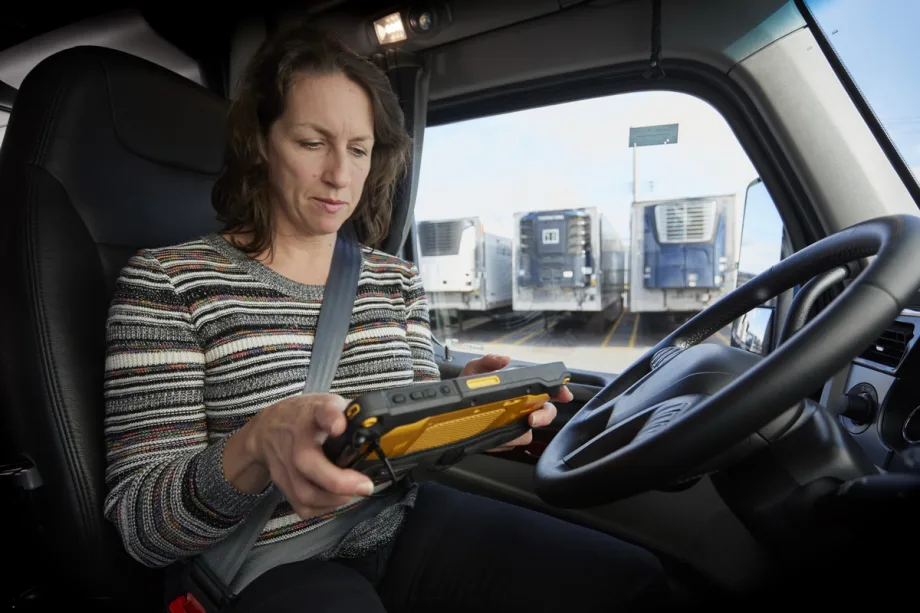
U.S. carriers operating in certain Canadian provinces could face fines of up to $2,000 (CDN) for severe violations of HOS/ELD rules, such as allowing drivers to continue driving after 16 hours on duty, or more than 70 hours per week.
Photo: Isaac Instruments
Canada has introduced a new tier of fines related to electronic logging devices (ELDs). These changes could result in substantially higher fines for violators, but a simpler process for resolving the violation.
The new regime breaks pre-set fine amounts into three categories: minor, moderate, and severe. Minor contraventions could result in fines of up to $600, whereas more severe contraventions could be as high as $2,000 (CDN). In all cases, carriers will pay higher fines than drivers for the same offense.
Previously, in some provinces there were no provisions for pre-set fines, nor mechanisms for easy resolution for the offender. Being ticketed for an HOS or ELD violation often resulted in a mandatory court appearance with no opportunity for a guilty plea and payment of the fine.
The changes announced last week by Canada’s federal transportation regulator, Transport Canada, bring HOS and ELD violations into a judicial tool known as the Contraventions Act. Designating certain minor, noncriminal offenses as contraventions provides enforcement officers with an efficient mechanism to enforce the provisions of the HOS regulations.
Prior to this designation, enforcement officers could only enforce these offenses by issuing a warning or proceeding under the summary conviction procedure of the Criminal Code.
"We recognize that going through the court process for violations of the Commercial Vehicle Drivers Hours of Service Regulations can tie up the justice system and take time," said Omar Alghabra, Canada’s minister of transport. "By allowing enforcement authorities to directly fine violators, we're giving them new tools to deliver quick and effective penalties."
Contravention tickets do not replace the court process; this remains available to prosecute offenders of the Commercial Vehicle Drivers Hours of Service Regulations. Offenders retain the right to challenge the ticket in court.

"By allowing enforcement authorities to directly fine violators, we're giving them new tools to deliver quick and effective penalties," said Canada Transport Minister Omar Alghabra.
Photo: John G. Smith, Today's Trucking/Truck News
What’s Driving the Changes?
Motor carrier safety in Canada is a joint responsibility between the federal government and the provinces and territories. The federal government is responsible for inter-provincial and international truck and bus transport.
However, under the Motor Vehicle Transport Act, the provinces and territories enforce federal regulations on behalf of the federal government. The provinces and territories also have sole responsibility for intra-provincial operations.
In most provinces and territories, ELD and hours of service regulations are enforced at the provincial level. But, due to a quirk in the way such rules are administered in Canada, some provinces do not actually have their own ELD regulations in place. Instead, they “adopt the federal rules by reference,” into their regulatory regime. Since they do not have actual legislation in place, those provinces cannot impose provincial fines and sanctions on violators. They can, however, charge offenders under the federal regulations. As we noted above, that process did not include a schedule of fines and required the offender to appear in court where judges set the fines.
"Most provinces already had their own rules and fines. For these, nothing changes,” said Nicolas Guérin, ELD product manager at Montreal, Quebec-based Isaac Instruments. “However, for provinces using the federal HOS rule by reference, no fines were defined and, most importantly, there was no federal ticketing procedure. This means that drivers and/or carriers found in violation of the federal rule in those provinces had to go through a complicated process that could even include having to go to court.”
The political aspect of the ELD regulations further complicated matters. The federal requirements for electronic logging devices came into force on June 12, 2021, but that had been debated vigorously for several years before that. Today, there are still four holdout provinces that have not adopted ELDs into law for intra-provincial carriers.
ELDs remain politically very unpopular in four jurisdictions:
Alberta
Saskatchewan
New Brunswick
Nova Scotia
In those jurisdictions, the administrative burden of laying a summary charge for relatively minor regulatory offenses such as ELD or HOS violations incentivizes enforcement officers to either not enforce the regulation or to only issue warnings that have no significant deterrent effect. Designating certain offenses under the federal HOS regulations as contraventions provides enforcement officers with an additional tool — the ability to issue a ticket — as a complement to their existing enforcement options.
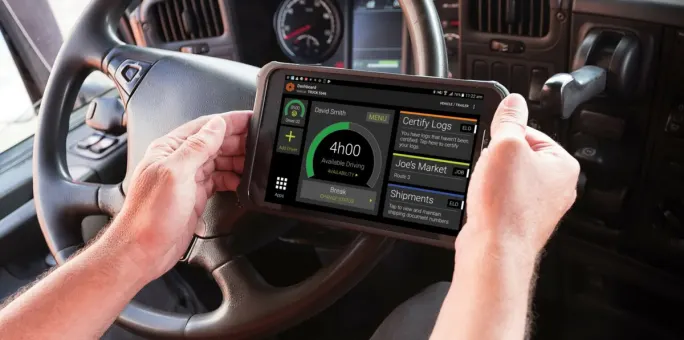
There are still four hold-out provinces that have not adopted ELDs into law for intra-provincial carriers.
Photo: eRoad
Does This Apply to U.S. Carriers?
American carriers operating in Canada are subject to the federal regulations and are required to use certified ELDs. In jurisdictions that did adopt the ELD mandate, enforcement officials have the option of laying charges using the new fine schedule — but it’s unlikely they will, a source familiar with the issue explained to HDT.
“It's really only going to be used in places where there's no ELD mandate,” the source said. “For those provinces that have adopted an ELD mandate, they're going to continue enforcing the provincial rate.”
Ontario and Quebec were mentioned as provinces unlikely to use the new federal fines. HDT reached out to several other provinces for comments but had not received replies by the deadline.
“At first glance, this looks like it only affects a handful of provinces,” said Guérin. “It is true, but a bit misleading. The provinces using the federal rule by reference do so for federally regulated trucks. This means that any truck, from any province that drives through those provinces, will be impacted by the addition of the HOS rule to the Contravention Regulation. The change will be used in provinces that apply the federal rule by reference AND that don't have defined fines for the HOS violations.”
Most likely Alberta, Saskatchewan, New Brunswick, and Nova Scotia.
New Fine Schedule
The amendment to the fine schedule designates approximately 60 provisions of the HOS regulations as contraventions. The types of contraventions added relate to offenses involving driving hours and off-duty time between work periods as well as administrative requirements involving the preparation of reports or the regular presentation of information (e.g. failure to keep records, failure to provide the specified information).
The amendments contain three tiers of fines, which are, in order of their severity:
Tier 1 – administrative and minor recordkeeping contraventions.
Tier 2 – on-duty/drive limitations; off-duty requirements; more serious recordkeeping contraventions that increase risk; contraventions that hamper compliance monitoring by the motor carrier or effective enforcement.
Tier 3 – tampering, falsification, or obstruction contraventions; most serious recordkeeping contraventions that prevent effective enforcement; and most serious on-duty/drive limitations and rest requirement contraventions.
The fines range from $300–$1,000 for commercial vehicle drivers, and from $600–$2,000 for motor carriers, depending on the respective tier.
The following are examples of offenses now designated as contraventions, along with their short-form description and set fine amount:
Subsection 13(3):
Drive after 16 hours have elapsed between two periods of required off duty time: $1,000
Request, require or allow driver to drive after 16 hours have elapsed between two periods of required off-duty time: $2,000
Subsection 77(7):
Failure to ensure commercial vehicle carries required ELD [Electronic Logging Device] information packet: $600.
The Transport Canada website has a complete list of all the fines.
Correction July 20, 2023: We previously mis-credited the photo of Canada Transport Minister Omar Alghabra, which was taken by John G. Smith of Canada's Newcom Media.
More Safety & Compliance

More Trailer Data Through the Same Seven-Way [Video]
Can trucking’s standard seven-way connector handle more cameras and trailer data? Grote’s Adam Slade shows HDT how the company is using new technology with its 4See trailer system, not only to add a new backup camera but also to expand other capabilities — without adding another connection.
Read More →
PrePass Intelligence Mines Fleet Bypass, Toll and Safety Data
PrePass Intelligence helps fleets measure bypass savings, flag potential toll overcharges, and spot suspicious transactions by combining data from separate systems.
Read More →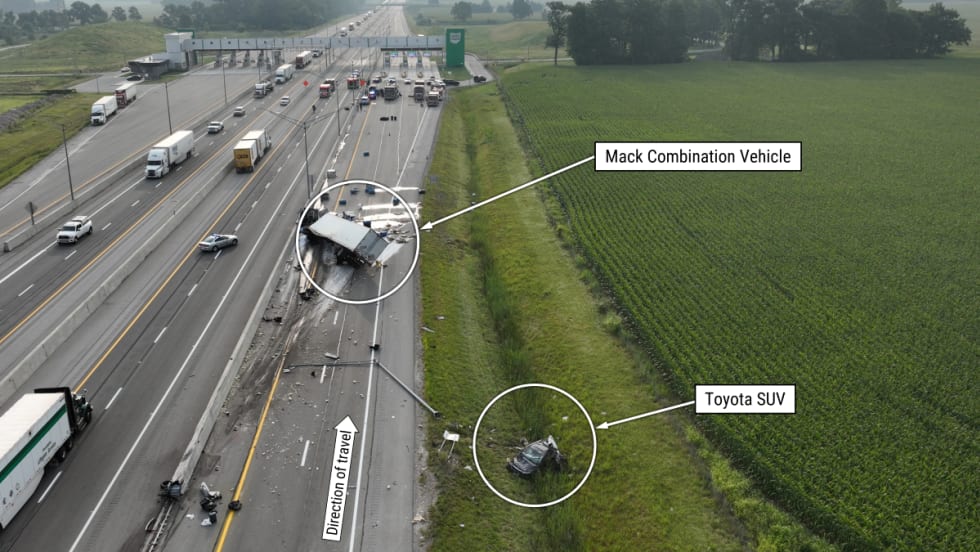
Fatal Crash Exposes Toll Plaza Risks
An NTSB investigation found that last-minute lane changes and large speed differences at an Ohio toll plaza created a hazard the truck driver couldn't avoid in time.
Read More →

When Language Stops the Truck: The Return of ELP Out-of-Service Orders
English language proficiency rules for commercial drivers aren’t new, but renewed out-of-service enforcement has raised the stakes. Here’s what carriers need to know before a driver reaches a roadside inspection.
Read More →
A Camera Isn't a Safety Program. Here's What Brokers Are Screening for Now
Footage alone may not be enough to pass broker vetting processes. Here's what counts as a defensible safety program now.
Read More →
Marijuana and Trucking’s Drug-Testing Dilemma
Marijuana is getting stronger, laws are changing, and drug tests still can’t reliably establish impairment. What does that mean for truck drivers and the fleets that employ them?
Read More →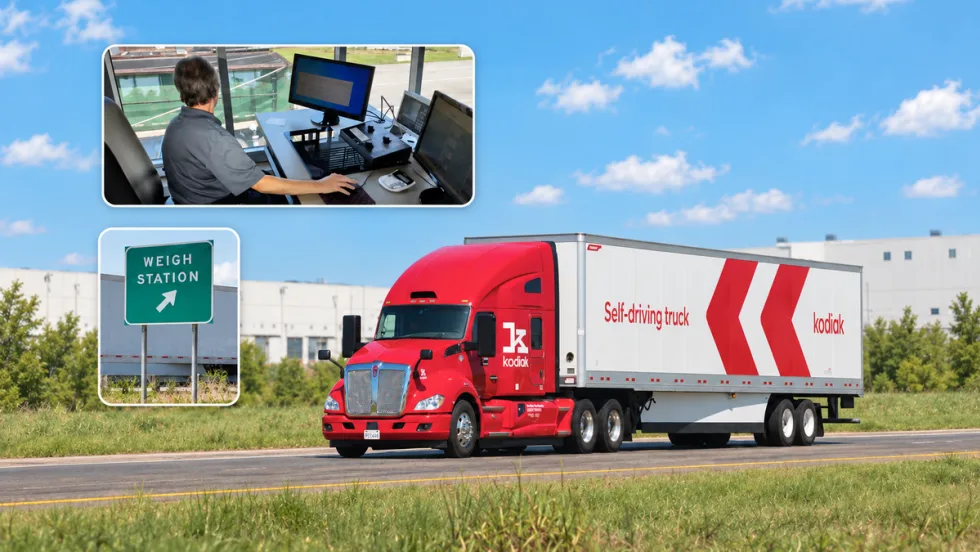
PrePass, Kodiak Connect Driverless Trucks to Roadside Enforcement
The system will allow enforcement agencies to verify Enhanced Inspection information and decide whether Kodiak’s autonomous trucks can bypass roadside screening sites.
Read More →
From One Generation to the Next: How Mentorship Builds Safer Truck Drivers
After three decades in trucking, Harold Perry shares what he's learned about driver safety, mentorship, and helping the next generation build confidence behind the wheel.
Read More →
FMCSA Pauses Biennial-Update Enforcement Amid Motus Transition
Carriers whose updates were due on or after June 1 have more time, while FMCSA works to stabilize its new registration system and warns of phishing sites impersonating its new carrier registration system, Motus.
Read More →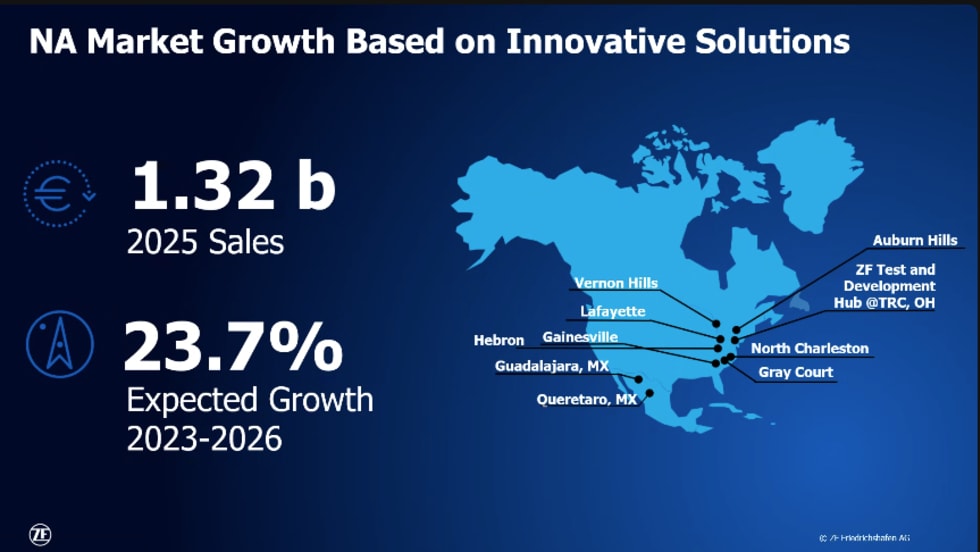
ZF Expands Commercial Vehicle Push in North America
ZF is expanding its North American commercial-vehicle presence with new transmission applications, electrification, trailer technology and autonomous-driving systems.
Read More →