




DAT: June Data Signals Spot Rates Have Hit Bottom
Truckload freight volumes and spot rates held firm in June, while contract rates fell to their lowest points in almost two years, said DAT Freight & Analytics.

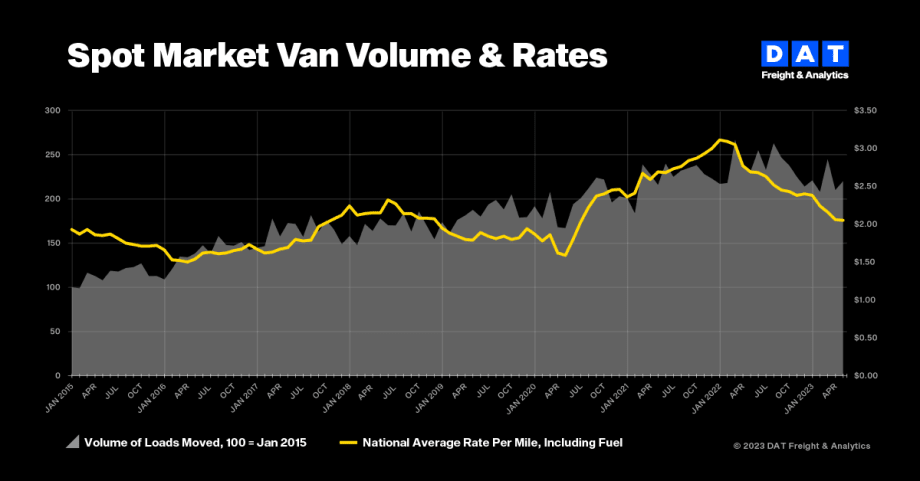
DAT Analytics reports the spot market has hit bottom.
Source: DAT Analytics
Truckload freight volumes and spot rates held firm in June while contract rates fell to their lowest points in almost two years, said DAT Freight & Analytics, which operates a major online freight marketplace and the DAT iQ data analytics service.
“The gap between spot and contract rates was the narrowest since April 2022,” said Ken Adamo, DAT chief of analytics. “Spot rates for van and refrigerated freight increased for the third straight month, and volumes were almost unchanged from May. These are signs that spot truckload prices have reached the bottom of the current freight cycle.”
The national benchmark contract rate for dry van freight has not increased for 12 consecutive months. At $2.58 per mile, the rate was 70 cents lower than a year ago.
Freight Volumes Held Steady in June
The DAT Truckload Volume Index, an indicator of loads moved during a given month, decreased marginally for van and refrigerated freight and increased slightly for flatbed loads:
Van: 230, down 1% from May
Reefer: 167, down 3% from May
Flatbed: 267, up 2% from May
Van, Reefer Rates Improved
On the spot market, the national benchmark rates for van and reefer freight rose while the flatbed rate declined compared to May:
Spot van rate: $2.08 per mile, up 3 cents, the first increase in five months
Spot reefer rate: $2.47 a mile, up 3 cents
Spot flatbed rate: $2.61 a mile, down 4 cents
Van line haul rates averaged $1.65 a mile, up 4 cents compared to May, while reefer line haul rates averaged $2.01 a mile, up 5 cents. The flatbed line haul rate dipped 2 cents to $2.10 a mile.
Line haul rates subtract an amount equal to an average fuel surcharge. Lower diesel prices in June pushed fuel surcharges to 17-month lows, averaging 43 cents a mile for van freight, 46 cents for reefers, and 51 cents for flatbeds.
Load-To-Truck Ratios Reflected Seasonal Demand
Load-to-truck ratios reflect truckload supply and demand on the DAT One marketplace:
The national average van load-to-truck ratio was 2.6, meaning there were 2.6 loads for every van posted to the DAT One marketplace last month. The ratio was 2.5 in May and 3.9 in June 2022.
The reefer ratio averaged 3.8, up from 3.6 in May and down from 7.0 in June 2022.
The flatbed ratio fell to 9.7, down from 11.7 in May and 37.6 in June 2022.
“Demand for truckload services typically slows at this time of year, but this could change quickly given the threat of strikes in the parcel and less-than-truckload sectors,” Adamo said. “Shippers are putting contingency plans in place and would look to freight brokers and carriers on the spot market to keep their line haul operations moving. Demand for trucks would jump, especially around Louisville, Memphis, Indianapolis, Dallas, and other major parcel hubs.”
More Fleet Management
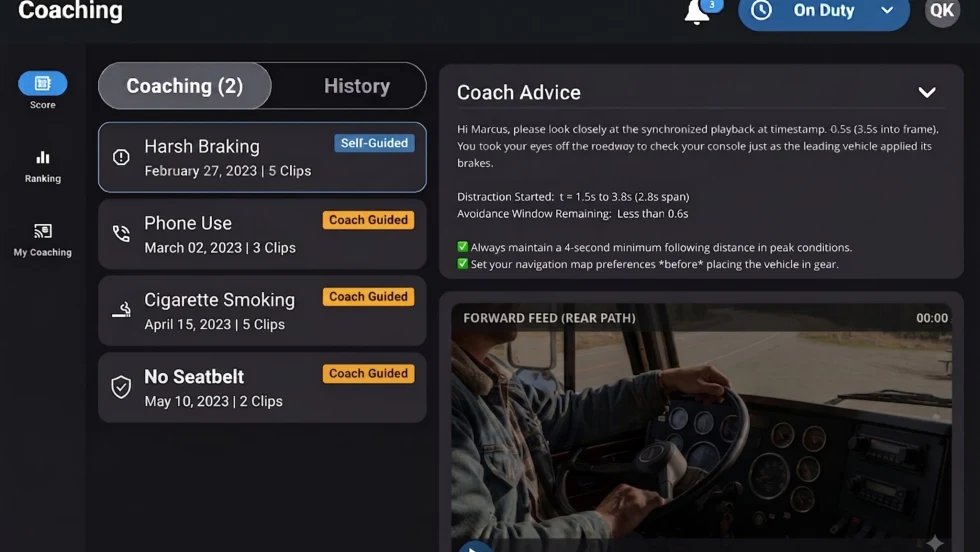
Platform Science Adds Dispatch and Safety Tools
Four additions to PS Fleet help fleets monitor loads, manage driver coaching, share truck locations and adjust video system settings.
Read More →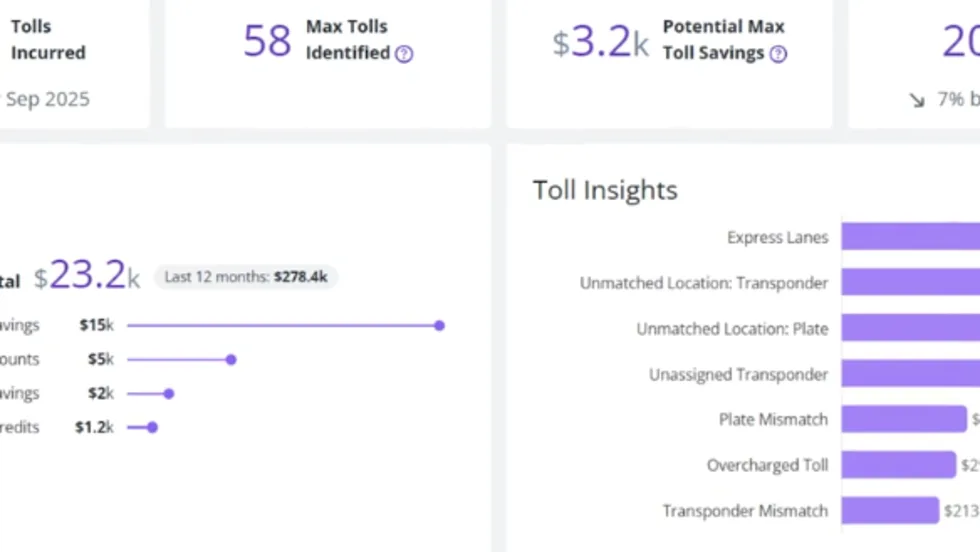
PrePass Intelligence Mines Fleet Bypass, Toll and Safety Data
PrePass Intelligence helps fleets measure bypass savings, flag potential toll overcharges, and spot suspicious transactions by combining data from separate systems.
Read More →
Motive Adds AI Agents for Fleet Operations
New tools automate follow-up on fleet data, from maintenance work orders to driver alerts, with two-way voice conversations planned for later this year.
Read More →
Can You Beat Our Trucking Trivia Challenge?
Test your truck knowledge with 19 trivia questions from Heavy Duty Trucking Exchange. Can you keep up with the fleet pros?
Read More →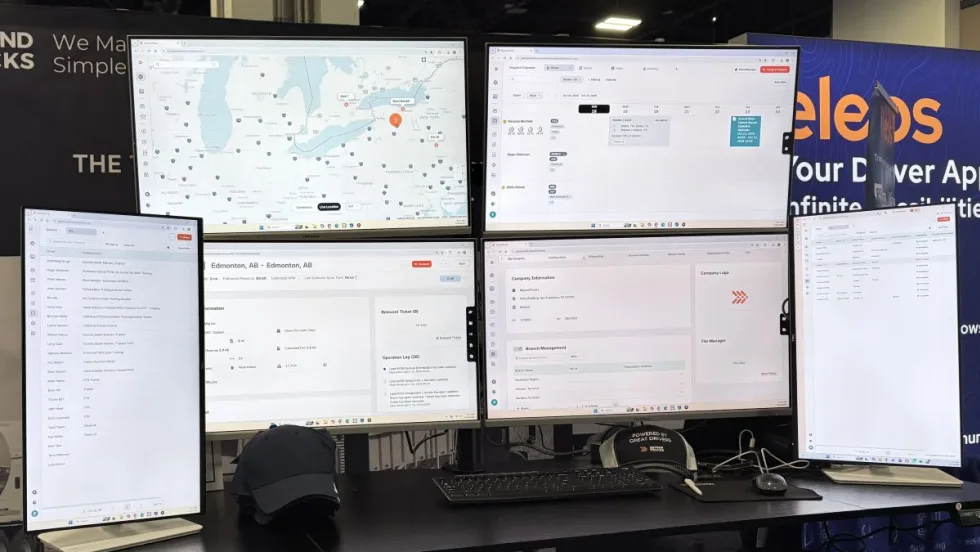
BeyondTrucks Adds Rules Checks to Dispatch
New Compatibility Engine checks driver qualifications, equipment requirements and fleet policies before loads are dispatched.
Read More →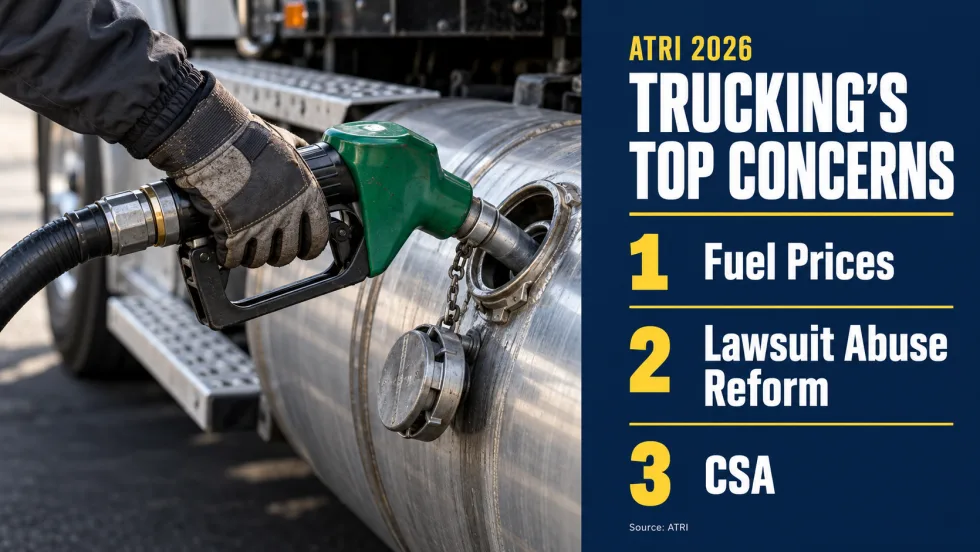
Diesel Prices Hijack Trucking’s Worry List
ATRI’s annual survey finds cautious optimism about freight, but diesel costs, litigation, and insurance continue to squeeze fleets. Drivers have different priorities on several issues.
Read More →
Nomination Deadline Extended for HDT Emerging Leaders
Just a few more days to nominate accomplished trucking fleet professionals under 40 who are making an impact and helping lead the industry forward for the HDT Emerging Leaders award. Deadline extended to October 20!
Read More →
What Will ATA’s New Leader Bring to Trucking's Table?
Incoming President and CEO Mark Colson’s record in Alabama offers clues about his priorities and approach following Chris Spear’s abrupt departure as the head of the American Trucking Associations.
Read More →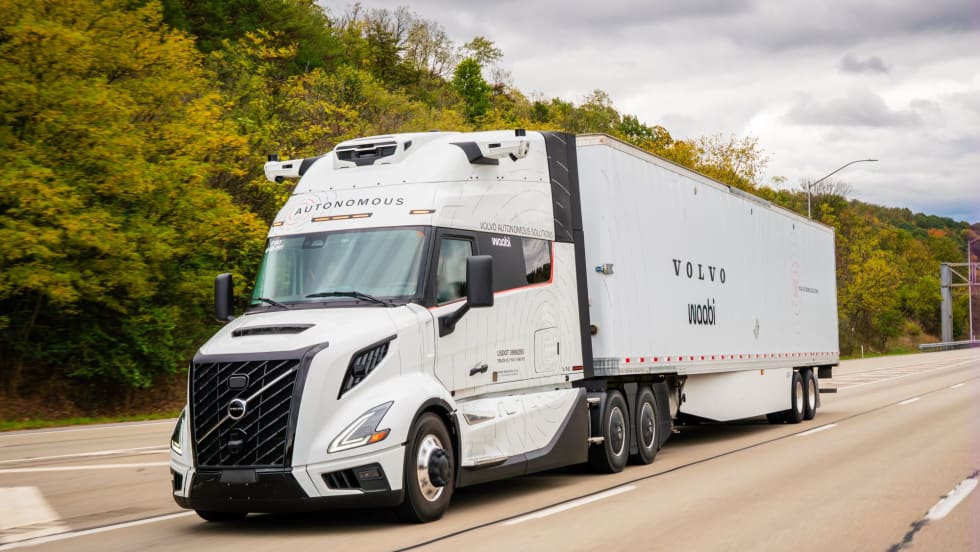
Volvo, Waabi Start Commercial Autonomous Operations in Texas
Volvo VNL Autonomous trucks, powered by the Waabi Driver, are hauling freight directly to third-party facilities for a customer in Texas.
Read More →
Samsara Launches Custom AI Agent Builder
Agent Studio lets fleets create AI tools for hours-of-service monitoring, reporting and driver support, including agents that communicate by phone.
Read More →