





Freightliner eCascadia electric trucks won’t be taking on interstate transport just yet, but it took a long haul to get them ready for regional service for one fleet in Southern California.
Schneider's Electric Heavy-Duty Trucks Start Off on Regional Routes
Trucking transportation and logistics provider Schneider National rolls out one of the first Class 8 fleets of electric tractor-trailers.
June 8, 2023
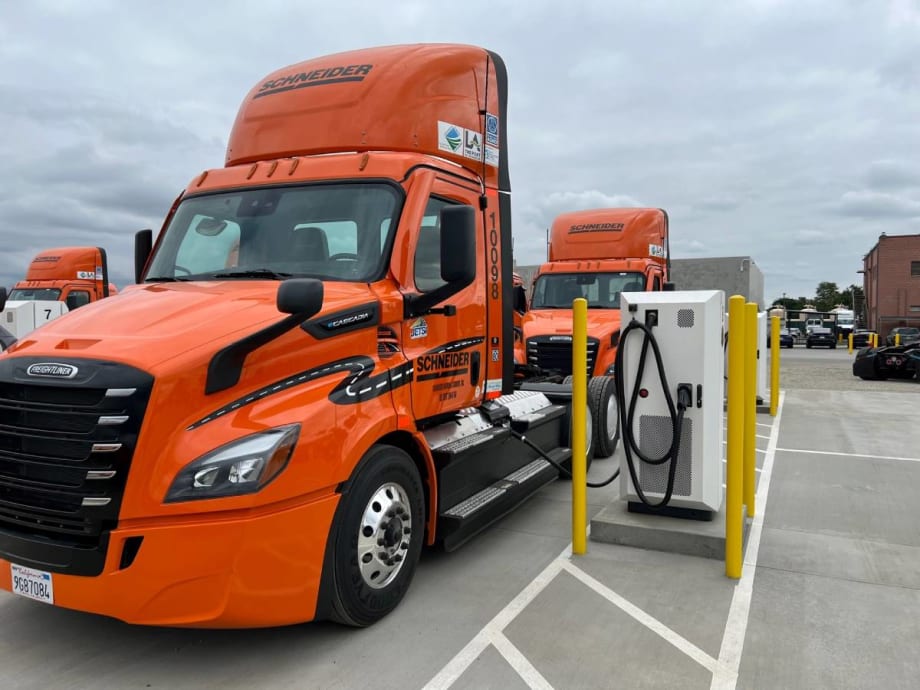
The Freightliner eCascadia truck can achieve an 80% charge within 90 minutes. Schneider has taken delivery of about a third of the 92 eCascadia trucks it will have by year’s end.
Photo: Martin Romjue / Bobit
5 min to read
Schneider National officially launched its all-electric trucking fleet and high-scale e-charging center on June 7 during a demo and media event at its facility in South El Monte, California, about 14 miles east of downtown Los Angeles.
The rollout capped a lengthy process measured in years to arrange the charging infrastructure and utility power sources for the 4,900-square-foot electric truck charging hub for Class 8 trucks. About half the size of a football field, the charging center has 16 dual-corded port DC fast 350 kw chargers, made by Power Electronics, that can juice up to 32 trucks at one time. The six-megawatt facility produces enough power that it could supply electricity for a city with a population of 200,000.
Schneider’s fleet hub is a perfect location to serve an extensive regional clientele of major corporations and product movers that need coordinated logistics across the massive warehouse distribution centers, two global ports, and inter-continental railway connections concentrated in the areas east of Los Angeles through the Inland Empire and stretching south toward Long Beach and San Pedro.
With a range of 220 miles, the Freightliner eCascadia, built by Daimler Truck North America, is well suited to the 160-mile duty cycles and round trips throughout the area, as one driver explained during an eCascadia ride-a-long. That 160-mile range allows for a reserve mileage cushion on the battery.
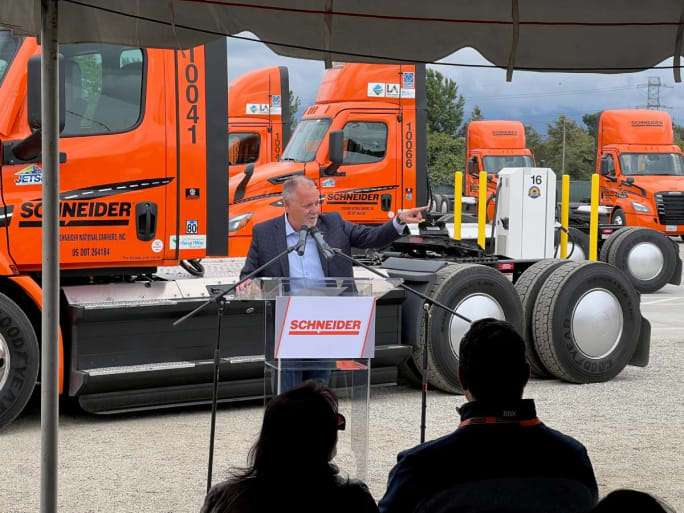
Mark Rourke, president and CEO of Schneider, led the presentation of the new eCascadia trucks during a media and demo event on June 7 in South El Monte, California.
Photo: Martin Romjue / Bobit
Electrifying Short-Haul Logistics
For Schneider, the goal was to establish an electric truck operation that has the characteristics of short-haul networks.
“What we think is most important is to be able to charge at our location at the end of the duty cycle,” said Mark Rourke, president and CEO of Schneider, in an interview after the ribbon-cutting. "It's such a dense market that we can get eight to 10 hours a day on optimizing [routes] locally here. That is the best use case we have.”
The eCascadia tractors can achieve an 80% charge within 90 minutes. Schneider has taken delivery of about a third of the 92 eCascadia trucks it will have by year’s end, making it one of North America’s largest electric heavy-duty fleets. Already this year, the carrier has begun hauling deliveries for Frito-Lay North America and Goodyear using the new eCascadias.
In addressing the cost comparisons between electric and diesel trucks, Rourke said the company’s private-public partnership with utilities and government agencies helped offset the development and purchase costs. Before any accurate apples-to-apples numbers can emerge, the fleet needs to be fully deployed with drivers properly trained on usage, such as knowing how to most efficiently apply regenerative braking to maximize EV range.
“We have to change and learn and do things differently with this type of operation than what we do if it was a diesel equivalent,” Rourke said. “But that's the whole point. We're learning how to run an operation at scale now as opposed to just testing one or two trucks. Running an operation at scale is easier.”
Rourke offered some advice for fleet owners and managers pursuing truck fleet electrification.
“I would say at this juncture, [getting] the electric truck is the easy part,” he said. “It's the infrastructure and its complexity, and a lot of the software that's talking between the truck and the charging units, that you must get right.
"But most importantly, you have to get the power distributed to your site. The biggest challenge is the infrastructure — not only the charging units themselves, but then how do you get enough power to a site to do the charging? This has been an almost three-year effort to coordinate and plan for what you see here today.”
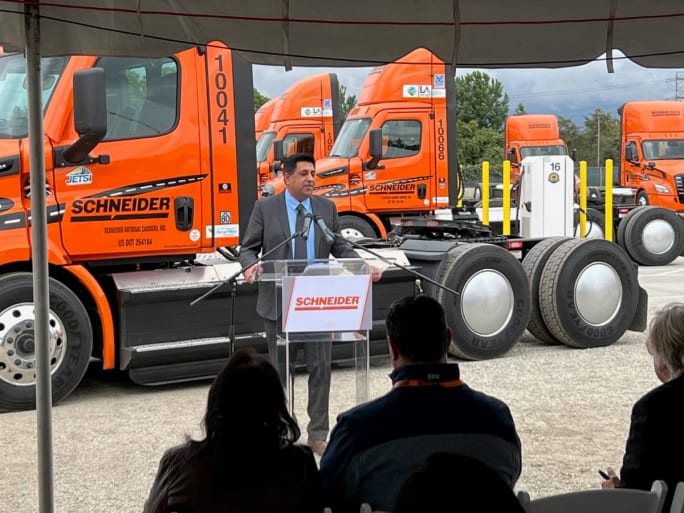
Rakesh Aneja, vice president of electrification mobility for DTNA, said interstate trucking will require advances in battery cell technology and range along with an ample charging infrastructure across travel routes.
Photo: Martin Romjue / Bobit
Outlook for Long-Haul Interstate Trucking
While the focus of the Schneider electric fleet is on local and regional logistics, the long-term goal for Daimler Truck North America is to eventually develop model versions that can handle interstate trucking, said Rakesh Aneja, vice president of electrification mobility for DTNA, in an onsite interview. Long-haul trucking logistics handles about 90 million-ton miles of freight every year.
Interstate trucking will require advances in battery cell technology and range, along with an ample charging infrastructure across continental routes, Aneja said. He cited three dimensions the manufacturer is pursuing to support long-haul trucking:
Cell and battery chemistry improvements: While no shifts are forecast for the near term, research will continue a path that is evolutionary, not revolutionary, that will refine energy density and costs as technology advances.
Fast charging: DTNA have been collaborating with an EV industry consortium to develop a megawatt charging standard protocol to allow charging at megawatt-type rates. While a few years away from prime time, the standard would enable an 80% charge in 30-45 minutes, consistent with a driver’s meal or rest break.
Hydrogen research: In applications where battery technology costs or weighs too much when adding capacity, hydrogen can play a complementary role. Hydrogen research is still a few years behind battery-electric in infrastructure and costs. “We need the hydrogen price at the pump ideally to be comparable to the diesel price to make the math work,” he said. Hydrogen fuel would enable trucks to travel several hundred miles on one infusion, ideal for long hauls.
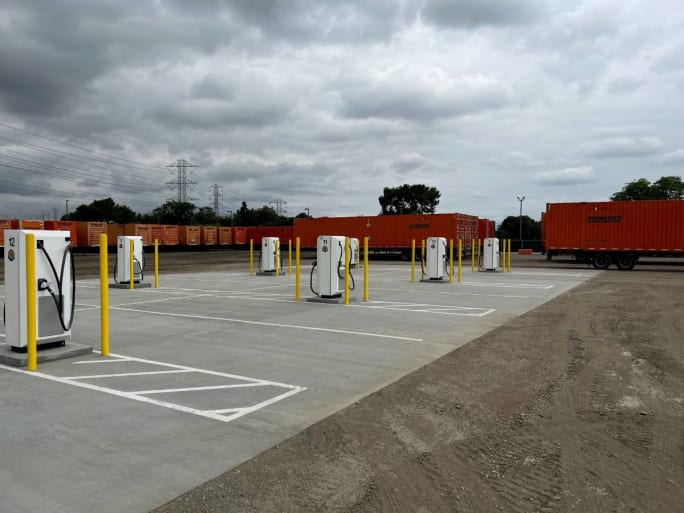
The 4,900-square-foot electric truck charging hub for Class 8 trucks is about half the size of a football field, and has 16 dual-corded port DC fast 350 kw chargers that can juice up to 32 trucks at one time.
Photo: Martin Romjue / Bobit
Trucking Costs Comparisons
Another challenge is the cost of electric trucks, which Aneja said range about two to three times the price of a typical diesel truck.
However, over time the higher price can be offset with fuel and maintenance efficiencies.
“The operating costs for these trucks from an energy perspective is a fraction compared to the diesel costs,” he said. “Depending on how many miles you run, and how many years you own the asset, there is at least an opportunity to start to offset some of this high initial acquisition price.
"And not to say that we aren’t working on that, there's also the [future] improved battery technology where we are continuously trying to bring that cost down.”
For now, smart charging managing and scheduling systems can help electric fleets save on energy costs while finding the most seamless duty cycles and routing, he added.
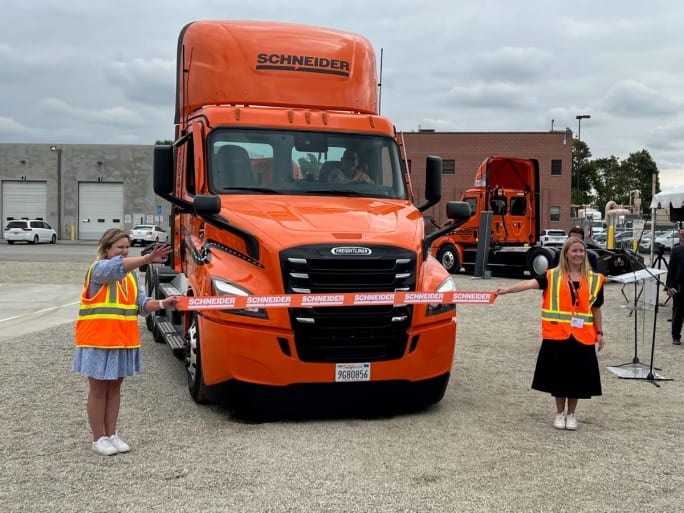
With a range of 220 miles, the Freightliner eCascadia built by Daimler Truck North America is well suited to the 160-mile duty cycles and round trips throughout the area.
Photo: Martin Romjue / Bobit
More Fuel Smarts
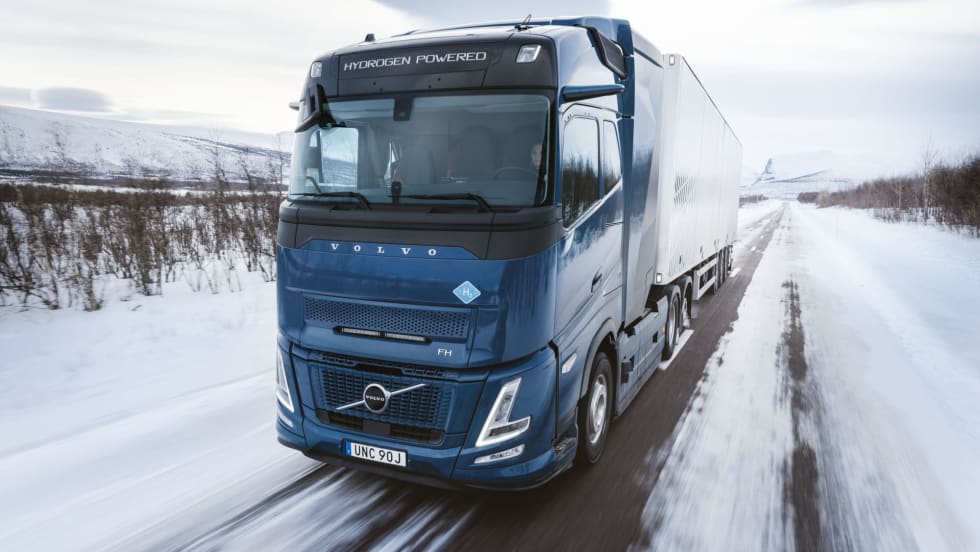
Volvo Testing Hydrogen-Fueled Internal Combustion Engines on Trucks in Europe
Hydrogen combustion engine trucks will be especially suitable over longer distances and in regions where there is limited charging infrastructure or time for recharging of battery-electric trucks, according to the company.
Read More →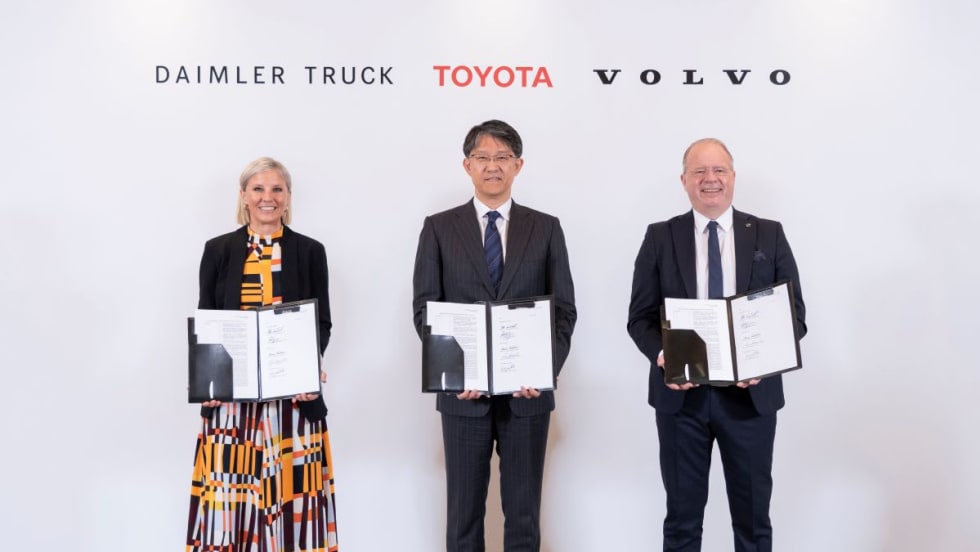
Toyota’s Entry Into Cellcentric Signals Push to Accelerate Hydrogen Truck Adoption
By joining Daimler Truck and Volvo, Toyota brings fuel cell expertise to a joint effort aimed at making hydrogen viable for heavy-duty transport.
Read More →
U.S. Diesel Prices Hit $5.40, Top $7 in California
Trucking operators are slowing speeds, cutting empty miles, and declining unprofitable freight as diesel costs continue to rise due to conflict in the Middle East.
Read More →
EPA Targets DEF Sensor Failures Behind Truck Derates
New guidance allows engine makers to replace problematic DEF sensors with NOx-based systems, aiming to reduce unnecessary derates and downtime caused by failures in the sensors designed to monitor diesel exhaust fluid on trucks.
Read More →
Heavy Duty Trucking is Searching for the Top Green Fleets of 2026
Is your company a leader in sustainability efforts among trucking fleets? If so, Heavy Duty Trucking's editors want to hear from you.
Read More →
What's Real in Advanced Truck Technology? ACT Expo's Erik Neandross Weighs In
Artificial intelligence, the software-defined vehicle, telematics, autonomous trucks, electric trucks and alternative fuels, and more in this HDT Talks Trucking interview
Read More →Why Diesel Is Climbing Fast—and What the Iran Conflict Has to Do With It
With global oil flows disrupted, U.S. diesel prices have topped $5 across every region, climbing sharply in the past few weeks.
Read More →
From Diesel Prices to Cyberattacks: How the Iran War Is Affecting Trucking
The impact of the Iran conflict extends beyond fuel costs, bringing more fraud and cybersecurity risks to the trucking industry.
Read More →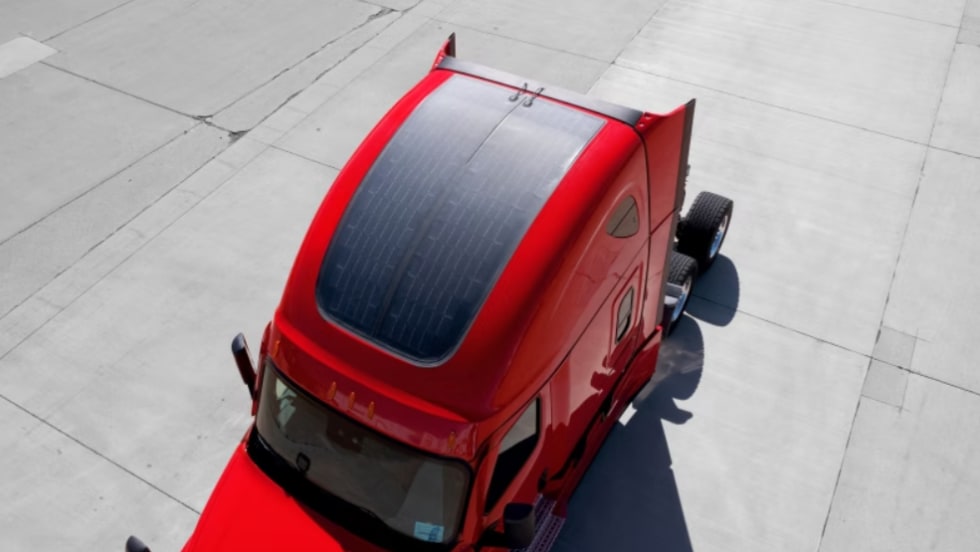
Vanair Introduces Solar, Battery Power Ecosystem for Class 8 Trucks
The company’s expanded EPEQ ecosystem includes flexible solar panels, lithium batteries, hydraulic power systems, and a portable fast charger for electric trucks.
Read More →
Run on Less “Messy Middle” Data Shows Multiple Paths for Truck Powertrains [Listen]
Listen as Mike Roeth of the North American Council for Freight Efficiency shares insights into battery-electric trucks, natural gas, biofuels, and clean diesel on this episode of HDT Talks Trucking.
Read More →