




How to Leverage the Data Firehose for Better Maintenance
Data-driven maintenance is all about gaining insights by capturing and analyzing the data endlessly streaming from your trucks.

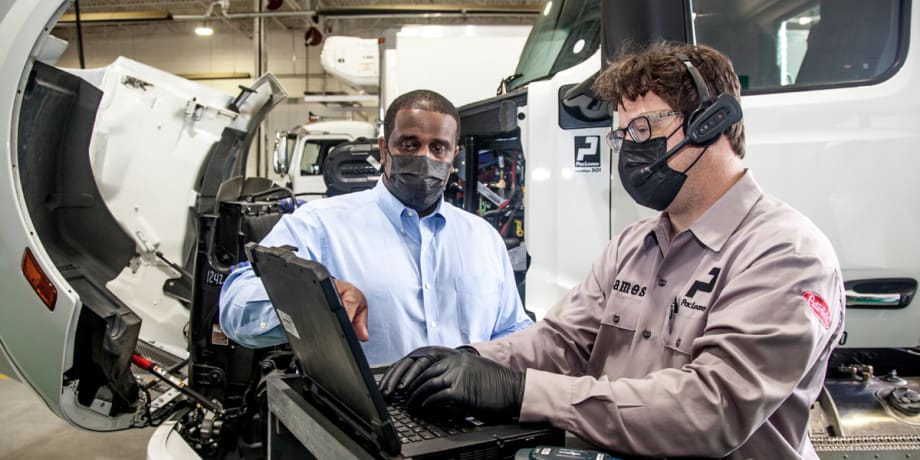
Maintenance ranks within the top three line-item expenses at most fleets, and greater use of data coming off the trucks can help keep those costs down.
Photo: PacLease
There’s nothing quite like a truck for pumping out firehoses of rich data. From integrated systems to onboard technologies, these steady data streams can better inform how a truck is maintained, how it is spec’ed, and how safely it is being operated, the latter of which also eventually impacts both maintenance practices and spec decisions.
Where this data meets the road, so to speak, is when a fleet manager can make dollars and cents of it.
“Leveraging available data in an actionable way can be a big cost savings for most fleets,” says Doug Schrier, vice president of strategy at Transflo, a provider of data-management services for truck fleets. “Maintenance ranks within the top three line-item expenses at most fleets. If you take maintenance and depreciation and group them together, keeping the truck on the road can be as expensive as keeping it insured and keeping diesel in the engine. That’s the direction you should be working toward — using anything you can to help reduce those costs.”
For example, “instead of basing preventive and routine maintenance intervals on a 30,000-mile cycle, carriers can use data from their engine diagnostics components and sensors to do maintenance when it’s needed, which could be at a 45,000-mile cycle or longer. That reduces costs and downtime, including by replacing components when they need to be replaced instead of on mileage.”
Schrier advises fleets to first select a telematics device that pulls “good, clean data” off the engine. “If you’re not getting good data, you don’t have anything to use to set up a data-driven maintenance program.”
The next step is refining how you use that data. He notes that several OEMs have solutions that take the engine diagnostic data coming in via telematics and run it through a predictive analytics system to identify component failures or issues that could be resolved within warranty.
Actionable Insights
“As someone relatively new to the transportation industry, and with an aviation background, I strive to have as much actionable insights as possible,” says Shaun Sadler, senior vice president of equipment and maintenance for Chattanooga, Tennessee-based U.S. Xpress, one of the nation’s largest truckload carriers. “Data is the link between knowledge, performance, and decision-making. All types of data will help shape us into a more effective company and give us insights that we have never had before.”
At Paccar Leasing (PacLease), they started from scratch, going back 20 years to pull data on vehicle specs and costs, says Michael Willey, PacLease assistant general manager.
With the data in hand, he says, the “next step was to clean it and move it to the cloud, so we could use it effectively. From there, you use data analytics, looking at it by truck, by component, and by duty cycle.
“Just from what we know from our specs,” he continues, “we found 17 main drivers that have statistical significance in the costs of operating a truck.”
Quality Transport Company may not be as far along as some fleets, “but our interest in data-driven maintenance is high,” says SVP Amanda Schuier. The Freeport, Illinois-based carrier hauls short-, regional-, and long-haul freight nationwide with a fleet of 31 tractors.
“Fleets are certainly aware of what data can do,” Schuier says. “But there is a wide range to that awareness. Some are using lots of data. Even with a small fleet, I’m trying to streamline data.” She says that’s in part to tamp down data overload. “There are so many dashboards — 36, to be exact — that I have to log into separately and sort through every day, from maintenance to hours-of-service compliance and detention times.”
The Path to Predictive
Sadler says the first objective at U.S. Xpress is “to continue along the preventive [maintenance] path, but also build in predictive capabilities.” That means using telematics to gather data from sensors within key systems, assemblies, and components in tractors where problems could lead to breakdowns.
“Maintenance data can complement these telematics systems,” he says. “Establish robust data linkage and complete analysis to find correlations between specific thresholds and a failure. Fleets can categorize the severity of resulting failures and the time elapsed from triggering a threshold until a component fails.”
From there, Sadler recommends expanding analysis into “real-time data streaming with alerts based on which component is likely to fail within a predicted number of miles and/or days. To get started on this, create pilot programs so you can implement changes as you learn.”
“With the right algorithms,” he continues, “we’ll soon be able to monitor sensor-equipped items on our tractors. This can help provide predictive and prescriptive maintenance events, helping to prevent breakdowns over the road. It will also help us align scheduled downtime with driver home time. With future technology, we’ll align with charging cycles or fueling cycles.”
He points out that this also can minimize lost opportunities to generate revenue miles. This is not only good for the fleet’s productivity, but it can also help reduce driver frustration, positively impacting employee satisfaction and reducing turnover.
It’s important to focus on data integrity before deployment across all assets in the fleet, Sadler says. And don’t feel like you have to do it alone. Combine your internal data analysis with the expertise of trusted external partners to identify correlations and patterns in data and failure events.
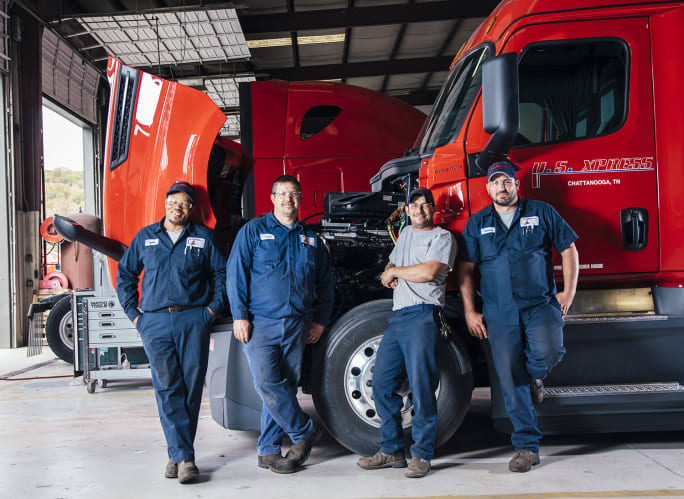
Data-driven maintenance can minimize breakdowns, and with a greater percentage of repairs completed at a company shop or a preferred vendor, fleets can save money.
Photo: U.S. Xpress
“Partner with others and learn what they are doing to facilitate these technologies. Learn and share information as much as possible.”
All this can lead to reduced time lost to roadside breakdowns and less time to complete diagnosis and correct failures.
“You also decrease the cost to complete repair, with a greater percentage of repairs completed at a company shop or a preferred vendor,” Sadler adds. “And reduced driver turnover leads to increased seated tractor count (as a percent of overall fleet), and lower driver recruiting costs.”
Plug in the Data
PacLease’s Willey says analyzing data can not only help lower maintenance costs; “it also points to which specs are most effective by truck application. So, with a data-driven approach, you build a truck, you plug in the fleet’s data, and then you redo it [the specs], based on what the data is telling you.”
He says this leveraging of data allows the lessor to be “50% more accurate in predicting vehicle lifecycle costs based on a truck’s specs and duty cycle. From there, we can negotiate with vendors to address the performance of specific items on the truck.”
Of course, fleets can also use a data-driven approach in refining their own truck specs. Willey stresses that data has inherent value.
“You’re definitely not maximizing its potential if you’re not collecting and analyzing it,” he says. “From there, predictive maintenance becomes the next step. Fleets can definitely buy off-the-shelf software to run analytics on the quality data that has been captured.”
At PacLease, he says, “the toughest part of all this was getting the data points out and stored in the cloud to use them.” The key data points PacLease works from include telematics data pulled off trucks; operations-related data drawn from electronic logging devices; maintenance history; specs; and data pulled from such devices as filter indicators and tire monitors.
Once all the pertinent data has been cleaned, sorted, and analyzed, “it becomes a valuable management tool that only requires the updating of maintenance information, typically once a quarter.”
Leading-Edge Approach
Quality Transport’s small size belies its efforts to be on the cutting edge of innovative management approaches. Indeed, Schuier currently chairs the Fleet Maintenance Management (S.5) study group of the American Trucking Associations’ Technology & Maintenance Council.
She notes that S.5 is working with the Society of Automotive Engineers on opening a new TMC task force on Health Ready Components and Systems. Admitting that’s a mouthful, she says it boils down to “learning how to manage your fleet’s run time in terms of ‘total vehicle health.’”
The scope of the task force includes mapping the path from today’s remote diagnostic monitoring of vehicles to gaining predictive vehicle-level “health management” for drivers and techs. From there, it’s on to developing autonomous, real-time self-adaptive management to control and optimize vehicle operation.
“My goal is to get all my data as streamlined and integrated as possible,” she says. “While we aren’t a leading-edge fleet, we’ve done a lot of upgrading since the pandemic began. We toyed with a lot of ideas to upgrade systems and have focused mostly on improving dispatching and maintenance software as well as updating our ELDs.”
Schuier points out that the ELD upgrade at Quality “opened the door to more integration,” including an electronic driver vehicle inspection report system. “Now our drivers report their results, and those go right to the shop so techs can triage for scheduling maintenance.”
Going forward, Schuier says she is “pushing back on vendors to integrate more with our other partners. For the most part, they have been receptive, which is the sign of a good partner.
“We are only going to receive more data from our trucks,” she adds. “We have to figure out what to do with it.”
No one can drink from a firehose. But if you can aim the data that pours out of today’s trucks into the correct buckets and analyze the impact of that content on fleet operations, your thirst for actionable business intelligence might well be slaked.
This article first appeared in the October 2021 issue of Heavy Duty Trucking.
More Maintenance

Mack Expands Extended Coverage With Four Chassis System Plans
Mack Trucks' new system-specific coverage options allow heavy-duty fleets to select protection for driveline, cab, HVAC, electronics, and advanced safety components.
Read More →
What an Out-of-Service Order Really Costs, and How to Plan for One
The repair invoice is the first number you see — and often one of the smallest. Here’s what else an out-of-service order can cost a fleet, and how planning can reduce the damage.
Read More →
International Launches Online Truck Parts Store
Fleetrite.com lets fleets and repair shops find OEM and all-makes parts, check prices and availability, and order without calling a parts counter.
Read More →

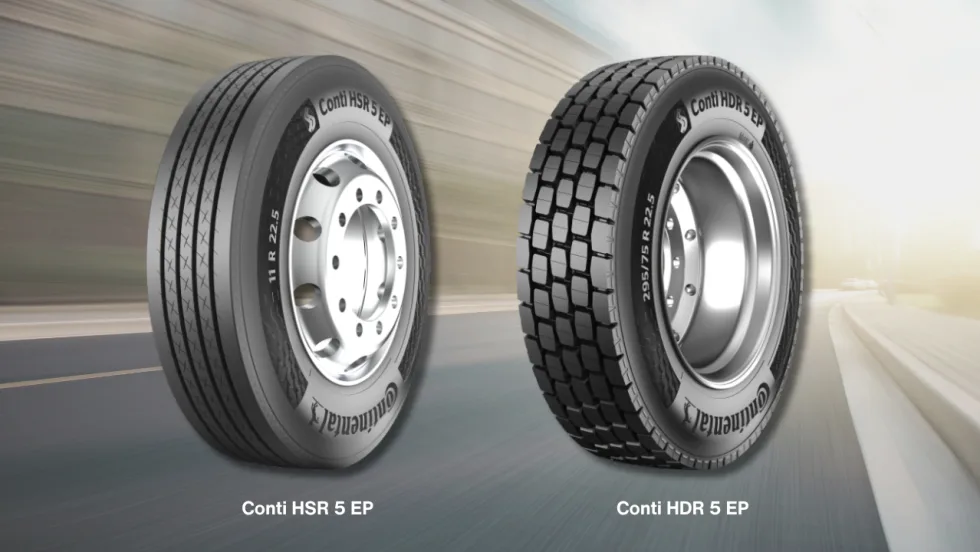
Continental Introduces New Regional Truck Tires
Continental says its new Generation 5 steer and drive tires for regional operations offer longer tread life, with estimated mileage gains of 22% and 19%, respectively.
Read More →
How AI Can Help Your Techs’ Efficiency
The technician shortage isn't going away, and no single fix can close the gap on its own. Trent Broberg makes the case that AI's real job in the shop is protecting the billable hours and job satisfaction of the techs you already have, not asking them to work faster.
Read More →
Color Match Smarter: Tools That Restore & Perform
For fleet managers and collision repair professionals keeping heavy-duty trucks on the road, getting the color right the first time isn't just about appearance — it's about efficiency, turnaround time, and bottom-line results. Discover how today's digital color tools are transforming the repair process from guesswork to precision.
Read More →
Wrong Repair Prompts Recall of Freightliner, Western Star 4x2 Trucks
DTNA is recalling more than 2,400 trucks that received an incompatible software fix instead of the hardware repair required to address brake valve corrosion.
Read More →
Truck Drivers Need More Than Another Alert
Fleets have more visibility into truck health, safety events, and driver activity than ever. The next challenge is turning all that information into useful guidance for the person who has to decide what to do next.
Read More →
The Maintenance Checks Trucking Fleets Should Prioritize Before Fall Freight Picks Up
Making it through August isn’t the same as being ready for the next several months of operation. Find out what systems may have suffered from summer heat and need to be checked out before fall.
Read More →
What Three Fleets Are Doing Differently When Buying Truck Parts in 2026
With freight improving but costs still climbing, fleet maintenance executives explain how they're balancing price, quality, and supplier relationships.
Read More →