




Proposed Trucking Rules Among 'Midnight Regs' to be Put on Hold by Biden Administration
A Department of Labor rule clarifying the definition of independent contractor and a pilot program to study younger truck drivers are among the “midnight regulations” that may not take effect after President-Elect Biden is sworn in on Jan. 20.

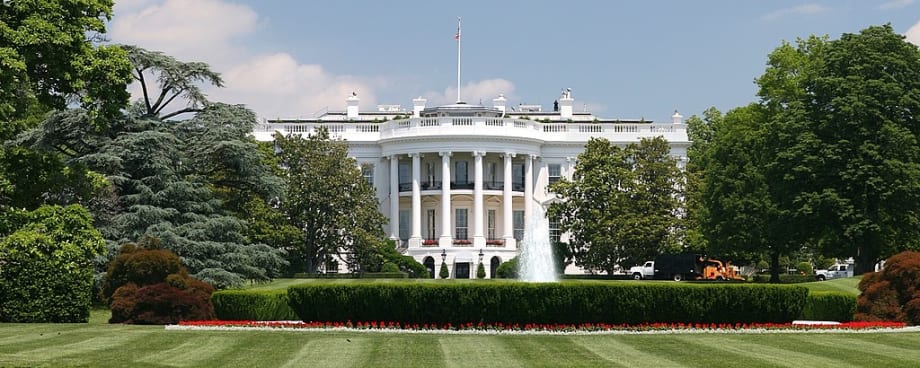
It's common for incoming presidential administrations to scrutinize regulations rushed through by the outgoing administration.
Photo: Dschwen via Wikimedia Commons
A Department of Labor rule clarifying the definition of independent contractor and a pilot program to study younger truck drivers are among the “midnight regulations” that may not take effect after President-Elect Biden is sworn in on Jan. 20.
It’s common for outgoing administrations to rush through last-minute rules, called “midnight regulations.” It’s also common for incoming administrations, especially when a different political party, to say “whoa, let’s slow down and take a closer look at these.”
That’s exactly what the Biden administration plans to do. The Biden-Harris transition team announced that it will issue a memo to take effect after noon on Jan. 20 to halt or delay “midnight regulations,” actions taken by the Trump administration that will have not yet taken effect by inauguration day. This will apply to not only regulations but also guidance documents, according to the transition team.
One example offered by the transition team in a briefing was the Department of Labor’s proposed rule that aims to clarify who’s an employee and who’s an independent contractor under the Fair Labor Standards Act. That proposal would adopt an “economic reality” test to determine a worker’s status as an FLSA employee or an independent contractor. The test considers whether a worker is in business for himself or herself (independent contractor) or is economically dependent on a putative employer for work (employee).
In its proposal, the DOL said that “the multifactor test [for determining independent contractor status under the FLSA], as currently applied, has proven to be unclear and unwieldy.”
“The proposal marks a more significant venture for the DOL than its previous efforts to define the parameters for determining independent contractor status generally under the FLSA,” said the transportation attorneys at Scopelitis, Garvin, Light, Hanson & Feary in an email alert at the time of the proposal. “The proposal synthesizes various courts’ approaches to implementing the Supreme Court’s economic realities test.”
However, Democrats see these efforts to streamline the definition of independent contractor as an attempt to “misclassify” employees as ICs in order to avoid paying benefits and employment taxes.
The rule was proposed on September 25, with only a 30-day comment period. A final rule has not yet been published. More than 1,800 comments were received. The department refused requests to extend the comment period.
Other actions relevant to trucking that could be affected by the Biden Administration halt:
Pilot program to evaluate the use of under-21 truck drivers in interstate commerce.
In nearly all states, 18- to 20-year-olds are allowed to operate commercial motor vehicles in intrastate commerce. Proposed in September, with a comment period that closed in November, the FMCSA’s pilot program would allow drivers to participate if they fall within two categories:
18 to 20-year-old CDL holders who operate CMVs in interstate commerce while taking part in a 120-hour probationary period and a subsequent 280-hour probationary period under an apprenticeship program established by an employer.
19 and 20-year-old commercial drivers who have operated CMVs in intrastate commerce for a minimum of one year and have at least 25,000 miles of experience.
Pilot program to test three-hour “pause” in driving window.
FMCSA in late August asked for public comment on a pilot program to study the one part of the hours-of-service proposal that didn’t make it into the 2019 final rule adding more flexibility to hours-of-service regulations: allowing drivers to pause their on-duty driving period with one off-duty period up to three hours.
Reallocating airwaves from transportation vehicle-to-everything to Wi-Fi.
In November, the Federal Communications Commission voted to split up the 5.9 GHz “safety spectrum” frequency previously set aside for use in transportation for vehicle-to-everything technologies, a plan that has prompted dire warnings from departments of transportation and various transportation and safety groups.
Pre-empting Washington state meal and rest break rules.
In 2019, the trucking industry in Washington state asked federal regulators to preempt a new state law requiring a higher number of meal and rest breaks than mandated under nationwide hours-of-service rules. On Nov. 17, the Federal Motor Carrier Safety Administration granted that petition.
(If you’re interested in reading about other “midnight regulations,” ProPublica is tracking them here.)
More Safety & Compliance
Driveline Defect Spurs Recall of Daimler, Paccar, Mack and Volvo Trucks
More than 6,900 2027-model trucks are being recalled because a missing snap ring could allow the driveline to separate from the truck.
Truck Snow Removal: Fines Aren't the Only Risk
Delaware and Maryland are the latest states to add requirements and fines for snow and ice removal on commercial trucks. But a flying-ice accident could cost a fleet more than a citation.

How ATA Wants to Fix ELD Certification
ATA's new roadmap calls for independent ELD certification, better fraud detection and closer oversight of providers. Here's how the proposed system would work.
133 ELDs Revoked as ATA Pushes Certification Reform
FMCSA just removed a record number of electronic logging devices from its registry. ATA says it's time to rethink how ELDs get approved in the first place.
CVSA Sets 2027 International Roadcheck Dates
The annual 72-hour truck inspection blitz will take place May 11–13 across North America. Here's what fleets can expect and what inspectors found during the 2026 event.

FMCSA’s New Complaint Platform Makes It Easier to Report Trucking Safety Concerns
The FMCSA Complaint Center features expanded complaint categories and a name change away from the word "consumer."

FDA Eases Path for Oral-Fluid Testing
Federal actions could advance oral-fluid drug testing for truck drivers, but lab certification delays and marijuana rescheduling questions remain.
Kodiak Lines Up Fleets for Driverless Trucking
An agreement for 75 trucks, a new Texas freight lane, and progress on safety validation move Kodiak closer to its planned driverless highway launch.

More Trailer Data Through the Same Seven-Way [Video]
Can trucking’s standard seven-way connector handle more cameras and trailer data? Grote’s Adam Slade shows HDT how the company is using new technology with its 4See trailer system, not only to add a new backup camera but also to expand other capabilities — without adding another connection.
PrePass Intelligence Mines Fleet Bypass, Toll and Safety Data
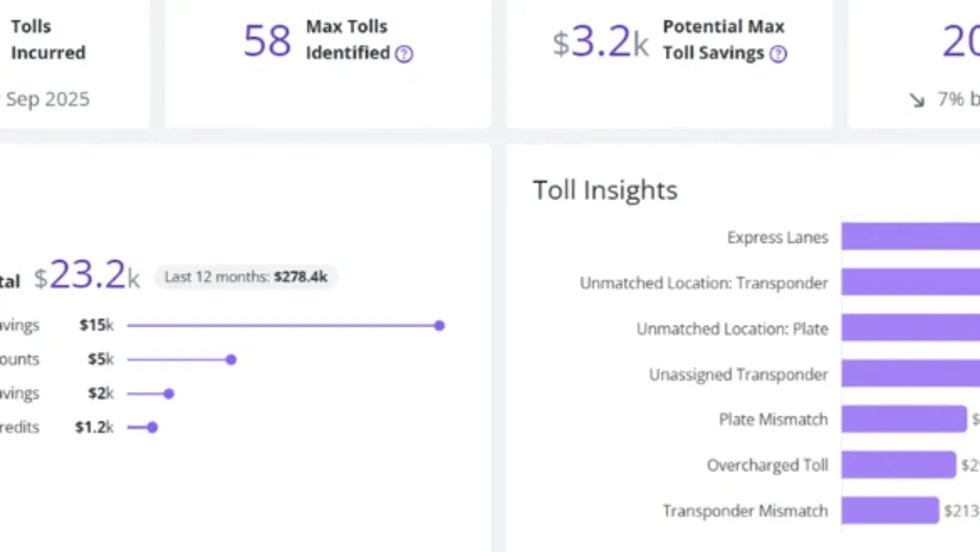
PrePass Intelligence helps fleets measure bypass savings, flag potential toll overcharges, and spot suspicious transactions by combining data from separate systems.