




"Wrongly Accused: Contrary to popular opinion, when cars and heavy trucks collide, the passenger vehicle is usually to blame, a U-M study shows."
This is not news to the trucking industry, but it was great to see this headline in a major newspaper like the Detroit Free Press earlier this month.
Reporter Christopher Walton starts the article talking about the number of truck-car fatalities. "The ferocity of these crashes and the fact that so many of those who die are driving or riding in the cars, not the big rigs, are why so many people assume that the heavy trucks are responsible for most of those wrecks and resulting deaths."
"But that's not true," he writes, according to "a controversial study" by the University of Michigan Transportation Research Institute. The study found that passenger vehicle drivers committed an error in more than 80% of fatal collisions involving one truck and one passenger vehicle. Truck drivers were in error in 26.5% of such accidents. In some cases, both drivers were found to have committed an error.
However, the article goes on to explain why the study is "controversial": Citizens for Reliable and Safe Highways has attacked the Michigan study, alleging that its methods are flawed and that the trucking industry paid for the study.
Daniel Blower, the Michigan researcher who conducted the study, stands firmly by his research, telling the paper that the study was funded by the U.S. Department of Transportation. "While he acknowledges the trucking industry does contribute to UMTRI's general fund, so do other groups with interests in highway traffic and safety," says the article.
Blower contends that CRASH "either doesn't understand statistical sampling or is being deliberately misleading."
Blower tells the paper that the study wasn't intended to point fingers, but to figure out how to reduce these accidents. The newspaper talks about the most common mistakes committed by passenger vehicle drivers in these fatal crashes and the need for more education of passenger car drivers.
U.S. Secretary of Transportation Rodney Slater last year issued a bold goal of reducing truck fatalities by 50% in the next 10 years. It's obvious from this study that do to that is going to take more than just the trucking industry.
Since the UMTRI study was paid for by the U.S. DOT, you would think it would be more prominent on their radar screens. Yet as a reader pointed out to us earlier this week, it's conspicuously absent from a guest commentary we published by Federal Motor Carrier Safety Administration acting head Julie Cirillo about what her agency is doing to improve truck safety.
Here's what our reader had to say: "After perusing your April issue of RoadStar, I was startled to read the article by Julie Cirillo…. On the one hand she goes on and on about truck safety and all the new rules being implemented for the trucking industry to prevent truck crashes, how trucks are unsafe, how technology will save truckers from ourselves, more inspections, more rules, more of the usual crap she dishes out. Then she goes on how it will take everyone's efforts that uses the roadways to reduce truck related fatalities. And asks if I will do my part. Nowhere does she mention anything about educating passenger vehicles...even though it's proven that they are responsible for the majority of truck related accidents! Why is this?"
Good question.
Wrongly Accused
"Wrongly Accused: Contrary to popular opinion, when cars and heavy trucks collide, the passenger vehicle is usually to blame, a U-M study shows." This is not news to the trucking industry, but it was great to see
More Safety & Compliance
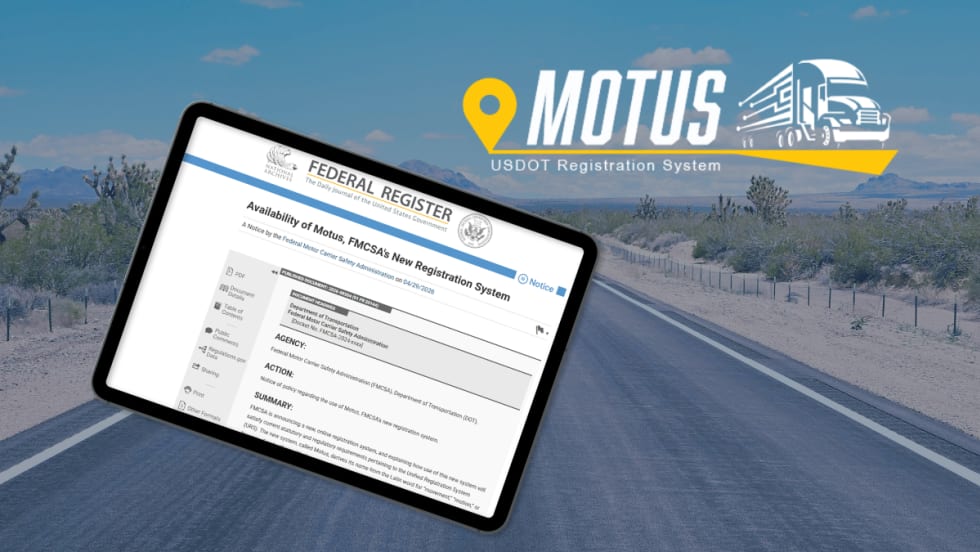
FMCSA’s Motus System Is Coming. What Fleets Need to Know Now
The long-awaited registration system promises a single portal — and tighter fraud controls.
Read More →
Nominations Open for HDT Truck Fleet Innovators 2026
Heavy Duty Trucking is searching for forward-looking leaders at trucking fleets as nominations for HDT’s Truck Fleet Innovators 2026. Deadline is May 15.
Read More →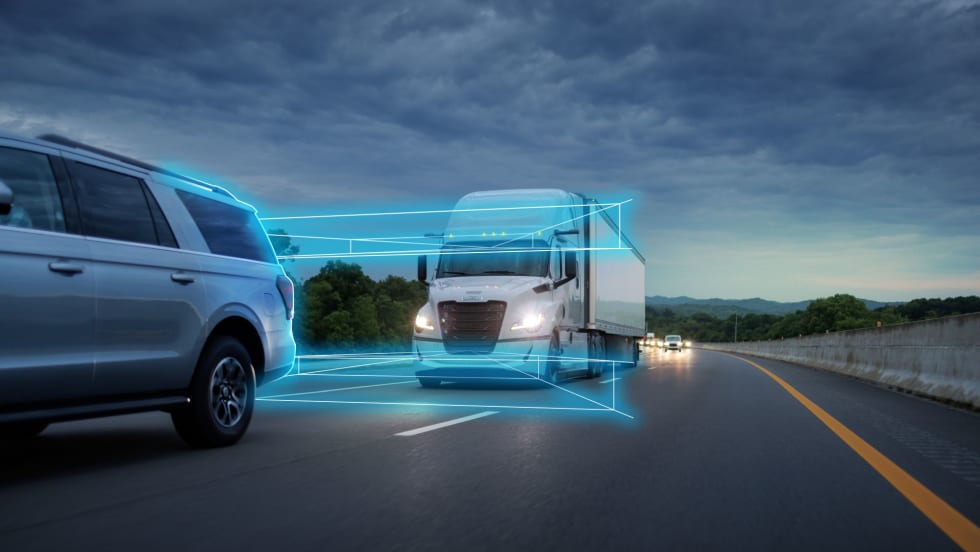
Freightliner Expands Detroit Assurance with New Intersection and Turning Safety Tech
Detroit’s next-generation ABA6 safety system adds cross-traffic detection and enhanced side guard assist with left-turn protection, targeting high-risk urban scenarios.
Read More →
'Beyond Compliance,' Regulations, Driver Coaching on ATRI’s 2026 Research List
The American Transportation Research Institute will examine driver coaching, regulatory impacts — including the "Beyond Compliance" concept —and weather disruptions that shape trucking operations.
Read More →
FMCSA Revamps DataQs to Improve Fairness, Speed of Reviews
New requirements add firm deadlines and independent review steps, addressing long-standing complaints about inconsistent rulings and slow response times.
Read More →
FMCSA Extends Paper Medical Card Exemption … Again
Five states still aren't ready to accept commercial driver medical exam information directly from the medical examiner's registry.
Read More →
HDT Honors the Best New Products of 2025 at TMC [Photos]
Heavy Duty Trucking's Top 20 Products awards recognize the best new products and technologies. Check out the award presentations at the 2026 Technology & Maintenance Council annual meeting.
Read More →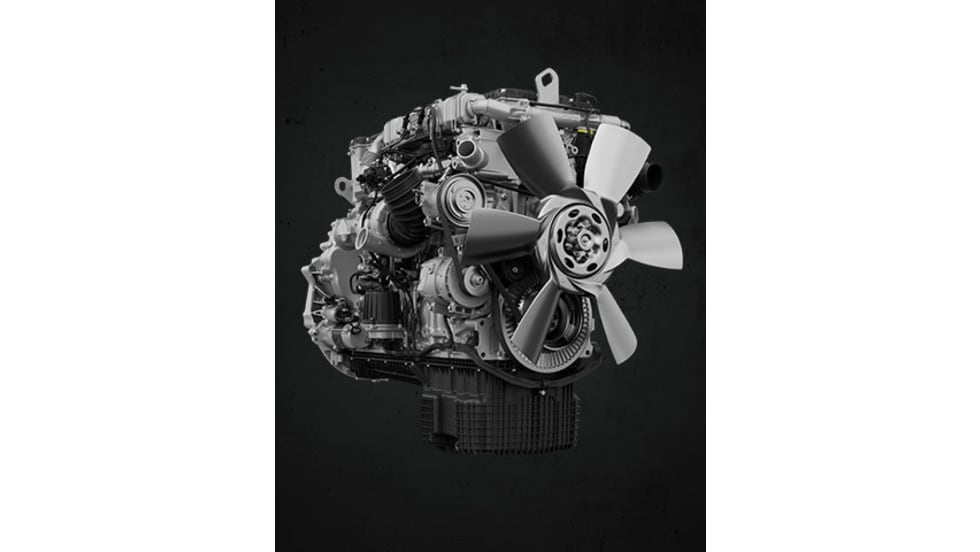
Detroit Engines: Trusted Performance, Built for What's Next
The Detroit® Gen 6 engine platform proves that real progress doesn’t require a complete redesign. Built on 20 years of trusted technology, these engines are designed for efficiency, stronger performance, and greater reliability than before. And they do it all while complying with 2027 EPA standards on every mile.
Read More →
Aperia Expands Halo Platform with Steer-Tire Inflation System, Fifth-Wheel Integration
Aperia Technologies introduced a new automatic tire inflation system for steer axles and a partnership with Fontaine Fifth Wheel to integrate coupling status into its Halo Connect platform.
Read More →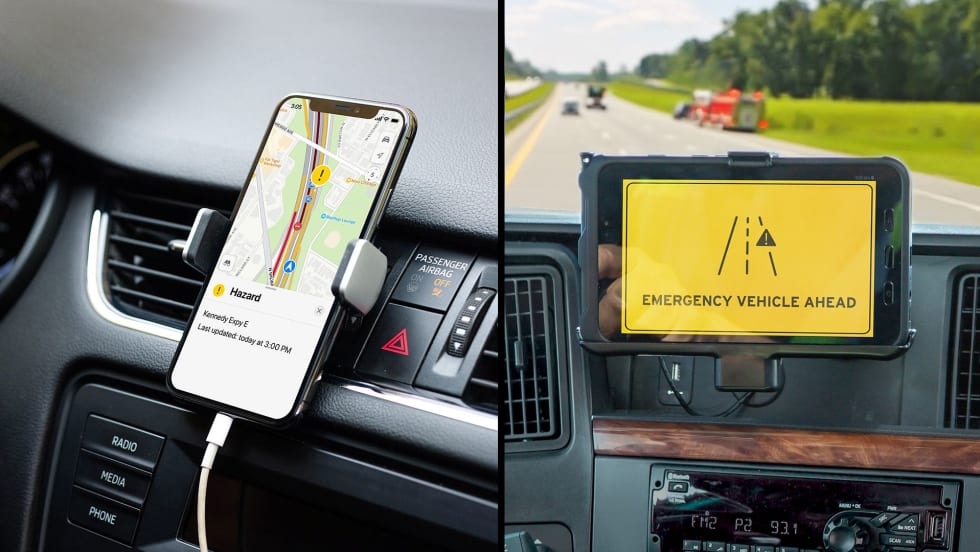
Fleetworthy and HAAS Alert Expand Partnership Stopped Truck Protection Alerts
Fleetworthy and HAAS Alert expanded their partnership to deliver real-time digital alerts that warn motorists when commercial trucks are stopped roadside and notify truck drivers when approaching emergency responders.
Read More →